In the field of thermal transfer printing, ribbon is a key consumable, and its slitting process directly affects product quality and production efficiency. In the past, many companies relied on semi-automatic ribbon slitting machines, relying on skilled workers to operate; nowadays, fully automatic equipment is rapidly replacing traditional models. One of the most realistic questions poses to managers: how much labor can be saved by upgrading to fully automatic?
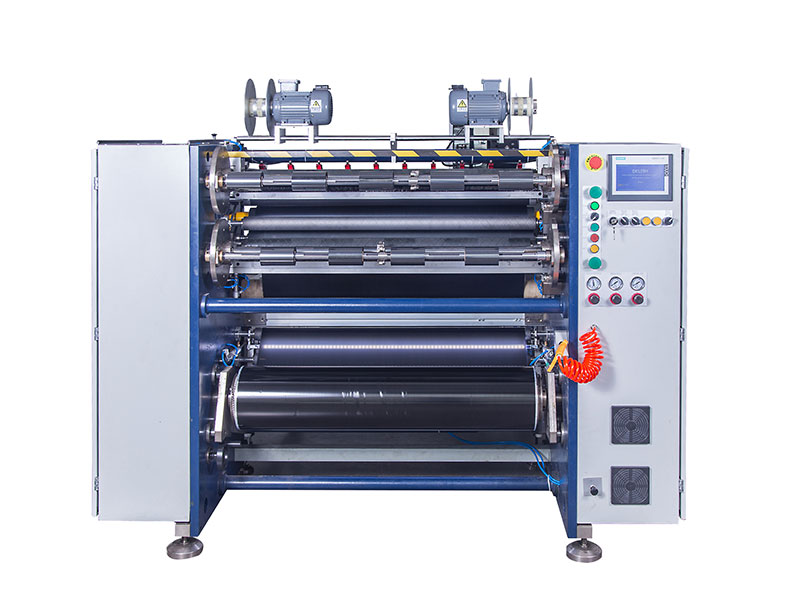
Semi-automatic slitting: One person stares at one and is still too busy
The working principle of the semi-automatic ribbon slitting machine determines its dependence on manpower. The operator needs to manually feed, adjust the tension, align the film roll, start the slitting, and manually discharge, replace the paper tube, and handle the joints after completion. A skilled worker operates a semi-automatic equipment, usually only taking care of 1 or 2 machines at the same time, and the labor intensity is high and fatigue is easy.
Actual production statistics show that in semi-automatic mode, each equipment needs to be equipped with one full-time operator per shift (8 hours). If the factory works two shifts a day, one equipment will occupy 2 workers. When changing specifications and adjusting parameters, team leaders or technicians are also required to spend time to assist, which indirectly increases labor costs.
Fully automatic slitting: one person sees multiple machines, doubling the efficiency
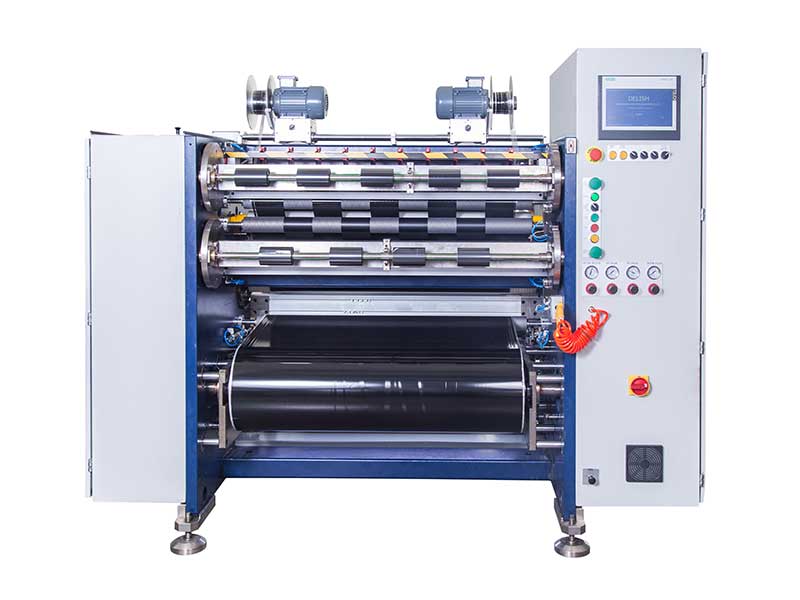
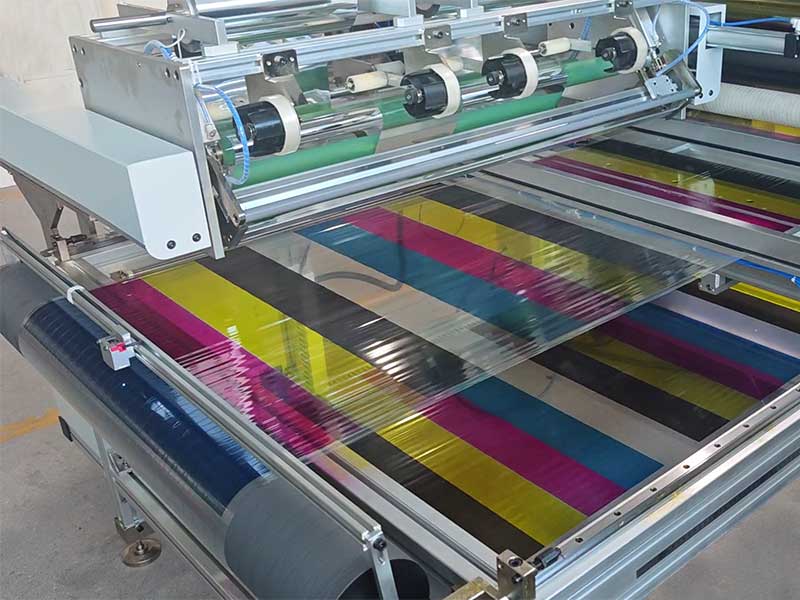
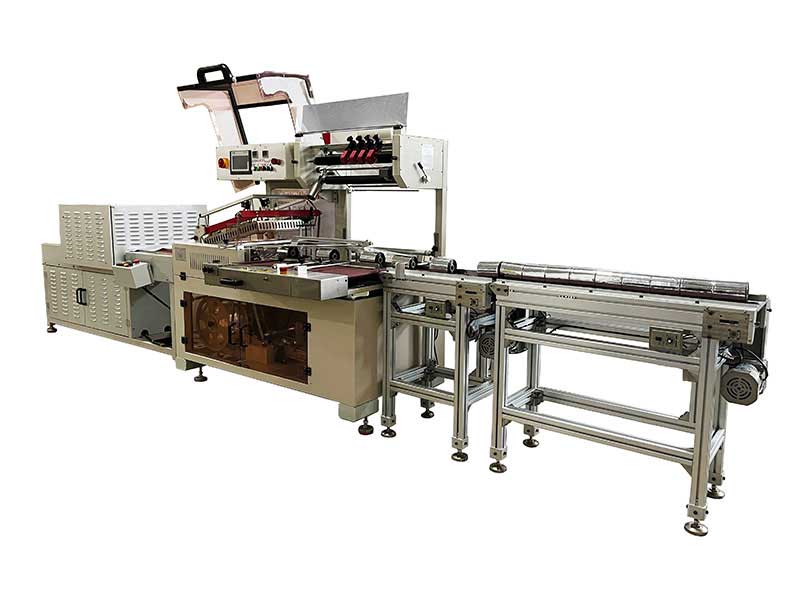
The automatic ribbon slitting machine integrates functions such as automatic feeding, automatic tension control, automatic deviation correction, automatic discharging, and automatic tube change. Operators only need to set the parameters, and the equipment can run continuously. In abnormal cases, the equipment will automatically alarm, and workers only need to deal with faults or replenish raw materials.
Practical application cases show that an ordinary operator can take care of 3 to 5 machines at the same time after being familiar with fully automatic equipment. Some high-end models can even realize the operation monitoring of 8-10 equipment in a workshop with a central console and AGV automatic handling.
Calculate a labor account
Taking a medium-sized ribbon slitting workshop as an example, let's say there are 10 semi-automatic slitting machines in two shifts a day:
• Semi-automatic mode: 1 person per shift for each machine, 20 operators are required for 10 machines. Coupled with auxiliary positions such as material change, quality inspection, and team leader, the actual manpower is about 22-24 people. Based on the monthly comprehensive cost of 6,000 yuan per person (including wages, social security, and benefits), the monthly labor expenditure is about 132,000-144,000 yuan.
• Fully automatic mode: the same 10 equipment, one worker looks at 5 units, only 2 operators are needed in each shift, and a total of 4 people in two shifts. Adding 1 inspector and 1 squad leader, the total manpower is about 6 people. The monthly labor cost is about 36,000 yuan.
In comparison, the direct labor cost savings are close to 100,000 yuan per month and more than 1 million yuan per year. This does not include the indirect benefits brought by improved equipment efficiency, reduced scrap rate, and shortened order change time.
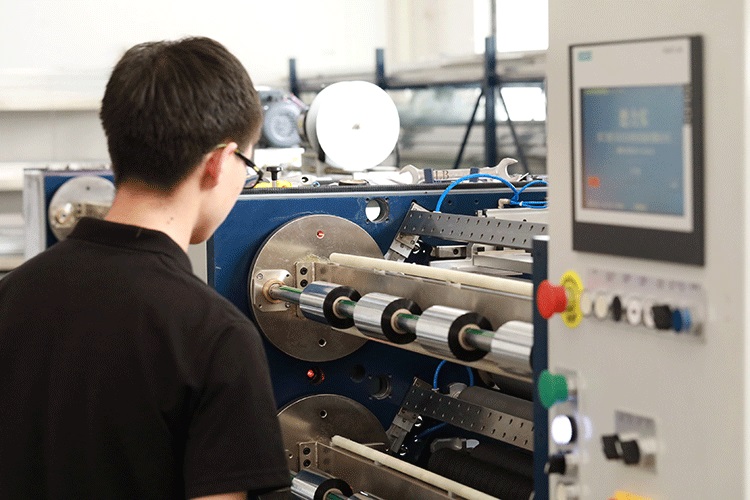
It is not only to save people, but also to improve efficiency
In addition to directly reducing labor, fully automatic equipment also brings about improved production stability. In semi-automatic mode, manual operation inevitably has tension fluctuations and alignment deviations, resulting in wrinkled ribbons and uneven width, and the scrap rate is often 2%-3%. The fully automatic equipment has high precision and good repeatability, and the scrap rate can be controlled within 0.5%. Calculated at the annual output of 1 million rolls, the material cost savings brought about by reducing scrap are also considerable figures.
In addition, fully automatic equipment can be continuously produced, reducing the interruption time such as shift change, rest, and eating, and the comprehensive efficiency of the equipment has increased from 60%-70% of semi-automatic to more than 85%, which is equivalent to using the same amount of equipment, increasing the annual output by 20%-30%.
Conclusion: The upgrade payback cycle is short and worth considering
From semi-automatic to fully automatic, the investment in one-time equipment is indeed not low. However, according to the above labor savings and waste reduction calculations, most ribbon manufacturers can recover their investment within 6 to 12 months. For today's rising labor costs and increasingly difficult recruitment, the automatic slitting machine is no longer a question of "whether to go up", but a question of "when".
A really smart manager will calculate an account: use a dozen fewer people, save millions of costs every year, and at the same time have higher output and more stable quality - this upgrade account is not a loss.
 English
 Deutsch
 Français
 Español
 Português
 日本語
日本語 русский
 한국어
한국어 عربي
عربي ภาษาไทย
 Tiếng Việt
 Italiano
 Thermal Transfer Ribbons Packaging Machine
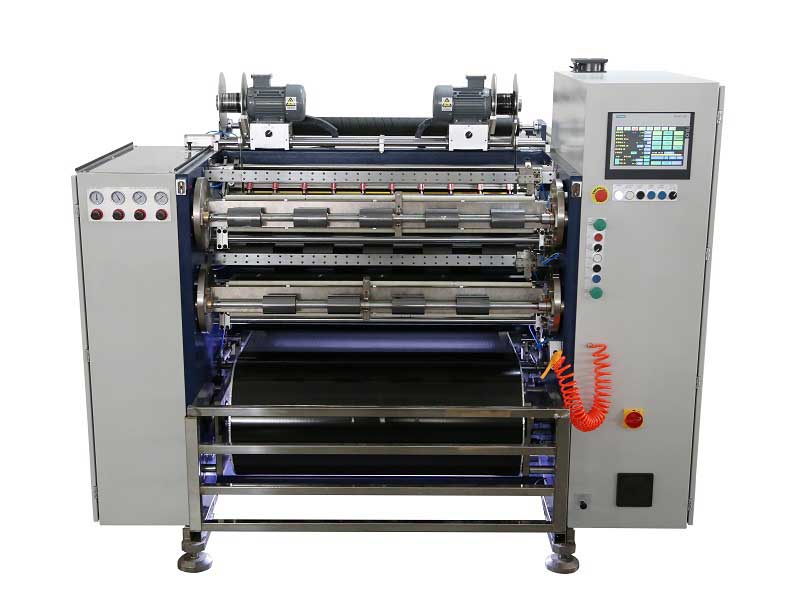 Automatic Thermal Transfer Ribbon Slitting Machine RSDS8 H PLUS
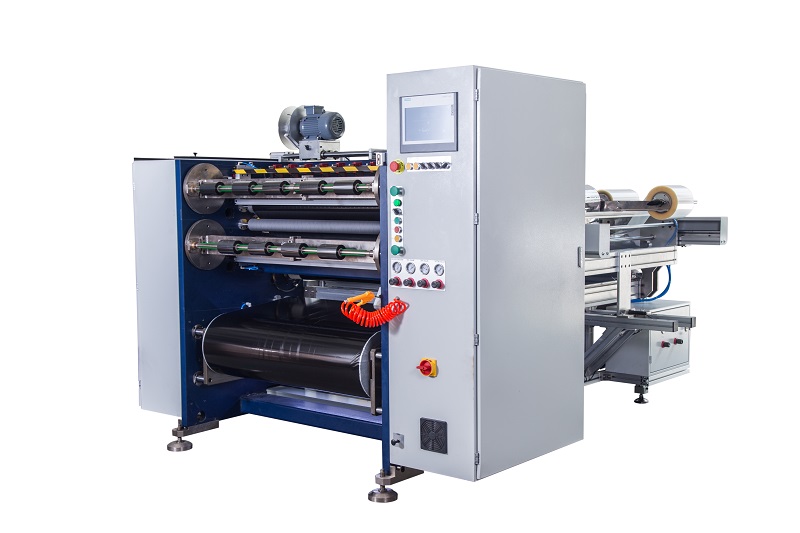 Semi Automatic Thermal Transfer Ribbon Slitting Machine RSDS5 PLUS
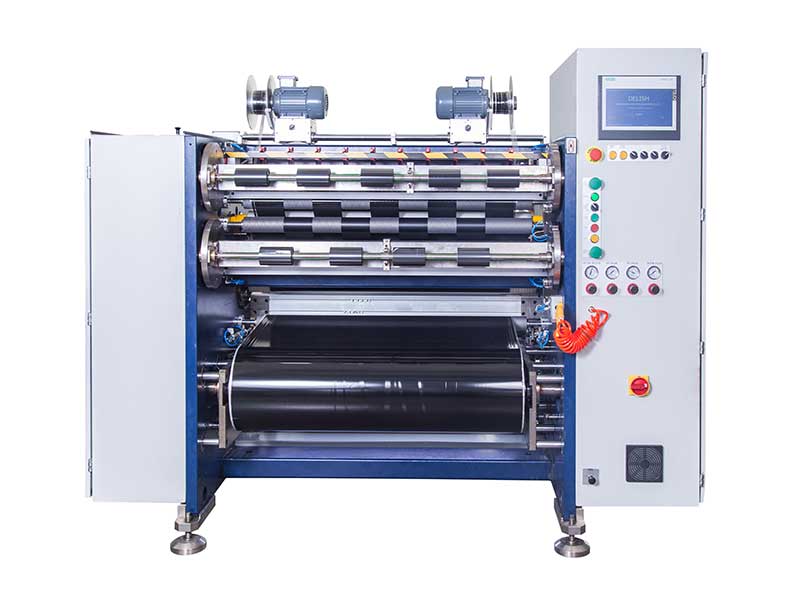 TTR Slitting Machine
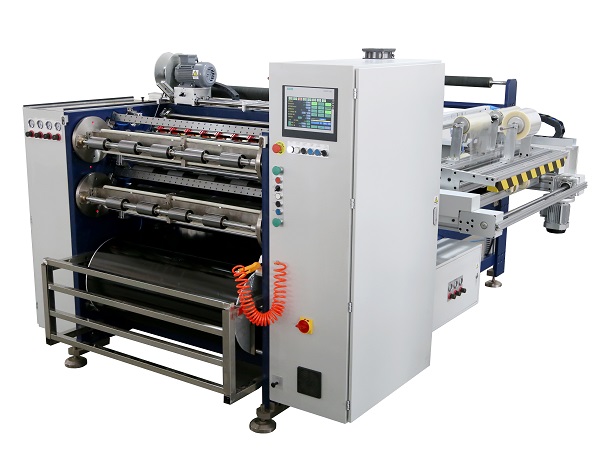 Automatic Thermal Transfer Ribbon Slitting Machine RSDS8 PLUS
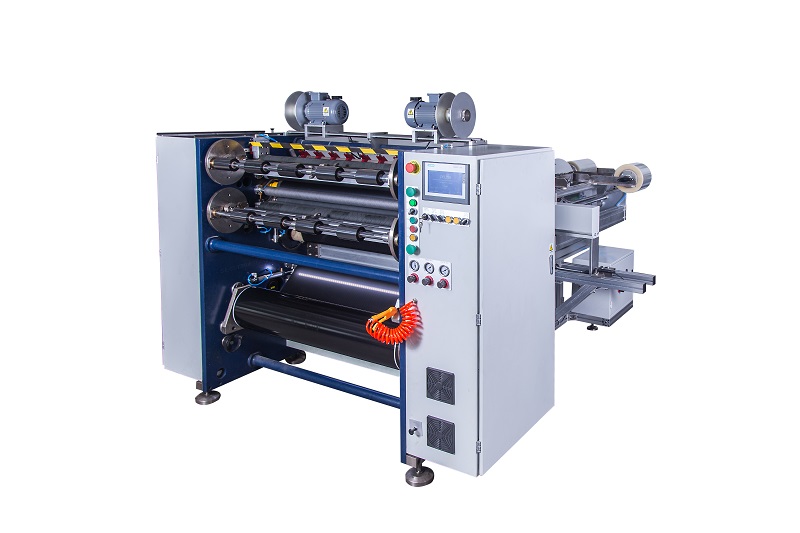 Semi Automatic Thermal Transfer Ribbon Slitting Machine RSDS1 PLUS
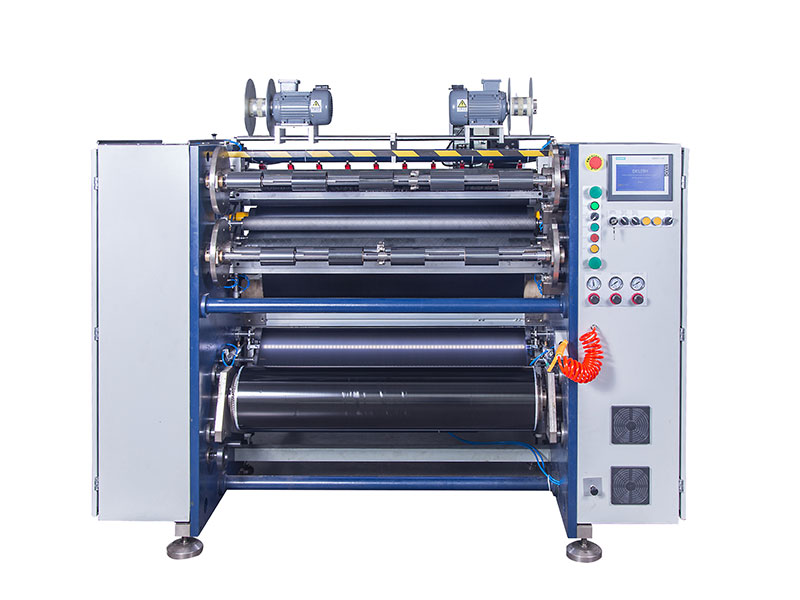 Ribbon Slitting Machine


 +86 135 9951 7291
 support@delishmachine.com