In the ribbon production process, the slitting machine blade is a key component that directly affects the quality and production efficiency of slitting. Whether the blade is sharp directly determines whether the ribbon edge is smooth, whether it produces burrs, and the amount of dust during slitting. So, how often should the ribbon slitting machine blade be replaced? This article will sort out the relationship between maintenance cycle and cost for you, and help you scientifically formulate a tool replacement plan.
1. Key factors affecting the blade replacement cycle
The blade service life is not a fixed value, mainly affected by the following factors:
• Ribbon type: resin-based ribbons, hybrid-based ribbons, and wax-based ribbons wear different degrees on the blade. Wax-based ribbons are relatively soft, while resin-based ribbons have high hardness and wear faster.
• Slitting material thickness: The larger the thickness and the harder the material, the faster the blade wears.
• Slitting speed: High-speed slitting accelerates blade passivation.
• Blade material: The wear resistance of ordinary steel knives, high-speed steel (HSS), carbide, and ceramic blades varies significantly.
• Maintenance: Regular cleaning, lubrication, and fine-tuning can effectively extend life.
2. Recommended replacement cycle under different working conditions (reference value)
| Condition type | Blade material | Recommended maintenance intervals (inspection/grinding) | Replacement cycles are recommended | Typical monthly output reference |
| Wax-based ribbon, low-speed slitting | Ordinary steel knife | Check every 2 weeks | 3-4 months | < 50,000 square meters |
| Wax-based ribbon, high-speed slitting | High-Speed Steel (HSS) | Weekly check-ins | 2-3 months | 5-100,000 square meters |
| Mixed base ribbons | High-Speed Steel (HSS) | Weekly check-ins | 1-2 months | 5-80,000 square meters |
| Resin-based ribbons | Carbide | Check every 3-5 days | 3-6 weeks | 3-60,000 square meters |
| High load/continuous production | Carbide/Ceramic | Checked every 2 days | 2-4 weeks | > 100,000 square meters |
| Frequent switching of multiple varieties | High-Speed Steel (HSS) | Weekly check-ins | 1.5-2.5 months | Depends on the switching frequency |
The above cycles are industry experience values, and the actual judgment should be based on the state of the blade.
3. How to tell if the blade needs to be replaced?
One of the following signals appears to indicate that the blade has reached the replacement node:
1. Burrs and draws appear in the incision: the edges of the ribbon are uneven, and there are fine fibers.
2. Significantly increased slitting resistance: The equipment current rises or abnormal noise is emitted during slitting.
3. Whaling or powdering of the end: Passivation of the blade results in extrusion rather than cutting.
4. Uneven winding end face: The deformation of the knife edge leads to uneven width after slitting.
5. Frequent belt breakage or cutter cuts: typical manifestations of severe passivation.
It is recommended to be equipped with a 10-20x magnifying glass to regularly check for microscopic defects on the blade.
4. Comparison table of maintenance cycle and cost (taking a common 20-knife station as an example)
| Maintenance mode | Check frequency | Grinding/regrinding frequency | Number of blade changes per year | Annual Blade Cost (RMB)* | Labor + downtime cost (yuan) | Comprehensive annual cost (yuan) | Scrap rate impact |
| Excessive savings | No checking | No grinding | 1 time/year | 600 | Very few | 600 | ⬆️ 3-5% increase |
| Passive replacement (obvious problem has occurred) | No fixation | None | 2-3 times/year | 1800 | 2000 | 3800 | ⬆️ 1-2% increase |
| Reasonable Plan (Recommended) | weekly | Every 2-4 weeks | 4-6 times/year | 3600 | 4000 | 7600 | Normal |
| Proactive maintenance (high demand) | daily | weekly | 8-12 times/year | 7200 | 8000 | 15200 | ⬇️ 0.5% reduction |
According to the estimate of 20 blades in a single set and 30 yuan per piece, different brands and materials vary greatly.
5. Cost comparison analysis
From the comparison table, it can be seen:
• Infrequent tool changes may seem to save money, but in fact, the comprehensive loss is greater due to the increase in scrap rate, increased equipment loss, and higher rework costs.
• Rational Planning Model: Strikes a balance between blade cost and quality assurance for most businesses.
• High-demand active maintenance: suitable for high-end ribbons (such as ribbons for automobiles and pharmaceutical labels), which are used when customers have extreme requirements for end-face quality.
Typical enterprise tool change optimization cases:
A medium-sized ribbon slitting plant originally changed the knife every 3 months, with a scrap rate of about 2.8%. After changing the tool every 3 weeks + weekly rapid inspection, the scrap rate dropped to 1.2%, saving about 45,000 yuan in scrap loss per year, and the blade cost only increased by 9,000 yuan, with a net income of 36,000 yuan.
6. Practical suggestions for extending blade life
1. Set the slitting parameters reasonably: the knife pressure should be just cut off, and the excessive wear will accelerate the wear.
2. Maintain Shaft Parallelism: Regularly calibrate the upper and lower knife bite amounts (0.05-0.1mm is usually recommended).
3. Use lubricating strips or micro-injections: reduce frictional heat.
4. Distinguish between blade uses: Carbide inserts are specifically designed for hard substrates and should not be mixed.
5. Establish a tool change ledger: record the use time, output, and material of each knife to form the company's own tool change standards.
7. Summary
There is no "one-size-fits-all" replacement cycle for ribbon slitter blades, but a plan can be made based on the following principles:
• Frequency reference: Based on actual output and trim quality, it is recommended to inspect weekly and grind or replace every 2-4 weeks.
• Resin-based ribbbon: The tool change interval can be shortened to 3-6 weeks; wax-based ribbon: can be extended to 2-3 months.
• Economic balance point: Choose the cycle with the lowest comprehensive cost between blade cost and scrap loss, usually the scrap rate is controlled within 1.5%.
• Record-driven: It is recommended to establish a 3-month trial trail and speak with your own data.
One final reminder: a sharp blade is the first line of defense for ribbon quality. Instead of waiting until the cutting edge is rough before processing, it is better to establish an active replacement mechanism - save money, worry, and waste.
 English
 Deutsch
 Français
 Español
 Português
 日本語
日本語 русский
 한국어
한국어 عربي
عربي ภาษาไทย
 Tiếng Việt
 Italiano
 Thermal Transfer Ribbons Packaging Machine
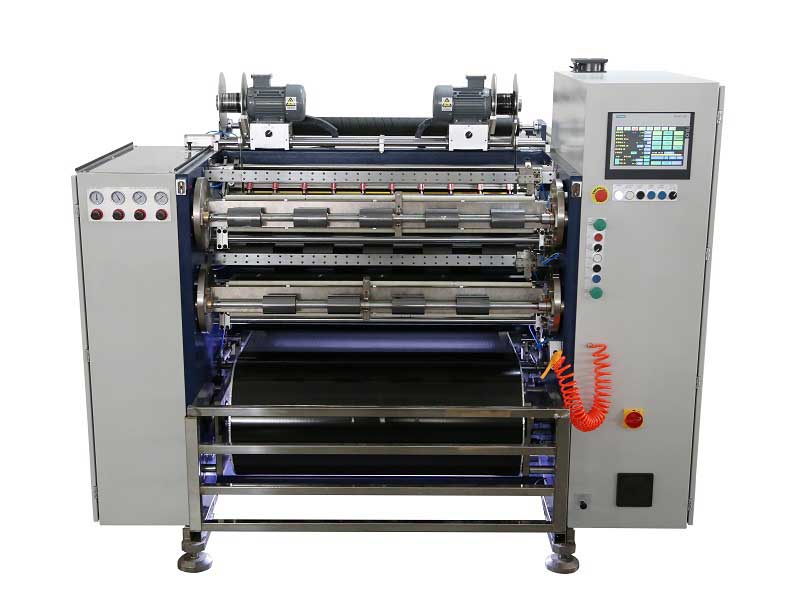 Automatic Thermal Transfer Ribbon Slitting Machine RSDS8 H PLUS
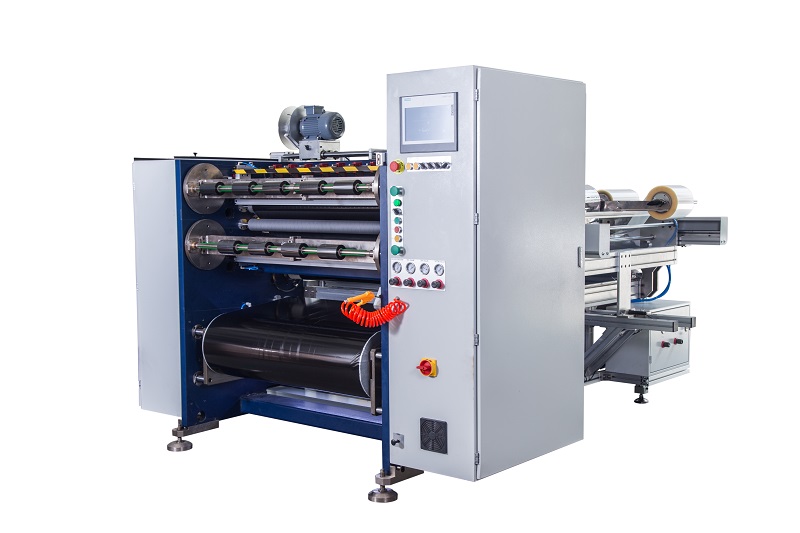 Semi Automatic Thermal Transfer Ribbon Slitting Machine RSDS5 PLUS
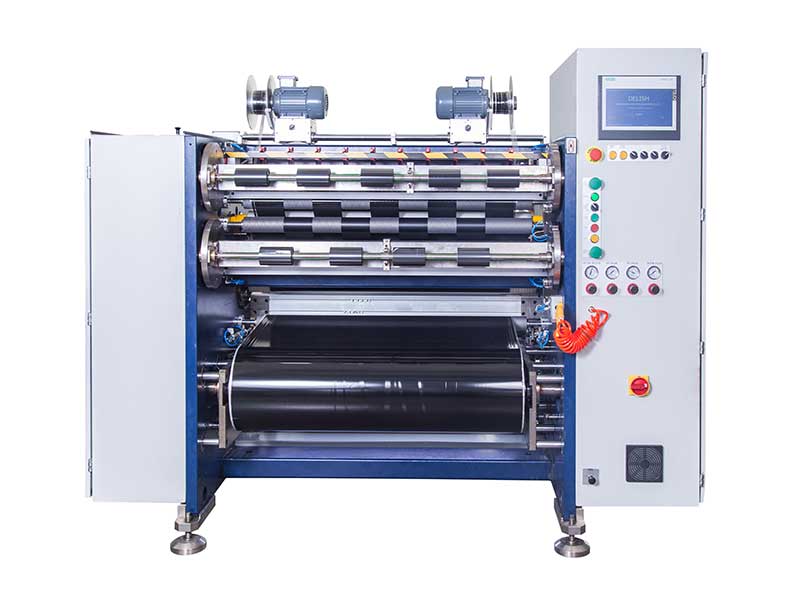 TTR Slitting Machine
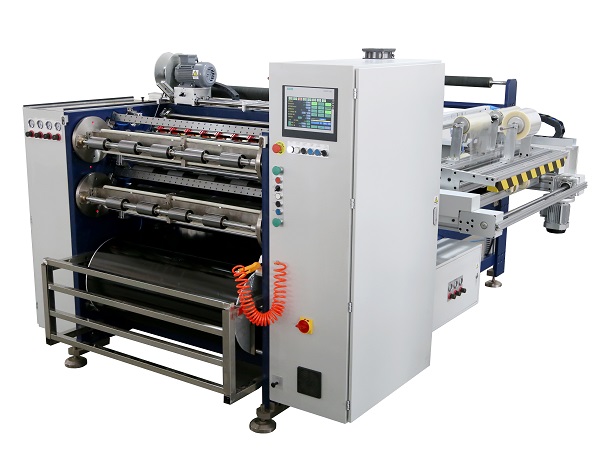 Automatic Thermal Transfer Ribbon Slitting Machine RSDS8 PLUS
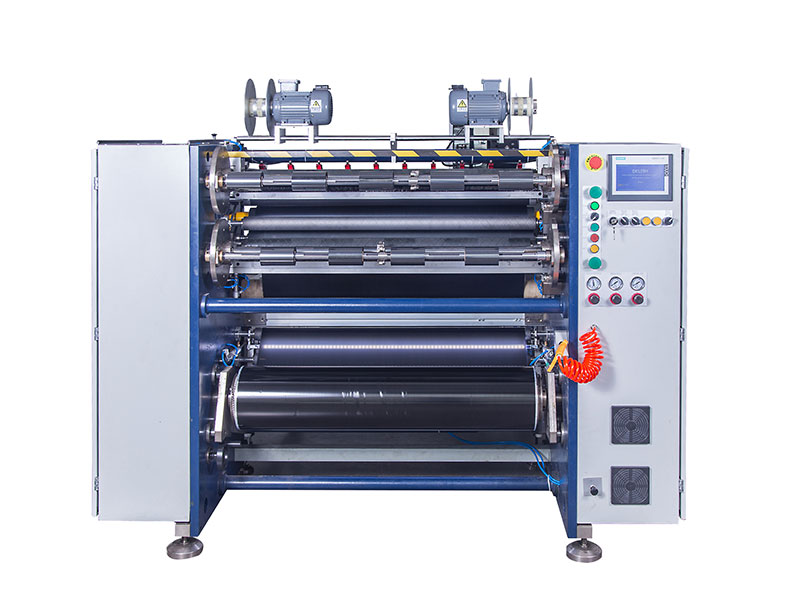 Barcode Ribbon Slitting Machine
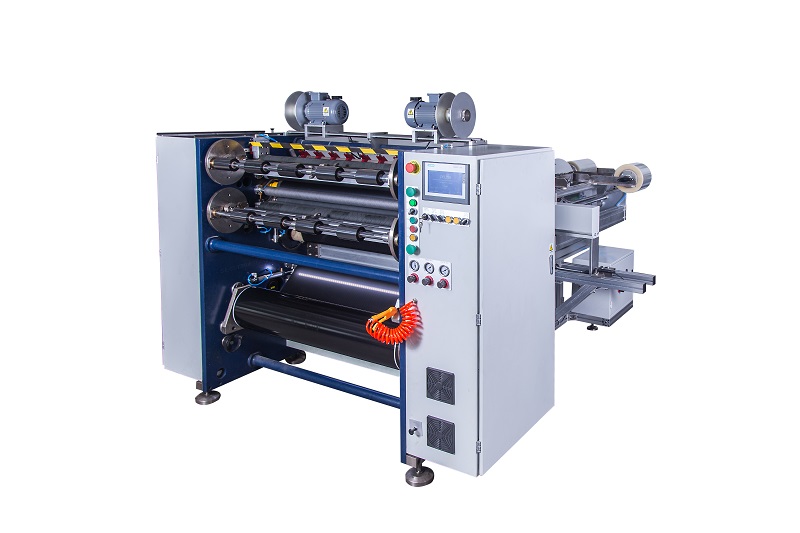 Semi Automatic Thermal Transfer Ribbon Slitting Machine RSDS1 PLUS
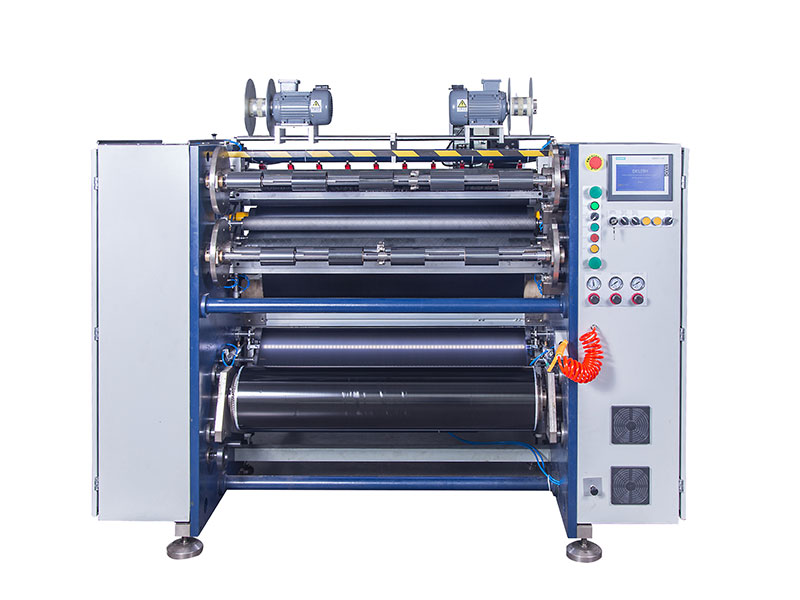 Ribbon Slitting Machine


 +86 135 9951 7291
 support@delishmachine.com