Introduction
In the production process of thermal transfer ribbon (TTR), slitting is a key link that determines the quality and production efficiency of the finished product. With the expansion of ribbon applications to high-speed, high-precision, high heat resistance and special materials (such as resin-based, colored ribbons, and special ribbons for side pressure), extremely high requirements are put forward for the core components of slitting equipment - circular blades (or slitting knives).
The choice of blade material directly determines the burr rate of the slitting end face, the powder loss, and the replacement frequency of the blade itself. This article will conduct a horizontal comparison of the current mainstream ribbon slitting machine blade materials and deeply analyze the key factors affecting their service life.
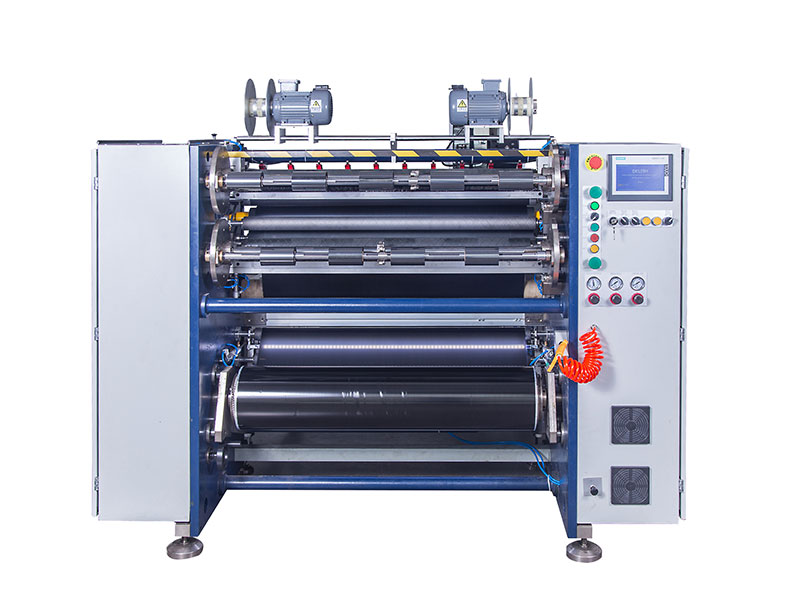
1. Special requirements for blades for ribbon slitting
Ribbon is a multi-layer structural composite material, usually composed of a base film (PET), a back coating (heat-resistant layer), and an ink layer (wax-based/hybrid/resin-based). When slitting, the blade must not only have a high sharpness to cut through tough PET films, but also have good wear resistance to cope with the abrasion of hard pigments in the ink layer.
The ideal ribbon slitting blade meets the following three requirements:
1. Edge Sharpness: Ensure smooth cuts to avoid stretch burrs or wavy edges.
2. Wear resistance: Maintains long-term cutting stability and reduces tool change downtime due to blade wear.
3. Corrosion Resistance: Silicone oil or special chemicals coated with ribbon backs can chemically corrode the blades under high-speed friction.
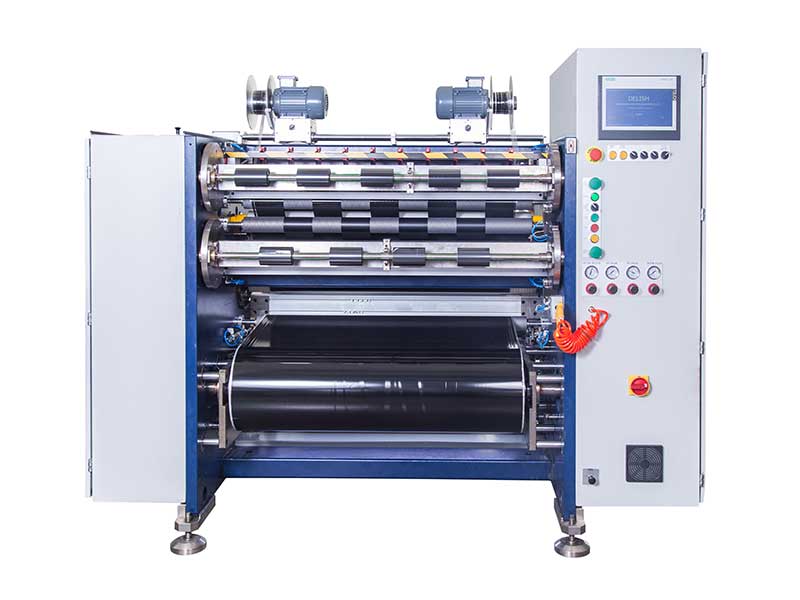
2. Comparison of mainstream blade materials
At present, the commonly used blade materials for ribbon slitting machines on the market mainly include ordinary tool steel, high-speed steel (HSS), cemented carbide (tungsten steel) and ceramic coated tools. Here's a detailed performance comparison:
1. Ordinary tool steel
• Representative materials: T8, T10, Cr12MoV (chrome molybdenum vanadium steel).
• Hardness: HRC 58-62.
• Advantages: good toughness, not easy to collapse; Low material cost and easy edge sharpening.
• Disadvantages: poor wear resistance, when slitting mixed or resin-based ribbons containing hard pigments, the cutting edge wear is extremely fast, and it is easy to appear obvious passivation after slitting 100-2 million meters, resulting in end face burrs.
• Applicable scenarios: Only suitable for low-end wax-based ribbons or very low-speed slitting, which has been gradually eliminated by the market.
2. High-speed steel
• Representative materials: SKH-9, M2, powdered high-speed steel.
• Hardness: HRC 62-67.
• Advantages: Good toughness and high red hardness (the ability to maintain hardness at high temperatures). Compared with tool steel, the wear resistance is increased by about 2-3 times. The quality of the slitting end face is stable, and it is not easy to produce microscopic notches.
• Disadvantages: When cutting resin-based ribbons with a high proportion of fillers, the life is still insufficient; For ultra-thin base films (e.g., below 4.5 μm), the sharpness retention of HSS knives is not as good as that of cemented carbide.
• Applicable scenarios: Currently, it is the mainstream choice of domestic ribbon slitting plants, suitable for wax-based, mixed-based and some conventional resin-based ribbons.
3. Carbide
• Representative materials: tungsten and cobalt (YG6, YG8, YG10X).
• Hardness: HRA 89-92 (equivalent to HRC 74-78 or above).
• Advantages: extremely high hardness and wear resistance. When slitting high-wear resin ribbons or special ribbons containing ceramic powder, the service life is 5-10 times that of high-speed steel. The blade maintains an extremely long sharp cycle, significantly reducing material loss due to tool changes.
• Disadvantages: The material is brittle, and the axial runout accuracy of the equipment is extremely high. If the spindle runout of the equipment exceeds 0.01mm, the carbide insert is very easy to chip, and it is expensive and difficult to sharpen (special diamond grinding wheel is required).
• Applicable scenarios: high-end resin-based ribbon, high-precision slitting, ultra-narrow strip slitting (less than 5mm).
4. Coated cutter
• Representative materials: TiN (titanium nitride), TiAlN (aluminum titanium nitride), or DLC (diamond-like) coatings deposited on high-speed steel or carbide substrates.
• Hardness: Substrate hardness + coating surface hardness can reach HV 2000-4000.
• Advantages: reduce the coefficient of friction and prevent the adhesion of the ribbon back coating; Greatly improves surface wear resistance, especially suitable for slitting ribbons with a strong adhesive back coating.
• Disadvantages: The thickness of the coating is usually only a few microns, and if the matrix is plastically deformed or encounters the impact of hard particles, the coating will peel off first, and the life will plummet.
• Applicable scenarios: special coated ribbons, easy-to-stick edge compression ribbons.
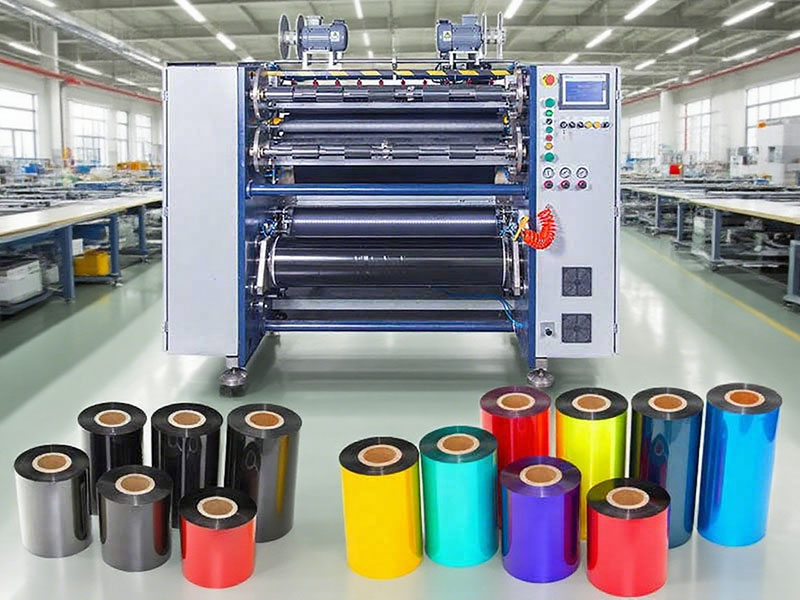
3. Analysis of influencing factors of blade service life
In addition to the material itself, the following factors also play a decisive role in the actual service life of the blade:
1. Slitting material properties
• Ribbon type: wax-based ribbon has minimal wear on the tool; Mixed base is secondary; Resin-based ribbons have the greatest wear coefficient because they contain high-hardness resins and pigments (e.g., carbon black, silica).
• Base film thickness: The thinner the base film (e.g., 4.5μm), the higher the requirements for the sharpness of the blade, but the total wear is relatively small; the thicker the base film (e.g., more than 6μm), the greater the cutting resistance, the greater the bending stress on the blade edge, and the faster the wear.
2. Mechanical accuracy of equipment
• Concentricity and clearance of the tool axis: If the overlap between the upper and lower tools (or the round knife and the bottom cutter) of the slitting machine is too large, it will lead to an increase in the lateral force of the blade and accelerate the wear of the abrasive; If the clearance is not properly adjusted, it will lead to "continuous cutting" or "secondary shearing", resulting in rapid passivation of the blade edge.
• Spindle runout: High-precision equipment usually requires a spindle runout ≤ 0.005mm. When the runout is too large, the carbide blade is very easy to chip due to impact contact.
3. Operation and maintenance
• Sharpening quality: Blades need to be sharpened after a period of use. If the blade is annealed (hardness decreases) due to insufficient cooling during sharpening, or if there are microscopic burrs at the edge edge, the life after the second machine will be greatly shortened.
• Cleanliness: If the dust (ink dust) generated during ribbon slitting is not removed in time, it will accumulate between the tip and the material, forming a three-body abrasive wear and aggravating blade wear.
4. Comprehensive comparison of economy
| Material type | Cost per purchase | Single grinding interval (meters) | Sharpening is difficult | Comprehensive life cost | Recommendation index |
| Common tool steel | low | about 500,000 meters | Easy | High (frequent tool changes) | ★ |
| High-speed steel | Medium | About 150-3 million meters | Medium | Moderate | ★★★★ |
| Carbide | High | About 500-10 million meters | Difficult | Low (long-term advantage) | ★★★★★ |
| Coated cutters | High | It varies greatly depending on the quality of the coating | Difficult | Medium | ★★★ |
Note: The above data are based on the empirical value of common 6μm PET base film and mixed base ribbon slitting environment, and the actual situation depends on the working conditions.
5. Conclusions and suggestions
1. On-demand material selection: For most small and medium-sized slitting plants that mainly use wax-based and mixed-based ribbons, high-speed steel inserts are the most cost-effective choice, which can strike a good balance between cost and efficiency.
2. High-end Adaptation: For manufacturers focusing on high-precision resin-based ribbons, special industrial ribbons (such as washing labels, heat-resistant labels) and high equipment accuracy, carbide inserts are the key to improving yield and reducing downtime. Although the initial investment is large, its comprehensive benefits are more significant in terms of long-term operating costs.
3. Management focus: Regardless of the material chosen, it is crucial to establish blade lifecycle management. These include: setting standard tool change meter thresholds, standardizing edge grinding process parameters, and regularly checking the spindle accuracy of the slitting machine.
In short, the selection of ribbon slitting blades is not simply "the harder the better", but needs to be combined with the characteristics of slitting materials, equipment accuracy level, and production capacity scale for comprehensive consideration. Through scientific selection and refined maintenance, the service life of the blade can be maximized, and the manufacturing cost of the slitting process can be effectively reduced while ensuring the quality of the ribbon end.
 English
 Deutsch
 Français
 Español
 Português
 日本語
日本語 русский
 한국어
한국어 عربي
عربي ภาษาไทย
 Tiếng Việt
 Italiano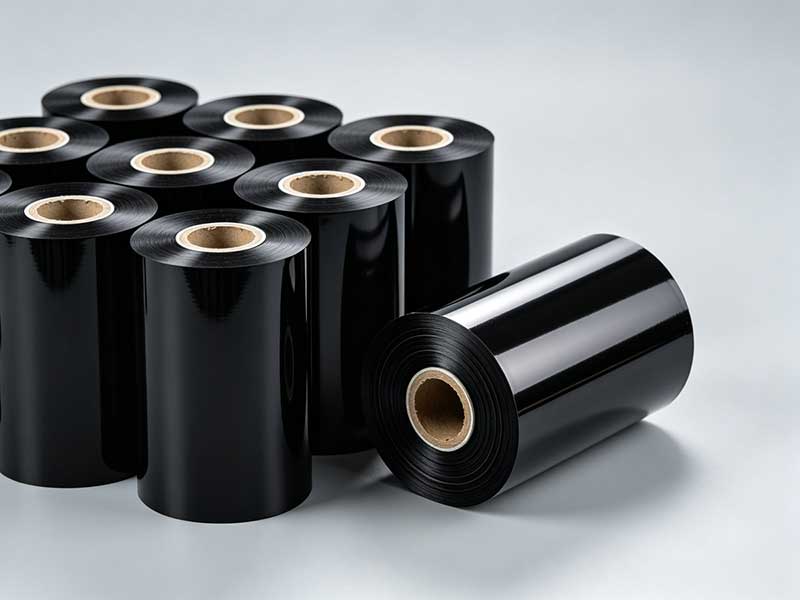
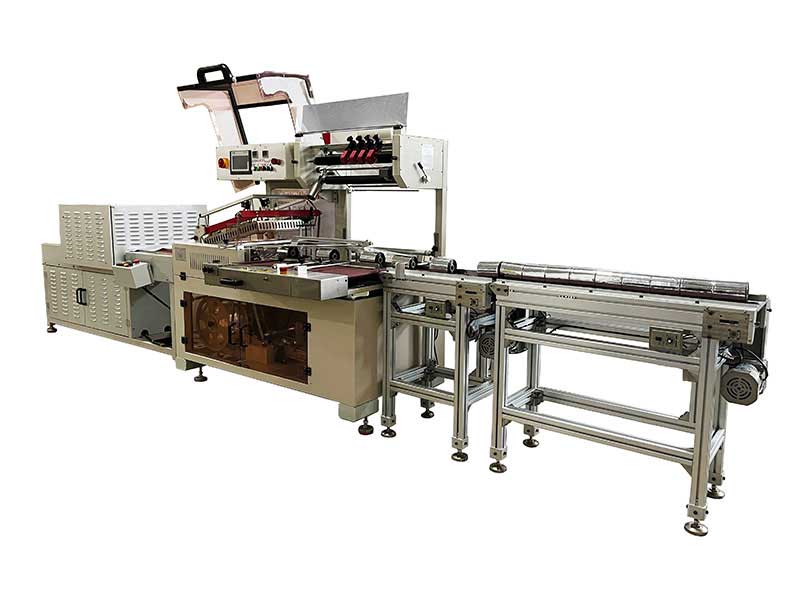 Thermal Transfer Ribbons Packaging Machine
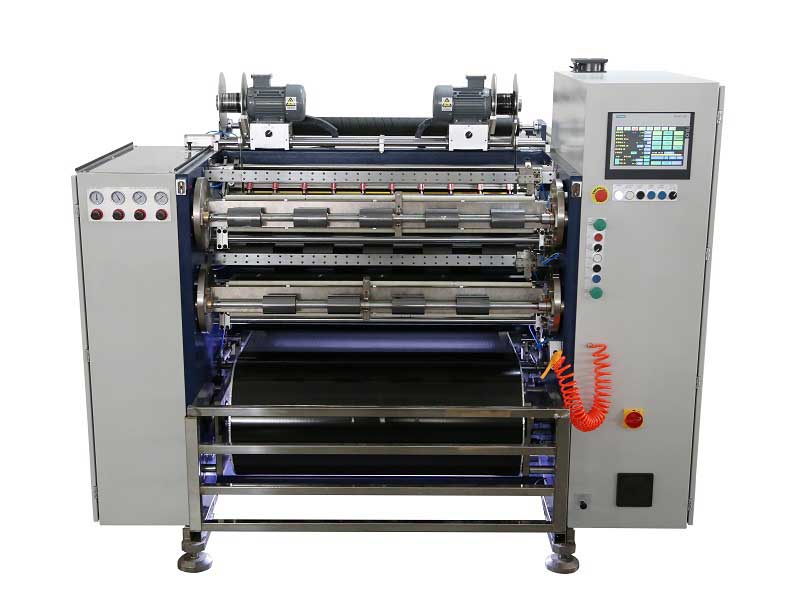 Automatic Thermal Transfer Ribbon Slitting Machine RSDS8 H PLUS
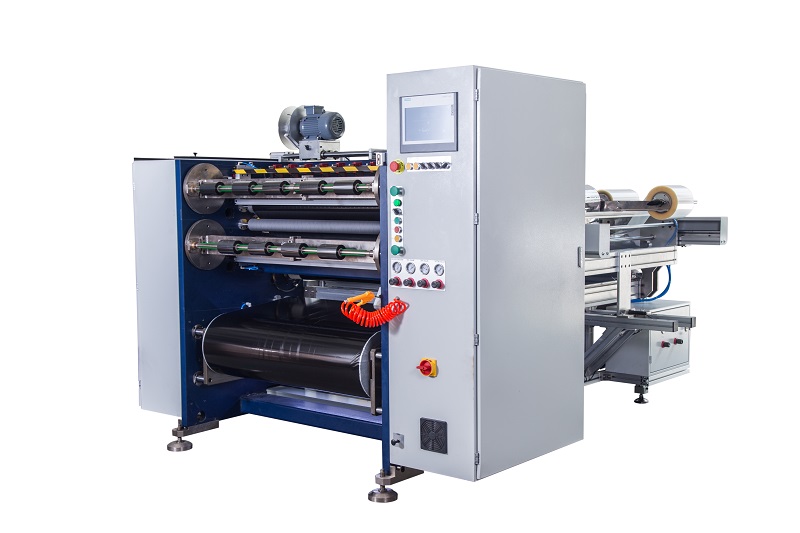 Semi Automatic Thermal Transfer Ribbon Slitting Machine RSDS5 PLUS
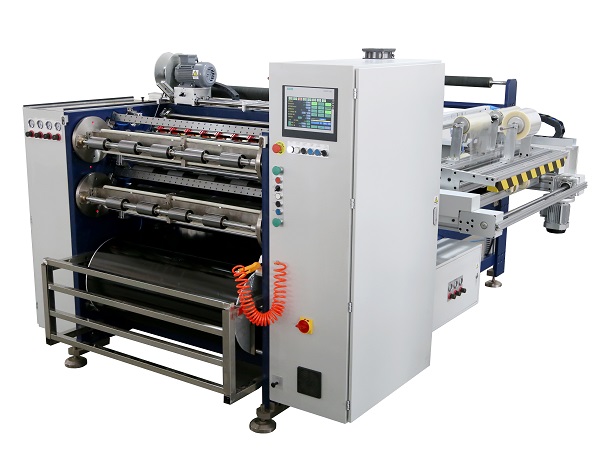 Automatic Thermal Transfer Ribbon Slitting Machine RSDS8 PLUS
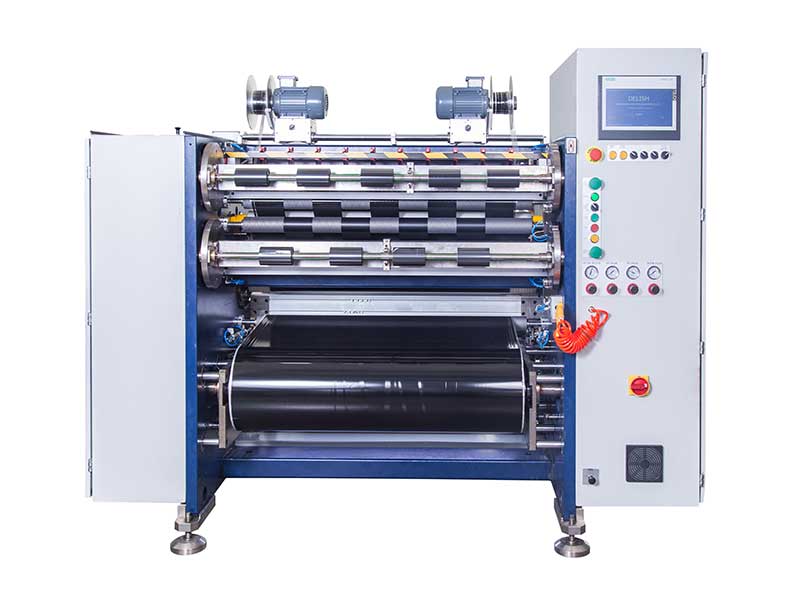 TTR Slitting Machine
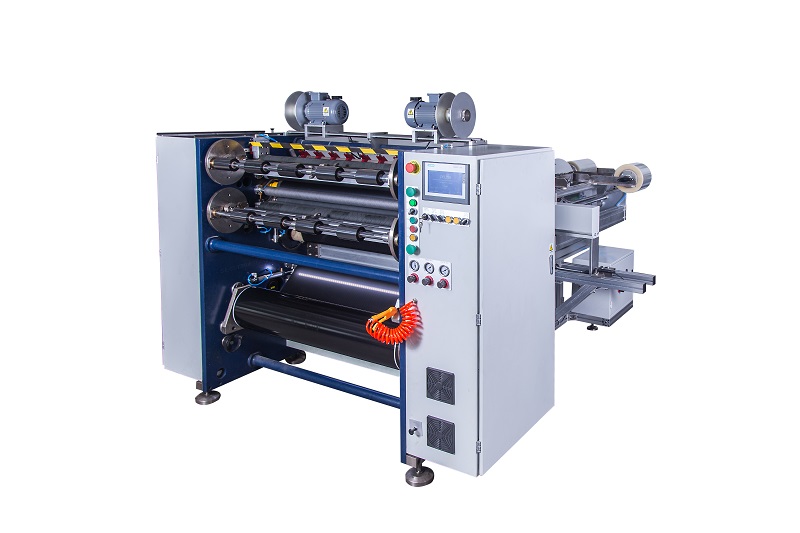 Semi Automatic Thermal Transfer Ribbon Slitting Machine RSDS1 PLUS
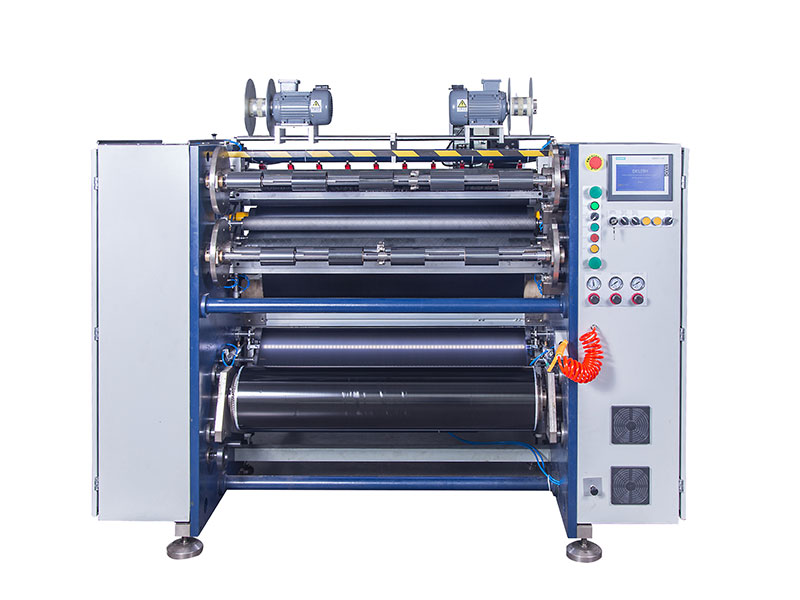 Ribbon Slitting Machine


 +86 135 9951 7291
 support@delishmachine.com