In the sophisticated arena of modern industry, the solar film (window film) slitting machine plays the role of a silent but crucial "tailor". It cuts wide raw film rolls into various sizes required by customers with millimeter-level accuracy. For solar film products that pursue ultimate thermal insulation, safety, and aesthetics, the quality of slitting directly determines its final performance and user experience. Thus, a core proposition emerges: where is the performance limit of the solar film slitting machine in the two seemingly contradictory dimensions of speed and accuracy?
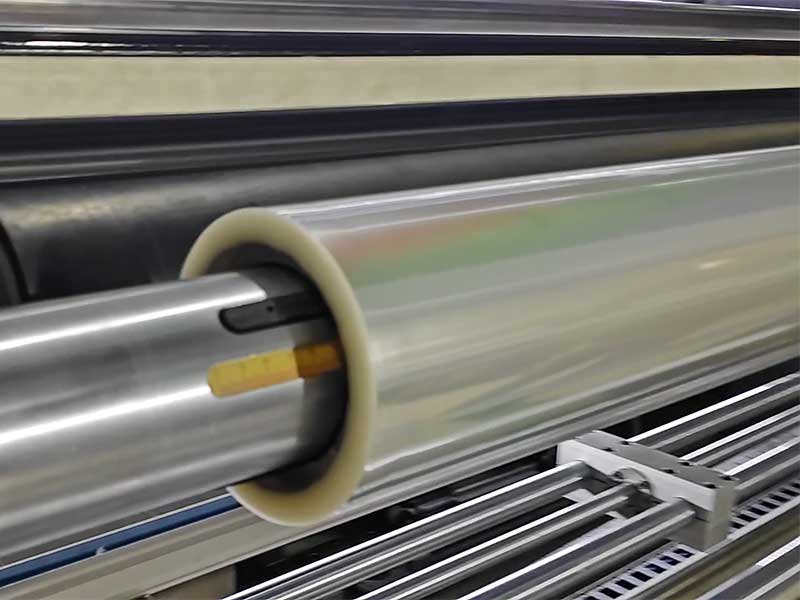
The Double Helix Challenge: A Game of Speed and Precision
In traditional manufacturing, speed and precision are often a zero-sum game. Increasing the slitting speed means shorter contact time between the blade and the film, and the tension fluctuates greater, which can easily lead to defects such as edge burrs, wire drawing, and even interlayer peeling. Blindly pursuing precision has to sacrifice efficiency, affecting production capacity and cost.
The solar film itself is a composite material, usually composed of multiple layers of PET base film with different functions, adhesive layer, metal sputtering layer, etc., which is soft and easy to scratch. This places almost demanding requirements on the slitting process:
• Burr-free edges: Any tiny imperfections can become stress concentration points, causing cracking or peeling from the edges during use.
• No drawing: sharp edges must be cut instantly to avoid pulling out the adhesive layer or membrane as a filamentous residue.
• No interlaminar damage: The impact force of the cut must be just right to not destroy the bonding structure between the film layers.
• Absolute cleanliness: Any fine dust generated during the cutting process becomes "sand" caught in the membrane roll, resulting in irreparable waste.
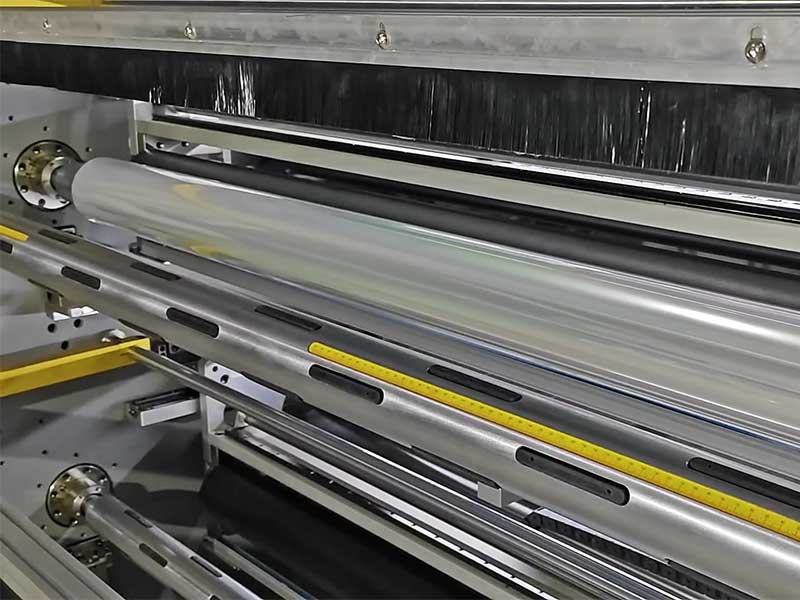
Pushing the limits: the core technology that drives the boundaries of performance
So, how does the modern top solar film slitting machine twist this pair of "double helixes" into a rope and constantly break through the performance limit? The answer lies in the convergence and innovation of a range of cutting-edge technologies.
1. "The Strongest Brain" - Intelligent Tension Control System
This is the soul of the slitting machine. From unwinding, traction to winding, the whole process adopts fully automatic closed-loop tension control. The highly responsive magnetic powder clutch, servo motor and precision tension sensor can sense and fine-tune the tensile force of each section of film in real time, ensuring that the film surface is always as flat as a mirror surface during high-speed start-stop and operation, and eliminating stretching, deformation and uneven cutting edges caused by uneven tension from the root.
2. "Precision surgery" - high rigidity structure and drive
The body of the slitting machine is like an operating table, and it must be extremely rigid and stable to absorb the vibrations generated during cutting. Linear guides, ball screws, and direct drives of servo motors provide precise displacement with virtually no backlash. This allows the tool holder to move and cut with micron-level repeatable positioning accuracy, ensuring straightness and consistency across every tangent, no matter how fast it is.
3. "Sharp scalpel" - advanced blade technology and cutting method
◦ Tool selection: For different film structures, choose supercarbide, ceramic, or even diamond-coated inserts to ensure long-lasting sharpness and reduce the frequency of replacements.
◦ Circular knife cutting: This is the current mainstream method. By precisely adjusting the amount of cut and overlap between the circular knife and the bottom anvil roller, perfect "cutting" rather than "crushing" is achieved. The sharpness, angle and contact point of the blade surface are precisely calculated by fluid dynamics and materials.
◦ Laser Slitting: As an emerging technology, laser slitting offers a non-contact solution. It completely avoids mechanical stress and has a smooth and dust-free cut, making it particularly suitable for top-of-the-line, highly damaging optical films. While cost and speed remain challenges at present, it represents the direction of future precision limits.
4. "Fire Eyes" - online visual inspection system
A high-resolution CCD camera is integrated at the end of the slitting line to capture and analyze the cut edge in real time. The system can instantly identify defects such as burrs, stains, and scratches, and automatically mark or sort them. This not only achieves 100% quality control but also feeds back data to the control system, forming a closed loop of self-optimization.
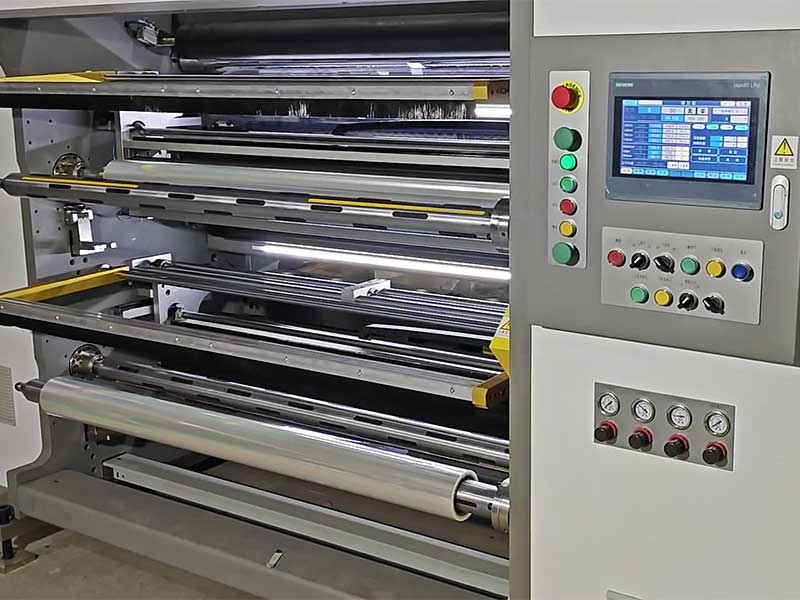
Where is the limit? A never-ending climb
So, where is the performance limit of the solar film slitting machine? The answer may be: the limit is a dynamic and constantly redefined goal.
• From a physical perspective, the limits are limited by materials science (can more wear-resistant blades be made?) ), vibration theory (can high-frequency vibration be completely eliminated?) ) and thermodynamics (can the heat-affected zone of laser cutting be reduced to zero?) )。
• From the control level, the limit is the evolution of algorithms. With the deep integration of artificial intelligence and machine learning, the slitting machine will no longer be a machine that passively executes commands, but an "agent" capable of predicting tension changes, autonomously optimizing cutting parameters, and even self-diagnosing and maintaining. It can learn from massive amounts of data to find the optimal speed-precision balance point that human engineers cannot detect.
conclusion
The performance limit of the solar film slitting machine is not a static end, but a peak that needs to be continuously climbed. It is reflected in the fact that when a meter-wide membrane coil is cut into hundreds of narrow strips, the edges of each one are as smooth as before; Reflected in the speed of hundreds of meters per minute, the retracted film coil is still neat like a block stone; This is reflected in the fact that in the face of increasingly complex nanocomposite films, it can still deliver perfect cutting answers.
In this ultimate race for speed and precision, victory goes to the innovators who deeply integrate mechanical engineering, automation technology, and artificial intelligence. When the "tailor's hand" of a slitting machine is lightning fast and rock-solid, it not only defines the height of manufacturing, but also lays a solid foundation for the clear, safe and comfortable world we see through every clear window.
 English
 Deutsch
 Français
 Español
 Português
 日本語
日本語 русский
 한국어
한국어 عربي
عربي ภาษาไทย
 Tiếng Việt
 Italiano
 Thermal Transfer Ribbons Packaging Machine
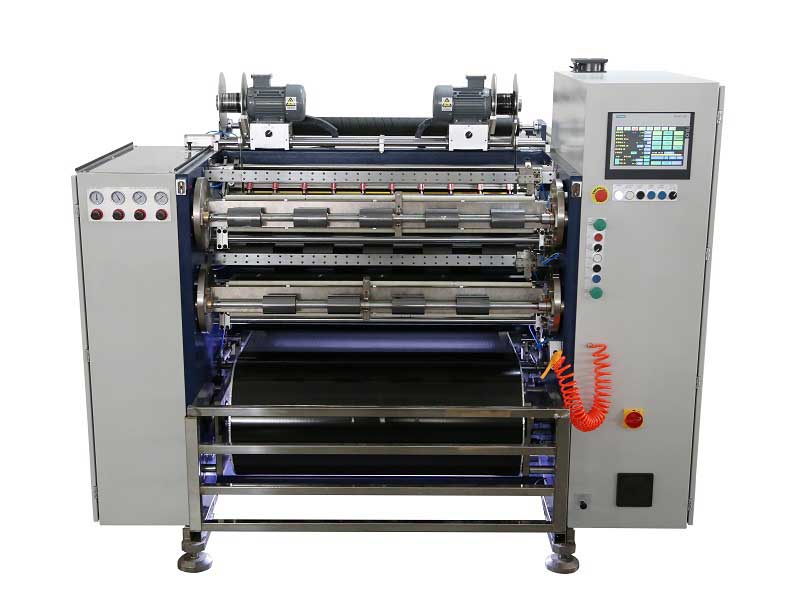 Automatic Thermal Transfer Ribbon Slitting Machine RSDS8 H PLUS
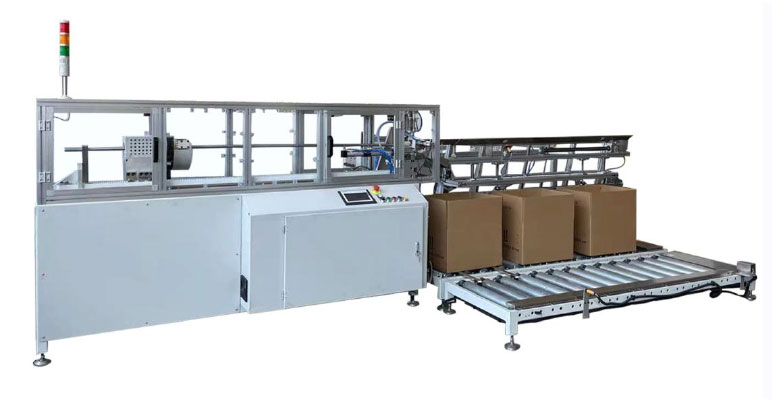 Automatic Paper Core Cutting Machine
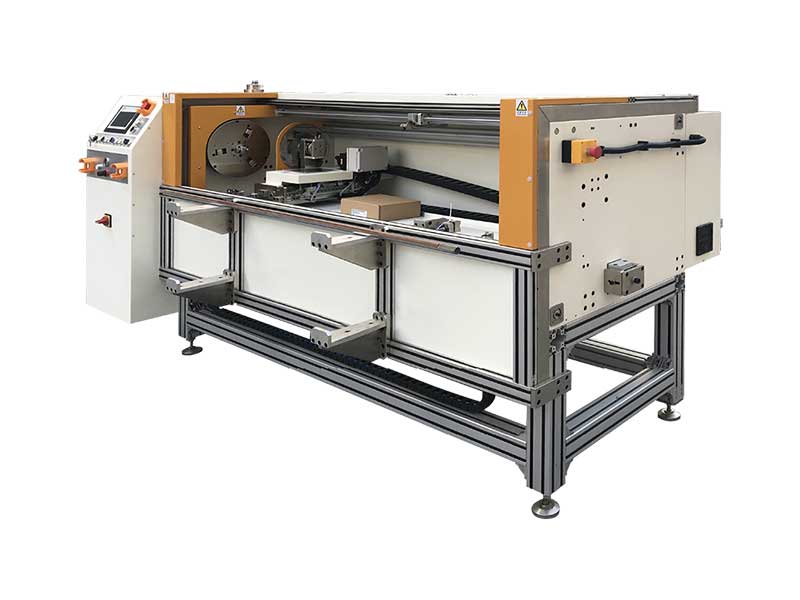 Automatic Foil Roll Cutting Machine
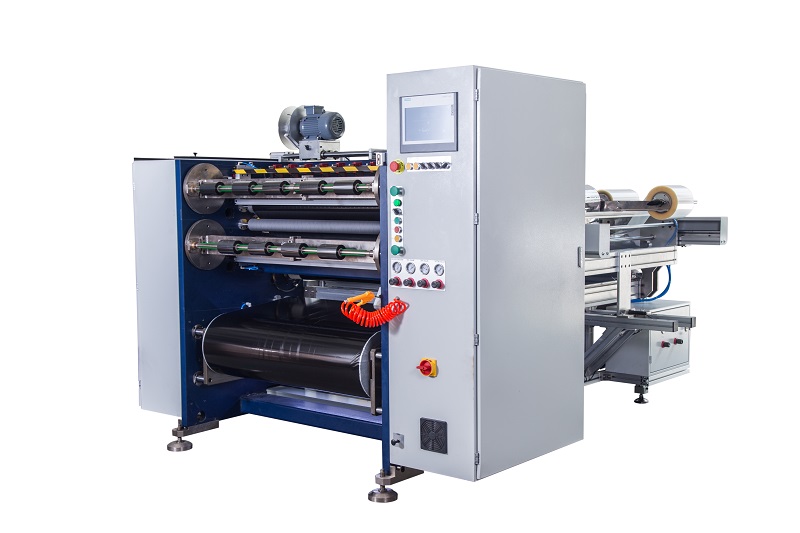 Semi Automatic Thermal Transfer Ribbon Slitting Machine RSDS5 PLUS
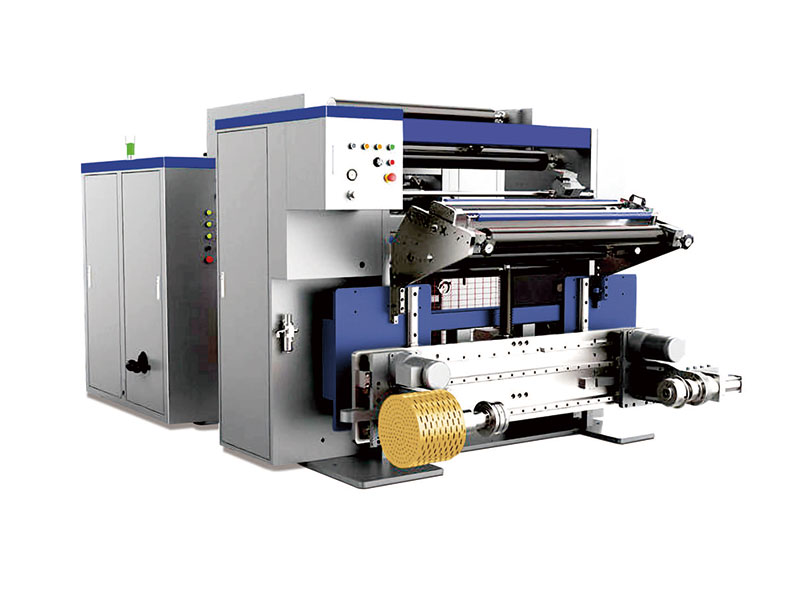 High Speed Slitting Machine
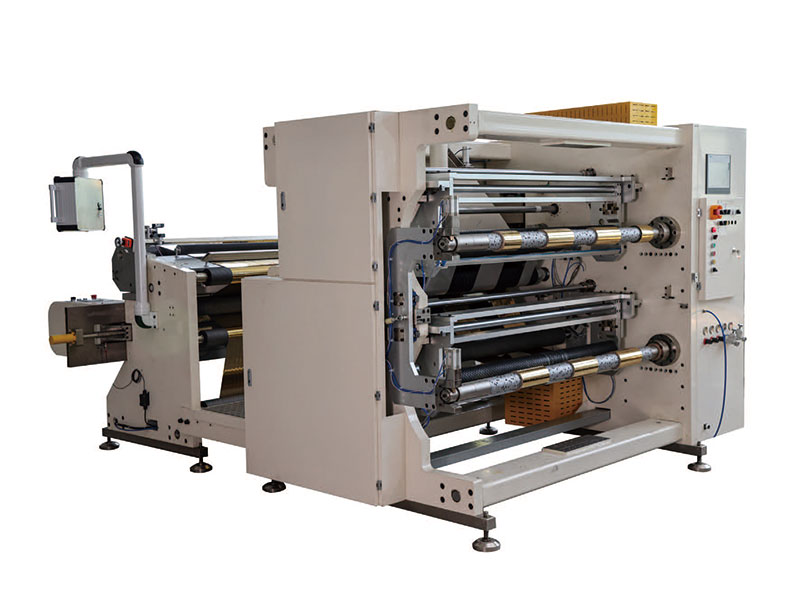 1400mm Hot Stamping Foil Slitting Machine
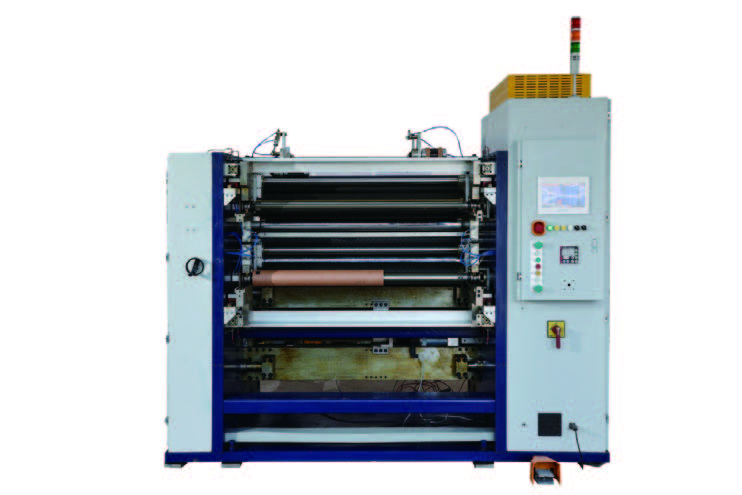 New Energy Ultra-thin Film Slitting Machine For Capacitive Film


 +86 135 9951 7291
 support@delishmachine.com