In the automobile manufacturing and modification industry, precision automotive film materials (such as window film, paint protection film, decorative film, etc.) are increasingly widely used. These film materials need to be precisely cut into different widths during the production process to meet the needs of various models and components. Any slight deviation in the slitting process can lead to material waste, reduced production efficiency, and even product quality issues. It is in this critical link that intelligent deviation correction technology is becoming the core technology of modern automotive film slitting machines, like an "invisible guardian", silently ensuring the perfect cutting of every inch of film material.
Limitations of traditional slitting techniques
Traditional mechanical guidance correction systems mainly rely on photoelectric sensors to detect the edge position of the material and drive the correction rollers through simple feedback control. Such systems have inherent flaws such as slow response speed, limited accuracy, and poor adaptability. When dealing with ultra-thin, stretchable, or highly reflective automotive film materials, traditional systems often struggle to cope with the challenges posed by material tension variations, mechanical vibrations, and environmental disturbances.
To make matters worse, modern automotive film materials often contain multi-layer composite structures (such as UV protection layer, adhesive layer, protective layer, etc.), and there may be different physical properties between each layer, further increasing the difficulty of maintaining stability during the slitting process.
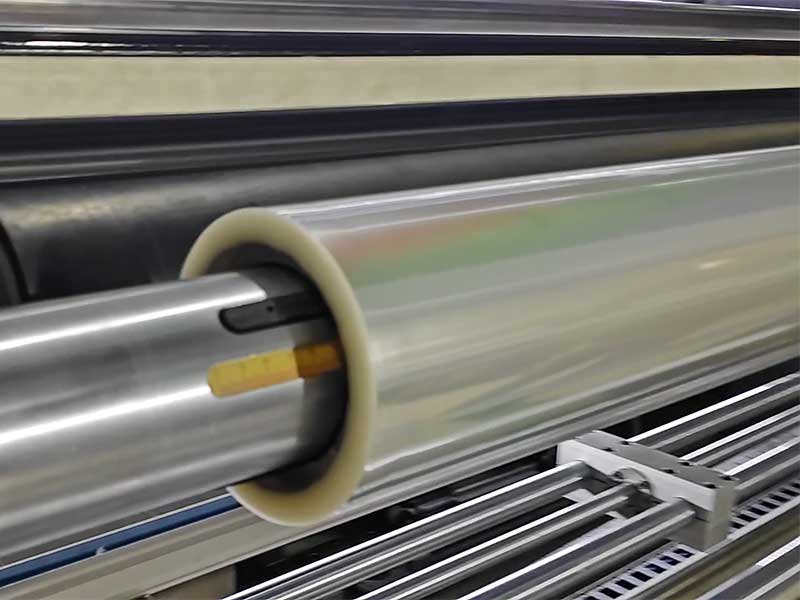
A revolutionary breakthrough in intelligent deviation correction technology
The intelligent guiding system achieves precise control of the slitting process by integrating advanced sensing technology, adaptive algorithms, and precision actuators. This technological breakthrough is mainly reflected in the following dimensions:
1. Multimodal sensing fusion
Modern intelligent guidance systems no longer rely on a single sensor. They integrate various detection methods such as high-resolution line array CCD cameras, infrared sensors, ultrasonic rangefinders, and tension sensors, which can monitor material position, tension state, and edge quality in real time from multiple dimensions. Through sensor fusion algorithms, the system can accurately distinguish between false signals caused by real position offsets and material surface features (e.g., printed patterns, slight wrinkles).
2. Adaptive control algorithm
The deep learning-based correction control system can continuously learn and adapt to the characteristics of different materials. The system's built-in neural network model can analyze historical slitting data, predict the behavior patterns of specific materials under specific environmental conditions, and adjust control parameters in advance. For example, when dealing with a paint protection film that stretches easily, the system automatically reduces the response speed to prevent overshoot; When dealing with more rigid window films, the response frequency is increased for more precise control.
3. Predictive maintenance and self-diagnosis
The intelligent guiding system not only controls the current slitting process, but also predicts the status of the equipment. By analyzing current fluctuations, mechanical vibration frequencies, and correction frequency changes in the guidance actuator, the system can identify potential mechanical wear or calibration issues in advance, avoiding production disruptions caused by sudden downtime.
4. Digital twin and virtual debugging
Advanced intelligent guidance correction systems have begun to be combined with digital twin technology. Before the physical equipment is operational, engineers can simulate the slitting process at different materials and speeds in a virtual environment to optimize the correction parameters. This technology greatly shortens the commissioning time of new equipment and reduces the cost of trial and error.
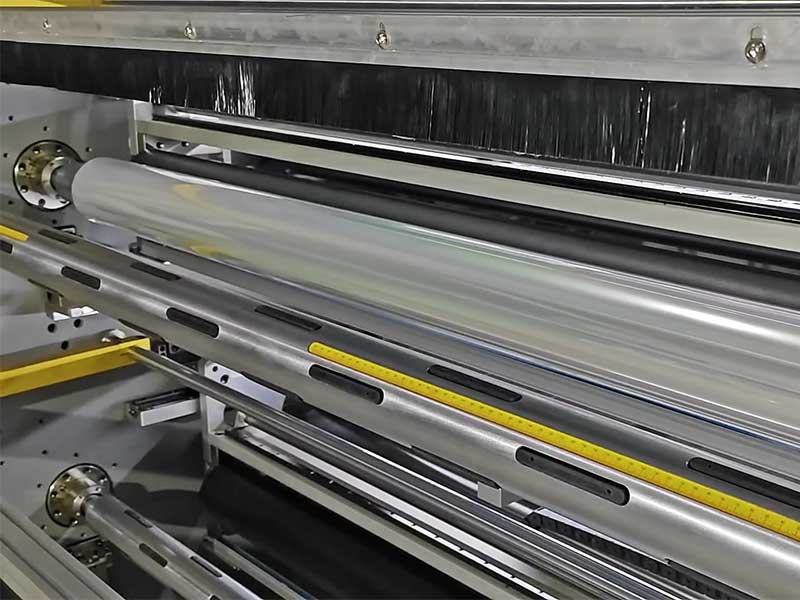
Practical application effect
The automotive film slitting machine with intelligent correction technology shows significant advantages in actual production:
• Improved slitting accuracy: The correction accuracy can reach ±0.1 mm, which is much higher than the ± 0.5 mm standard of traditional systems
• Improved material utilization: Reduces edge waste by more than 30%, significantly reducing production costs
• Optimized production efficiency: 70% reduction in automatic adjustment time after material change and 25% increase in overall equipment effectiveness (OEE)
• Enhanced Quality Consistency: Reduces batch-to-batch quality differences by 90%, ensuring standardization of automotive film products
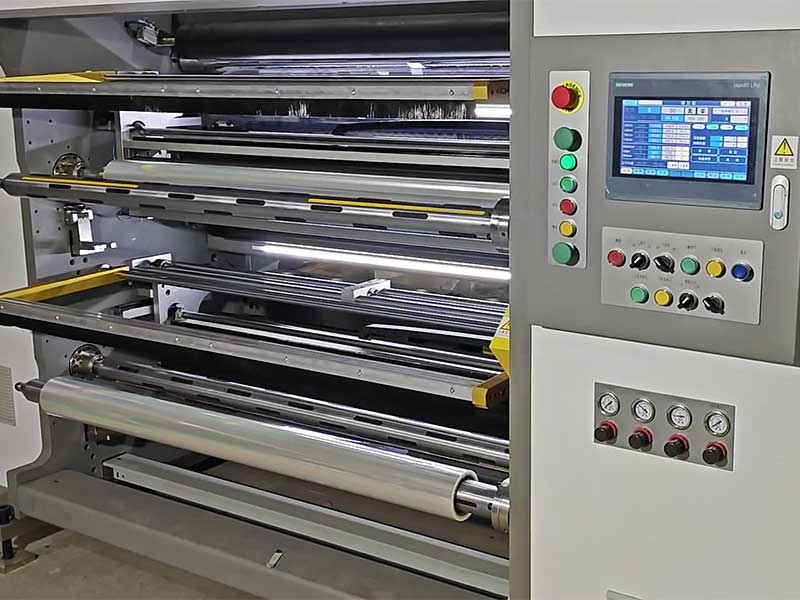
Industry future outlook
With the strengthening of the trend of automotive personalized customization and the growth of demand for special film materials in new energy vehicles, automotive film slitting technology is facing higher challenges. In the future, intelligent guidance correction technology will develop in the following directions:
Full-link intelligence: The slitting machine will be fully integrated with upstream coating, composite equipment and downstream packaging and warehousing systems to achieve intelligent control of the whole process from raw materials to finished products.
Cross-material adaptability: Next-generation systems will be able to seamlessly switch between different substrates, different thicknesses, and different surface properties without the need for manual readjustment of parameters.
Cloud-edge collaborative optimization: Real-time control of the slitting process through edge computing, while uploading key data to the cloud for cross-equipment and cross-factory collaborative analysis and optimization, forming a knowledge base for continuous improvement.
Green Manufacturing Integration: Intelligent deviation correction systems will focus more on energy efficiency optimization and scrap minimization, reducing energy consumption and material waste through precise control, supporting the sustainability goals of the automotive film industry.
epilogue
In the subdivision but key manufacturing link of automotive film slitting, intelligent guiding technology is evolving from a simple auxiliary function to a core technology that determines the competitiveness of equipment. It is not only a tool to improve precision and efficiency, but also the foundation for flexible production, personalized customization, and green manufacturing. With the continuous integration of artificial intelligence, the Internet of Things, and advanced sensing technologies, intelligent deviation correction systems will continue to deepen their role as "invisible guardians" in automotive film processing, promoting the entire industry to develop in a smarter, more accurate, and more sustainable direction.
For automotive film manufacturers, investing in intelligent deviation correction technology is no longer an option, but an inevitable requirement to maintain competitiveness. In this field of precision down to microns and fast to milliseconds, only an intelligent "invisible guardian" can ensure that every roll of automotive film is flawless and meets the increasingly stringent standards of the automotive industry.
 English
 Deutsch
 Français
 Español
 Português
 日本語
日本語 русский
 한국어
한국어 عربي
عربي ภาษาไทย
 Tiếng Việt
 Italiano
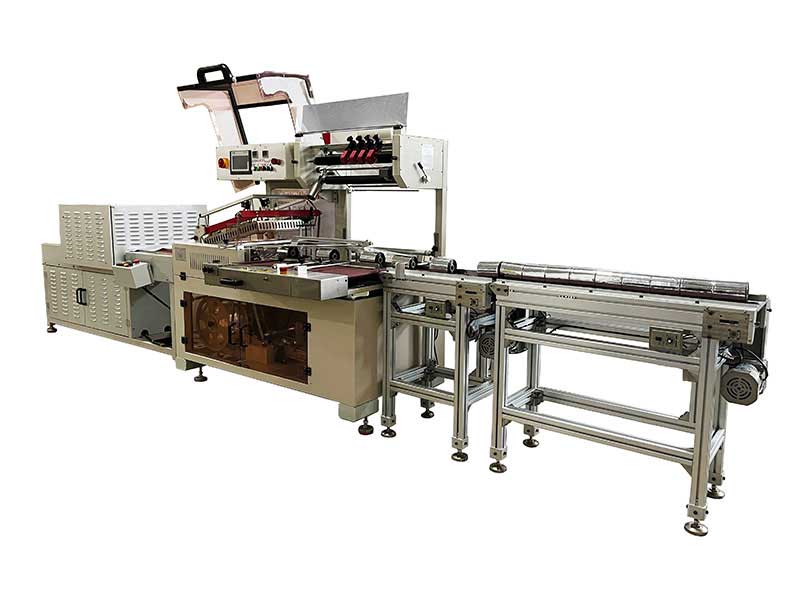 Thermal Transfer Ribbons Packaging Machine
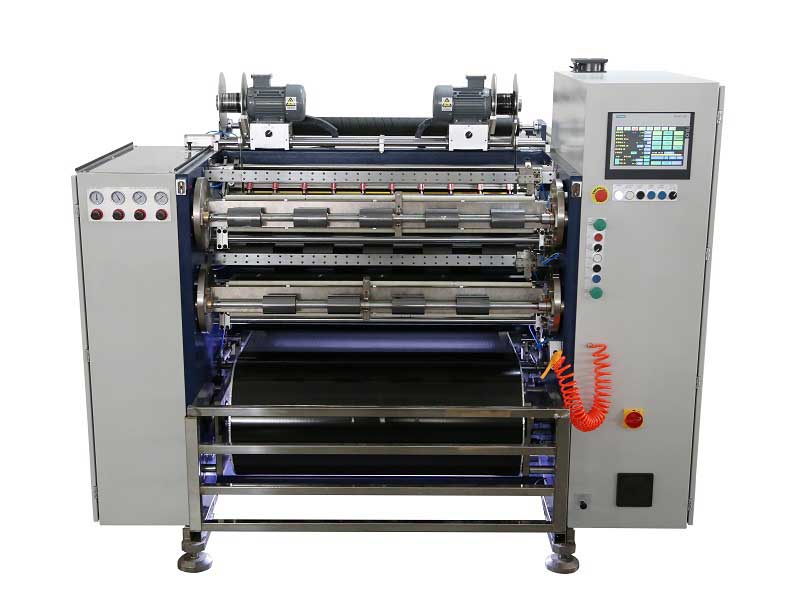 Automatic Thermal Transfer Ribbon Slitting Machine RSDS8 H PLUS
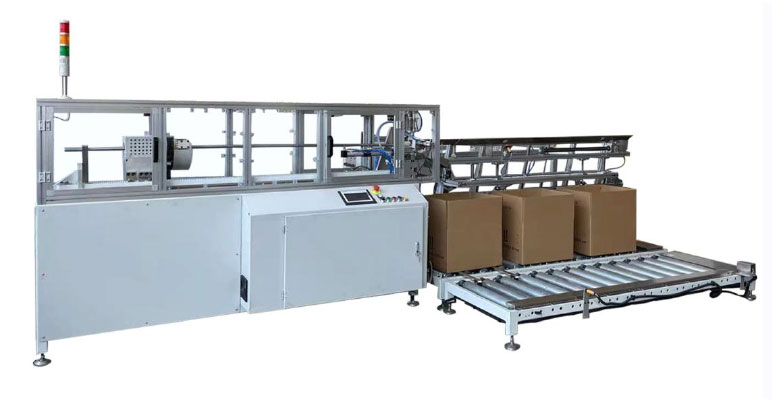 Automatic Paper Core Cutting Machine
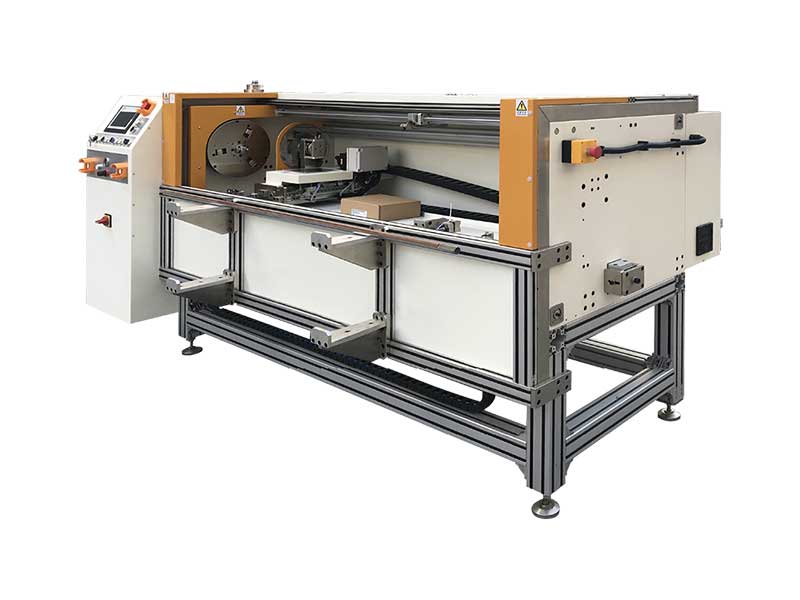 Automatic Foil Roll Cutting Machine
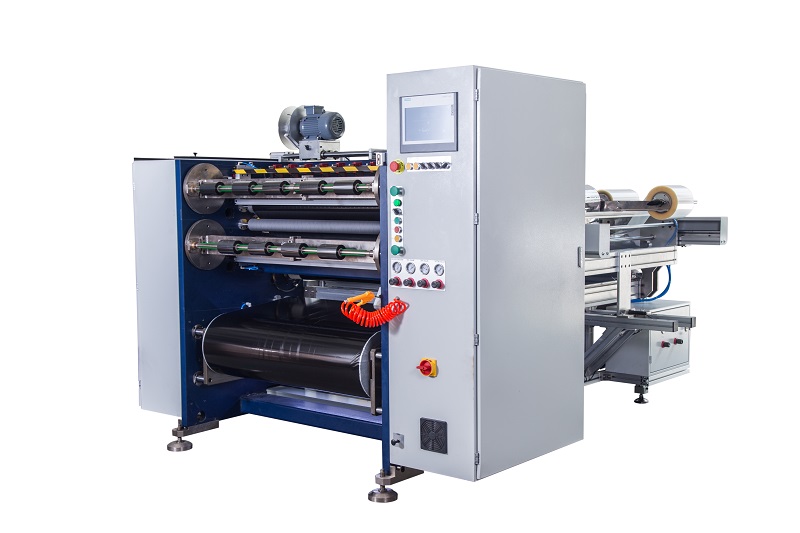 Semi Automatic Thermal Transfer Ribbon Slitting Machine RSDS5 PLUS
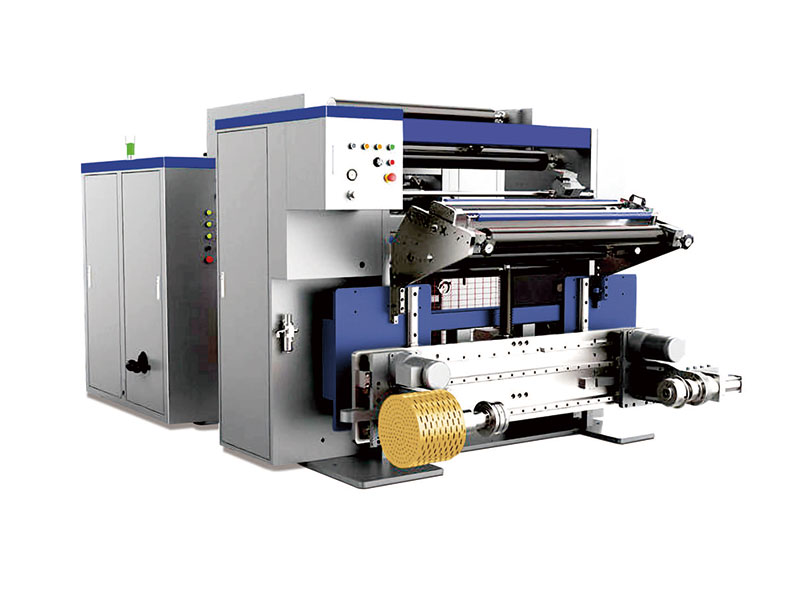 High Speed Slitting Machine
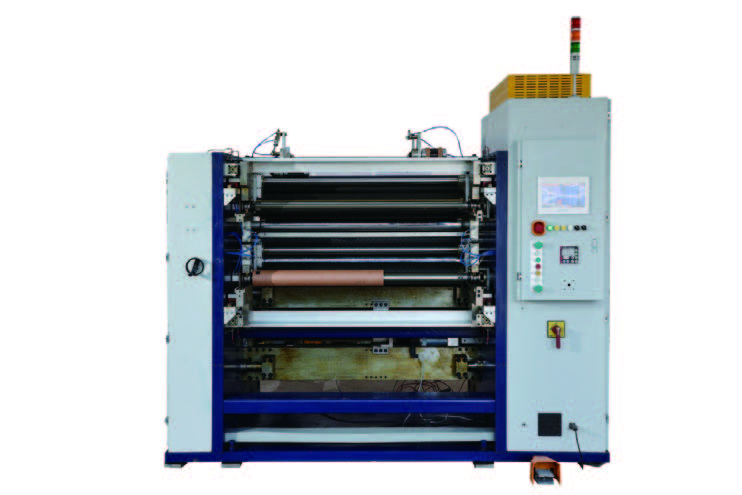 New Energy Ultra-thin Film Slitting Machine For Capacitive Film
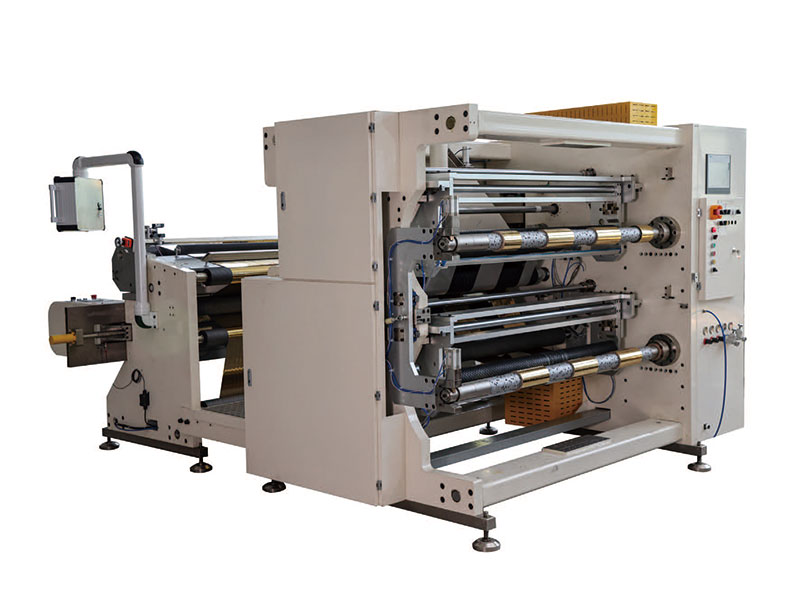 1400mm Hot Stamping Foil Slitting Machine


 +86 135 9951 7291
 support@delishmachine.com