Selecting a film slitting machine is essentially not about choosing the "highest parameter" equipment, but about finding a machine that "matches your material temperament and your order rhythm." Many factories on the market have found their utilization rates hovering around 40% after buying high-speed models, and the payback period has been extended from the estimated one year to three years. The problem often arises when selecting models by separating materials and production capacity—materials determine whether the equipment can perform well, while capacity determines whether the equipment can be completed; the two must be considered together.
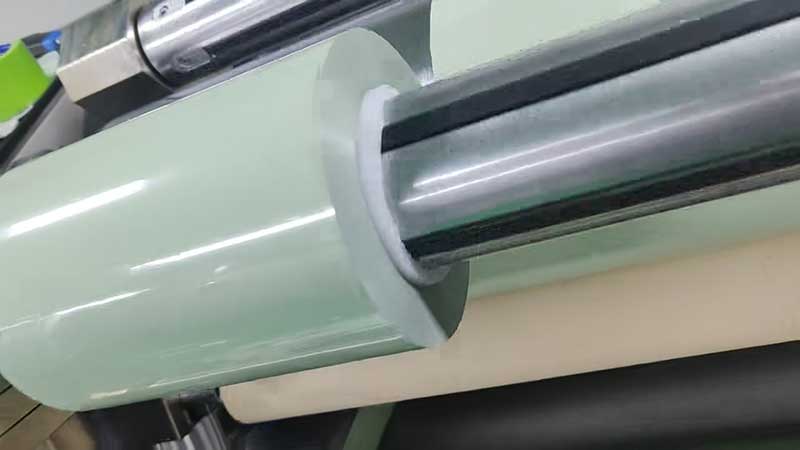
1. First, understand the "temperament" of the materials, then discuss equipment configuration
The physical properties of different films vary greatly; for the same machine, the required tension, speed, and tool angle for slitting BOPP and PE are almost entirely different.
BOPP film: Sensitive to stretching, preferably low tension rather than high. BOPP has good rigidity but is prone to tensile deformation. It is recommended to control the tension during slitting within the low range of 8~12N, with speeds not exceeding 150m/min, and the tool pressure should be light, otherwise longitudinal streaks and mislayering may occur. If the workshop has a high proportion of BOPP orders, priority should be given to whether the equipment's lower limit for low-tension control is sufficiently fine, rather than the nominal maximum speed value.
PET film: can withstand high speeds but fears static electricity and film breakage. PET has high strength and good temperature resistance, capable of withstanding slitting speeds of 120~300m/min. The real challenge lies in ultra-thin PET (3~12μm), where poor control of cutting resistance easily leads to film breakage, requiring a combination of air-floating bearing blades to keep tension fluctuations within ±0.5N. If optical films or lithium battery separators are involved in PET, it is also necessary to confirm whether the equipment is suitable for dust-free environments and equipped with static elimination features.
PE film: soft and prone to adhesion, with a winding tension of "higher at the top, lower at the bottom." PE is soft and highly ductile, and the winding tension must be 5%~10% higher than the winding tension. At the same time, taper tension must be used—gradually reducing tension as the coil diameter increases; otherwise, the inner layer will be compressed and deformed. PE slitting requires high independence of the winding shaft, and the slip shaft configuration is almost mandatory; otherwise, the tension of each roll cannot be adjusted independently during narrow strip slitting, making it difficult to ensure end face uniformity.
If the workshop needs to switch between multiple materials year-round, it is not necessary to expect a machine to "do everything to the extreme," but it should be equipped with an intelligent tension control system (pre-stored material process parameter package) and a modular quick-change tool holder. Change times have been reduced from four hours to under fifteen minutes, and for multi-variety, small-batch scenarios, the value far exceeds peak speeds by 100 m/min.
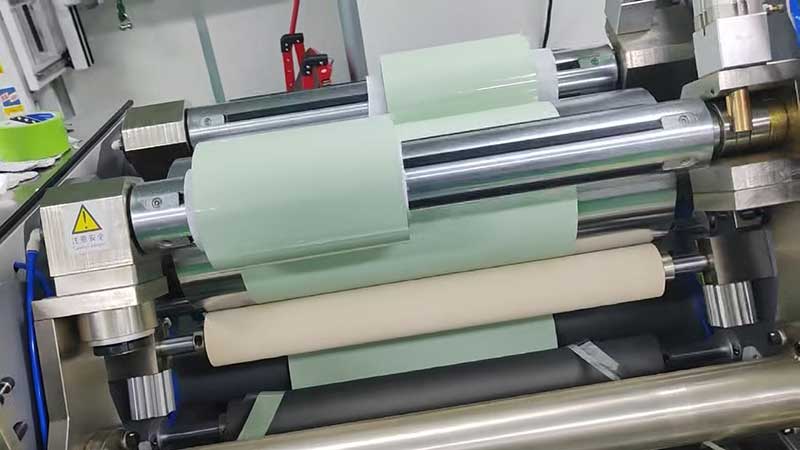
2. Capacity matching: Don't focus on nameplate speed—look at effective output
The 300m/min and 500m/min values on the slitting machine nameplate are the limits, not your output values. Actual capacity needs to be converted using effective working hours and utilization rates.
Industry experience shows that the overall utilization rate in the slitting stage is generally between 55%~70%, with coil rerolling, film penetration, waste removal, and tool adjustment taking up a large amount of time. If there are 3~5 model changes per day, each session taking 10~30 minutes, the proportion of effective production time may be further compressed to 60%~75%. This means that a machine rated at 400m/min may have an actual continuous effective speed in the range of 240~280m/min.
A more pragmatic algorithm is to use peak orders to work backwards: pull out orders from the past 12 months and find the monthly peak and specification distribution. If the top five specifications account for more than 70% of the total, the capacity advantage of high-speed fully automatic models can be realized; If specifications are scattered and there are many small orders, the flexibility of semi-automatic models can actually be more valuable than the speed of fully automatic models. It is recommended to reserve 1.2 times the expected peak for the next 12 months of effective equipment capacity, leaving room for sample rework and avoiding tension fluctuations and reduced winding end face accuracy caused by full-load operation.
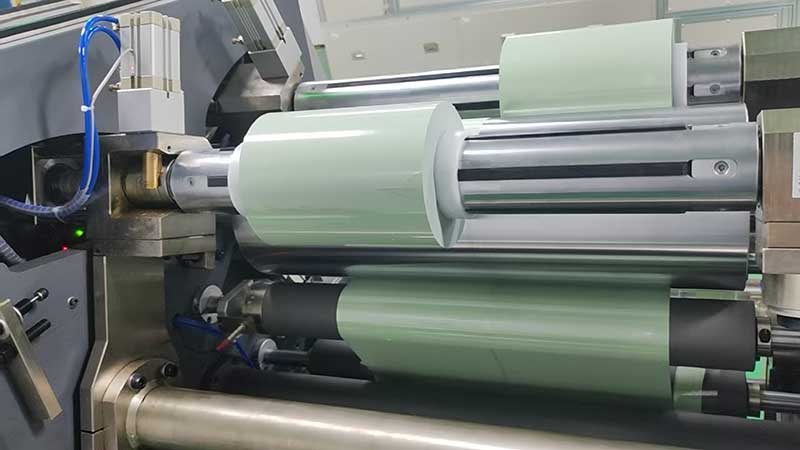
3. Selection approach based on scenario matching
Scenario 1: Single material, large batch, few specifications. For example, specializing in BOPP packaging film, with a daily processing capacity of over 8 tons. The selection focus is on the unwinding diameter and the number of winding stations. A winding diameter of ≥1000mm is required to support infrequent rewinding at high speeds; dual-station winding reduces unwinding downtime. Choose a 500m/min speed level with margin, but make sure the tension system can keep fluctuations within ±0.5N at high speeds; otherwise, the higher the speed, the higher the defect rate.
Scenario 2: Multi-material mixed production, medium batch sizes, frequent specification changes. This is the real situation for most flexible packaging and coating factories. The core selection indicator shifted from "speed" to change efficiency and tension formulation management. The servo-driven fully automatic model works with the material fingerprint library, allowing preset parameters to switch between tension, speed, and tool pressure, reducing the tool change group from four hours to fifteen minutes. The slip shaft is a mandatory component; for narrow strips with slitting widths as small as 30mm, each roll must slide independently to ensure uniform tension between the inner and outer layers. Speed does not need to be pushed high; an effective output of 150~250m/min is sufficient to cover medium-batch orders.
Scenario 3: Ultra-thin films, specialty films, high value-added products. For example, 3~12μm PET, lithium battery separators, and optical films. These scenarios place overwhelming demands on film breakage control and cleanliness. For slitting, priority should be given to air-floating bearing tool sets or high-precision circular cutter shearing, with correction accuracy reaching ±0.1mm. The static elimination device is standard rather than optional. Speed is not the primary contradiction—the loss of one film break at high speed in ultrathin films may offset half a day of high-speed output. When selecting models, suppliers should be asked to use your materials as actual samples, observe the film break rate of thin sections and the quality of the winding end face, rather than just looking at the parameter table.
Scenario 4: Small batches, prototyping, customized orders. If the monthly order quantity exceeds twenty specifications and the single specification volume is small, the high speed of the fully automatic line will be completely overwhelmed by frequent model changes. The flexibility of specification switching and lower investment thresholds for semi-automatic models actually make them a rational choice. Manual or semi-automatic models typically operate at speeds of 10~150 m/min, require 1~2 people per shift, and require much less space and auxiliary space than fully automatic lines. Investing the saved equipment in rapid tool changeover fixtures and operator training can lead to more direct improvements in output efficiency.
4. Two Hard Constraints That Are Easily Overlooked
Independence of the reel. Many selection checklists only mention "number of reels" but do not mention "slip quality." When slitting narrow strips, traditional full-shaft winding cannot independently adjust the tension of each coil, with tight outer layers and loose inner layers being the norm. Slip shaft or independent servo winding is key to solving end face neatness; the smaller the slitting width, the more this cannot be skipped.
Matching the tool with the material. Circular blade shearing is suitable for thick films above 20μm, while razor type is suitable for ultra-thin films and cast films. PE soft films use low-angle round knives to reduce burrs, while PET hard films require attention to tool material and lifespan. If the supplier only lists the "standard round knife" without asking about the thickness and hardness of your materials, this plan is very likely not taking your craftsmanship seriously.
The final step in selecting the model is to take your mother roll to the supplier's site or run it on the sample machine. Check whether the winding end face after slitting is neat, whether there are stripes or wrinkles on the film surface, and whether the narrow strips are misaligned—this is more effective than looking at any parameter table. A medium-speed machine that works well with materials often outperforms a high-speed machine that competes with materials over time.
 English
 Deutsch
 Français
 Español
 Português
 日本語
 русский
 한국어
 عربي
 ภาษาไทย
 Tiếng Việt
 Italiano
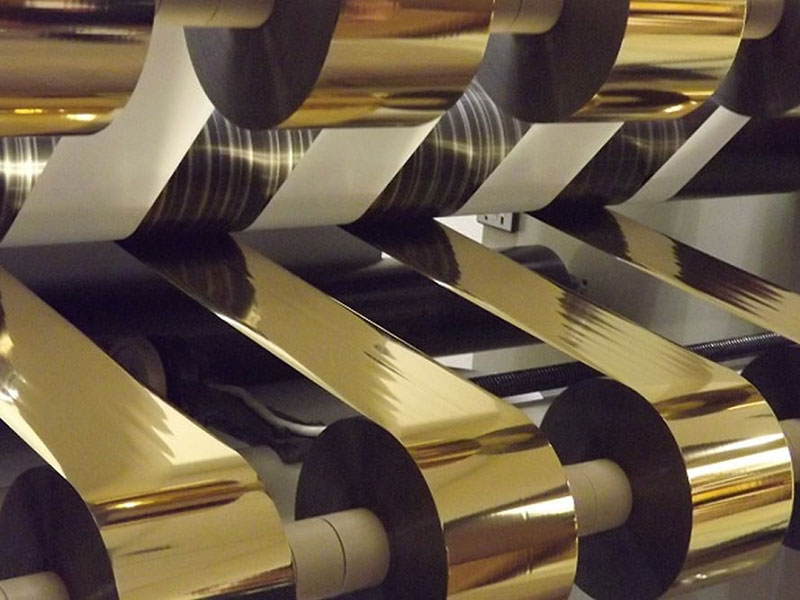
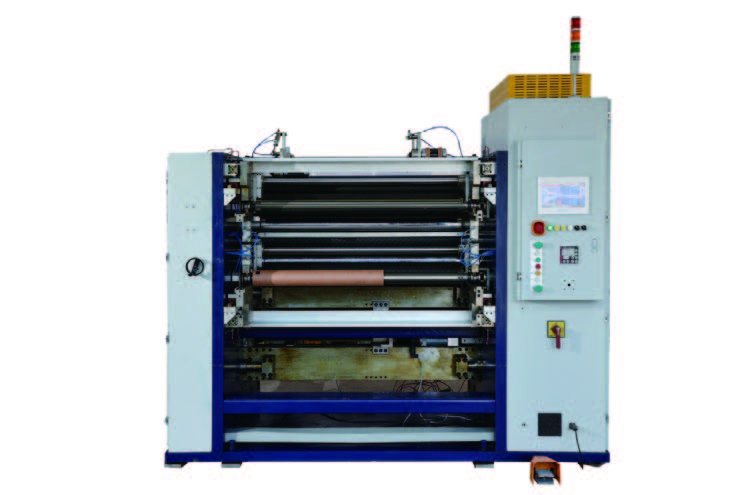 New Energy Ultra-thin Film Slitting Machine For Capacitive Film
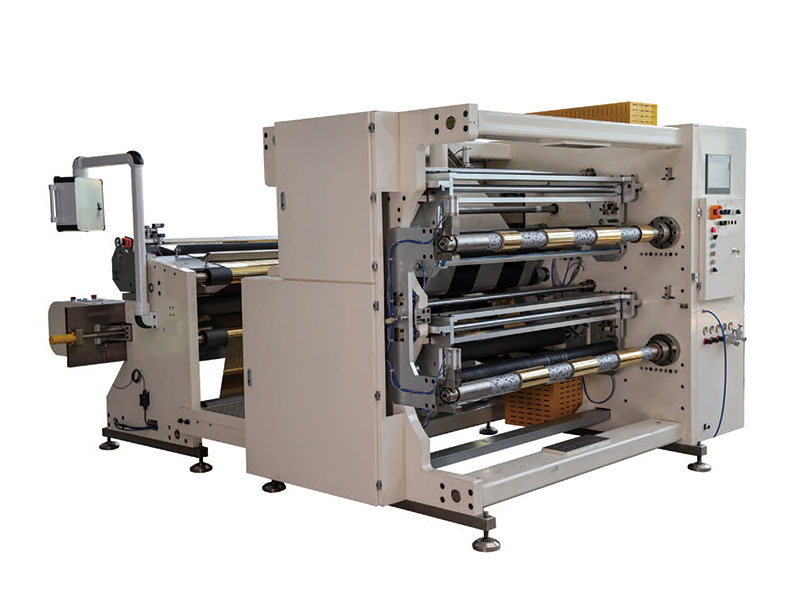 1400mm Hot Stamping Foil Slitting Machine
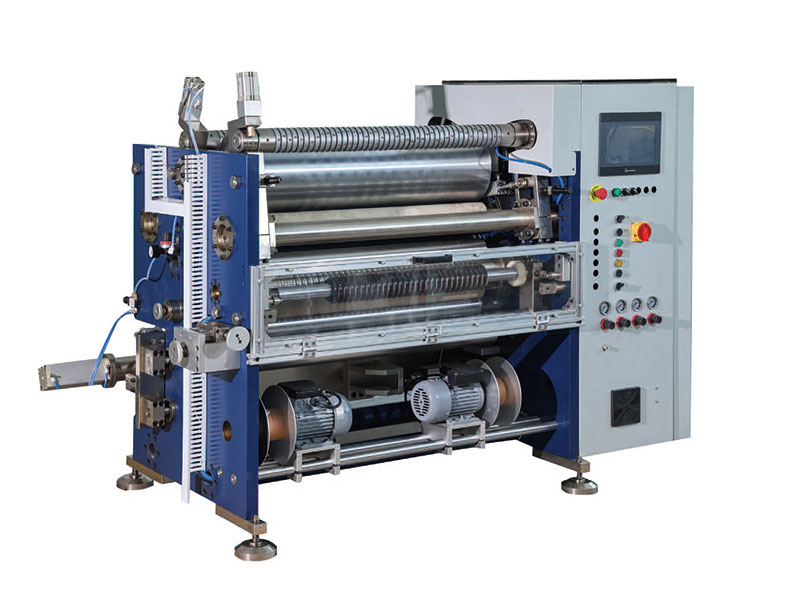 800mm Hot Stamping Foil Slitting Machine
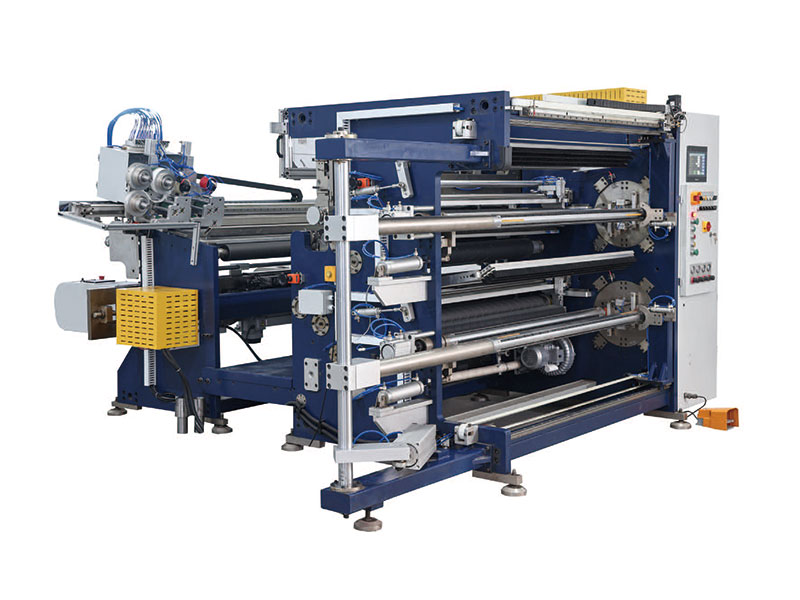 1350mm Hot Stamping Foil Slitting Machine
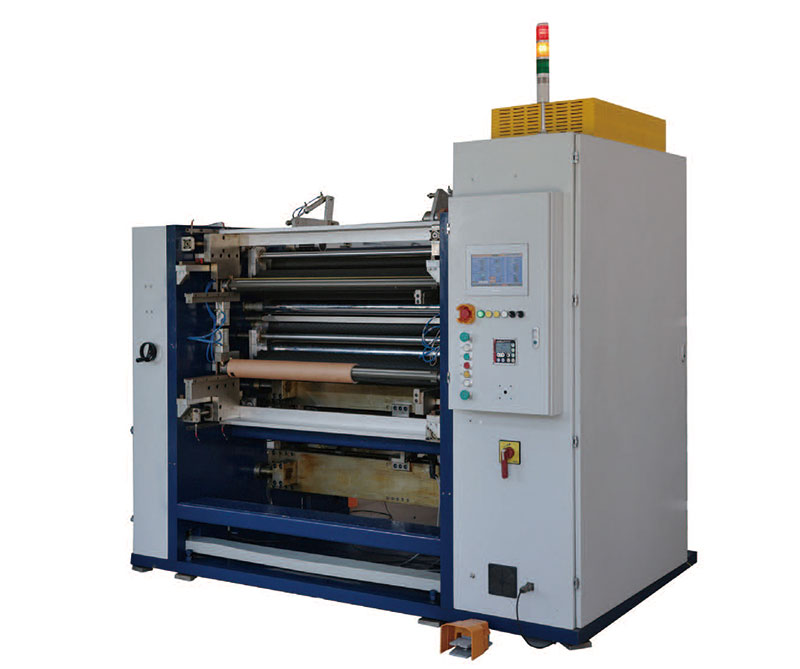 New Energy Ultra-thin Film Slitting Machine For MOPP
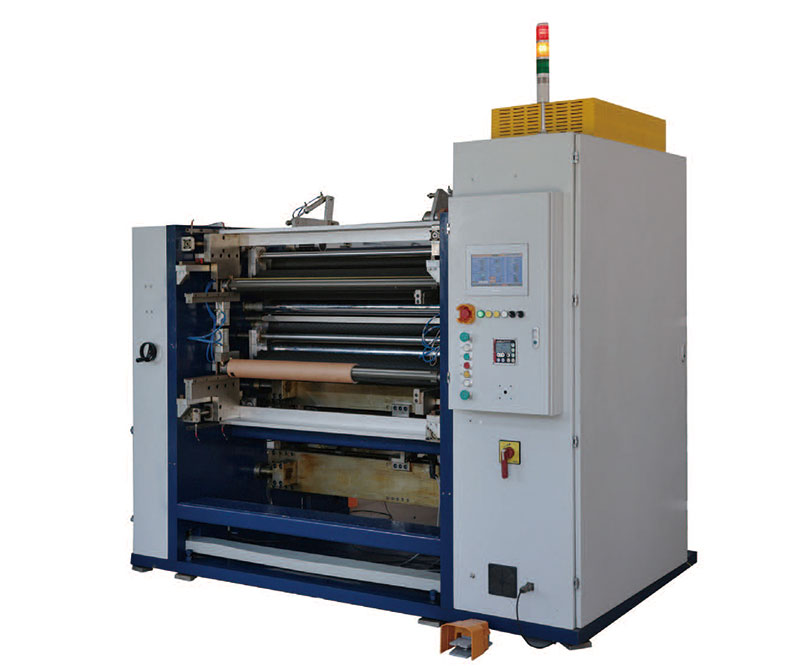 New Energy Ultra-thin Film Slitting Machine For MPET
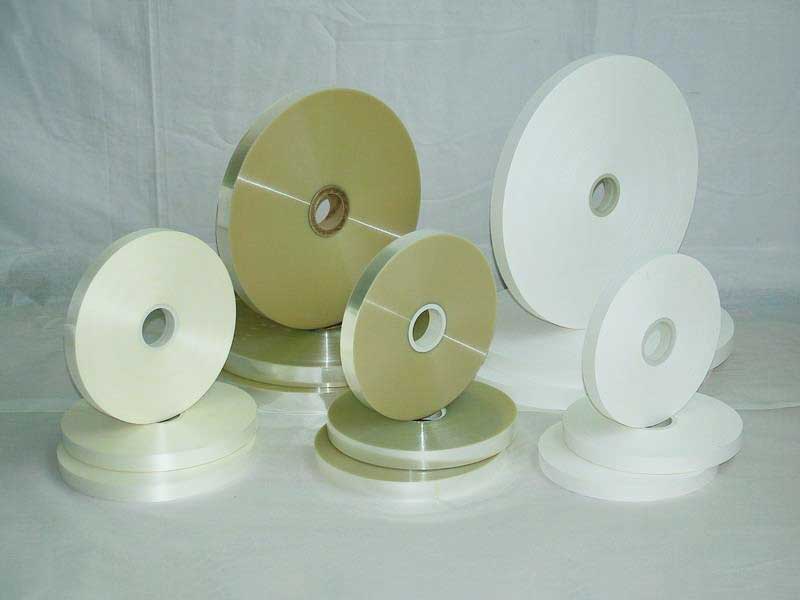 Film Slitting Machine
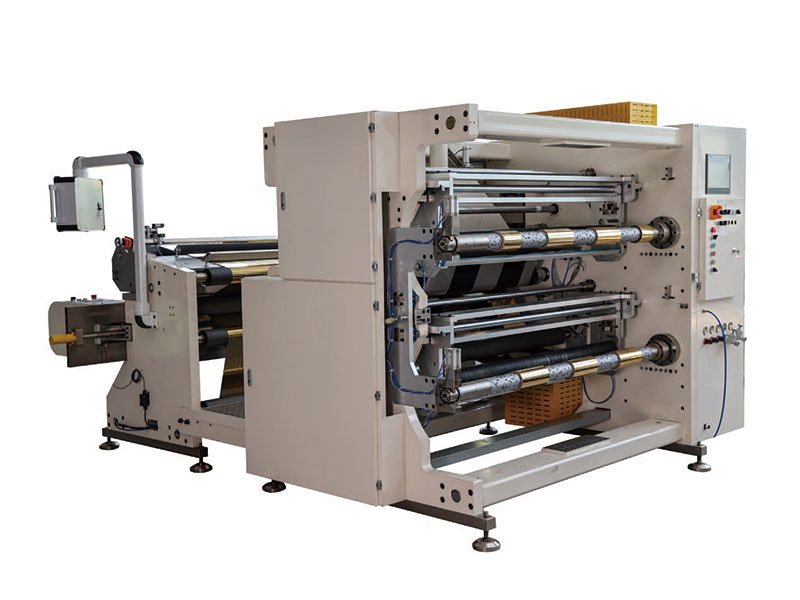 1400mm Copper Foil Slitting Machine


 +86 135 9951 7291
 support@delishmachine.com
