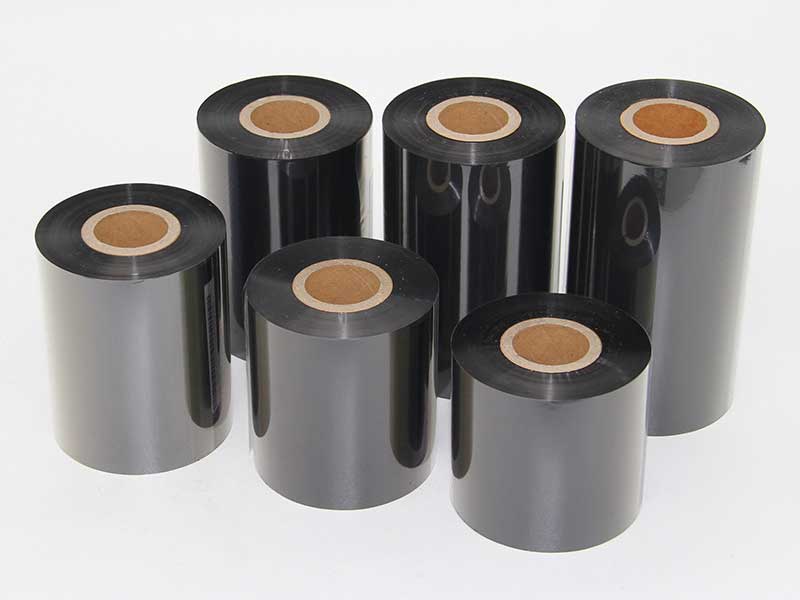
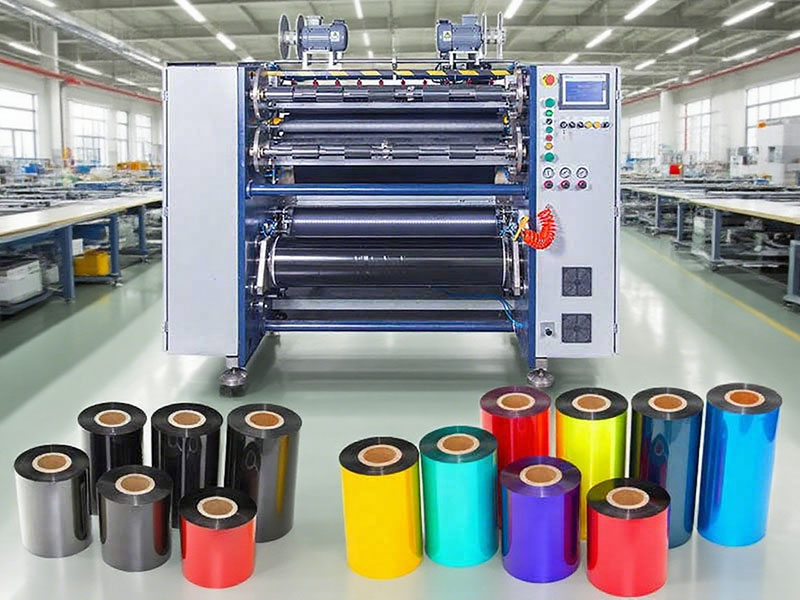
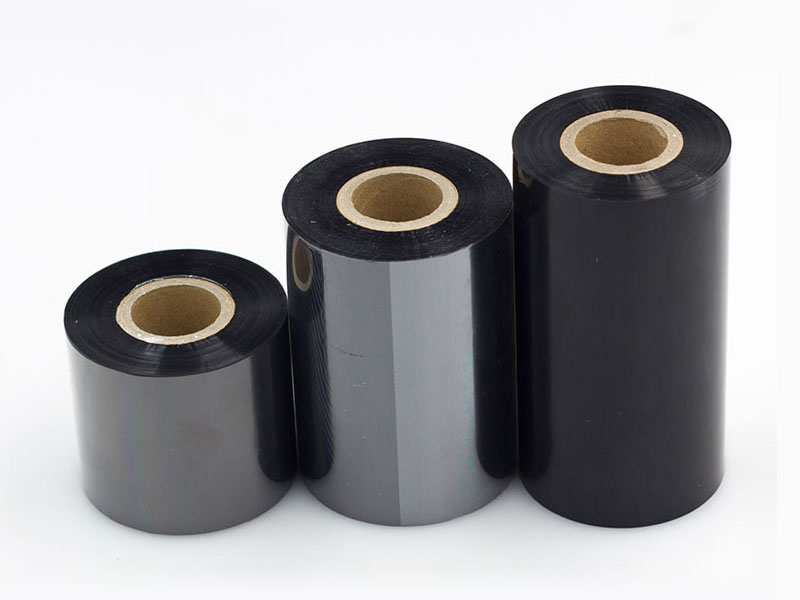
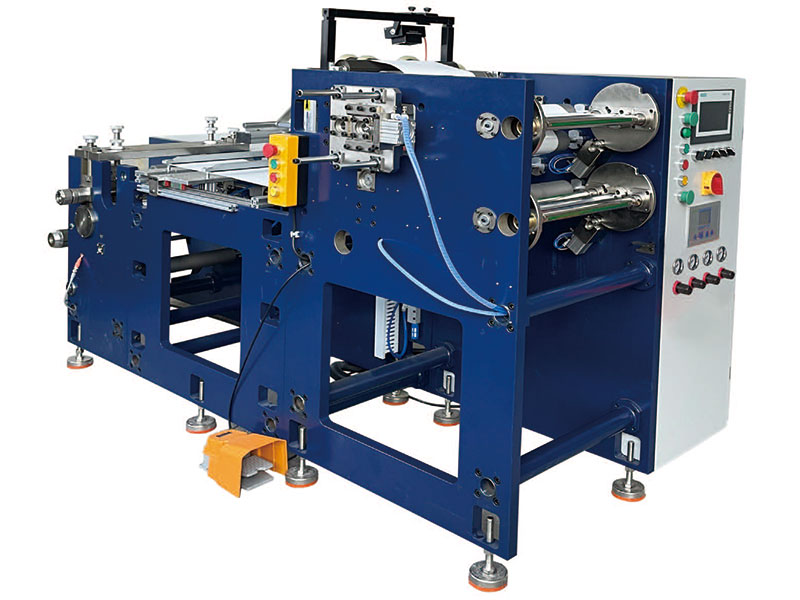
In the fields of label printing, barcode manufacturing, and thermal transfer ribbon production, the ribbon slitting machine is the core equipment for processing wide large rolls of ribbons into the narrow rolls required by customers. Its operational stability and slitting accuracy directly affect the quality and production efficiency of the end product. However, many companies tend to focus on the "emergency repairs" after failures, neglecting the more important aspect of "prevention."
The industry consensus is that equipment reliability is not achieved by chance, but stems from systematic and standardized daily maintenance experience. The core approach to maintenance should shift from "repairing equipment when it breaks" to "proactively preventing, identifying and eliminating hidden dangers in advance."
This article will systematically outline the key points for daily maintenance of ribbon slitting machines, aiming to help enterprises build a standardized preventive maintenance system.
1. Core Points of Daily Maintenance
Effective maintenance can start with the eight-character guideline of "cleaning, lubrication, adjustment, and tightening." Depending on the execution cycle, it can be further divided into the following levels:
1. Daily/shift maintenance (performed by the operator)
This is the most basic and important line of defense, with the focus on cleaning and inspection:
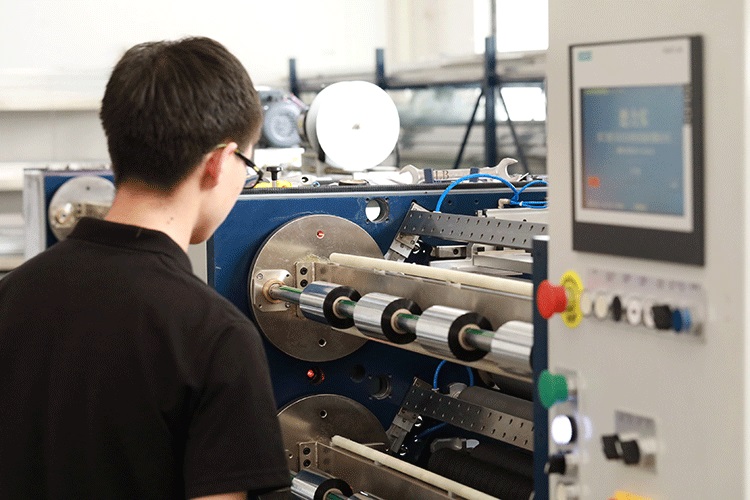
• Cleaning key areas: Use dust-free cloth and industrial alcohol (concentration above 95%) to clean carbon powder and adhesive stains from the surfaces of unwinding/rewinding rolls, guide rollers, and tension rollers; Carefully remove debris around the blade; Clean the surfaces of photoelectric sensors and correction sensors to ensure sensitive sensitivity.
• Operating status check: After startup, monitor for abnormal noises (such as bearing wear sounds) or abnormal vibrations; Check whether the barometer reading is within the standard range (usually 0.5-0.7 MPa).
2. Weekly/monthly maintenance (performed by technicians)
• Deep cleaning and lubrication: dust removal on the motor cooling fan and circuit board casing (power offline). Add the specified lubricating oil to moving parts such as guide rails and bearings according to the manual. Avoid excessive amounts to prevent oil contamination of the ribbon.
• Inspection of wear parts: Check the sharpness of the blade. If you find burrs or brushing at the cut, sharpen or replace it promptly; Check whether the drive belt is loose or aged, and whether the coupling is properly centered.
3. Quarterly/annual maintenance (performed by professional engineers or manufacturers)
• System calibration: Professional calibration of tension sensors and correction systems to ensure control accuracy.
• Comprehensive overhaul: Check all bearings and replace them immediately if there is any excess or abnormal response; Systematic inspection of circuits and gas circuits, tightening terminal blocks and pipe joints.
2. Targeted maintenance strategies for core components
Focusing on core components maximizes the reduction of operation and maintenance costs and improves product quality:
1. Blades (the largest consumable)
The blade is the core of slitting quality. Blunt blades not only damage quality but also increase motor load.
• Establish a lifespan record: Establish a blade life management file, recording the number of meters used after each grinding. It is recommended to lightly sharpen ordinary white steel knives once per shift, and replace carbide knives after 100~150 hours of operation.
• Precise installation: Ensure the blade is installed at an exact angle. It is recommended to control the overlap between upper and lower blades at 0.01~0.03mm, and maintain the lateral clearance at 0.02~0.05mm.
2. Tension Control System (Quality Core)
Tension fluctuations are the main culprit behind splitting burrs, uneven rolling, and even broken ribbon (broken ribbon accounts for up to 60%).
• Keep clean: Keeping tension rollers and dancer rollers clean is the prerequisite for accurate tension detection.
• Parameter optimization: Establish and store optimal tension parameter files for ribbons of different materials and widths, avoiding waste caused by "one parameter to win."
3. Operational Standards and Environmental Management
Human error and environmental factors are major triggers for equipment failure. Establishing standardized operating procedures (SOPs) is crucial.
• Standardized operating practices: Ensure the ribbon coil is centered on the shaft during feeding; Perform dual parameter kernels before startup; Stop the machine promptly when slitting reaches the core to avoid entanglement.
• Environmental control: It is recommended to maintain workshop temperature between 20-25°C and humidity between 40%-60%. A stable environment reduces material deformation and prevents dust from entering bearings and sensors.
• Personnel training: Incorporate maintenance skills into operator training and assessment systems, making every person who touches the equipment a "sensor" of its status.
Conclusion
Maintaining ribbon slitting machines is an extremely cost-effective investment. By shifting daily maintenance from passive cost expenditures to proactive value creation strategies, companies can not only significantly reduce downtime losses and scrap rates, but also extend equipment service life and ensure consistently high quality for slitted products. In today's increasingly fierce manufacturing competition, that carefully cared for and smoothly operating carbon ribbon slitting machine is the silent yet powerful cornerstone for the company to practice the lean production philosophy.
 English
 Deutsch
 Français
 Español
 Português
 日本語
日本語 русский
 한국어
한국어 عربي
عربي ภาษาไทย
 Tiếng Việt
 Italiano
 Label Slitting Machine


 +86 135 9951 7291
 support@delishmachine.com