Behind the dazzling golden logo on cosmetic packaging boxes or the delicate metallic stripes on tobacco and alcohol packaging lies a little-known technical story. These hot stamping effects that elevate product grade and visual appeal all originate from a precision material with a thickness of only 10 to 20 microns—hot stamping foil. To precisely process the wide hot stamping foil master roll into the narrow finished rolls required by downstream printing factories, the hot stamping foil slitting rewinder is an indispensable "ingenious tool."
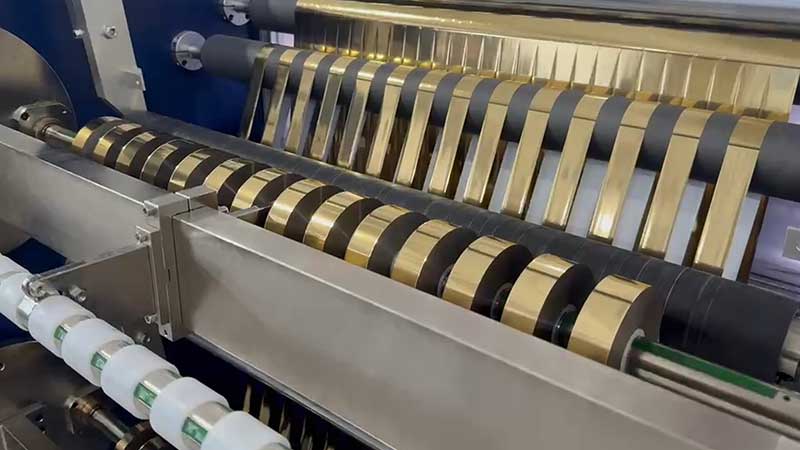
Integrated innovation from "division" to "competition."
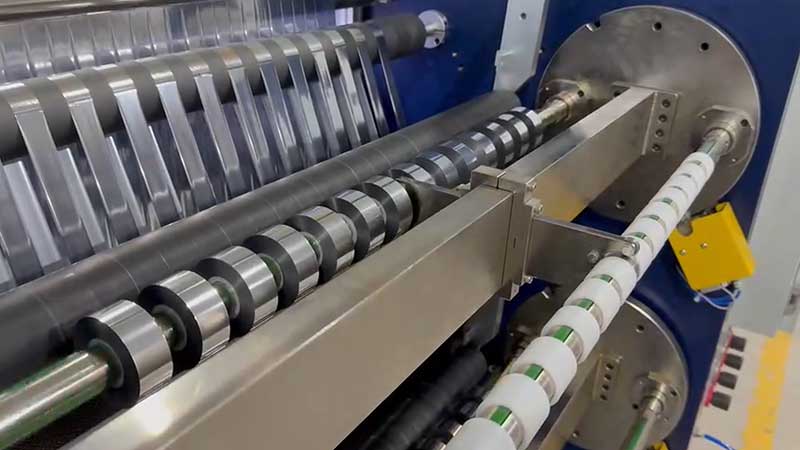
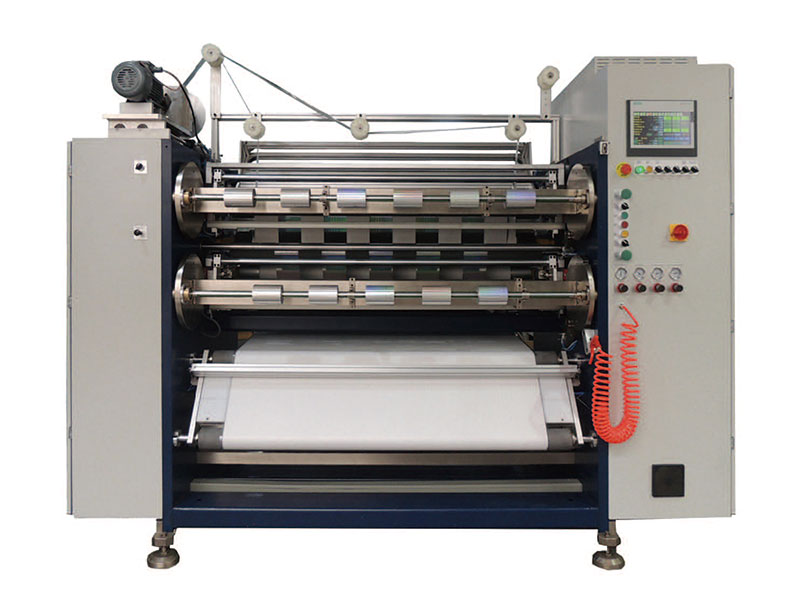
In traditional processing methods, slitting and rewinding are often independent steps, requiring frequent transfer of materials between machines, which not only reduces efficiency but also increases quality risks such as scratches and wrinkles. The slitting and rewinding integrated machine adopts the design concept of "one-time film penetration, synchronized completion," integrating unwinding, slitting, and rewinding into a continuous automated production line.
The workflow is clear and precise: the large foil foil master roll is mounted on the roller, and after a correction system ensures straight feeding, it enters the core slitting area. Here, the wide roll is sliced longitudinally into several narrow strips required by customers. Then, these narrow strips are drawn to the reel and rewound into tight, neat finished small rolls. This integrated linkage enables slitting speeds of 250 to 350 meters per minute, or even higher, significantly reducing order change times and the frequency of manual intervention.
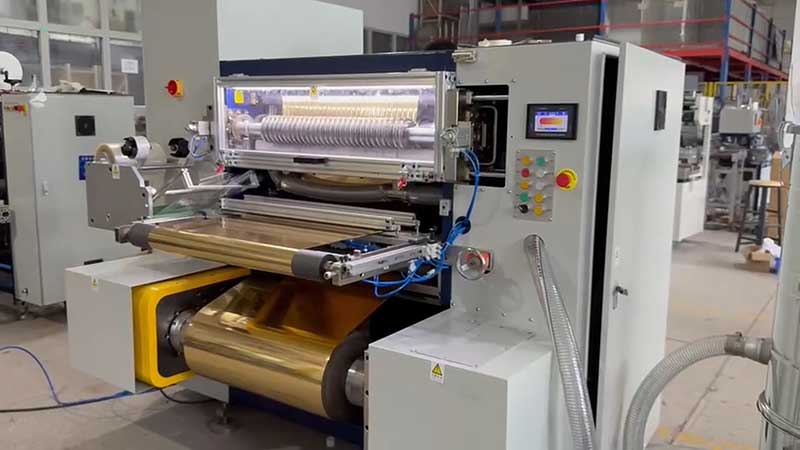
Key technologies for mastering "delicate" materials
The metal plating on the surface of hot stamping foil makes it especially "delicate": if the tension is too high, it can break; if too much friction, scratches can occur; and dust from static electricity can affect the gloss of the stamping stamp. Therefore, the design of precision slitting rewinders reflects ultimate protection of materials throughout.
Tension control is the core art of this process. The equipment uses multi-stage closed-loop tension control, allowing independent and precise adjustment of tension in the three zones of unwinding, slitting, and rewinding. Given the characteristics of hot stamping foil, its tension is usually set 20%-30% lower than that of ordinary films, ensuring the material stretches smoothly during high-speed movement without deforming due to excessive force. The slip shaft technology used during rewinding allows for independent tension adjustment for each narrow roll, avoiding issues such as internal looseness or outer tightness or star-shaped patterns on the end face.
The slitting process also determines the final quality. High-end equipment often uses laser slitting or ultra-thin circular blades. The former cuts without contact, completely eliminating blade chip contamination and edge burrs; The latter requires a precise servo tool holder to achieve dynamic tool distance adjustment, precisely adapting to widths ranging from 5 millimeters to 1000 millimeters. At the same time, to ensure precise slitting paths, equipment commonly uses photoelectric EPC for correction, and even is equipped with CCD vision-assisted correction, achieving an accuracy of up to ±0.05 millimeters.
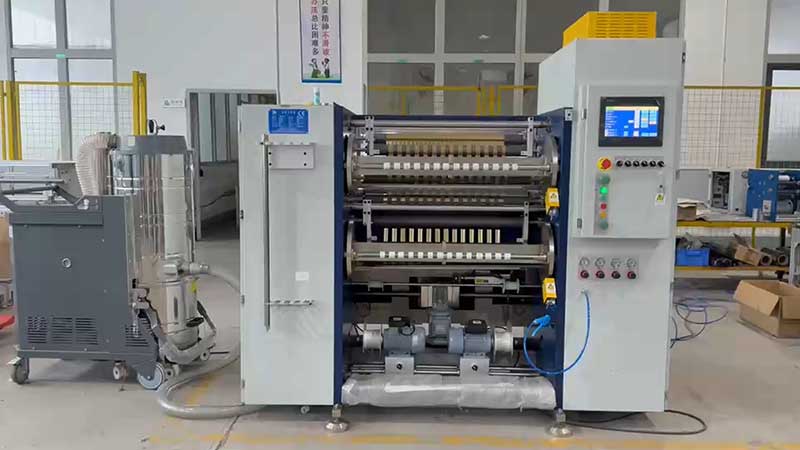
Efficiency Leap and an Intelligent Future
The advantages of integration ultimately lie in tangible benefits. Data shows that compared to the traditional model, after adopting the slitting and rewinding integrated machine, order change time is shortened by more than 70%, the number of operators per line is reduced from 3 to 1 per line, and the defect rate of finished product end faces has plummeted from 2.5%-3% to 0.3%-0.5%.
Looking ahead, hot stamping foil slitting rewinders are evolving toward greater intelligence. AI predictive maintenance can warn of blade shaft wear through vibration sensors; Remote operation and maintenance supports manufacturers to diagnose equipment status in real time; Some devices have even begun integrating online inspection systems to automatically identify and mark minor defects in the hot stamping layer. These technological innovations are jointly driving hot stamping processing toward the ideal goals of zero defects, zero downtime, and zero waste.
 English
 Deutsch
 Français
 Español
 Português
 日本語
日本語 русский
 한국어
한국어 عربي
عربي ภาษาไทย
 Tiếng Việt
 Italiano
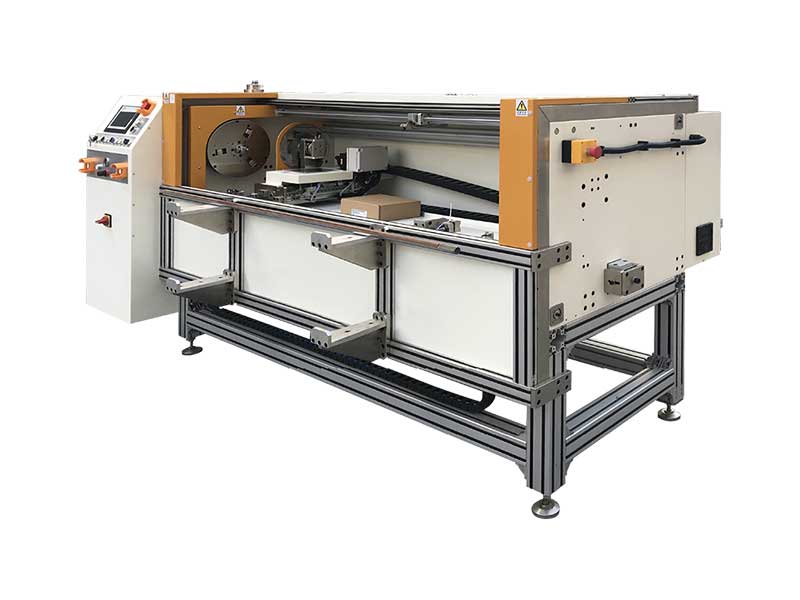 Automatic Foil Roll Cutting Machine
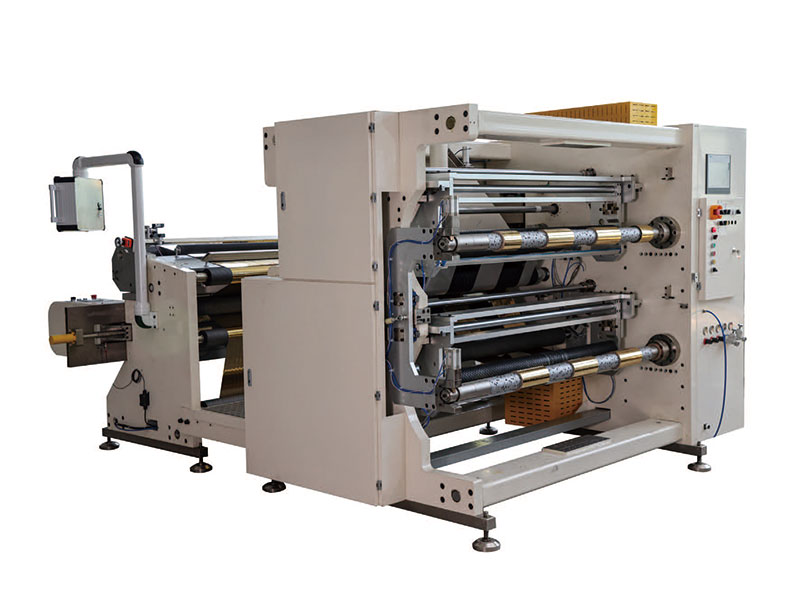 1400mm Hot Stamping Foil Slitting Machine
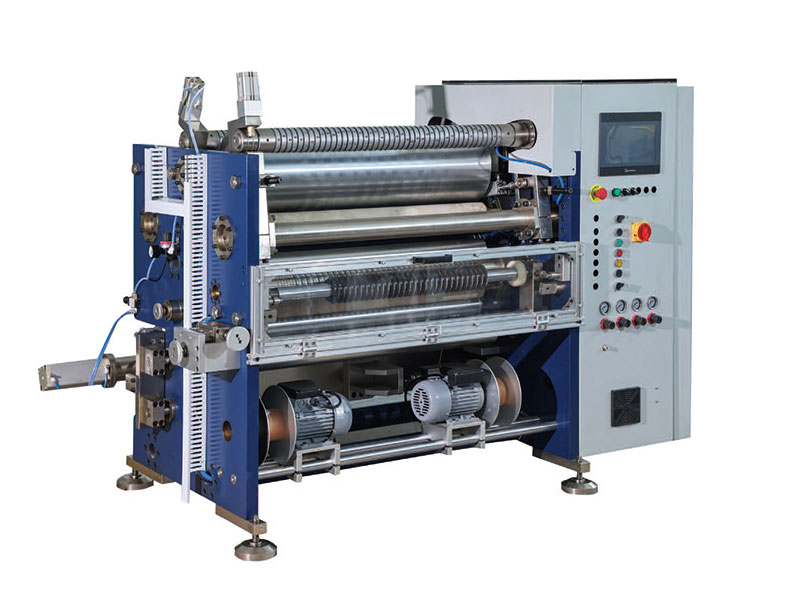 800mm Hot Stamping Foil Slitting Machine
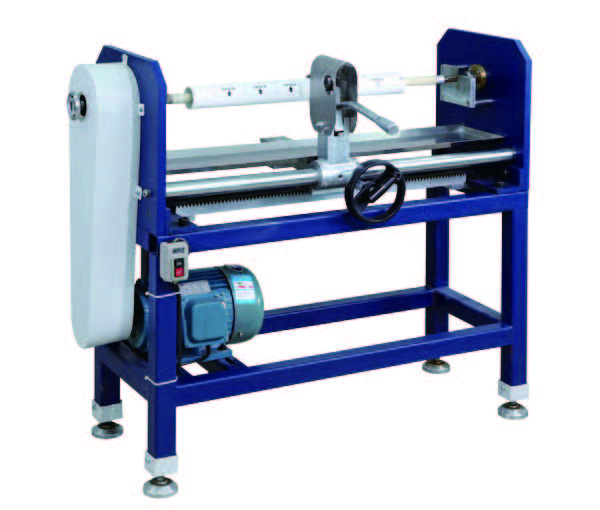 Manual Foil Roll Cutting Machine
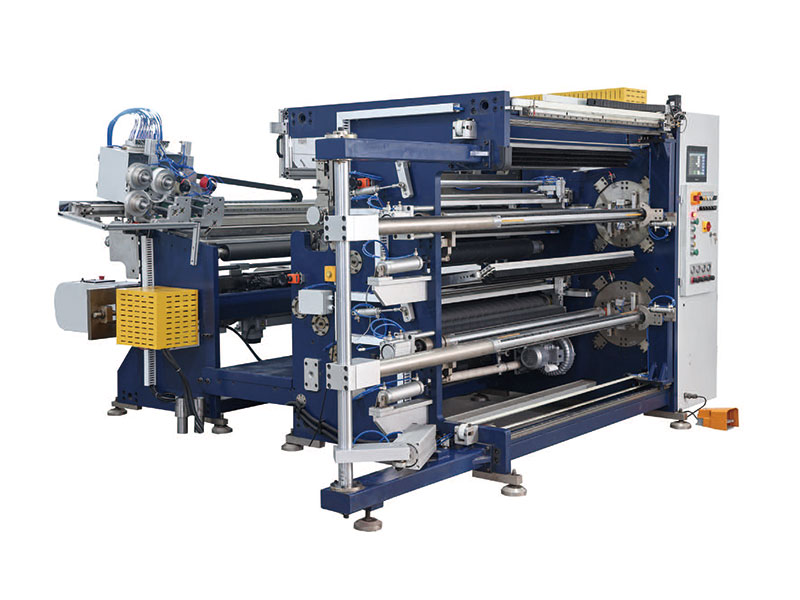 1350mm Hot Stamping Foil Slitting Machine
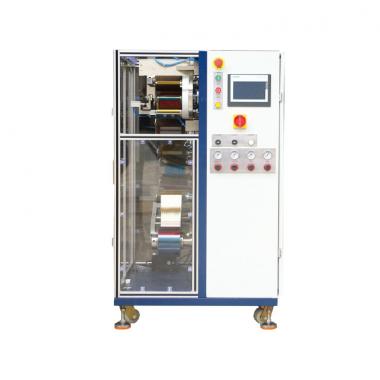 Photo & Card Print Ribbon Rewinding Machine
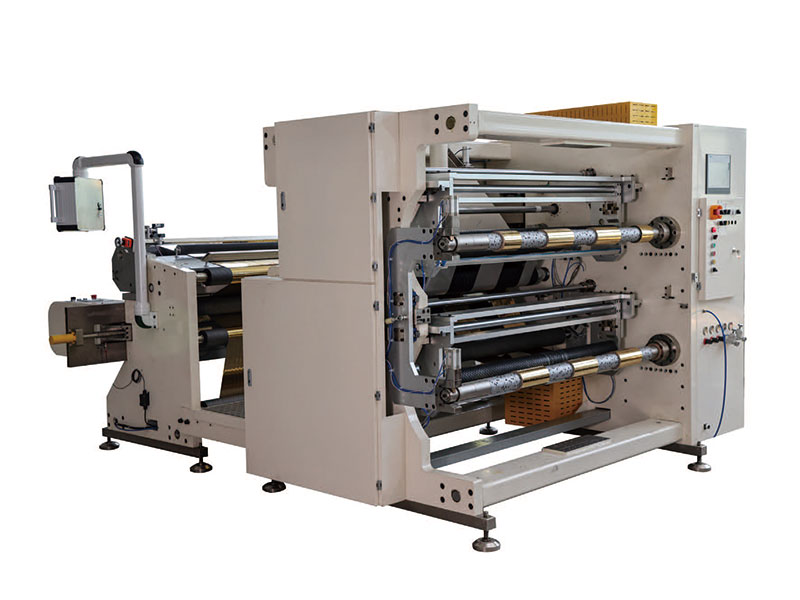 1400mm Copper Foil Slitting Machine
 1350mm/1600 Foil Slitting Machine


 +86 135 9951 7291
 support@delishmachine.com