In the grand narrative of packaging and printing, hot stamping is often the finishing touch that gives products a "visual premium." However, few pay attention to whether this metallic luster is refined or rough, not the hot stamping machine itself, but a preliminary step—slitting the hot stamping foil. Hot stamping foil is only a few microns to twenty microns thick, with fragile coatings that easily stretch and wrinkle, making ordinary film slitting equipment inadequate. In recent years, as the packaging industry has shifted towards high-end and flexible development, hot stamping foil slitting machines have been upgraded from auxiliary equipment to key control points for quality and cost. The following three application cases reveal the efficiency revolution currently underway in this area.
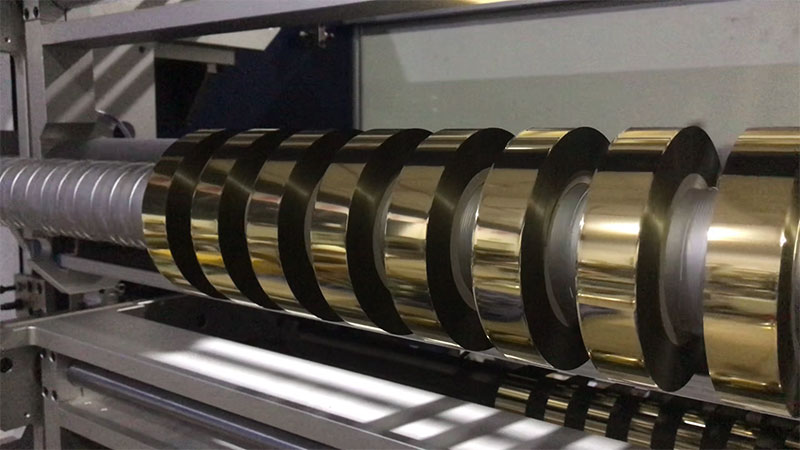
Case 1: Packaging and printing companies' "waste slimming" and rapid breakthroughs
In the field of packaging printing, cost control for hot stamping foil has long been a challenge for managers. Traditional slitting equipment faces two major pain points: high edge scrap rate and limited operating speed. A leading hot stamping foil producer has delivered a valuable report card through systematic equipment innovation: the proportion of slitting waste dropped from 8% to 5.6%, a decrease of 30%; Slitting speed jumped from 120 meters per minute to 180 meters per minute, a 50% increase.
The root of this shift lies in the redefinition of "precision." Traditional mechanical edge reclining sensors are easily affected by foil reflection or tension fluctuations, causing edge misalignment and forcing operators to reserve a 3mm safety margin. The innovative solution introduces a dual CCD vision system and laser ranging modules to detect micron-level deviations at the edge of the foil strip in real time, and synchronizes with servo correction rollers for dynamic correction, compressing the edge allowance to 2 millimeters without reserving a safety margin. Meanwhile, the intelligent tool layout software automatically calculates the "minimum edge waste" tool position combination for multi-specification narrow strip combination orders, increasing the average material utilization rate for multi-specification orders by 4.2 percentage points.
The increase in speed depends on fundamental replacement of the drive system. The direct-drive permanent magnet synchronous motor paired with carbon fiber guide rollers reduces inertia by 40%. Combined with dual-station unwinding and vacuum adsorption automatic foil bonding devices, the coil change time is reduced from 4 minutes to 30 seconds, and the overall effective operating speed is increased by over 55%. The company invested about $70,000 in renovation, with a waste savings alone generating an annualized income of $5,000, with an investment payback period of about 9 months. The lesson from this case is that the return period for technological transformation investment in the slitting stage is often shorter than expected.
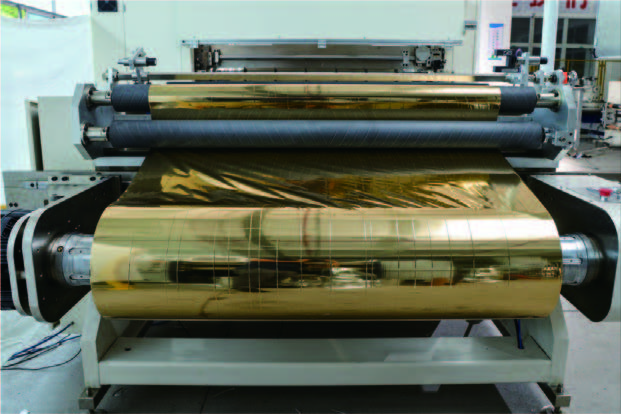
Case 2: The "Yield Rate Challenge" of Wenzhou Hot Stamping Material Suppliers
If the previous case focused on efficiency and cost, then the practice of a Wenzhou hot stamping materials company points to the bottom line of quality. The company supplies hot stamping foil materials for packaging and printing clients, offering a variety of product specifications and needs to accommodate narrow and medium-width cuts for different gift boxes and color boxes. The problems with the original equipment are quite representative: uneven tightness of the foil after slitting, easy peeling of the surface coating, frequent deviation during wide slitting, and failure to meet the acceptance standards of high-end packaging customers.
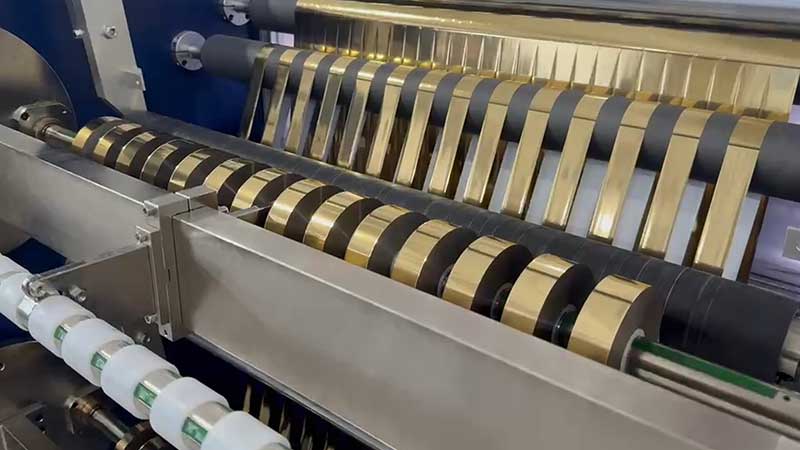
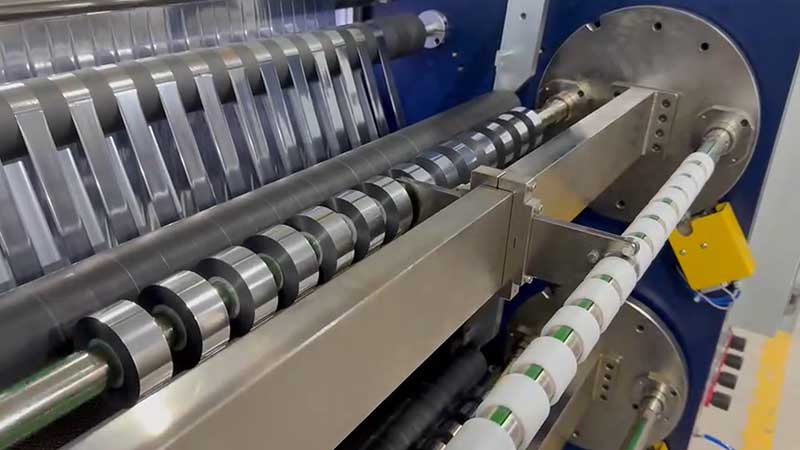
The key issue lies in the dual loss of tension control and correction accuracy. The multilayer composite structure of hot stamping foil is extremely sensitive to tension fluctuations. The combined tension coupling causes edge stretching, deformation, or wrinkles, which are the main causes of irregular scrap edges and coating damage. The company's fully automatic computerized servo slitting machine divides the winding to winding path into three independent tension zones, each controlled by independent servo motors and floating roller feedback, completely eliminating tension coupling effects. Combined with an imported photoelectric correction system and a low-tension flexible winding and unwinding system, the slitting range covers 5mm to 1300mm, and supports intelligent parameter memory and one-click specification changes.
Immediate results: product yield rate increased to 99.8%, order change times shortened by 60%, and production efficiency improved by 35%. The addition of static elimination devices eliminates appearance defects caused by electrostatic dust adsorption in foil materials. As a result, the company successfully connected with several high-end packaging listed companies, with order volume continuing to grow. This case illustrates that for high value-added hot stamping materials, slitting precision directly determines whether products can enter high-end supply chains.
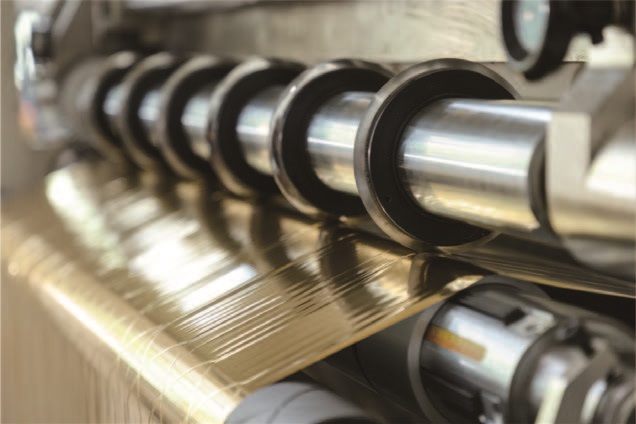
Case 3: The "Micron-Level Defense Line" in Dedicated Cigarette Pack Scenarios
Tobacco packaging has almost stringent requirements for the quality of hot stamping. A troublesome scene often plays out in cigarette foil stamping workshops: after high-speed stamping, the expensive foil foil develops fine "gold powder" trails or jagged edges along the edges, known in the industry as "flying gold" or "rough edges." Quality managers often repeatedly inspect the hot stamping machine but fail to find the root cause—the problem actually lies in the upstream slitting process.
The thickness of the hot stamping gold foil on cigarette packs is usually between 10 microns and 20 microns. Traditional slitting machines ± a mechanical error of 0.5 millimeters, which is magnified into pattern registration deviation during the stamping process. Even a 0.1-millimeter deviation in the security micro-texture or intricate logo on high-end cigarette packs is enough to make them incomplete and blurred. To this end, the new generation of cigarette pack slitting machines has maintained long-term precision within ±0.1 millimeters, with some top-tier equipment reaching up to ±0.02 millimeters. This breakthrough relies on three major technological pillars: full closed-loop tension control dynamically adjusts tension within milliseconds, ensuring no stretching of the foil; The edge slip of diamond-coated tools is controlled within 0.005 millimeters, eliminating burrs at the physical level; the intelligent deviation correction system tracks the foil edges in real time, completely eliminating serpentine deviation.
In terms of efficiency, the "short cycle, multiple batches" characteristics of cigarette pack orders require faster order exchange. The integrated slitting machine uses a fully automatic positioning system and recipe storage function to reduce order change time from 30 minutes to under 3 minutes. Precise slitting also reduces material loss from the traditional 8%–10% to below 2%, which is considerable cost savings for cigarette pack printing companies that consume hundreds of tons of foil annually. More importantly, the extremely flat roll edges and consistent width provided by slitting ensure perfect registration between holographic positioning hot stamped patterns and printed designs, allowing high-end anti-counterfeiting methods such as microtexts and hollowed-out patterns to be clearly presented, directly serving the anti-counterfeiting function of cigarette packs.
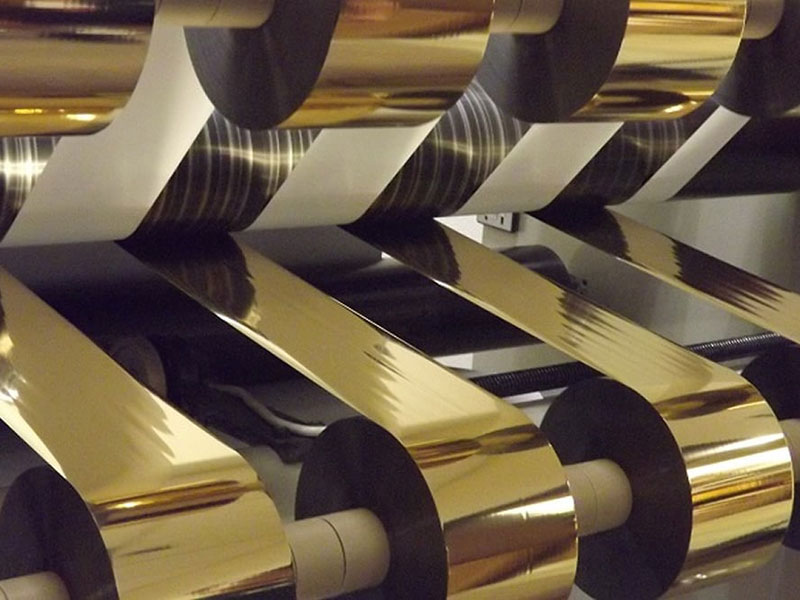
Case Insights: Strategic value revaluation in the slitting stage
Looking at the above cases, a common understanding is emerging: hot stamping foil slitting machines are no longer simple "cutting tools," but have become efficiency hubs connecting material procurement and production use.
For packaging and printing companies, the flexible production capacity brought by self-owned slitting machines is changing the procurement logic. In the past, suppliers had to order various specifications of finished foil coils, which occupied storage and easily led to backlogs; Now, only wide muskets are needed, with "cutting as needed," shortening delivery times from days to hours, and significantly improving responsiveness to non-standard orders such as irregular packaging and special widths. After introducing a high-speed intelligent slitting machine for a printing company specializing in wine packaging in East China, the loss rate in the hot stamping process dropped from 5%–8% to within 2%. This single product saved over $45,000 in annual costs and increased inventory turnover by 40%.
From the perspective of technological evolution, hot stamping foil slitting machines are undergoing a shift from mechanical precision to intelligent precision. The downward expansion of functions such as CCD visual inspection, taper tension control, and formula parameter management has greatly narrowed the "capacity gap between novices and experienced technicians," shifting slitting quality from relying on experience to relying on systems. For the packaging and printing industry, which is currently in an era of thin profits, this replicable and predictable quality stability may be more strategic than simply increasing capacity. After all, in the face of hot stamping—a craft that values gloss and texture—any waste of material or a single misstep in registration will ultimately be fully revealed on the shelves of the final product.
 English
 Deutsch
 Français
 Español
 Português
 日本語
 русский
 한국어
 عربي
 ภาษาไทย
 Tiếng Việt
 Italiano
 Automatic Foil Roll Cutting Machine
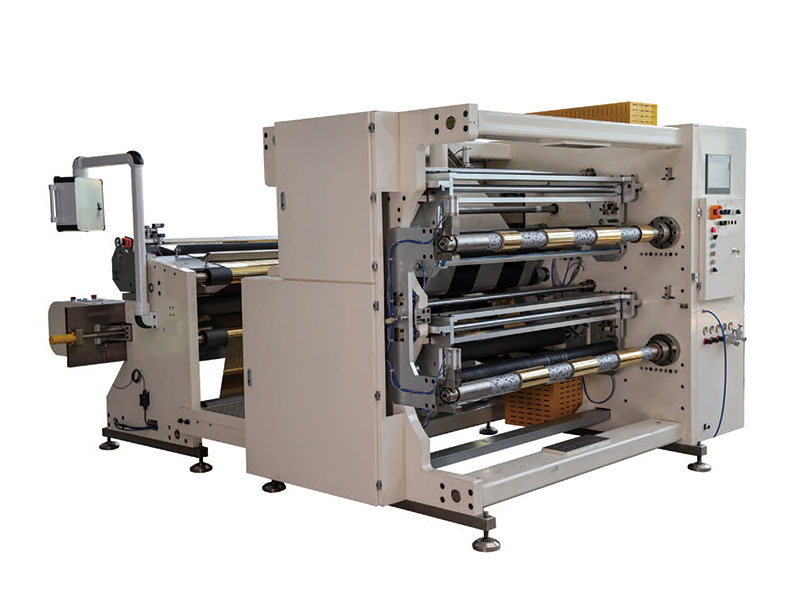 1400mm Hot Stamping Foil Slitting Machine
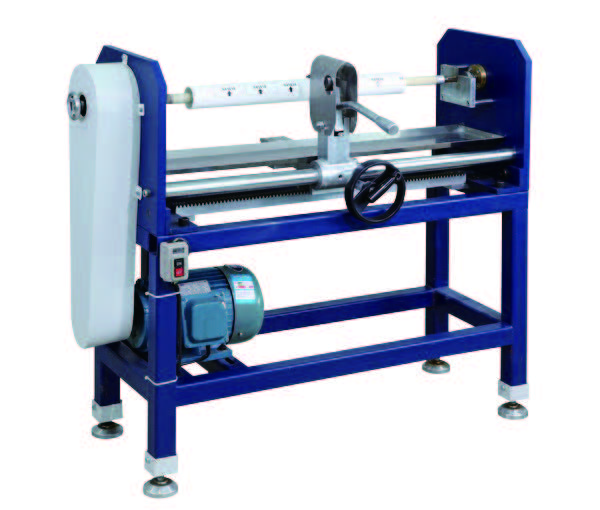 Manual Foil Roll Cutting Machine
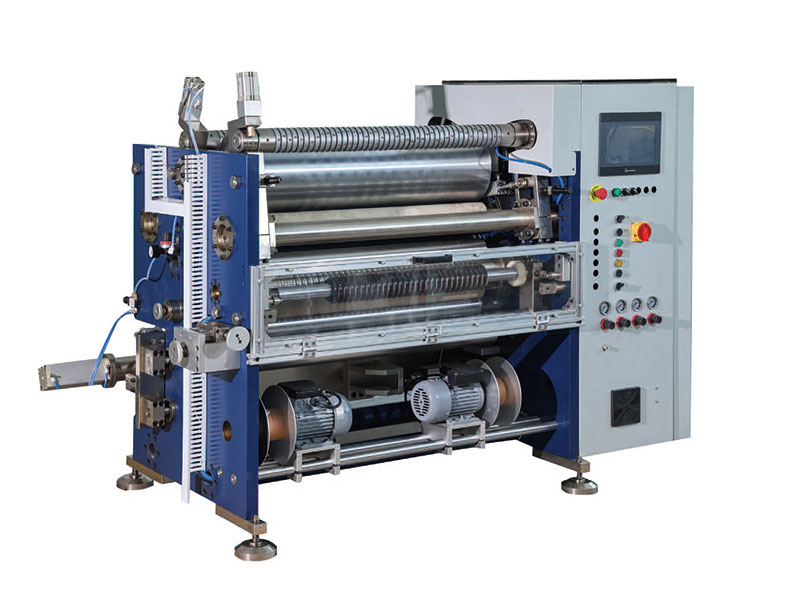 800mm Hot Stamping Foil Slitting Machine
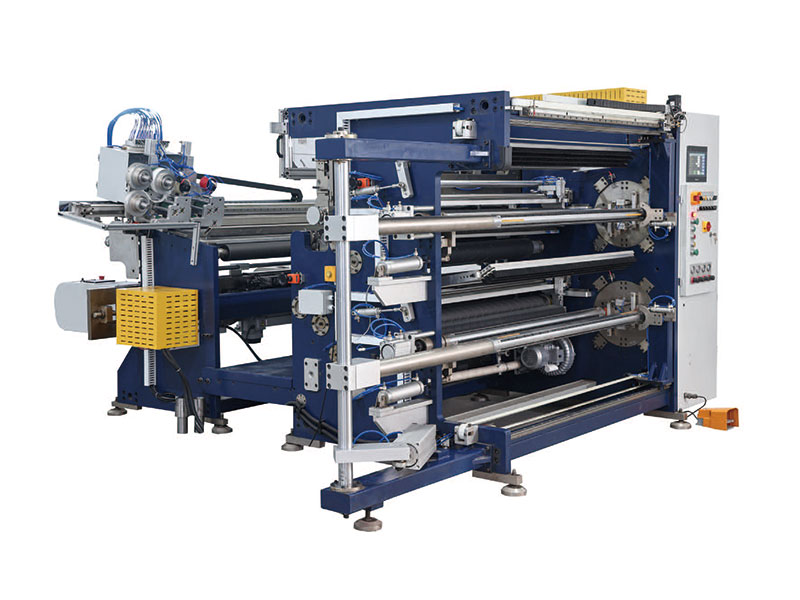 1350mm Hot Stamping Foil Slitting Machine
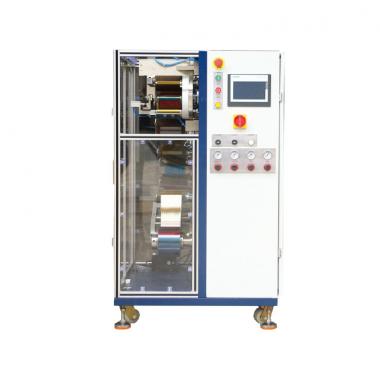 Photo & Card Print Ribbon Rewinding Machine
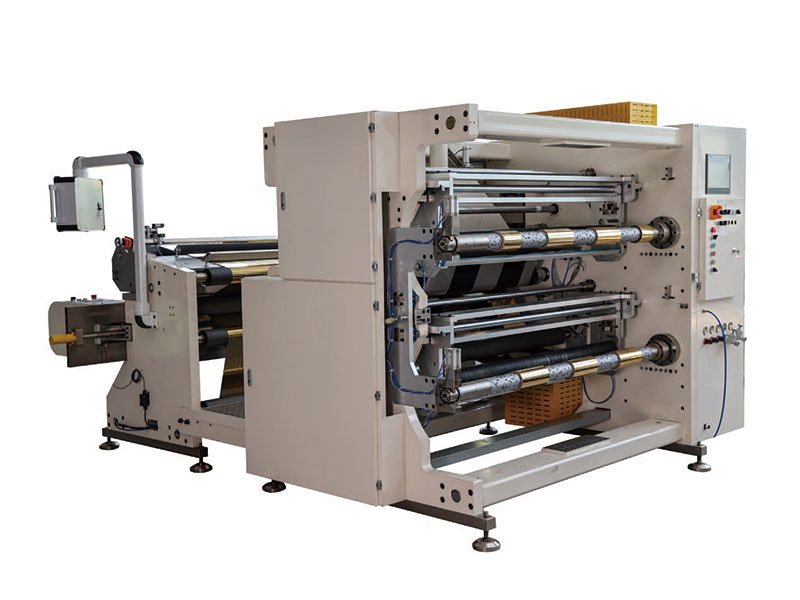 1400mm Copper Foil Slitting Machine
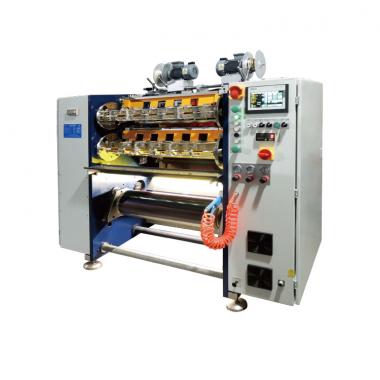 Photo & Card Print Ribbon Slitting Machine


 +86 135 9951 7291
 support@delishmachine.com
