1. Background and significance of model selection
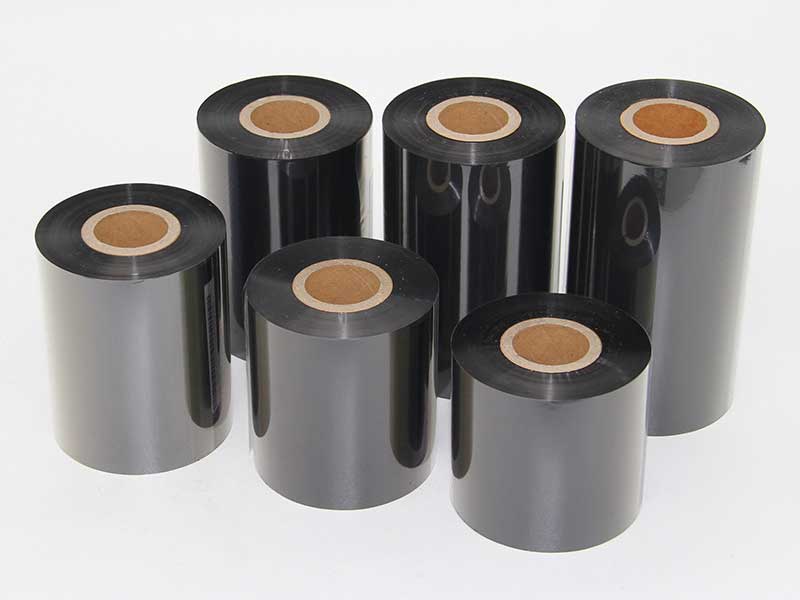
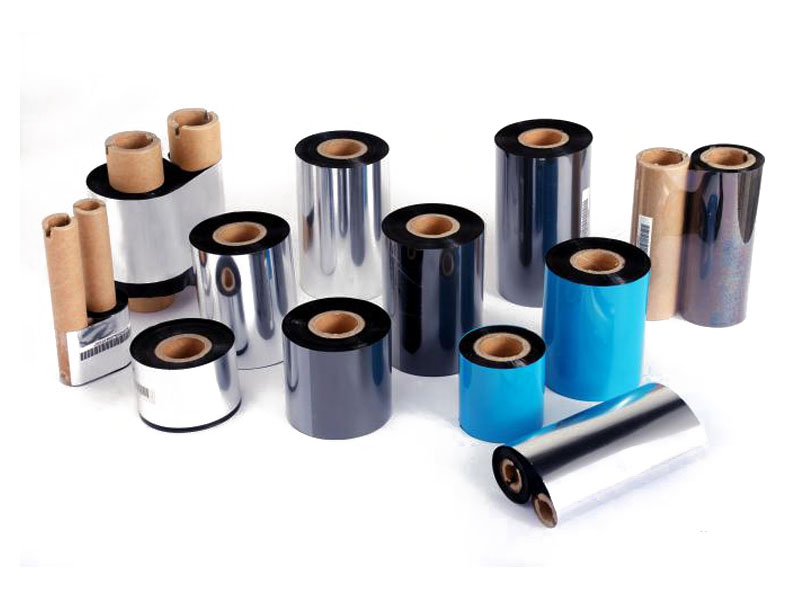
Barcode ribbons are the core consumables for thermal transfer printing, widely used in logistics, healthcare, retail, industrial manufacturing, and other fields. The slitting process is the "final step" in the ribbon production chain—the wide ribbon master roll is precisely slitted into finished small rolls suitable for various printers. The quality of slitting directly determines whether the ribbon runs smoothly in the printer, whether the printing is clear, and whether the print head can be ensured.
Choosing a slitting machine that fits your production needs not only affects capacity and efficiency but also impacts product quality and long-term operating costs. Faced with a wide variety of equipment types and complex parameters on the market, companies need to establish a systematic selection and evaluation framework to make rational decisions.
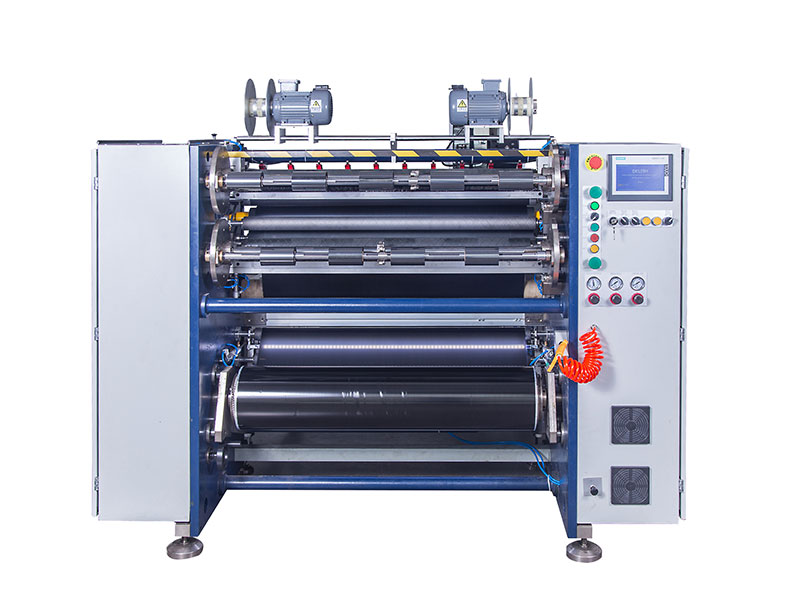
2. Equipment Type and Positioning
Ribbon slitting machines can be divided into various types based on different dimensions; understanding these categories helps to initially determine the direction for selection.
| Classification dimension | Type | Features |
| Applied Materials | TTR ribbon slitting machine | Suitable for conventional barcode printing ribbons, mainstream in the market |
| TTO ribbon slitting machine | For the design of thermal transfer coding ribbons, higher precision and tension requirements are required | |
| Degree of automation | Manual/semi-automatic | Suitable for small batches and multiple varieties, with low investment thresholds |
| Fully automatic | Automatic feeding, automatic flipping and winding, automatic film application, suitable for large-scale continuous production | |
| Production scale | Small slitting rewinder | Width ≤ 500mm, speed < 200m/min, flexible functionality |
| Large automatic slitting machines | Width up to 1000mm, speed up to 500m/min, suitable for high-efficiency mass production | |
Enterprises should preliminarily determine the range of equipment types based on their product positioning, order structure, and capacity planning.
3. Core Selection Parameters
Selection requires focusing on three core parameters, which directly determine whether the equipment can meet production requirements.
1. Slitting accuracy
Slitting accuracy is the primary indicator for evaluating equipment performance, determining the width consistency and edge quality of the finished carbon ribbon. Industry reference standards are: standard grade ± 0.5mm, high-precision models can reach ±0.1mm or even ±0.05mm. Insufficient precision can cause ribbon edges to be rough, tape offset during printing, missing printed content, and even damage to the print head.
Selection recommendation: For ribbons used in high-resolution barcodes, precision electronic tags, and similar scenarios, priority should be given to equipment equipped with servo-controlled tension systems and high-rigidity tool holder structures. Always refer to actual sample trial cut data as the standard; do not trust theoretical values in the parameter table.
2. Slitting speed
Speed determines output per unit time, but you can't just look at the nominal maximum speed.
| Speed level | Scope | Applicable scenarios |
| Low-speed economy model | 50–100 m/min | Small batch, multi-variety production |
| Medium-speed universal model | 150–250 m/min | Most commercial orders |
| High-speed production model | 300–500 m/min | Mass continuous production |
Selection reminder: Resin-based ribbons have harder coatings and lower toughness, so they usually need to operate at speeds 20%–30% lower than wax-based ribbons. It is recommended to conduct on-site trial cutting using the actual ribbon specifications to observe start-stop control, winding neatness, and joint treatment effects at high speeds.
3. Winding neatness
The neatness of winding directly affects the smoothness of back-end packaging and printer conveyance, yet it is often overlooked. Face deviation should generally be controlled within ±1mm, with high-end equipment reaching up to ±0.5mm.
When selecting models, attention should be paid to the configuration of the winding tension control system and the deviation correction device. If the end face shows a "bell-mouth," edges are "serrated," or internal folds appear, it indicates problems with winding control. Priority should be given to models equipped with closed-loop tension control + active deviation correction.
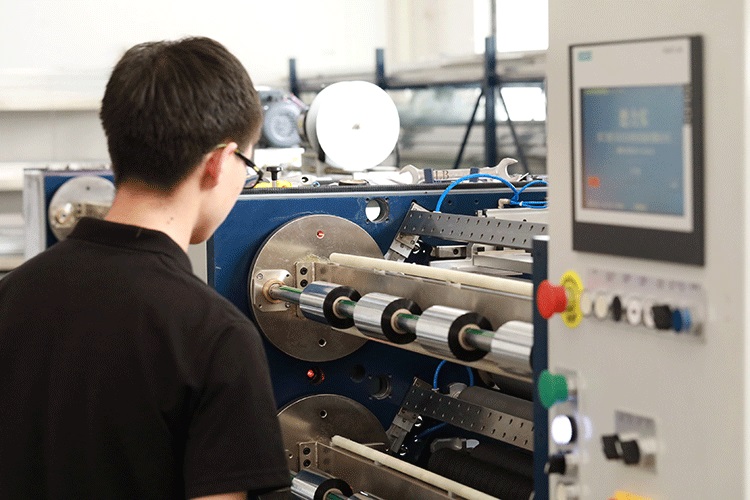
4. Key Technology and Configuration Evaluation
1. Tension Control System—The "Soul" of the Equipment
The ribbon substrate is PET film only 4.5–10μm thick, which is extremely sensitive to tension. Tension control is the core technical challenge in slitting winding, affecting over 50% of the flatness of the winding.
• Excessive tension: This causes the PET base film to stretch and deform, leading to powder shedding in the ink layer, and over-winding to form a "tower shape."
• Too low tension: loose and wrinkled when rolled, making the finished product unusable.
• Technical solution: Priority is given to fully automatic closed-loop tension control (servo motor + sensor linkage). High-end models use taper tension control—gradually reducing tension as the coil diameter increases, ensuring consistent tightness inside and outside the finished reel.
2. Winding mechanism—the execution unit that determines flatness
The selection of the winding shaft directly affects the consistency of multi-station winding:
• Slip shaft (recommended): Each slip ring can independently control torque, compensating for uneven tension caused by coil core dimensional tolerances, fundamentally eliminating the phenomenon of "loose inside, tight outside" or "tower-shaped."
• Standard gas expansion shaft: The tension at all stations is completely synchronized, making it impossible to compensate for coil core differences; the problem of uneven end faces is especially prominent during narrow band slitting.
3. Compatibility between slitting knife types and materials
Different ribbon materials have significant tool requirements:
| Carbon ribbon types | Cutting Difficulties | Recommended blade types and countermeasures |
| Wax-based ribbons | The coating is soft, and friction generates heat, making it easy to "overflow wax" and stick together | Sharp blades + cooling dust removal system |
| Mixed-base carbon ribbons | Prone to "rough edges" and "powder loss" | High tension stability is required, mainly for circular blade slitting |
| Resin-based ribbons | The coating is hard and brittle, prone to "chipped edges" or microcracks | Tungsten steel round or flat blades can cut instantly, strictly controlling impact force |
4. Scratch and Anti-Static — The "Essential Course" for High-End Ribbon
The ink layer and backcoating thickness of high-end ribbons are only at the micron level; any slight contact or electrostatic discharge during slitting can cause coating scratches or electrostatic dust adsorption, affecting printing quality.
When selecting a model, pay attention to:
• Roller surface roughness ≤Ra 0.05μm, using ceramic or Teflon low-friction coatings
• Non-contact tension sensors and ultrasonic correction sensors
• Conductive roller grounding, carbon fiber brushes, or active electrostatic neutralization devices
5. Comprehensive Selection Strategy
1. Match configuration according to business type
| Types of business | Key recommended configurations | Reference speed | Precision requirements |
| Small batches, multiple specifications (sample production, short orders) | Easy order changeover, programmable tool positions, and strong wide adaptability | 100–150 m/min | ± within 0.3mm |
| Large volume standard wide-width carbon ribbons | High-speed continuous operation, automatic cutter, large winding rewinding | Above 250 m/min | ± within 0.2mm |
| High-end resin-based/specialty ribbons | Low tension control, anti-static treatment, and blade heating function | 150–200 m/min | ± within 0.1mm |
2. Full lifecycle cost assessment
Choosing a model should not be based solely on purchase price; a comprehensive evaluation is also necessary:
• Initial investment: equipment purchase costs
• Operating costs: energy consumption, consumables (blades), maintenance expenses
• Opportunity Cost: Production losses caused by inefficient equipment
• Long-term returns: Quality improvements and capacity release brought by efficient equipment
3. Brand and Service Considerations
Well-known brands usually represent mature technical expertise and reliable quality control systems, but brand premiums can increase equipment prices by 20%–40%. When making decisions, weigh the following:
• A more complete after-sales service network for branded equipment, timely spare parts supply, and reduced downtime risk
• For core production processes, prioritize top-tier brands with reliable performance
• Focus on technological breakthroughs in emerging brands, which can sometimes deliver unexpected value
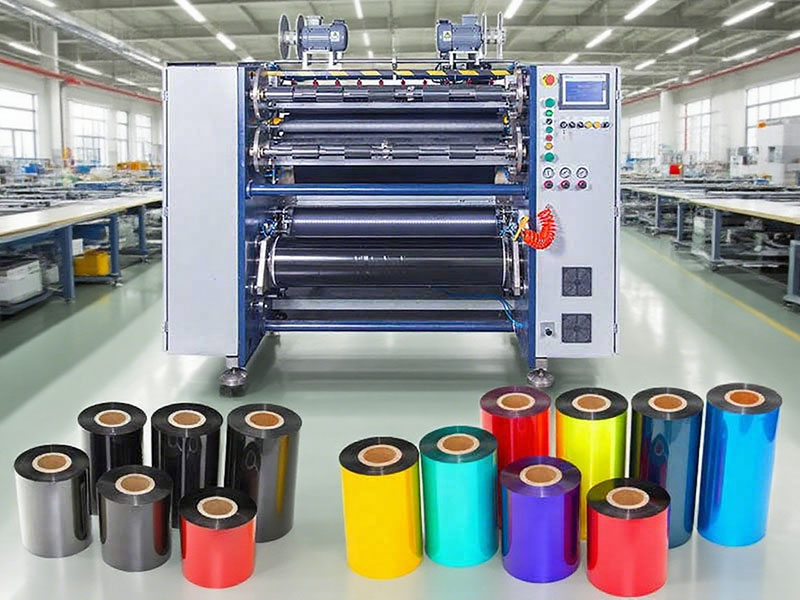
6. Model selection process and practical suggestions
Step 1: Clarify the requirements
• Determine the main product types (wax-based/blended/resin-based) and their proportions
• Clearly defined commonly used slitting specification ranges (narrowest and widest)
• Estimated capacity targets and growth forecasts for the next 2–3 years
Step 2: Market research
• Screening 3–5 mainstream equipment suppliers
• Collect technical parameters and quotations
• Inspect the usage of similar enterprises to understand the long-term operation status of the equipment
Step 3: On-site trial cutting (key stage)
No matter how beautiful the parameter table is, it is strongly recommended to use your own ribbon mother coil for on-site trial cutting, with key points to focus on:
1. Edge quality at different widths (narrowest and widest specifications).
2. Rolling stability during high-speed starts and emergency stops
3. Equipment condition and product consistency after continuous operation for more than 2 hours
Step 4: Comprehensive Evaluation
• Compare the achievement of technical indicators
• Calculate full lifecycle costs
• Evaluate after-sales service capabilities and responsiveness
7. Conclusion
Selecting a barcode ribbon slitting machine is a systematic project, essentially an investment decision rather than a simple procurement action. A wise choice should strike a balance among three core parameters: accuracy, speed, and winding quality, while considering equipment type, key configurations, full lifecycle costs, and branded services. The most economical equipment is not necessarily the cheapest, but one that achieves the best balance between performance, reliability, and cost. It is recommended that enterprises make rational decisions based on their own business characteristics and a systematic selection process that meets current production needs and adapts to future development.
 English
 Deutsch
 Français
 Español
 Português
 日本語
日本語 русский
 한국어
한국어 عربي
عربي ภาษาไทย
 Tiếng Việt
 Italiano


 +86 135 9951 7291
 support@delishmachine.com