In the packaging and printing industry, the metallic sheen imparted by hot stamping techniques to products is often synonymous with quality and luxury. However, behind this dazzling effect, the precision of a key step directly determines the success or failure of the hot stamping process—the cutting of the foil foil. Burrs, wrinkles, uneven ends...... These minor defects in the slitting process not only cause a large waste of expensive hot stamping foil, but can also lead to poor stamping for the entire batch, wasting all previous efforts.
Today, with the integration of intelligent control and precision manufacturing technology, hot stamping foil slitting machines are evolving from simple "cutting tools" into precision systems capable of achieving "zero-flaw" slitting. This article will delve into the core technologies behind them.
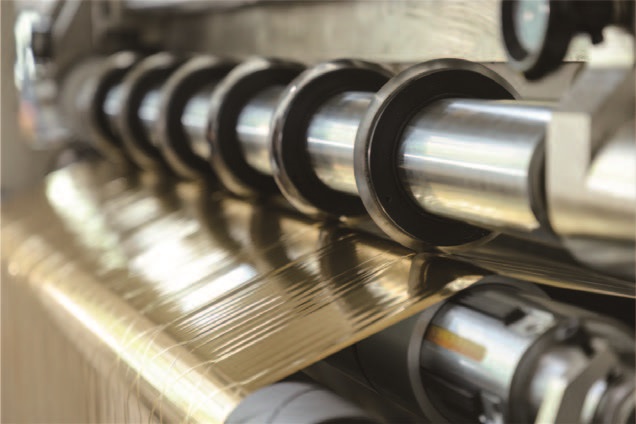
1. Where do burrs and wrinkles come from?
To achieve zero flaws, you must first know yourself and your enemy. The root causes of slit defects can be summarized into three main categories:
1. Equipment and tool issues
This is the most common reason. Blade passivation means that during slitting, it is "squeezed" and breaks rather than "cut" the foil tape, directly causing burrs, stringing, and powder shedding. Additionally, improper clearance or overlap between the upper and lower blades, or radial runout on the tool shaft, can cause unstable cutting pressure and create serrated edges.
2. Improper tension control
Foil foil has a precise structure (including base film, release layer, color layer, aluminum plating layer, and glue layer) and is extremely sensitive to tension. Excessive tension during unwinding or rewinding can stretch or even tear the foil ribbon; If the tension is too low or fluctuates, the foil strip will shake or shift during slitting, eventually forming chrysanthemum patterns or internal wrinkles on the end face, which seriously affects the smooth unwinding of subsequent hot stamping machines.
3. Material and environmental factors
Foil foil made from different materials (such as PET-based, paper-based, and laser foil) has varying physical properties and requires matching different slitting processes. Environments that are too dry can generate static electricity, causing foil powder to fly and adhere to the cut edges; Excessive humidity may alter the coating's performance.
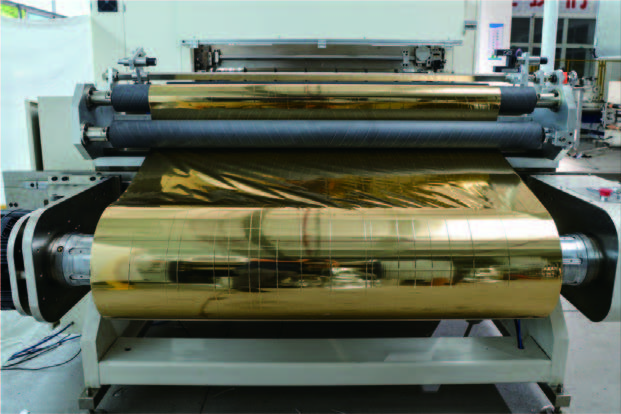
2. The technical pillar of zero-defect slitting
Modern high-performance hot stamping foil slitting machines precisely address these issues through four core technologies.
1. Intelligent Tension Control System: From "Rough" to "Closed-Loop"
Tension is the soul of slitting. Modern equipment abandons traditional open-loop control and uses servo motors + closed-loop tension control systems, dynamically adjusting tension in each section of unwinding, slitting, and rewinding through real-time feedback from tension sensors. For example, for ultra-thin PET substrates (below 12μm), the system can activate a specific elastic compensation algorithm to avoid tensile deformation. The winding tension is usually set slightly below the unwinding tension (about 10-15% lower) to ensure the core is compact and the outer layer does not crease.
2. Precision Tool Systems: From "Blunt Knife Hard Cutting" to "Blowing Hair Cutting"
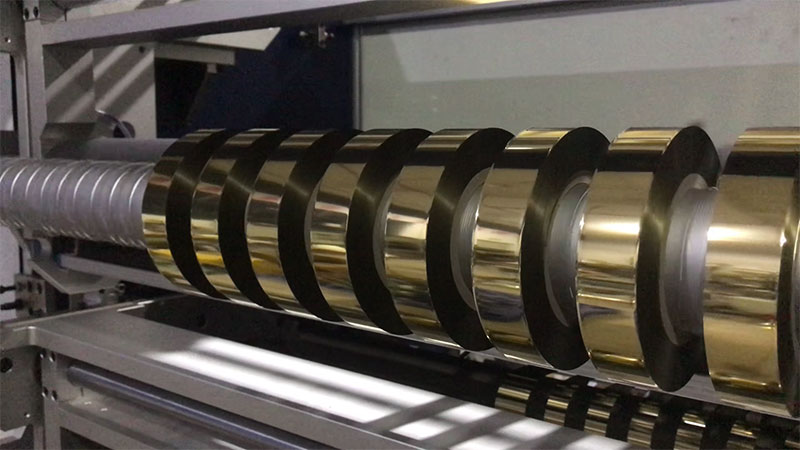
The blade is the "teeth" for slitting. To achieve smooth, burr-free cutting surfaces, high-end slitting machines use ultra-high-precision carbide or diamond-coated round blades, with the blade angle finely polished according to different foil materials (usually 20°-60°). For materials prone to surface wear such as laser foil and transfer foil, special Teflon-coated knives are even used to maximize microstructure protection. At the same time, the use of air-floating guide rails significantly reduces blade friction, allowing slitting speeds to exceed 120 m/min while maintaining smooth and straight cuts.
3. Dynamic Correction and Visual Detection: Equipping Machines with "Eyes" and "Brains"
Any slight deviation during slitting can lead to dimensional inaccuracies or uneven edges. Photoelectric sensors or CCD vision systems are used to monitor the edge position of the foil strip in real time, and millisecond-level correction is performed via hydraulic or electric actuators, with accuracy controlled within ±0.05mm. Furthermore, deep learning-based AI vision inspection systems (such as the YOLO algorithm) can identify defects such as scratches, bubbles, and uneven coatings on the foil surface, with an accuracy rate exceeding 99.5%, and can automatically mark defect locations, linking slitting path planning to minimize scrap rates.
4. Adaptive Adjustment of Process Parameters: Saying Goodbye to "Empiricism"
Faced with the trend of small-batch, multi-variety orders, equipment needs to be highly flexible. The intelligent slitting machine presets multiple slitting schemes via PLC and touchscreen, allowing one-click call of different order parameters (width, tension, speed), reducing order change time from the original 15 minutes to under 3 minutes. The system can even automatically optimize the slitting blade path (such as choosing between spiral blades or flat blades) based on real-time monitoring parameters such as material width and thickness, adapting to the slitting needs of foil hot stamping foil with continuous patterns or independent logos.
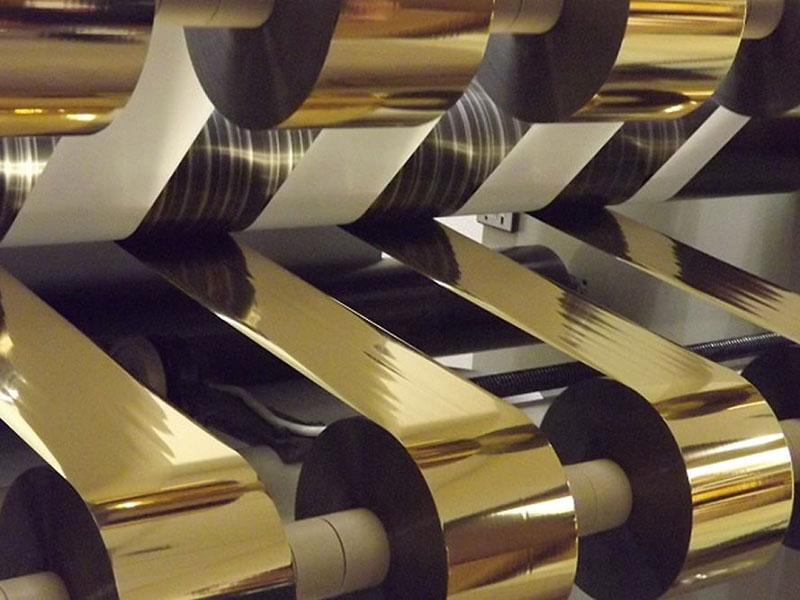
3. Innovation at the Root: Forward-Looking Design of Processes
In addition to precise control at the equipment level, innovation from the material source is also an important approach to pursuing zero defects. A patented technology proposes that by using a local release process during hot stamping foil production, the slitting blade cutting path is deliberately left without applying a fragile release layer. This approach avoids the direct contact of the blade body with the release layer during slitting, which could generate fragments and powder, fundamentally eliminating contamination of the hot stamping plate and pattern defects caused by powder shedding.
Conclusion
The foil foil slitting machine achieving zero-defect slitting is no longer a task relying on the "tactile feel" of experienced craftsmen, but a precision engineering project driven by closed-loop tension control, precision tool systems, AI visual inspection, and intelligent algorithms. Through systematic optimization of equipment, processes, and materials, it reduces the slitting loss rate from over 5% to below 1% in the traditional way, while increasing production capacity by more than 30%.
Saying goodbye to burrs and wrinkles means every inch of expensive hot foil can be fully utilized, and every product features a flawless, brilliant foil pattern. This is precisely the core value of modern hot stamping foil slitting machines.
 English
 Deutsch
 Français
 Español
 Português
 日本語
日本語 русский
 한국어
한국어 عربي
عربي ภาษาไทย
 Tiếng Việt
 Italiano
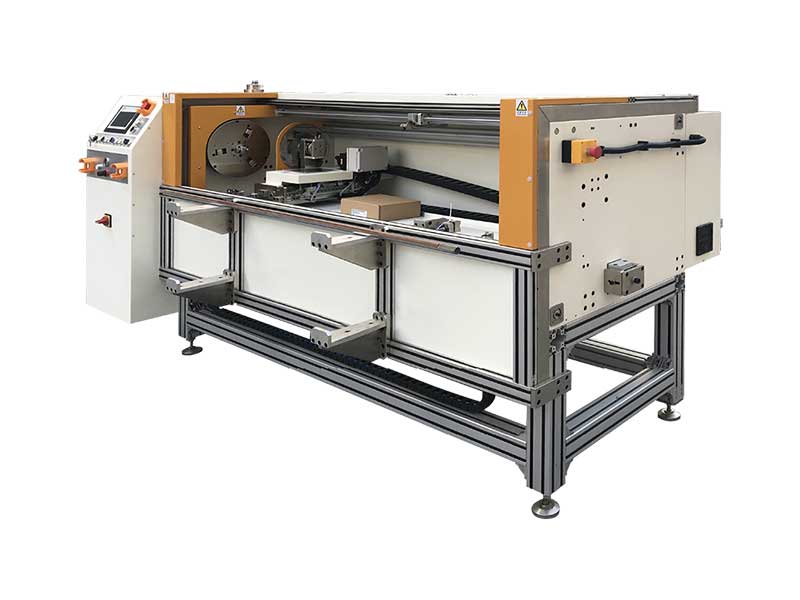 Automatic Foil Roll Cutting Machine
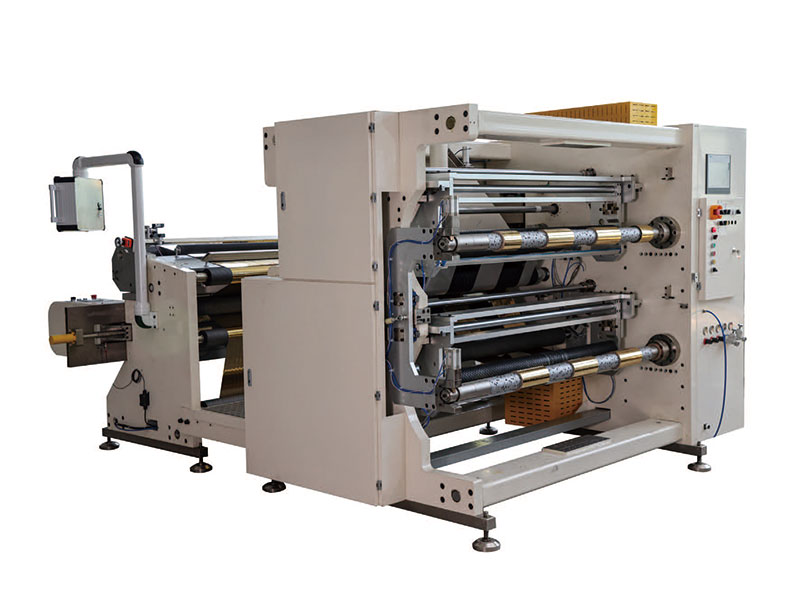 1400mm Hot Stamping Foil Slitting Machine
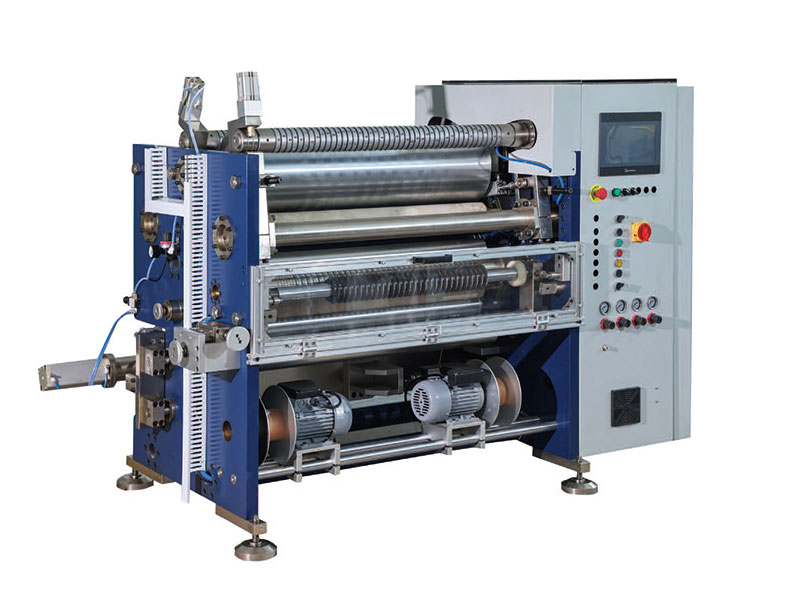 800mm Hot Stamping Foil Slitting Machine
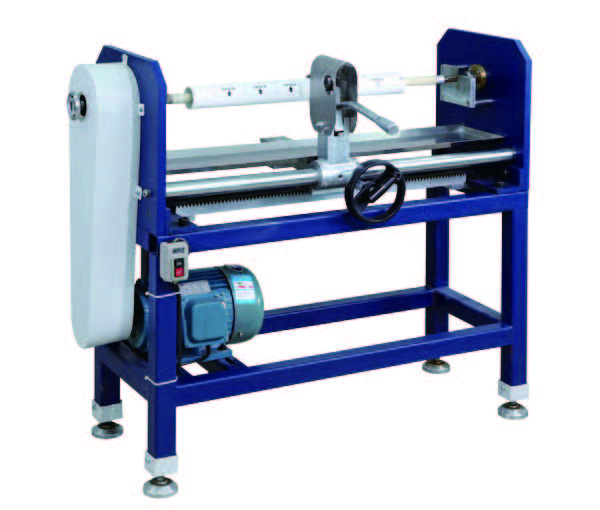 Manual Foil Roll Cutting Machine
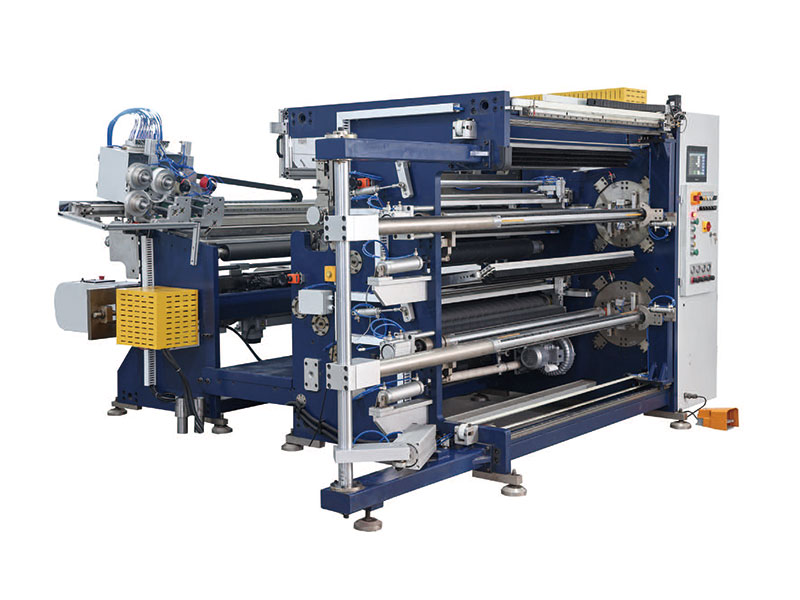 1350mm Hot Stamping Foil Slitting Machine
 Photo & Card Print Ribbon Rewinding Machine
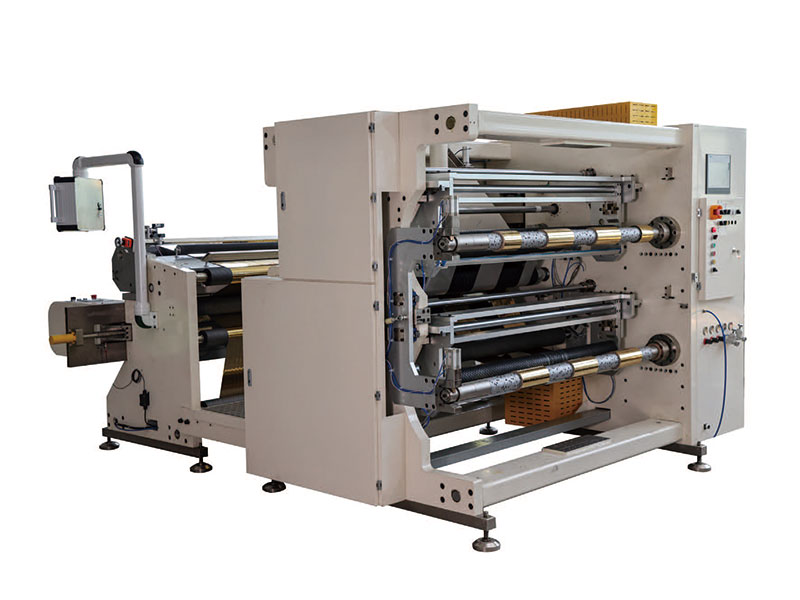 1400mm Copper Foil Slitting Machine
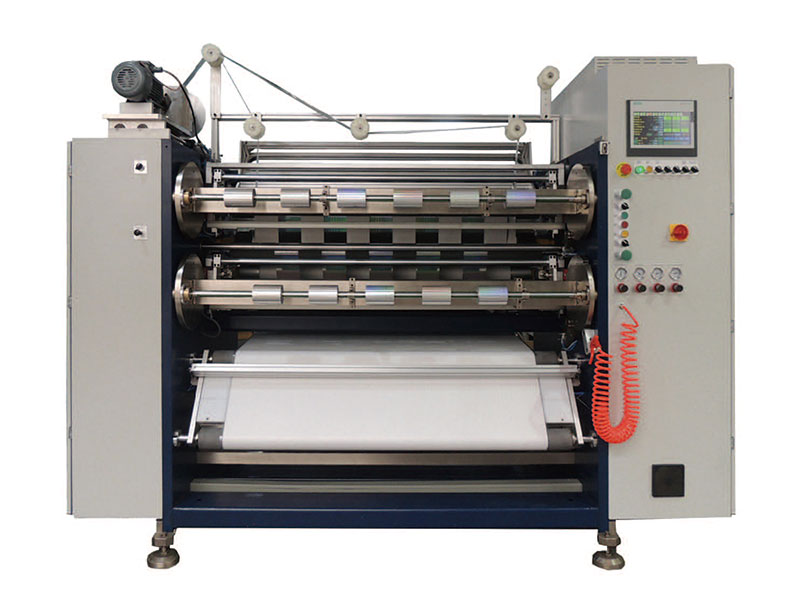 1350mm/1600 Foil Slitting Machine


 +86 135 9951 7291
 support@delishmachine.com