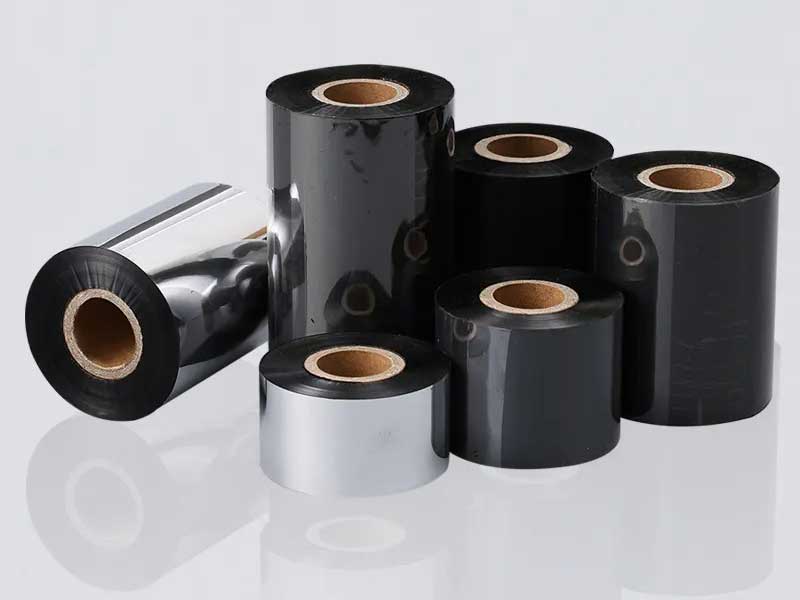
In thermal transfer printing, the edge quality of the ribbon directly determines the print head life and the fineness of the barcode. Once the slitting edge is burred, it will not only cause the cassette and broken tape during printing, but also wear the print head, resulting in white lines and incomplete handwriting in printing. However, ribbon substrates are only a few microns thick and the coating is brittle and thin, making them highly prone to microscopic tears, dust buildup, or coating flanging that can cause burrs when slitting. So, how should the slitting machine systematically overcome this pain point?
1. The root cause of the burr
To solve the problem, you must first understand where the glitch comes from. In the high-speed slitting process, burrs mainly arise from three levels:
1. Cutting edge and material action: Traditional circular knives or razors are "impact + stretch" cutting, and the blade is not idealized vertical shearing when cutting PET substrates, but is accompanied by lateral extrusion. When the substrate is stretched and rebounded, irregular fibrous burrs form at the edges.
2. Microscopic state of the tool: Even new knives have serrations at the edge under the microscope. When slitting thin materials such as ribbons, tiny notches or edge wear can pull the coating like a saw, causing the coating to peel off the substrate to form chips that accumulate into visible "burrs".
3. Tension and static influence: During slitting, the fluctuation of tension will cause the ribbon to swing laterally at the cutting edge, resulting in the cutting line being not unique, repeatedly rubbing both sides of the cutting edge, and the edge is "pasted" or brushed. At the same time, the static electricity generated by the high-speed friction of the ribbon will adsorb dust and chips in the air, attaching to the edges to form grainy burrs.
2. Core solution: process change from "cutting" to "grinding"
Traditional solutions often fall into the misconception of "sharpening knives". Modern high-end slitting machines have shifted to new processes such as cutting instead of grinding, hot cutting, and ultrasonic cutting.
1. MPC (polygonal arc) or trapezoidal edge blade is adopted
• Principle: The traditional circular knife is a double bevel, with a very narrow contact line, strong pressure but disordered shear area. MPC inserts are designed with a unique curved or trapezoidal cutting surface that turns "point contact" into "face contact", and the subsequent plane of the cutting edge undergoes a micro-polishing of the cutting surface at the same time.
• Effect: At the moment of slitting, the blade cuts the substrate first, and then the arc surface overwhelms and smoothes the tiny burrs generated by the PET rebound, which is equivalent to completing the two processes of "cutting + grinding" within 0.01 seconds, and the edge smoothness is improved by several levels.
2. Revolutionizing the way you cut the knife: from shearing to hot (hot slitting)
• Principle: Add a temperature control module to the slitting knife set, heat the blade to just exceed the glass transition temperature of the PET substrate (usually 80-120°C), so that the substrate at the edge of the knife is locally softened rather than hard fracture.
• Effect: In the softened state, the molecular chains of the substrate are cut by the heat flow rather than torn, and the edges are smooth fused, which fundamentally eliminates fibrous burrs. This method is especially suitable for mixed-based, resin-based ribbons with high-density strips.
3. Ultrasonic-assisted slitting
• Principle: Superimpose ultrasonic vibration (20-40kHz) on the round knife to make the blade vibrate tens of thousands of microns per second. This high-frequency micro-vibration causes the coefficient of friction between the blade and the material to approach zero.
• Effect: The cutting resistance is extremely low, and the material can be cut without vigorous squeezing, eliminating the phenomenon of the coating being crushed or peeled, and the slitting edge is clean and clean, dust-free and burr-free.
3. Mechanism guarantee: the art of controlling tension and static electricity
Even if the tool is perfect, burrs can still occur if not properly controlled.
1. Taper tension and closed-loop control
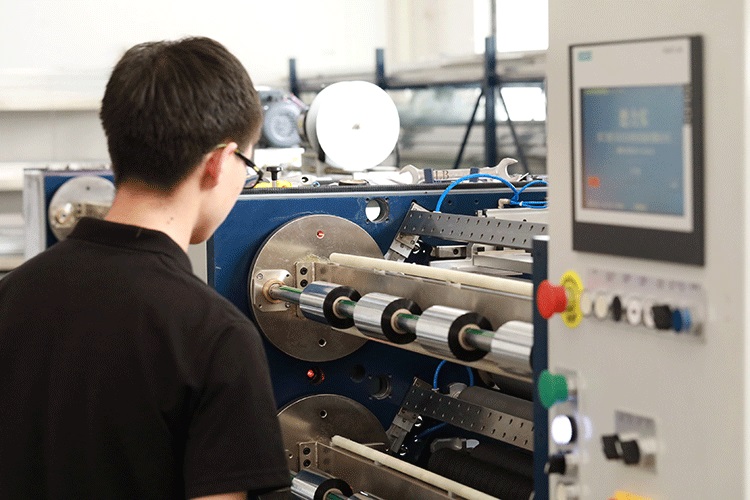
• Key point: When slitting to a small coil diameter, if the tension is constant, the lateral torque of the material at the cutting edge will change abruptly, causing a swing burr. Modern slitting machines use taper tension control, and as the winding diameter decreases, the tension decreases according to the curve, maintaining the absolute straightness of the material at the cutting edge.
• Advanced configuration: Equipped with ultrasonic guidance correction sensor, real-time monitoring of the edge position of the strip, with an accuracy of up to ±0.05mm, to avoid the strip from "rubbing" on the blade of the blade.
2. Active static elimination and vacuum dust removal
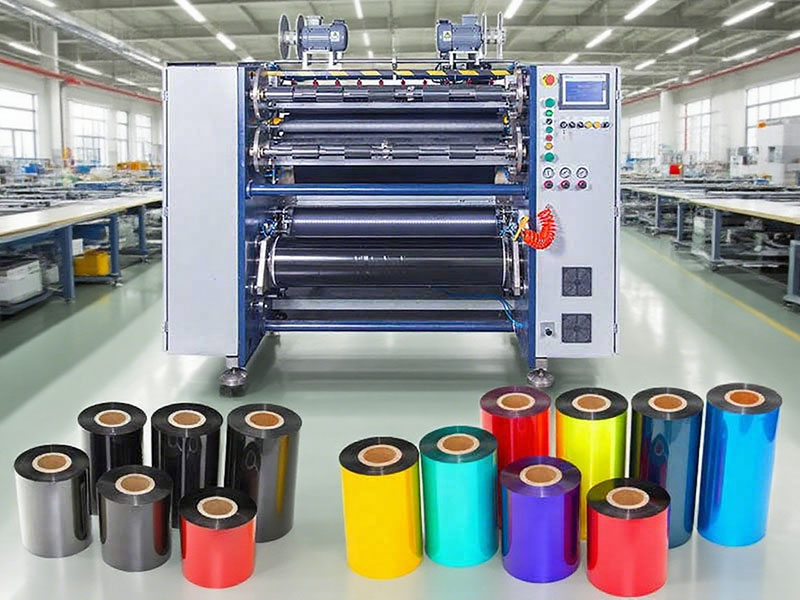
• Solution: Install AC pulse static eliminator rods before and after the slitting tool set, with negative pressure nozzles close to the knife edge.
• Effect: Eliminates static electricity and prevents chips from adsorbing to the edges due to static electricity. At the same time, the vacuum system instantly sucks away the micron-level dust that has just been generated, preventing debris from being rolled into the interwinding layer to crush the edges. Measurements have shown that the dust removal system can reduce edge particulate matter by more than 90%.
4. Maintenance system: dynamic edge management
No matter how good the knife is, it will wear out. The slitting machine needs to establish an online edge monitoring mechanism:
• Microscopic visual inspection: A high-power microscope lens is installed next to the slitting station to capture the slitting edge image in real time, and the AI algorithm automatically identifies the burr level (none/slight/severe).
• Automatic grinding/tool change logic: Once the burr exceeds the standard, the system prompts to forward or reverse the grinding tool set, or trigger the tool change mechanism. It is recommended to actively replace or grind the blade once after slitting the ribbon of 3-50,000 meters, and do not wait for the burr to appear.
5. Case evidence: the transformation effect of a high-end ribbon factory
Taking a manufacturer of mixed-based ribbons as an example, the original use of ordinary circular knives for slitting has a burr rate of about 3.5% and a high claim rate for printhead wear. The transformation plan includes:
• Replaced with MPC hot slitting tool set (knife temperature 100°C)
• Addition of bipolar static elimination rods and high-flow vacuuming
• Upgraded to taper tension control
Results: After 100,000 meters of continuous production, the edge burr defect rate was reduced to less than 0.2%, and the edges of the finished product were neatly mirrored under the 200x microscope, with no flanging and no dust accumulation.
Epilogue
Solving the problem of slitting burrs in thermal transfer ribbons is no longer a matter of simply "sharpening a fast knife", but a system project involving thermodynamics, ultrasonic technology, and precision tension control. From passive "cutting" to active "grinding, ironing, and vibration", combined with the ultimate tension and electrostatic management, a truly burr-free slitting edge can be achieved. For manufacturers looking for high-quality ribbons, the slitting machine should not only be a cutting device, but also an "edge former" – it cuts not only the width, but also the reliability of the ribbon running smoothly under the print head.
 English
 Deutsch
 Français
 Español
 Português
 日本語
日本語 русский
 한국어
한국어 عربي
عربي ภาษาไทย
 Tiếng Việt
 Italiano
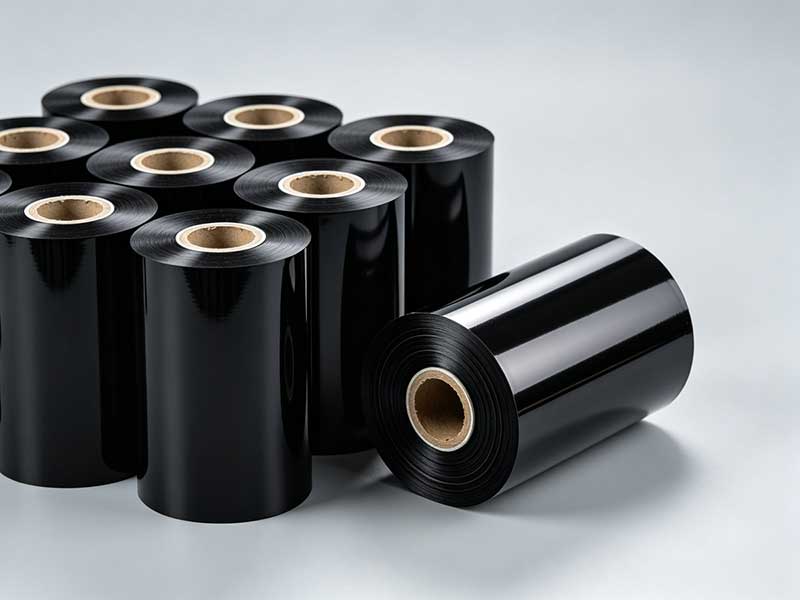
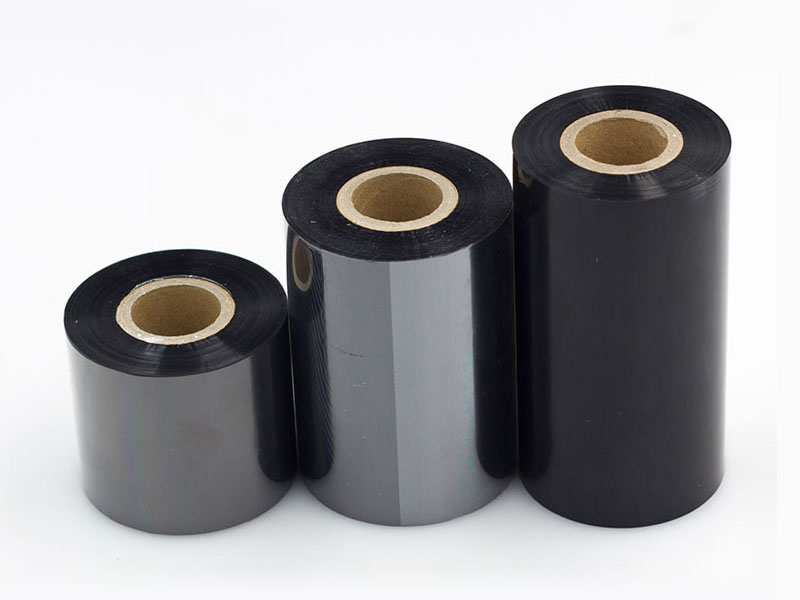
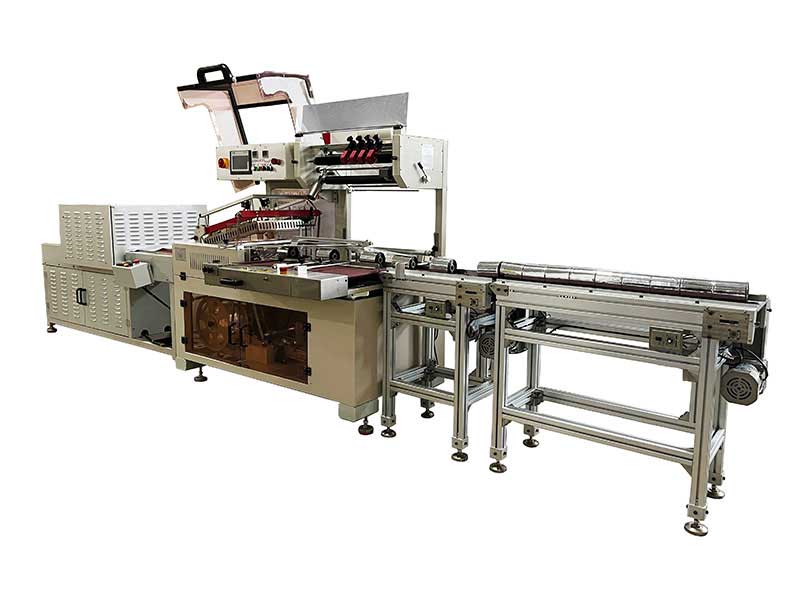 Thermal Transfer Ribbons Packaging Machine
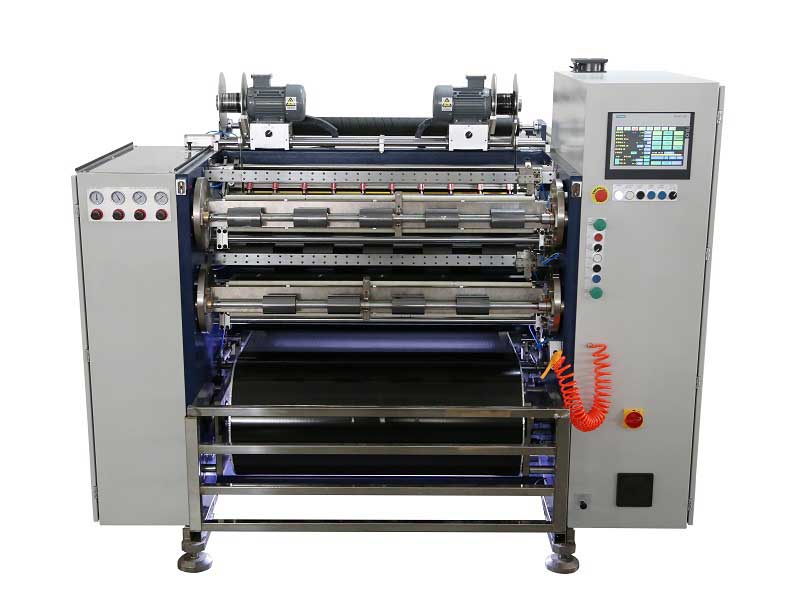 Automatic Thermal Transfer Ribbon Slitting Machine RSDS8 H PLUS
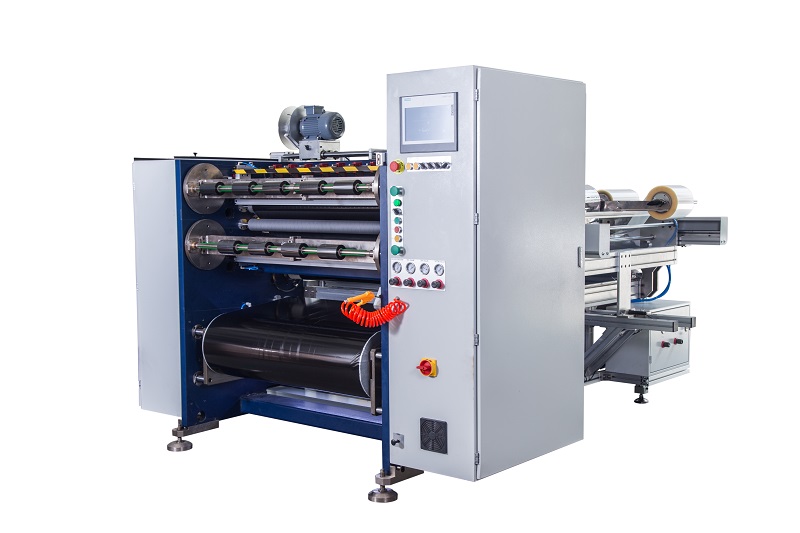 Semi Automatic Thermal Transfer Ribbon Slitting Machine RSDS5 PLUS
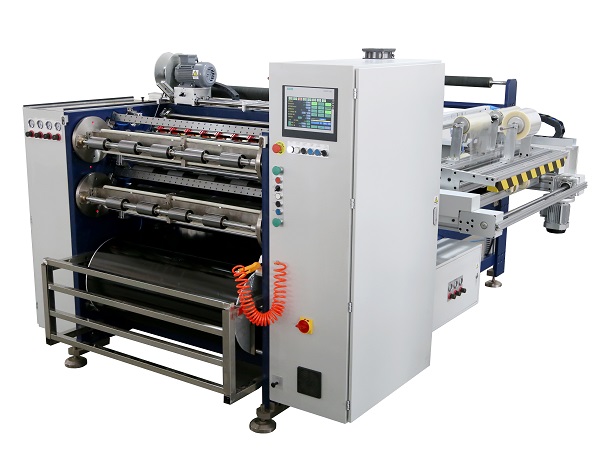 Automatic Thermal Transfer Ribbon Slitting Machine RSDS8 PLUS
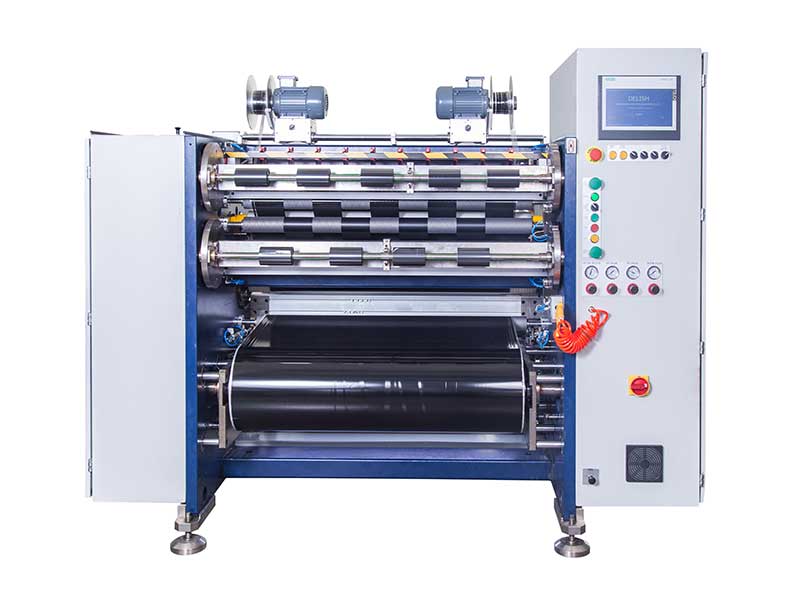 TTR Slitting Machine
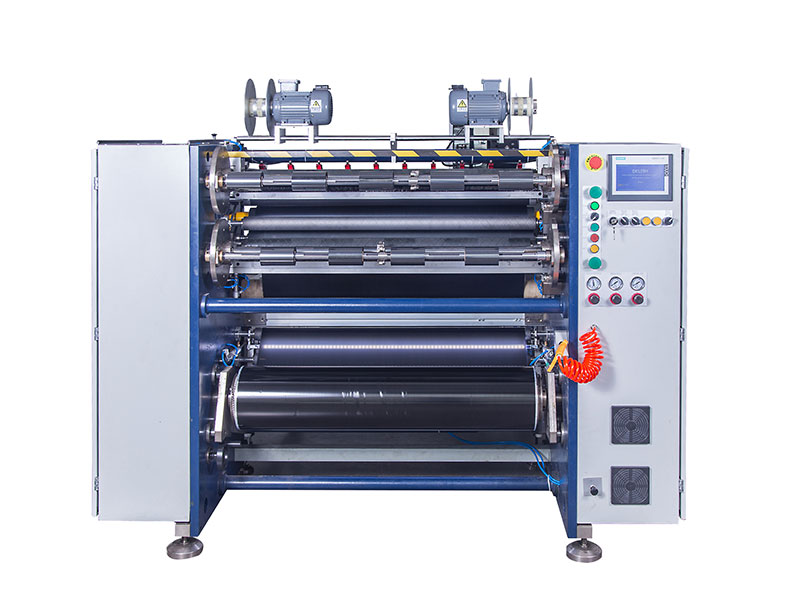 Barcode Ribbon Slitting Machine
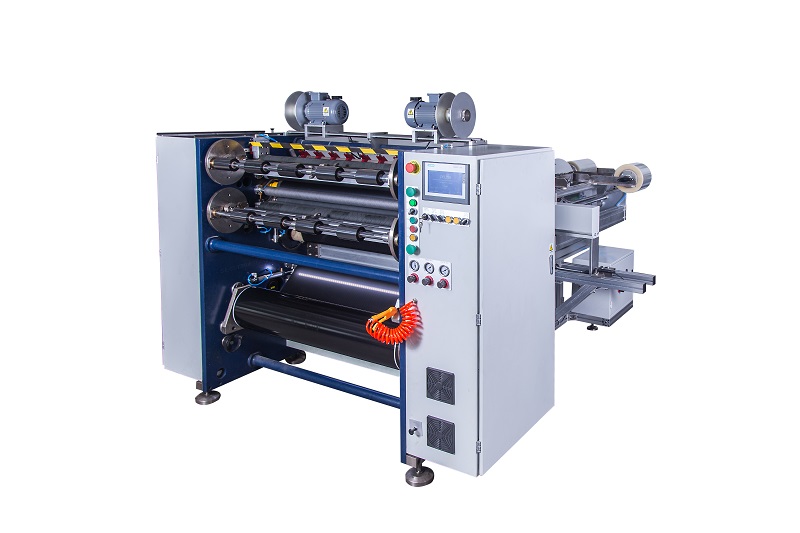 Semi Automatic Thermal Transfer Ribbon Slitting Machine RSDS1 PLUS
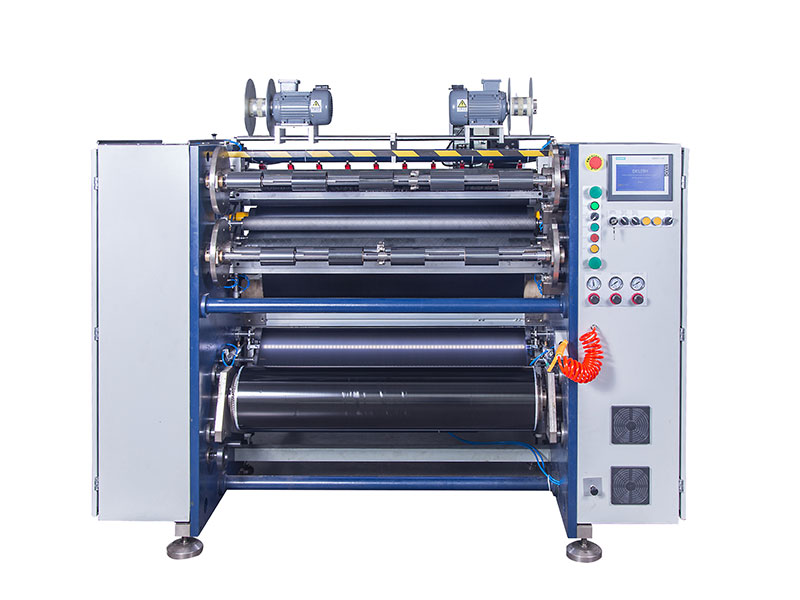 Ribbon Slitting Machine


 +86 135 9951 7291
 support@delishmachine.com