As a high-end packaging material, hot stamping foil is widely used in surface decoration in tobacco and alcohol, cosmetics, gifts and other fields. In the production process of hot stamping foil, the slitting process is a key link in determining product quality and yield. Due to the characteristics of hot stamping foil with thin thickness, sensitive surface coating, and easy to generate static electricity, it is very easy to cause scrap problems such as scratches, wrinkles, uneven end faces, and paper breakage during slitting. How to reduce the slitting scrap rate through key technical means has become the focus of attention in the industry. This article will focus on three key technologies.
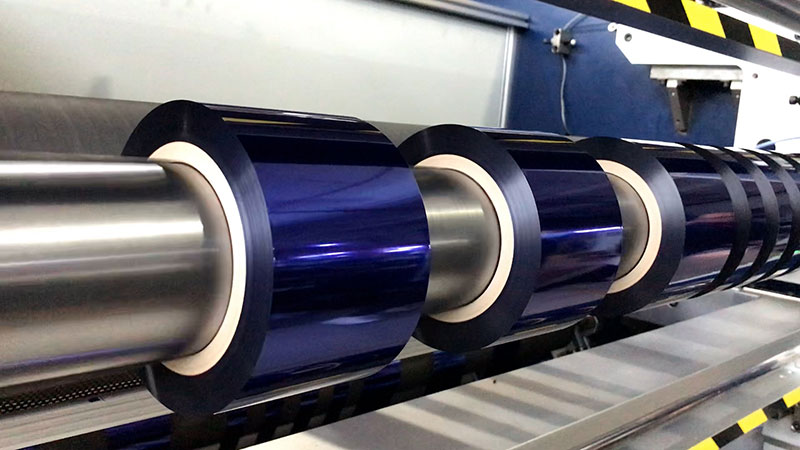
1. Precision tension control technology
During the slitting process, the tension control of the hot stamping foil is the most direct factor affecting the scrap rate. Excessive tension will lead to stretching deformation or even fracture of the foil film, while too little tension will easily cause wrinkles and uneven winding.
Modern hot stamping foil slitting machines generally adopt a closed-loop tension control system, and the core components include tension sensors, servo motors, and PLC controllers. The tension sensor monitors the actual tension value during the operation of the foil strip in real time and feeds back the signal to the control system; after comparing the feedback value with the set value, the controller accurately adjusts the servo motor torque of the winding and unwinding shafts, so that the tension is always maintained within the target range.
The further optimization scheme is to adopt the taper tension control strategy. With the gradual increase of the winding diameter, the tension on the winding shaft needs to decrease according to the preset taper curve to avoid the phenomenon of "chrysanthemum core" or "running winding" caused by the inner ring being too tight and the outer ring being too loose. Experimental data show that the incidence of uneven end face and wrinkled waste can be reduced by 40%-60% after the use of precision taper tension control.
In addition, for different specifications of hot stamping foil (such as different thicknesses and different substrates), the equipment should have a segmented tension setting function, and the operator can pre-store multiple sets of tension parameters according to the process requirements, and call them with one click when changing orders to reduce manual adjustment errors.
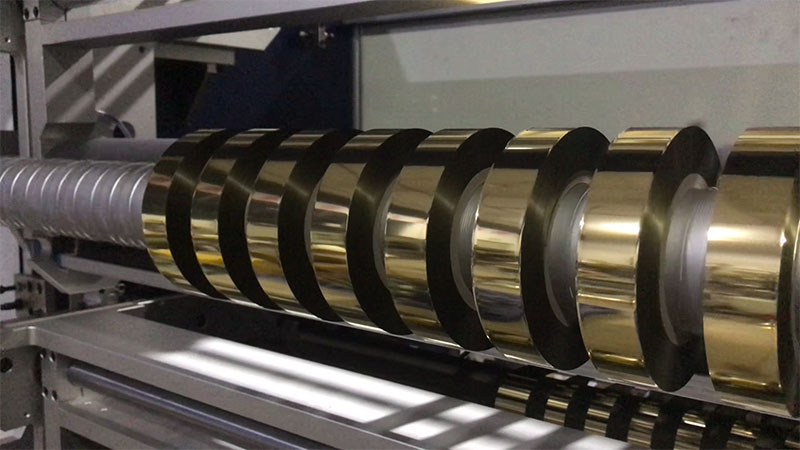
2. High-precision correction and alignment technology
In the process of high-speed slitting of hot stamping foil, the foil belt is prone to lateral drift due to factors such as roller parallelism, uneven thickness of the material's own banner, and airflow disturbance. Once the deviation exceeds the allowable range, it will produce scrap products such as uneven edges, cutting deviations, and even knife strikes.
Ultrasonic or photoelectric guidance systems are the core technologies to solve this problem. Its working principle is: non-contact sensors are installed at the unwinding and winding ends respectively to detect the position offset of the edge of the foil tape or the printed mark in real time; when the offset exceeds the set threshold, the controller drives the linear actuator (such as electric screw or hydraulic cylinder) to move the entire correction frame laterally to return the foil strip to the correct path. The correction accuracy of high-end equipment can reach within ±0.5mm.
In addition to correction, it is equally important to control the alignment of the winding end. After hot stamping foil slitting, the end face neatness is usually required to be within 1 mm. For this purpose, you can use either "follow the edge" or "follow the line" mode, where the sensor follows an edge of the foil or a pre-printed reference line to dynamically track, while the winding roller provides the appropriate axial thrust to ensure that the edges of each layer of foil are tightly aligned. It should be noted that for hot stamping foil on transparent substrates, ultrasonic sensors should be used instead of photoelectric sensors to avoid false detections due to light transmission.
The response speed of the guiding system must match the operating speed of the equipment. For high-speed slitting machines (more than 300m/min), it is recommended to use a servo direct drive correction system, which can control the response time within 50ms and effectively suppress high-frequency offset.
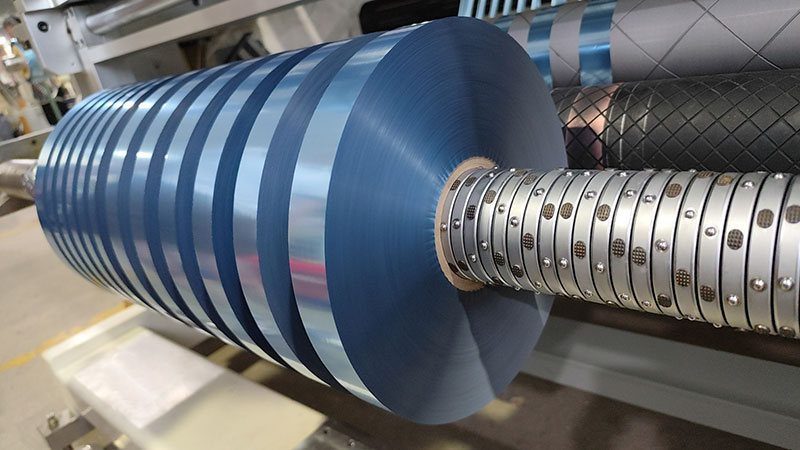
3. Intelligent static elimination and cleaning technology
Hot stamping foil mostly uses PET or BOPP film as the base material, and these materials are very prone to static electricity during high-speed friction separation. Static buildup can cause a series of problems: surface dirt caused by dust adsorption; Due to mutual repulsion between the foil layers, the winding loosening or slippage will occur. In severe cases, it can even produce electric shock sparks that damage sensitive coatings.
Active static elimination rods are standard to address this issue. The principle is to generate a large number of positive and negative ions on the electrode needle through a high-voltage power supply, and use compressed gas flow or electric field force to blow the ions onto the surface of the foil to neutralize the electrostatic charge carried by the material. Compared with traditional AC products, it is recommended to use pulsed DC electrostatic eliminators, which have high dissipation efficiency, good ion balance (residual voltage can be controlled within ±30V), and are not easy to generate ozone.
A further solution is a combination of a closed dust passage and a sticky dust roller system. Acrylic transparent protective cover is set up in the slitting area to form a micro-positive pressure clean environment to prevent external dust from entering; At the same time, low-viscosity cleanable sticky dust rollers are installed on the path of the foil belt to continuously adsorb debris and powder generated by the slitting process itself. The measured data of a hot stamping foil enterprise shows that after adding sticky dust rollers, the surface particle waste rate decreases from 2.1% to 0.6%.
In addition, the grounding and electromagnetic shielding of the equipment cannot be ignored. All metal rollers and tool holders of the slitting machine should be reliably grounded to prevent static electricity from accumulating on metal parts; The control cabinet and sensor cables are shielded to prevent electrostatic pulses from interfering with the control system and causing malfunctions.
Epilogue
Reducing the scrap rate of hot stamping foil slitting machine is not something that can be achieved by a single measure, but needs to be comprehensively made from three dimensions: tension control, correction and alignment, static electricity and clean management. Precision tension control ensures the stability of the foil strip in the length direction, high-precision guidance technology solves the problem of offset in the width direction, and static elimination and cleaning technology provides a guarantee for surface quality.
It is worth mentioning that these three technologies are not independent of each other, but work synergistically. For example, poor static elimination effect will cause the correction sensor to be obscured by dust and cause misjudgment; If the tension fluctuates too much, the friction coefficient of the foil on the correction frame will change, affecting the correction accuracy. Therefore, when selecting equipment or technical transformation, enterprises should systematically evaluate the configuration level of these three key technologies and optimize and debug them based on their own product characteristics. Only in this way can we truly achieve low-waste, high-efficiency and high-quality production of slitting processes.
 English
 Deutsch
 Français
 Español
 Português
 日本語
日本語 русский
 한국어
한국어 عربي
عربي ภาษาไทย
 Tiếng Việt
 Italiano
 Automatic Foil Roll Cutting Machine
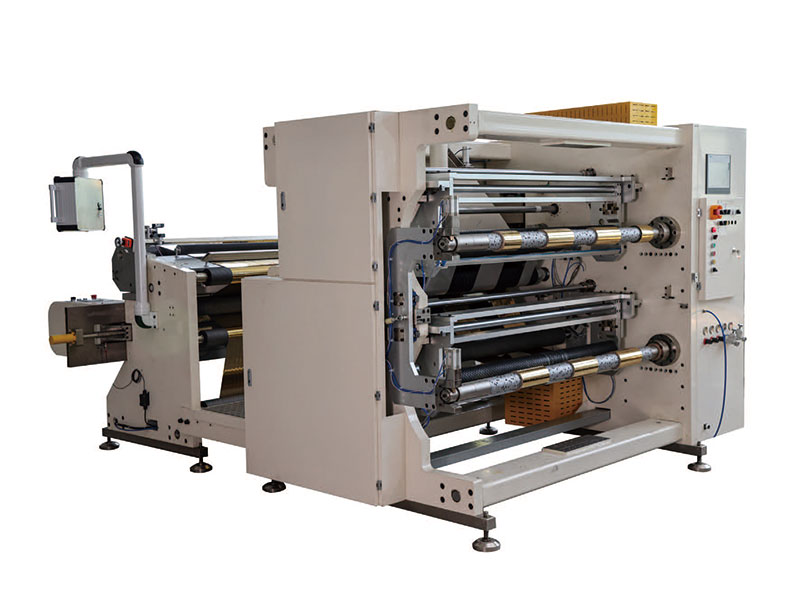 1400mm Hot Stamping Foil Slitting Machine
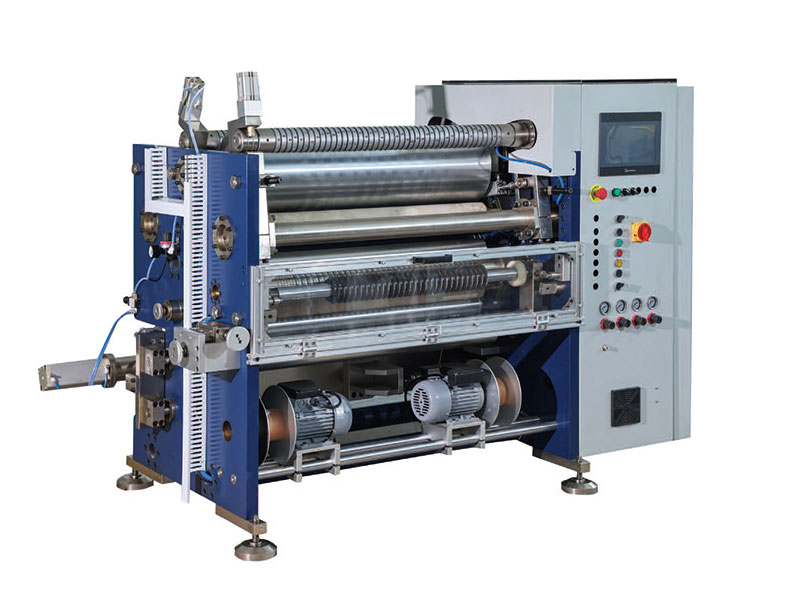 800mm Hot Stamping Foil Slitting Machine
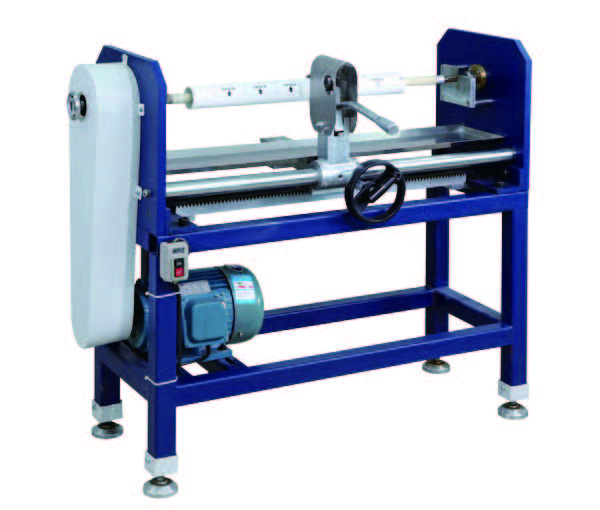 Manual Foil Roll Cutting Machine
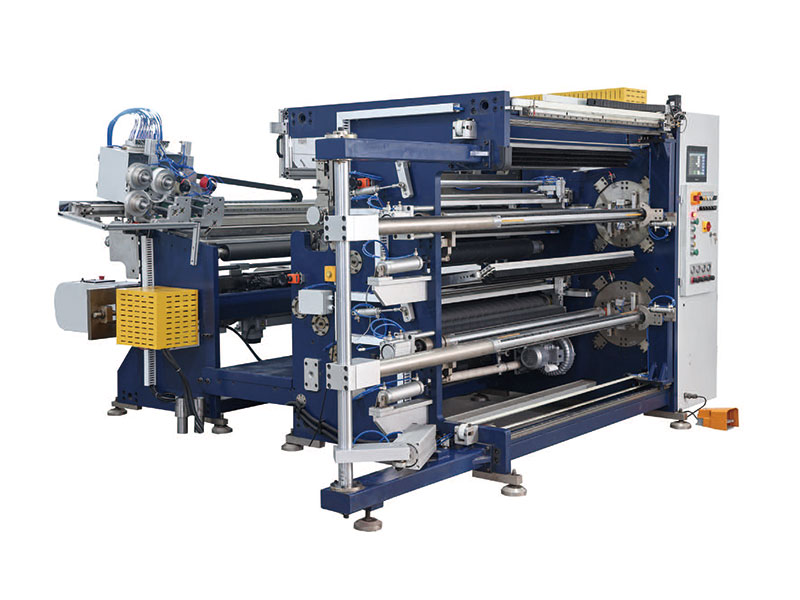 1350mm Hot Stamping Foil Slitting Machine
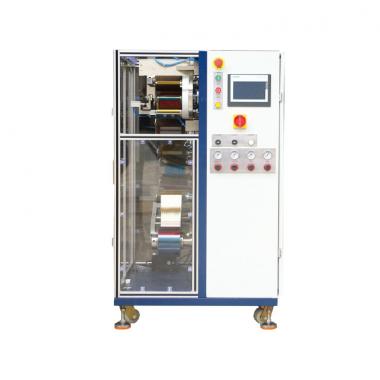 Photo & Card Print Ribbon Rewinding Machine
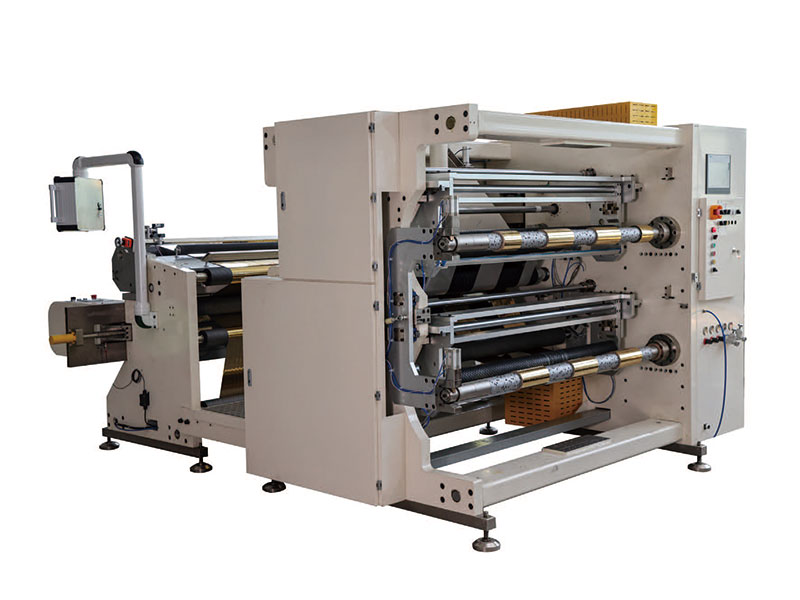 1400mm Copper Foil Slitting Machine
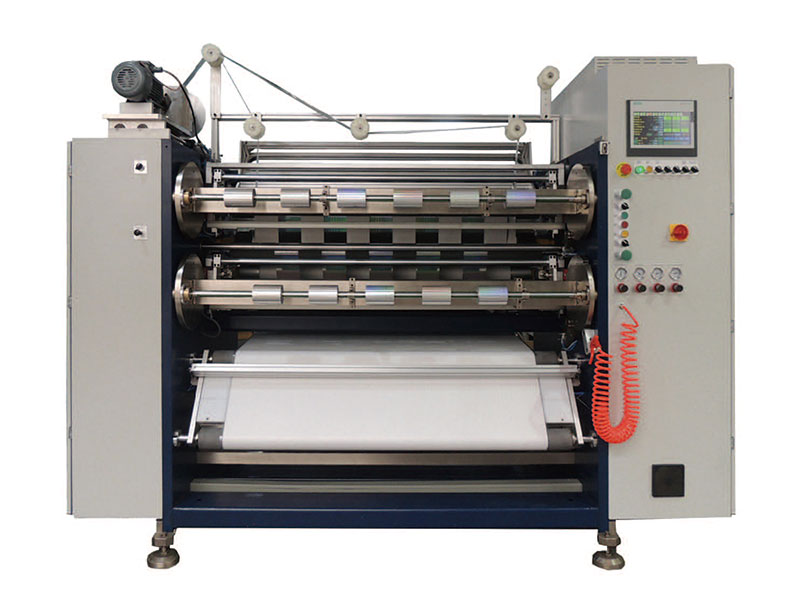 1350mm/1600 Foil Slitting Machine


 +86 135 9951 7291
 support@delishmachine.com