In the fields of high-end packaging, cigarette labels, wine boxes and fine printing, the hot stamping process is a key link to enhance the added value of products. However, the most troublesome problem in foil stamping production is "poor foil stamping": broken pens and missing drawings, poor adhesion, edge burrs or wrinkles.
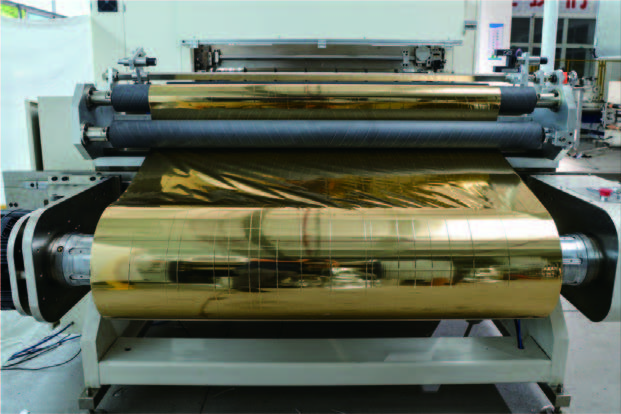
According to statistics, the root cause of more than 60% of the quality problems of hot stamping is not in the hot stamping machine itself, but in the upstream hot stamping foil slitting link. As a pretreatment equipment for slitting wide electroized aluminum foil into narrow rolls, the accuracy of tension control directly determines the flatness, tightness, and coating integrity of the hot stamping foil.
This article will delve into how to improve the yield rate of foil stamping from the source through scientific tension control in the process of foil stamping slitting.
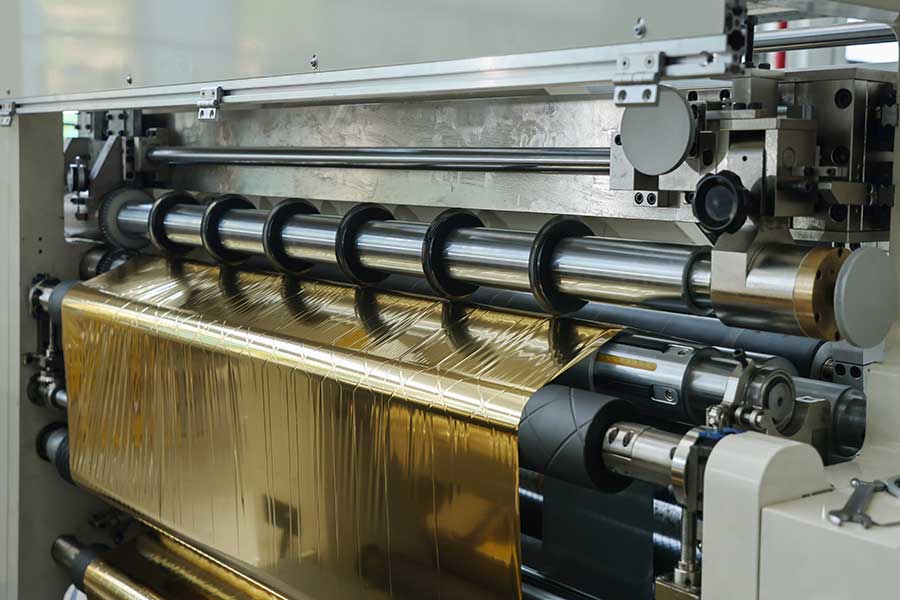
1. Characteristics of hot stamping foil: why is tension control so sensitive?
Hot stamping foil (electrochemical aluminum) is a multi-layer composite film with a multi-layer structure, usually composed of a PET base layer, a release layer, a protective layer, an aluminum layer and an adhesive layer. This structure determines that it has the following properties:
1. Easy stretchability: The base PET film will produce elastic deformation or even plastic deformation when the tension is too high, resulting in pattern deformation during hot stamping.
2. Fragile coating: The coating is very thin and brittle, and excessive tension or tension fluctuations can cause microscopic cracks in the coating, affecting the transfer effect.
3. Edge sensitivity: If the edge of the foil roll is unevenly stressed after slitting, it is very easy to produce curling or ruffles, which will cause unsolid pressing during gold stamping.
Therefore, tension control in slitting machines is not just about "tensing" the material, but about creating a dynamically balanced micro-stress system.
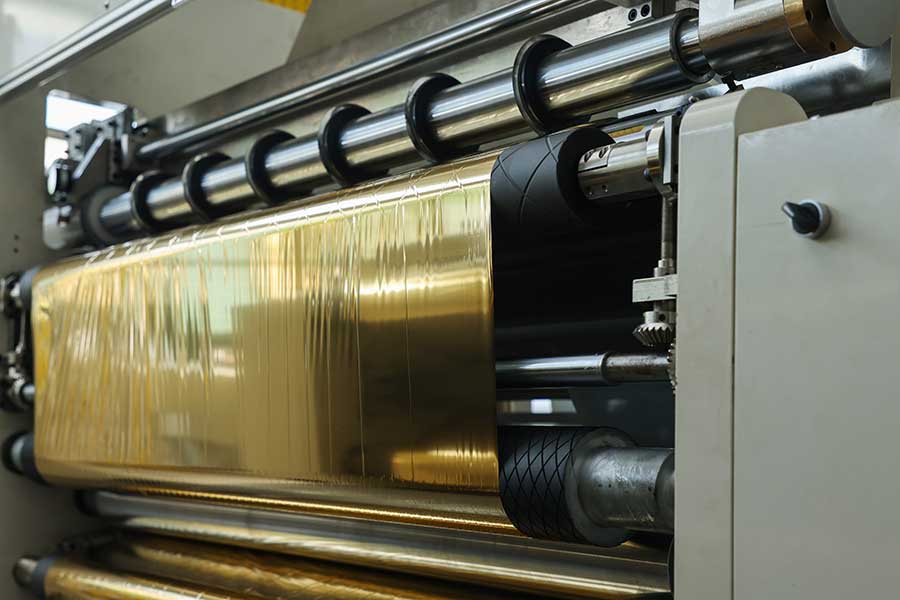
2. Four major tension control points to improve the yield rate
1. Taper tension control for winding and unwinding
During the slitting process, the coil diameter is constantly changing, and if constant tension control is used, it will lead to internal tightness and external loosening or internal tightness and external tightness.
• Unwinding taper: As the roll diameter decreases, the weight of the material decreases, and the required braking force should be reduced accordingly. If the unwinding tension does not decrease in taper, it will cause the foil at the bottom of the large roll to be overstretched.
• Winding taper: As the coil diameter increases, the rewinding tension should gradually decrease (taper control). This can avoid the pressure and deformation of the inner material due to the tightening of the outer layer, ensure the consistent hardness of the whole roll material from the core to the outside, and avoid "loose rolling" or "deviation" when unwinding the hot stamping machine.
2. Dynamic response during acceleration and deceleration
The moment when the slitting machine starts, rises, decreases and stops, it is the moment when the tension fluctuates the most.
• Key points: A high-performance tension control system should have pre-acceleration compensation and inertia compensation functions. That is, before the speed change, the controller pre-adjusts the output torque to offset the inertia impact caused by acceleration and deceleration, ensuring that the tension curve of the foil remains straight at the joint or during operation, and avoiding coating breakage caused by instantaneous overload.
3. The contact pressure control of the winding roller
For thin hot stamping foil, it is easy to get caught in air when winding, resulting in uneven winding or "string rolling".
• Key points: The pressure of the roller must be adjusted in conjunction with the winding tension. In the early stage of winding, the coil diameter is small and requires a large contact pressure to remove air; As the coil diameter increases, the contact pressure should gradually decrease to prevent deformation of the face compression. The ideal winding end face should be as flat as a mirror, which is the prerequisite for the hot stamping machine to feed foil smoothly at high speed.
4. Tension partition isolation
Modern high-end slitting machines are often designed with multiple tension control zones:
• Unwinding area: controls the unwinding stability of the master roll.
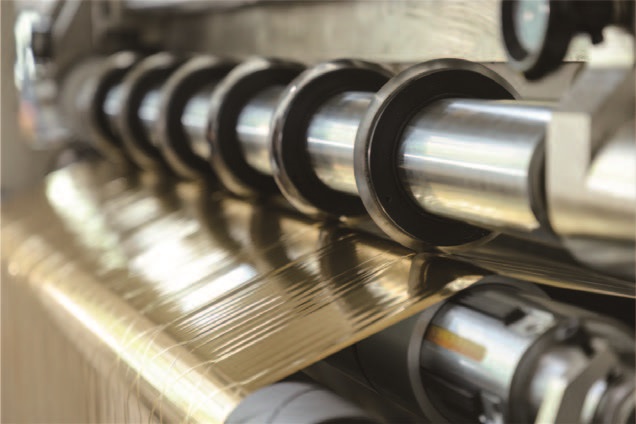
• Traction zone: Establish a stable "neutral point" before and after the slitting knife to ensure that the cutter cuts without jitter of the material, avoiding microscopic aliasing on the edge of the foil due to blade impact (which is the culprit of hot stamping burrs).
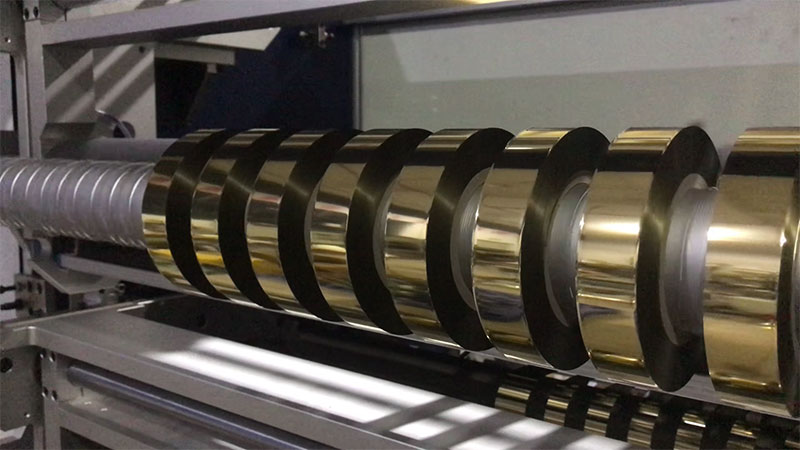
• Rewinding Zone: Independently controls the tension of each reel.
Key principle: It is essential to ensure that the material at the slitting knife is in a state of "zero tension fluctuation", i.e. i.e. isolation of tension fluctuations from the cutting area through real-time feedback from floating rollers or tension sensors.
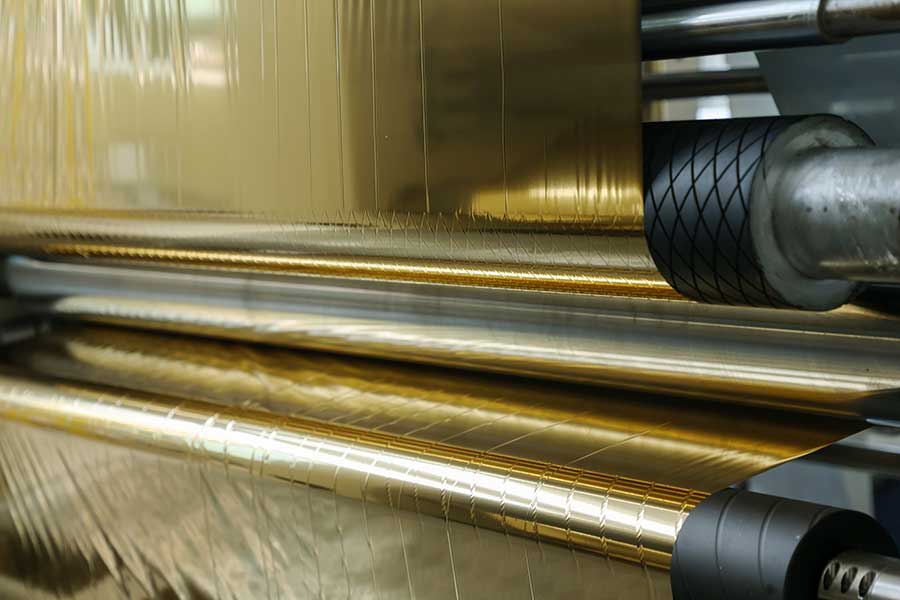
3. Analysis of typical hot stamping defects caused by poor tension
Understanding the correspondence between tension problems and final hot stamping defects can help you quickly locate problems in the slitting process:
1. Foil stamping pattern "blistering" or "flying gold"
◦ Root cause analysis: Tight winding during slitting leads to excessive pressure between coatings and adhesion (anti-sticking). The release layer cracks in advance during hot stamping.
2. "Burrs" or "jagged" edges of the hot stamping
◦ Root cause analysis: The foil tape shakes at the blade during slitting, or the uneven winding tension causes the edge of the foil strip to stretch and deform, which destroys the neatness of the cutting edge.
3. The hot stamping position is "inaccurate"
◦ Root cause analysis: The unwinding tension is too high during slitting, resulting in irreversible stretching of the PET base layer. When hot stamping is heated, the material will shrink or elongate twice, resulting in pattern displacement.
4. Foil "breakage" during high-speed hot stamping
◦ Root cause analysis: When the slitting coil is rewinded, the inside is tight and the outside is loose, resulting in the foil coil sliding between the layers when the hot stamping machine stops at high speed and starts again, and the suddenly loosened foil belt is broken.
4. Conclusion
The improvement of the bronzing yield rate is a refined management from the source. As the core equipment of pretreatment, the tension control system of the hot stamping foil slitting machine is no longer a simple electrical configuration, but the core of the process that determines the competitiveness of the product.
By implementing taper tension control, dynamic inertia compensation and partition isolation technology, each roll of hot stamping foil cut out should have:
• Flat end face (easy to install);
• Consistent hardness (easy release);
• Non-destructive edges (for easy transfer).
When these slitting indicators are guaranteed, the production efficiency and yield rate of the hot stamping workshop will naturally come naturally. In the printing and packaging industry in the era of low profits, whoever controls the tension of slitting will master the first life of hot stamping quality.
 English
 Deutsch
 Français
 Español
 Português
 日本語
日本語 русский
 한국어
한국어 عربي
عربي ภาษาไทย
 Tiếng Việt
 Italiano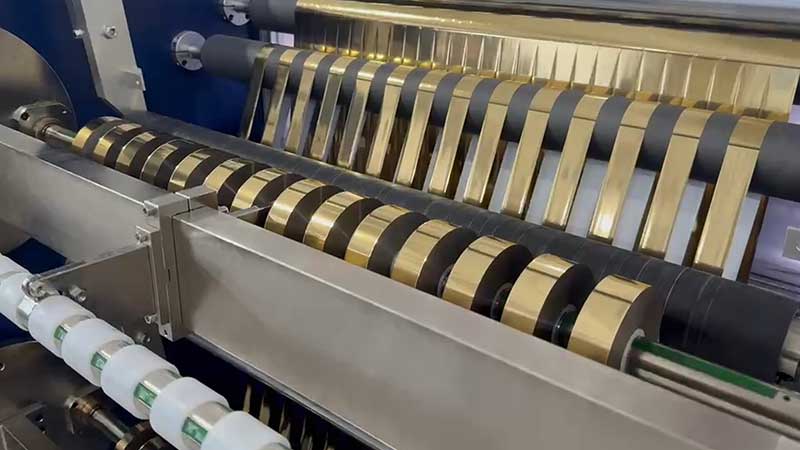
 Automatic Foil Roll Cutting Machine
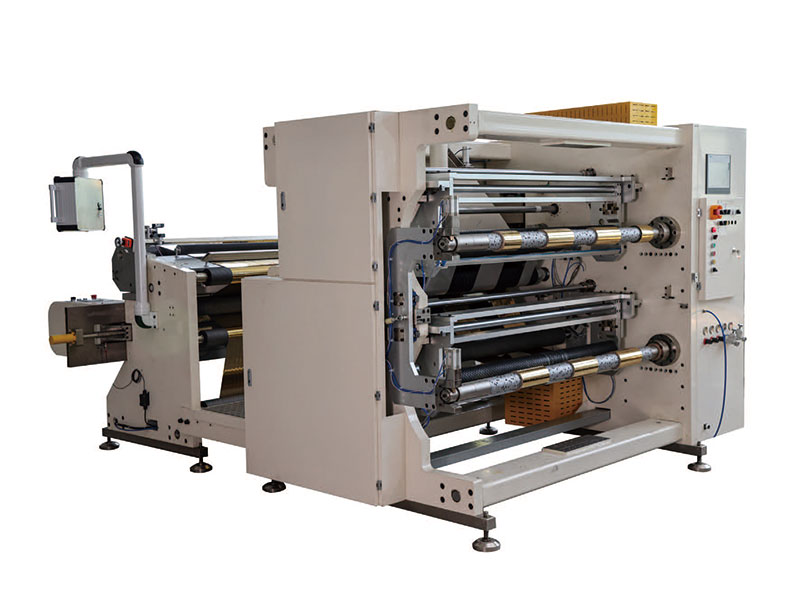 1400mm Hot Stamping Foil Slitting Machine
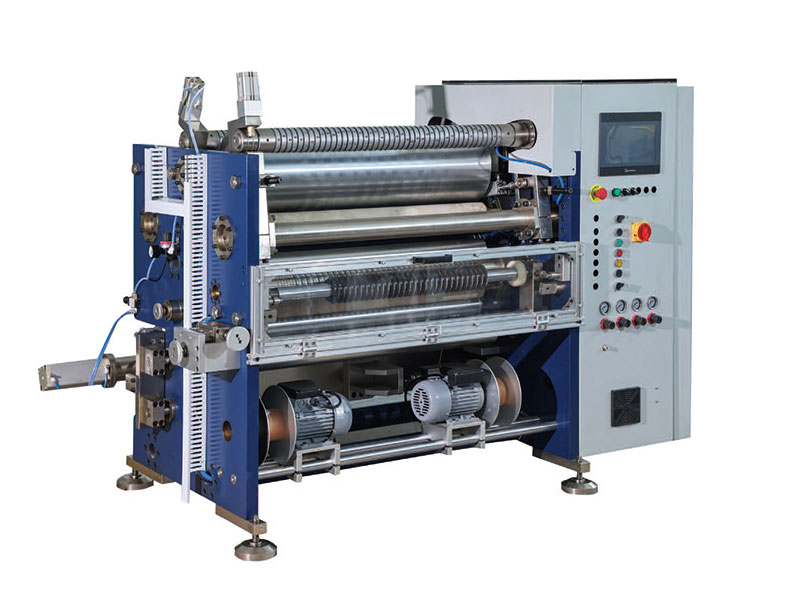 800mm Hot Stamping Foil Slitting Machine
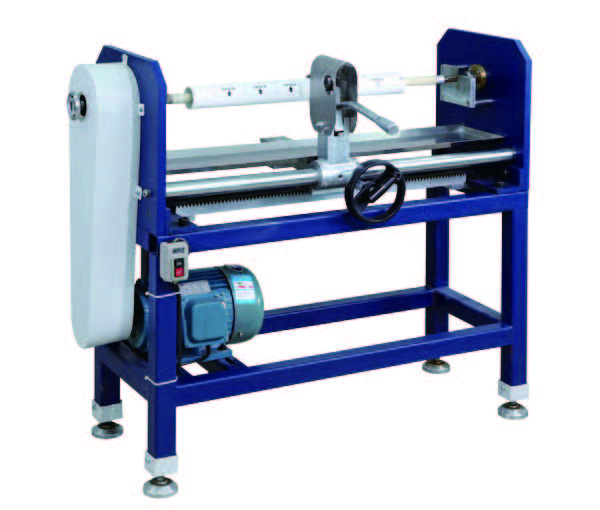 Manual Foil Roll Cutting Machine
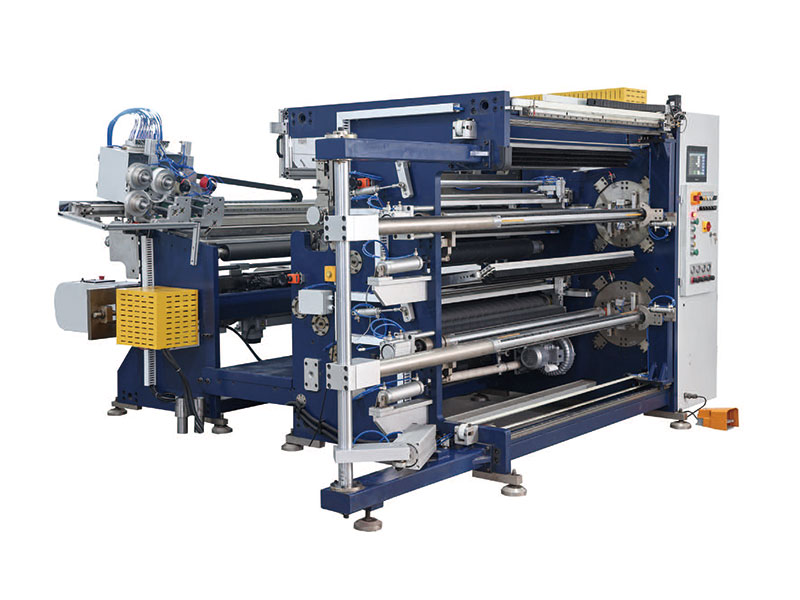 1350mm Hot Stamping Foil Slitting Machine
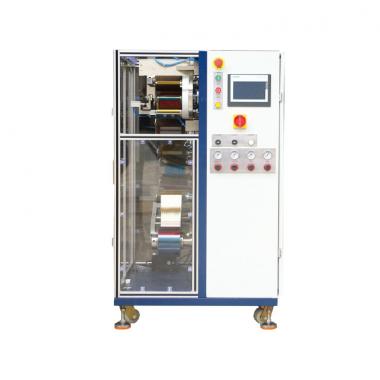 Photo & Card Print Ribbon Rewinding Machine
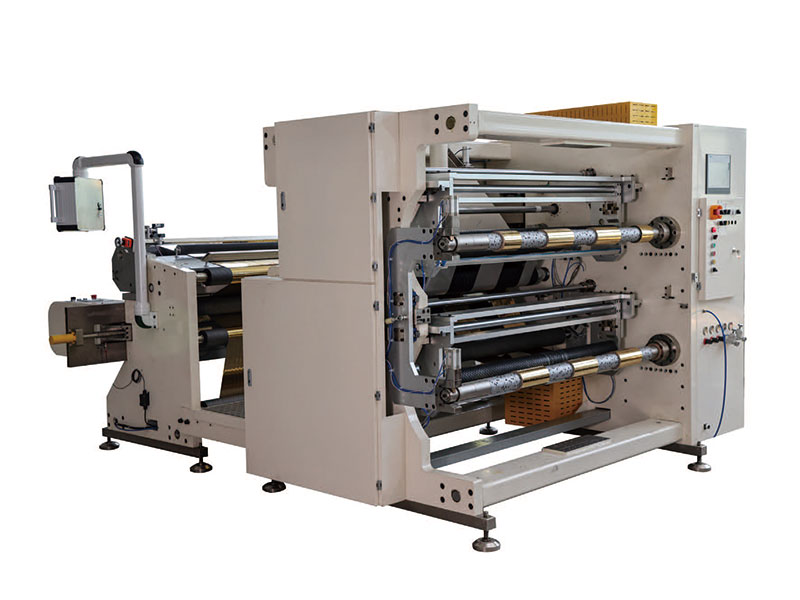 1400mm Copper Foil Slitting Machine
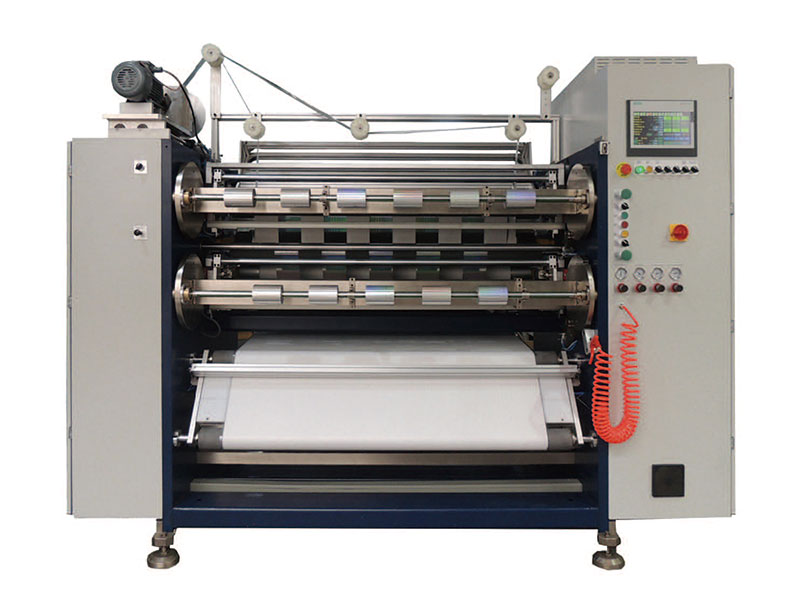 1350mm/1600 Foil Slitting Machine


 +86 135 9951 7291
 support@delishmachine.com