Hot stamping foil slitting is a key step in the process from master roll to finished roll of hot stamping foil, and the quality of slitting directly affects the accuracy and yield of downstream hot stamping patterns. In 2026, as small-batch custom orders become the norm and hot stamping materials evolve toward thinner and more sensitive areas, the selection logic for slitting machines is undergoing profound changes. This article provides a current selection framework from four dimensions: material adaptation, core parameters, intelligent configuration, and cost evaluation.
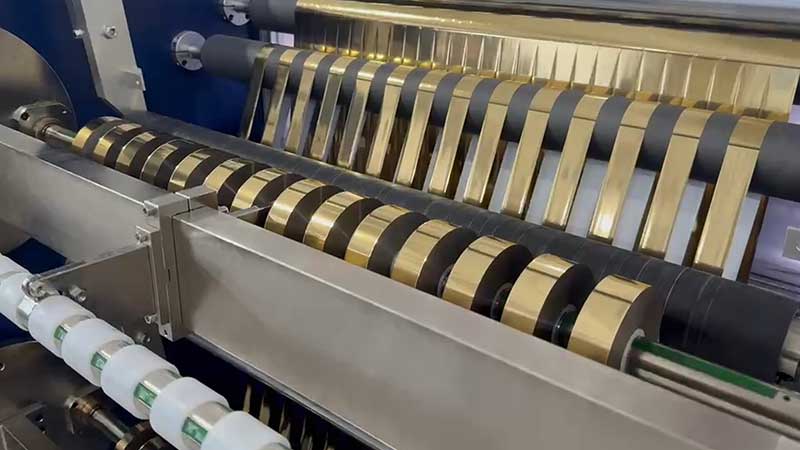
1. First, figure out what you're cutting
The first step in selecting a model is not to look at equipment parameters, but to thoroughly understand the material characteristics. The physical composition of hot stamping foil—the base film (usually PET), release layer, tinted layer, aluminized layer, adhesive layer—determines its sensitivity to the slitting process.
Thickness and width are fundamental parameters. The mainstream hot stamping foil thickness on the market is between 4~30μm, and the common width of the master roll is 400~1400mm. If the main product is narrow-width finished products such as cigarette packs and liquor labels, a minimum slit width of about 20mm is a hard requirement; For micro-text hot stamping on luxury packaging, the width tolerance must be controlled at a stricter level.
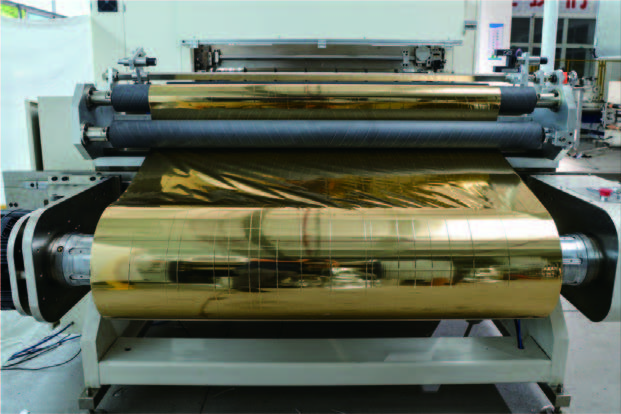
The material type is directly related to the slitting process. Ordinary hot foil films are relatively "tough," but laser foil and holographic foil have metallized coatings or grating structures on their surfaces. Micro-vibrations caused by blade contact during slitting can scratch the functional layers. These materials require the blade shaft to have sufficient hardness and to have the guide roller surface treated to prevent scratches; otherwise, the yield will be invisible and lost.
One dimension that is easily overlooked is order structure. The reality in 2026 is that hot stamping foil order specifications have surged from just a few traditional types to dozens of types, while single batch sizes have plummeted from tens of thousands of meters to hundreds or even dozens of meters. If a single equipment change requires more than half an hour of downtime, small batch orders simply cannot generate profit. When selecting models, "order change speed" must be given equal importance to "slitting accuracy."
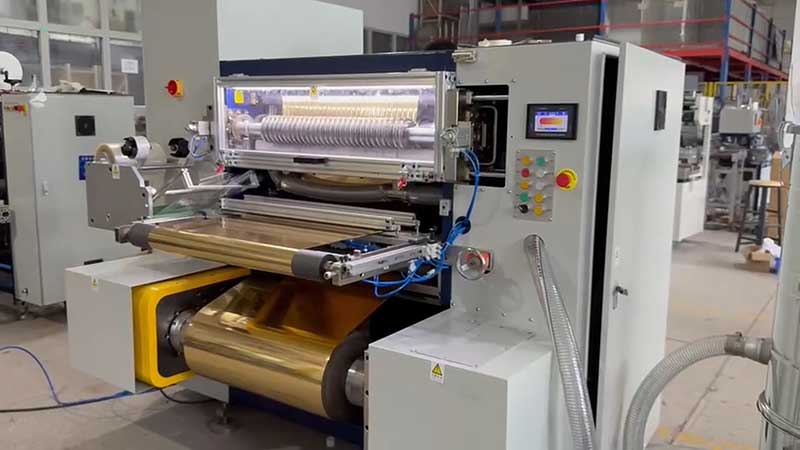
2. Four core parameters determine whether the device is usable
Accuracy: Not reading brochures, but checking trial cutting results
Slitting accuracy includes two aspects: width tolerance and edge quality. Ordinary packaging hot stamping foil ±0.2mm is usually sufficient, but high-end anti-counterfeit hot stamping requires stricter controls. Edge quality is checked for burrs, ripples, or coating peeling—these defects can be magnified into incomplete patterns during subsequent hot stamping processes.
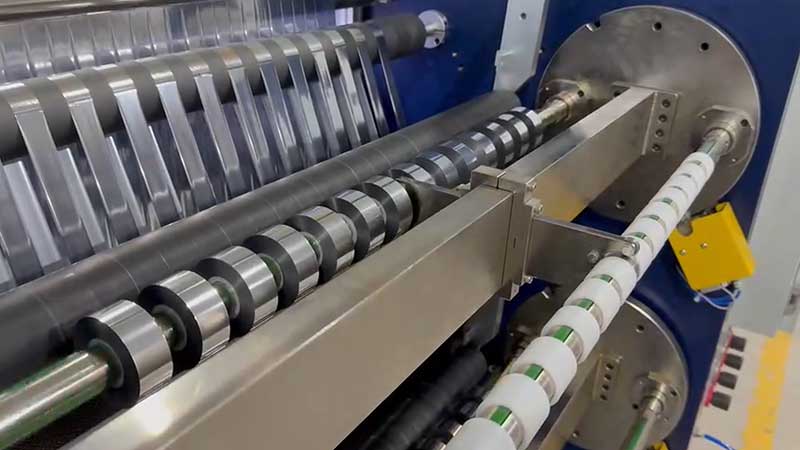
Round blade slitting remains the mainstream method for hot stamping gold foil, with neat cuts and relatively controllable blade lifespan for upper and lower blades. However, the performance of circular cutters heavily depends on shaft rigidity and the response speed of the correction system. When selecting, be sure to bring your hardest-to-cut material—the thinnest and most sensitive coating—to the manufacturer for on-site trial cutting, measuring width deviations with a caliper, and inspecting the end face with a magnifying glass.
Tension control: The key point of gold foil slitting
The base film of hot stamping foil is thin and the coating is sensitive; slightly excessive tension can cause stretching, deformation, or even coating cracking; too low tension causes loose rolling and misalignment of the end face. Traditional magnetic particle brake solutions can still be used in medium and low-speed scenarios, but when facing high-speed operation or thin materials, closed-loop servo tension control is almost essential—it can adjust in real time throughout the entire process of unwinding, slitting, and rewinding, keeping tension fluctuations within ±1%.
The winding end is equally crucial. The slip shaft combined with taper tension control ensures the finished roll is tight and loose from the inside out, preventing "tight inside, loose outside" or the "chrysanthemum core" phenomenon. If the winding tension cannot be adjusted, interlayer slippage is very likely to occur during narrow slitting.
Speed: Matches production capacity, not paying for performance that is unusable
The nominal speed of hot stamping foil slitting machines is commonly 50~500m/min. However, the labeled "maximum speed" is the limit value under ideal conditions; the actual stable operating speed is the reference point. High-speed operation demands tension control, correction accuracy, and rack rigidity increase exponentially; blindly chasing higher may result in frequent downtime and debugging and a large amount of scrap.
It is recommended to calculate the required speed based on daily output: in small-batch, multi-variety scenarios, an economic speed range of 200~300m/min is often more practical than the nominal value of 500m/min.
Correction system: a base for ensuring accuracy
Unwinding and correction is the first line of defense for slitting accuracy. Photoelectric correction (edge chasing) and thread tracking mode are standard features for hot stamping foil slitting. If the main roll itself has uneven slitting quality or uneven edges, the correction system's response speed and correction stroke become key variables. When selecting, confirm the brand and accuracy level of the correction system, rather than just "yes/no."
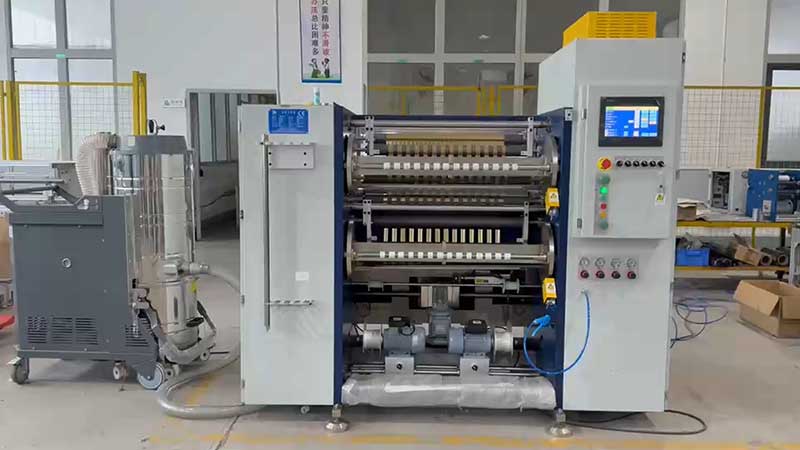
3. Intelligent Features: From a "Bonus" to a "Mandatory Option"
For slitting machine selection in 2026, intelligence is no longer just a bonus, but a core capability for small-batch customization.
The rapid changeover system directly determines the economics of small-batch orders. Models equipped with preset parameter memory allow operators to automatically adjust tool spacing and tension settings after the product specifications are retrieved, reducing changeover time from several hours to just a few minutes. For factories that need to switch between multiple specifications daily, the value of this configuration far outweighs the increased costs.
Intelligent production management interfaces integrate slitting machines into digital workshops. Equipment integrated with MES systems can receive electronic orders, automatically plan optimal slitting schemes, and automatically call process parameters based on material type, reducing reliance on operator experience. For production modes with multiple varieties and high-frequency switching, this "data-driven" capability can improve overall yield better than mere mechanical precision.
Online detection and closed-loop control are penetrating from high-end to mid-range. Some leading models have integrated visual inspection systems that can identify the edge position of foil coils in real time and dynamically adjust the toolpath, reducing the gold stamping material loss rate from the industry average of 8% to around 2%. If high-value laser foil or anti-counterfeiting foil is being processed, the investment payback period for this configuration may be shorter than expected.
4. Overlooked details: dust removal, static electricity, and after-sales service
The dust generated during the slitting process of hot stamping foil is a hidden cost. Coating debris adheres to the surface of the finished roll, causing white spots or incomplete stamping during downstream stamping. Models equipped with independent dust removal devices can significantly reduce such quality risks, and for orders with stringent surface quality requirements, this configuration cannot be skipped.
Static electricity elimination is equally important. PET base films tend to accumulate static electricity during high-speed operation, causing dust to attract or misalign rolling. Static elimination rods should be confirmed as standard configuration, not as an optional add-on.
The responsiveness of after-sales service is the last line of insurance. If the slitting machine stops, downstream hot stamping processes may also be halted. When selecting models, it is necessary to understand the manufacturer's service coverage capacity in the area, the supply cycles of commonly worn parts (blades, air shaft seals), and whether remote diagnostics are supported.
Selection decision checklist
Finally, condense the above dimensions into an actionable checklist:
Material end: the thinnest/most sensitive material type; Maximum width and outer diameter of the main roll; Minimum width and tolerance requirements for finished products; Average daily order change frequency.
Performance side: Measure width deviation and end face mass with actual cut-to-edge; Types of tension control systems (open-loop/closed-loop); The difference between nominal speed and stable speed; Correction system accuracy.
Configuration side: model change time (switching from current specification to next specification); Whether parameter presets and memory are supported; Whether dust removal and static elimination are standard; Arrangement of winding shafts (air shaft/slip shaft) and tension taper control.
Cost side: equipment price and premium for intelligent features; Material savings from expected yield improvement; Improved changeover efficiency frees up production capacity; After-sales response timeliness and spare parts costs.
Selecting a hot stamping foil slitting machine is essentially a matter of matching—matching your material characteristics, order structure, and quality standards. In 2026, when customized production becomes mainstream, a "sufficient and flexible" piece of equipment is often more valuable than one "maxed out with parameters but difficult to change."
 English
 Deutsch
 Français
 Español
 Português
 日本語
日本語 русский
 한국어
한국어 عربي
عربي ภาษาไทย
 Tiếng Việt
 Italiano
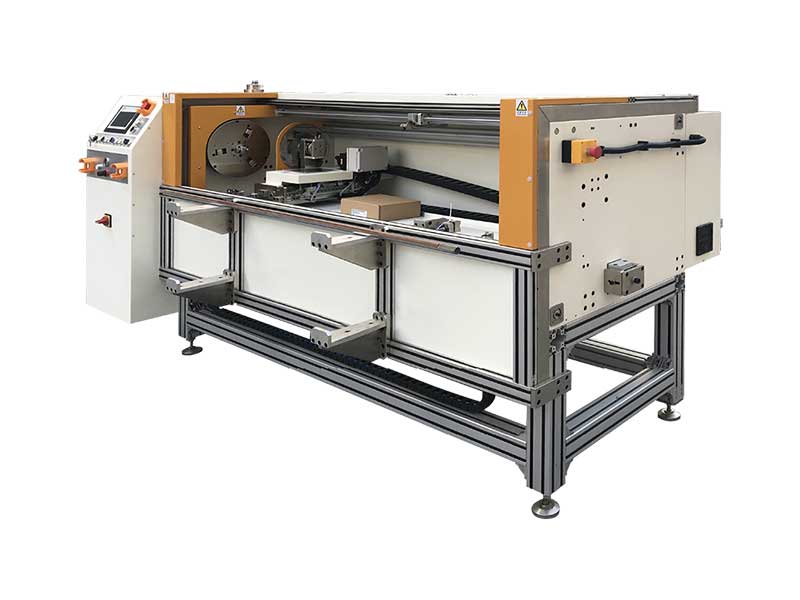 Automatic Foil Roll Cutting Machine
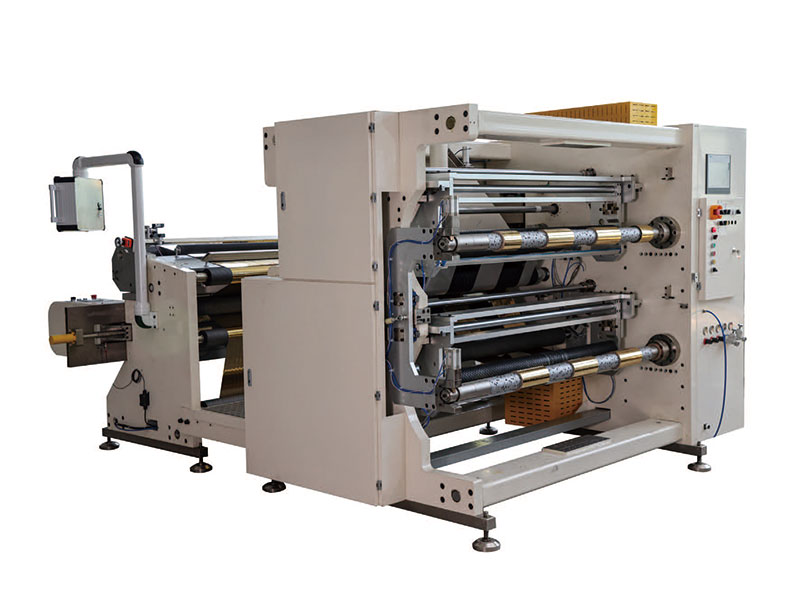 1400mm Hot Stamping Foil Slitting Machine
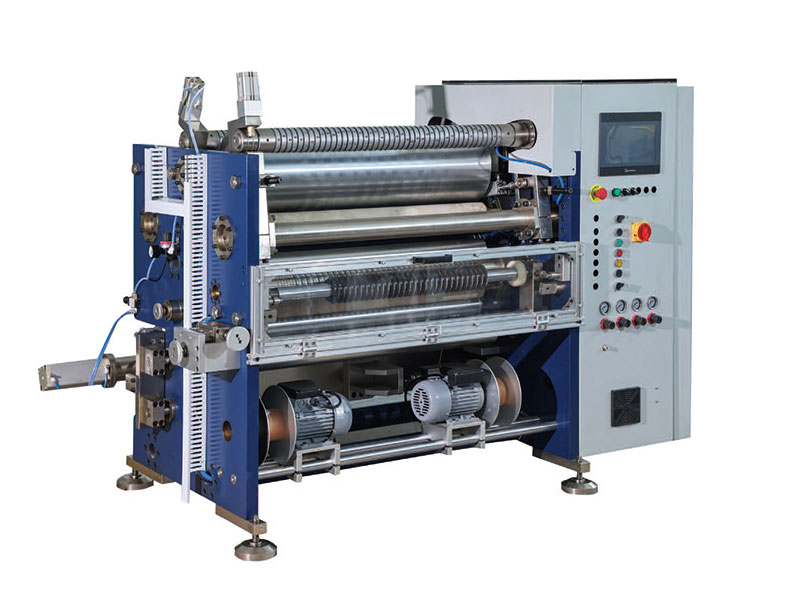 800mm Hot Stamping Foil Slitting Machine
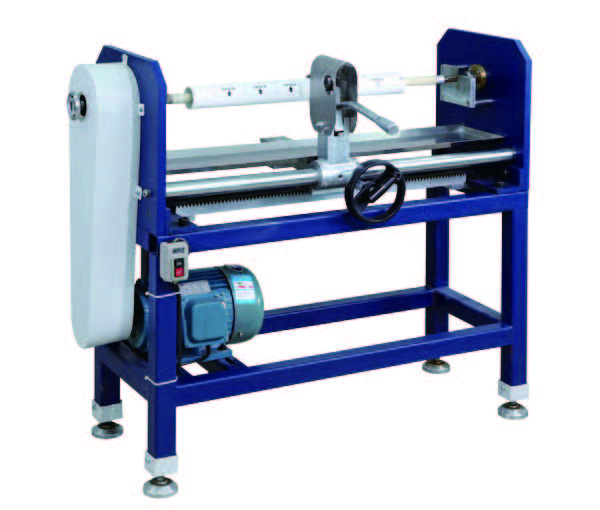 Manual Foil Roll Cutting Machine
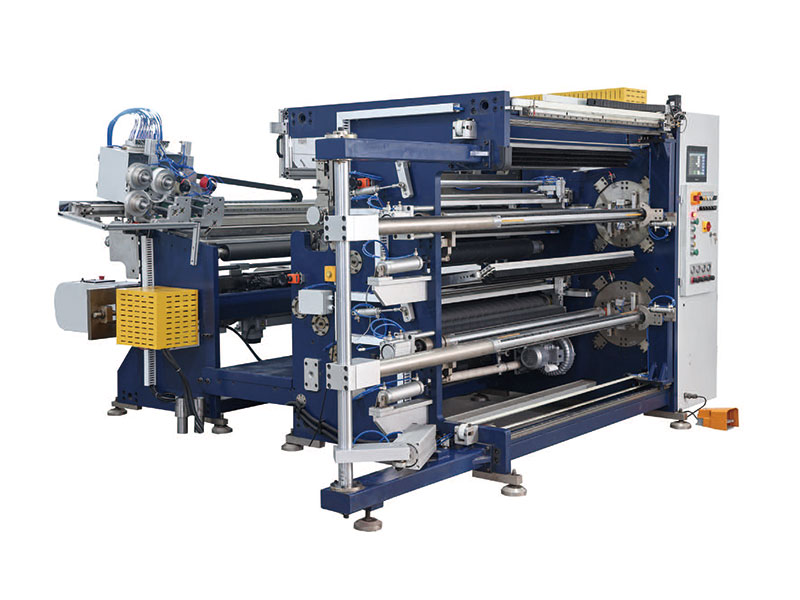 1350mm Hot Stamping Foil Slitting Machine
 Photo & Card Print Ribbon Rewinding Machine
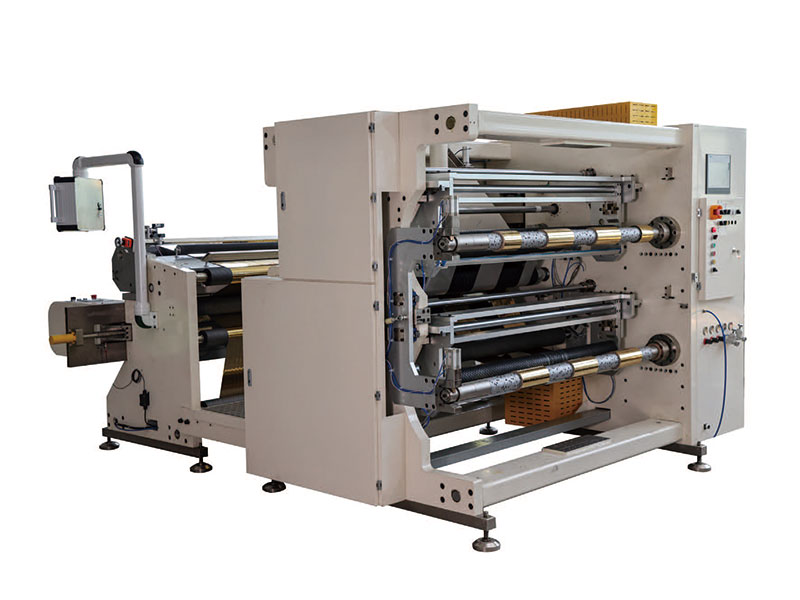 1400mm Copper Foil Slitting Machine
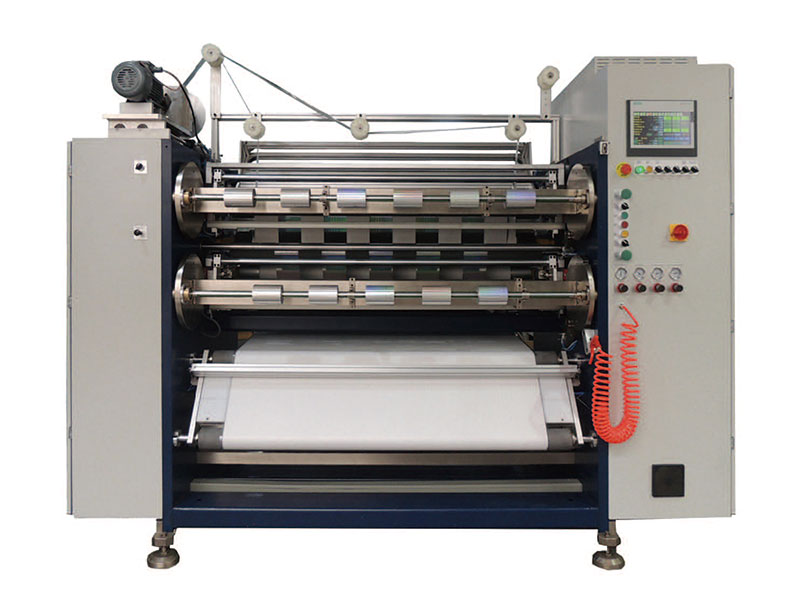 1350mm/1600 Foil Slitting Machine


 +86 135 9951 7291
 support@delishmachine.com