In the hot stamping workshops of the packaging and printing industry, an awkward situation often plays out: high-speed hot stamping machines costing hundreds of thousands of yuan run at thousands of sheets per minute, yet often have to "wait for rice to be put into the pot" due to insufficient upstream slitting processes. Gold foil slitting—this key step that converts wide master rolls into thin rolls usable by hot stamping machines—has long served as an "invisible bottleneck" on the production line.
Breaking through this bottleneck and releasing capacity in the slitting process is not simply about "running the machine faster," but a systematic project involving speed, precision, order change efficiency, and equipment management.
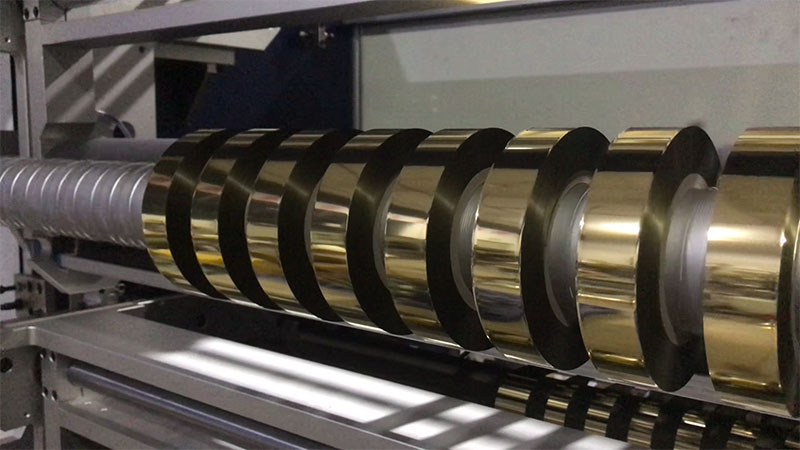
1. The Speed Revolution: The Leap from "Strolling" to "Sprinting."
The most direct constraint on slitting capacity is line speed. Traditional slitting equipment usually operates at speeds of 80-150 meters per minute, which is significantly lower than the supply demand of downstream high-speed hot stamping machines. Modern high-speed slitting machines have pushed the design speed to 300-500 meters per minute through servo motor direct drive technology and precise vector control, with some high-end models even reaching 700 meters per minute.
The value of increased speed is especially evident in continuous production. For example, processing 10,000 meters of hot stamping foil per day takes traditional equipment nearly 2 hours, while high-speed machines only need about 40 minutes. This means a single slitting machine can simultaneously meet the material needs of multiple hot stamping machines, transforming the slitting process from a production bottleneck into an efficiency engine.
However, high-speed operation brings challenges—the hot stamping foil is only 4-30 microns thick, the material is thin, and the surface is smooth, making it extremely sensitive to tension fluctuations. The higher the speed, the more severe the tension disturbances. Without precise control, issues such as strip breakage, wrinkling, and uneven winding will follow, which in turn reduce effective production capacity.
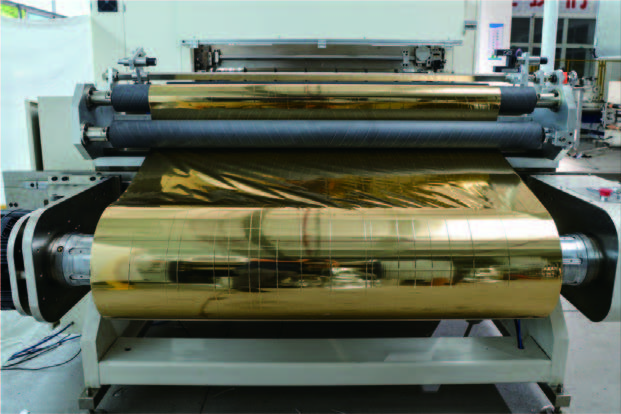
2. Precision Assurance: "Stability" and "Accuracy" at High Speed
High speed and high precision are not contradictory opposites. Modern slitting machines achieve both speed improvement and quality assurance through three core technologies.
Closed-loop tension control is the cornerstone of neat winding. Traditional open-loop control operates only on the initial set value, making it difficult to adapt to dynamic disturbances caused by speed changes and increasing coil diameter. The closed-loop system uses high-precision sensors to monitor foil tension in real time, with millisecond-level adjustments made by the servo system. More importantly, millisecond-level tension adjustment technology—the direct-drive torque motor—keeps response delay within 5ms. Combined with the model predictive feedforward algorithm, at a 500m/min speed abrupt change, tension overshoot is only 0.8N, with recovery time about 80ms, whereas traditional PID solutions overshoot 3.5N and recovery requires 400ms.
High-precision correction systems solve the problem of material deviation. Ultrasonic or CCD vision sensors continuously detect the foil edges, with correction accuracy up to ±0.1mm, ensuring the slitting lines are absolutely straight. High-end models have a slitting accuracy of ±0.05mm, and special designs can even reach ±0.01mm, with material loss rates dropping from over 5% to below 1%.
Slitting quality control focuses on edge finish. If there are fine burrs at the edge of the hot stamping foil, friction between adjacent layers will occur during high-speed winding, causing edge fibers to accumulate and gradually deviate from the original plane. The high-precision circular blade slitting system, combined with an online vacuum device, can keep burr height within 5μm, ensuring uniform winding from the source.
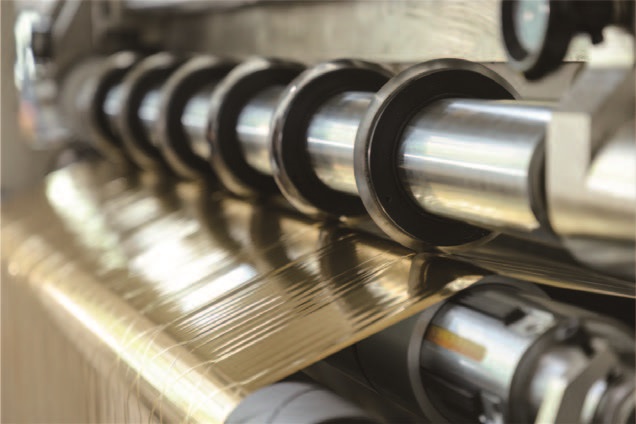
3. Order Change and Efficiency Improvement: The Transformation from "Hour-level" to "Minute-level."
With the trend of multi-variety, small-batch orders, frequent order changes have become another core bottleneck for split production capacity. Traditional equipment often takes 30-45 minutes to change blades, thread film penetration, and adjust tension. For companies processing 15-20 different order specifications daily, just preparing for order exchange requires several hours of effective production time each day.
The intelligent slitting machine significantly shortens order change time through system design:
• Parameter presets and one-click calls:P The LC intelligent control system has hundreds of built-in process schemes, allowing operators to switch parameters with one click, reducing debugging time by over 70%.
• Modular rapid tool change system: uses pre-installed tool groups and hydraulic locking devices, reducing tool change time to under 3 minutes.
• Dual-station winding and automatic splicing: Enables continuous production without stopping machines, completely eliminating the passive situation of "waiting for material" and "waiting for people" during slitting.
Actual cases show that after order change time was reduced from 15 minutes to 3 minutes, effective equipment operating time increased significantly, and overall production capacity jumped by 30%.
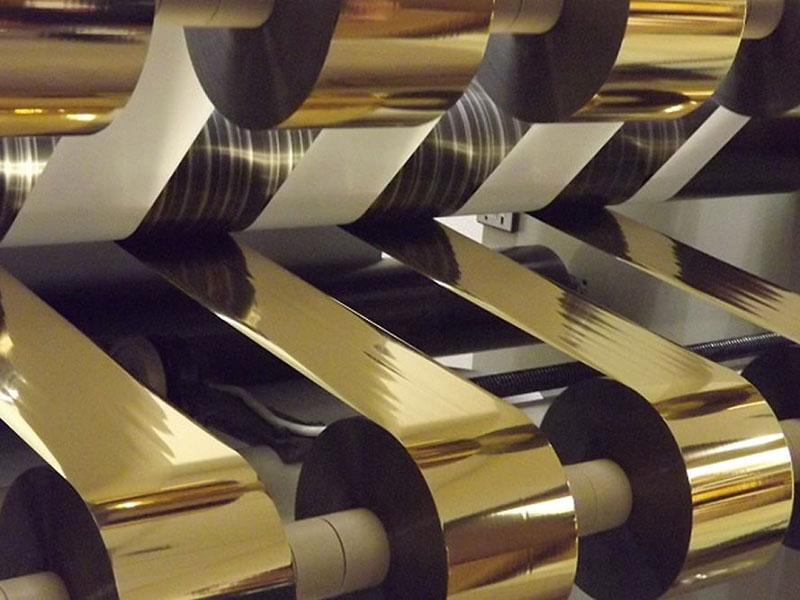
4. Intelligent Empowerment: From "Experience-Driven" to "Data-Based Decision-Making"
The ultimate form of speed improvement is the evolution of devices from passive execution tools to active decision-making nodes. The new generation hot stamping foil slitting machine transforms its speed advantage into systematic efficiency dividends through three major intelligent upgrades.
The AI visual inspection system can accurately identify microscopic defects such as scratches, bubbles, and uneven plating on the foil surface, with an accuracy rate exceeding 99.5%, preventing defective products from entering subsequent processes at the source.
Predictive maintenance installs sensors for vibration, temperature, and current, enabling the system to predict tool dullness or bearing wear in advance, eliminating unexpected downtime and reducing unplanned downtime by more than 30%.
Data interconnection seamlessly connects to MES/ERP systems through standardized protocols such as OPC UA, enabling real-time uploading of production data, and closed-loop management of scheduling, material feeding, slitting, and packaging, completely transforming the traditional "experience-driven" model into a modern manufacturing model of "data-driven + intelligent decision-making."
Conclusion
The speed increase of hot stamping foil slitting machines is essentially a value reshaping of the industry chain centered on precision, efficiency, and intelligence. When cutting speeds reach 500 meters per minute and order change times reach the minute level, and equipment evolves from a "tool" to a "decision-making terminal," it defines not only the technical standard for "high-speed precision cutting," but also the core capability boundary for packaging and printing enterprises to reduce costs, increase efficiency, respond quickly, and ensure quality control in the high-end market. The transformation from manufacturing to intelligent manufacturing, this critical link, is injecting unprecedented certainty into the hot stamping process and the entire surface decoration industry.
 English
 Deutsch
 Français
 Español
 Português
 日本語
日本語 русский
 한국어
한국어 عربي
عربي ภาษาไทย
 Tiếng Việt
 Italiano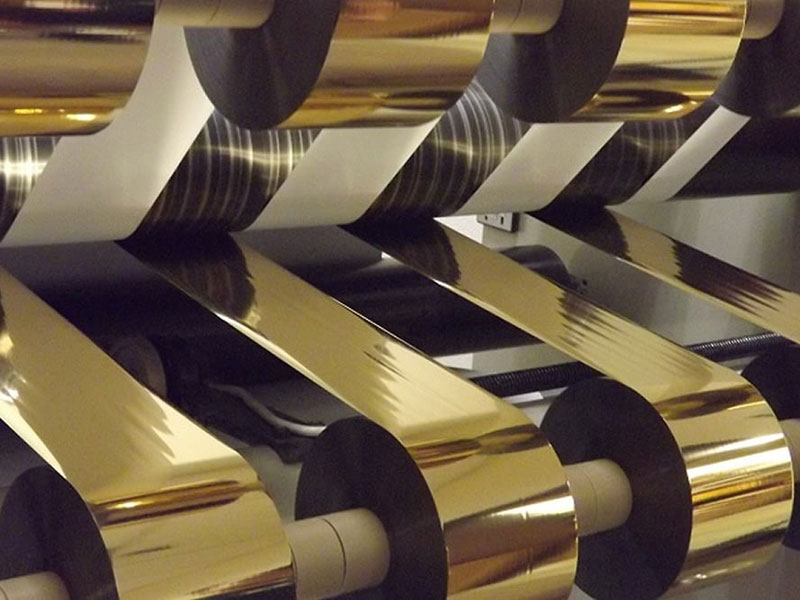
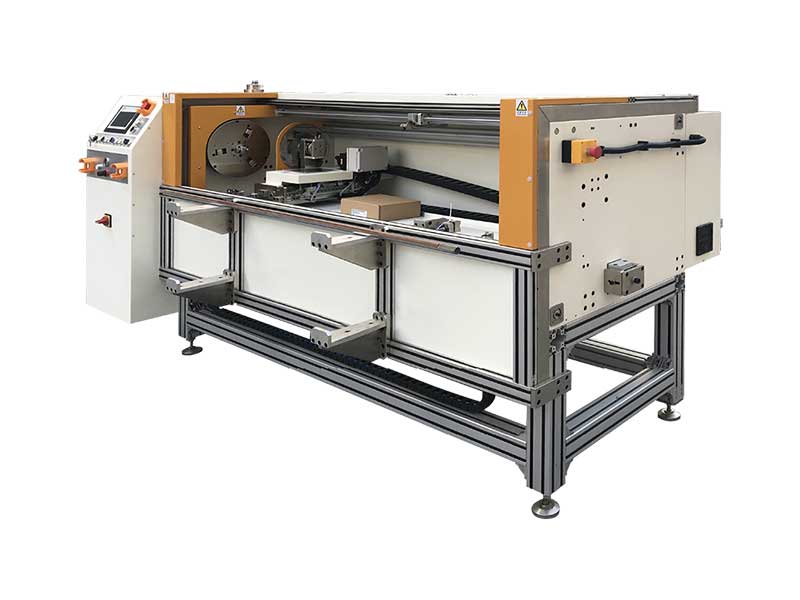 Automatic Foil Roll Cutting Machine
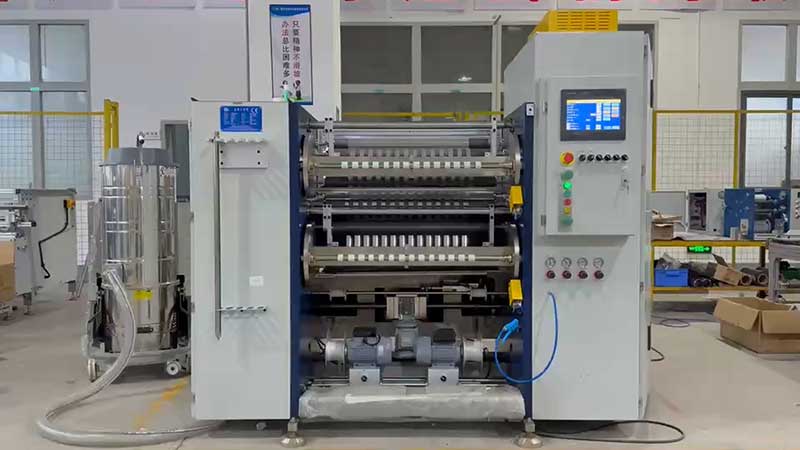
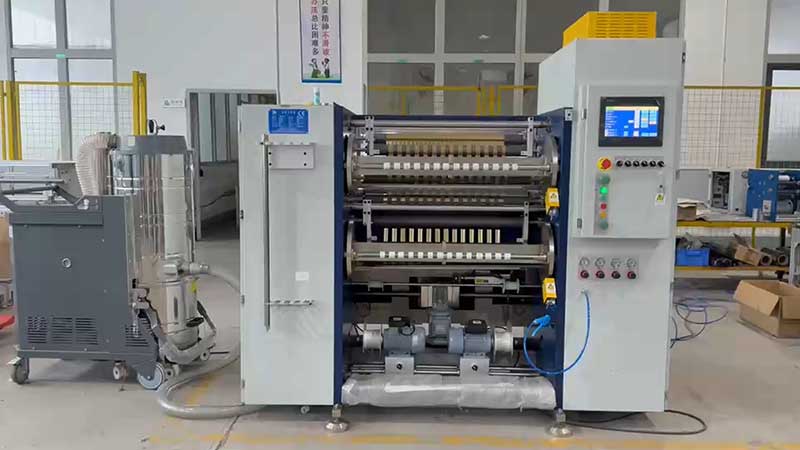
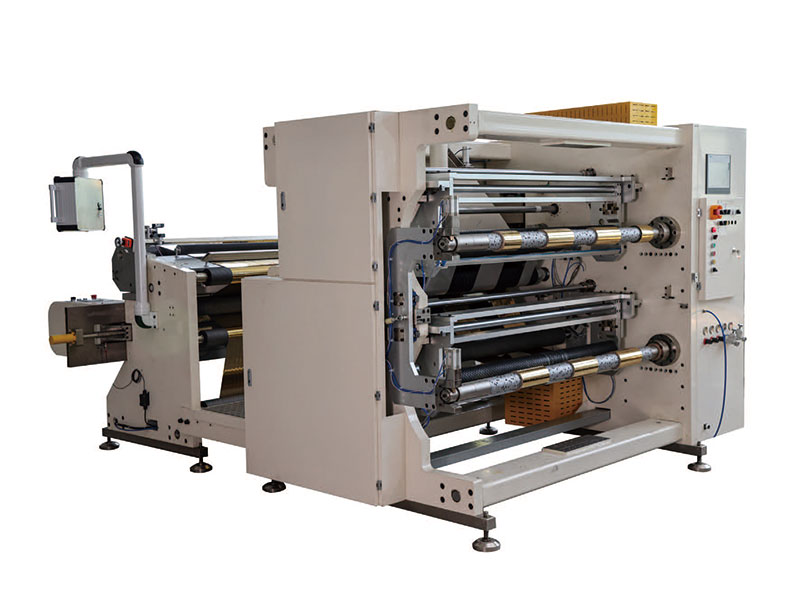 1400mm Hot Stamping Foil Slitting Machine
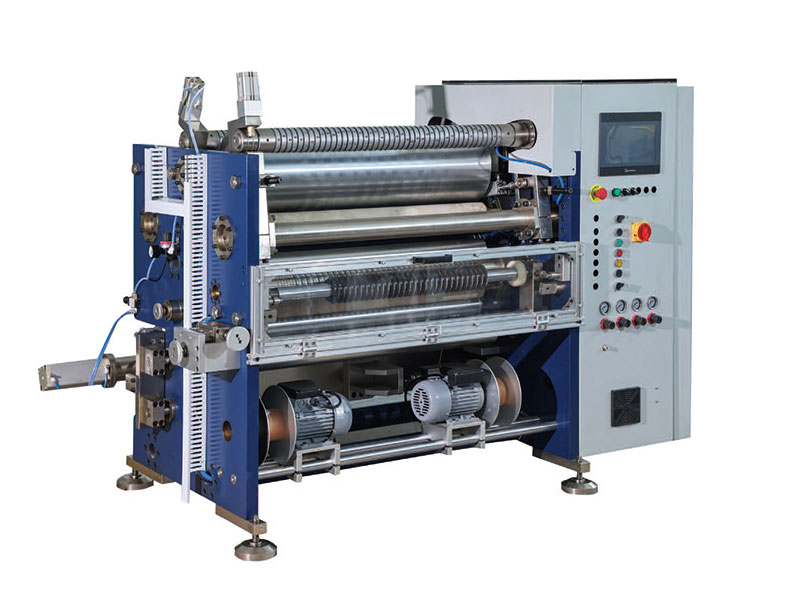 800mm Hot Stamping Foil Slitting Machine
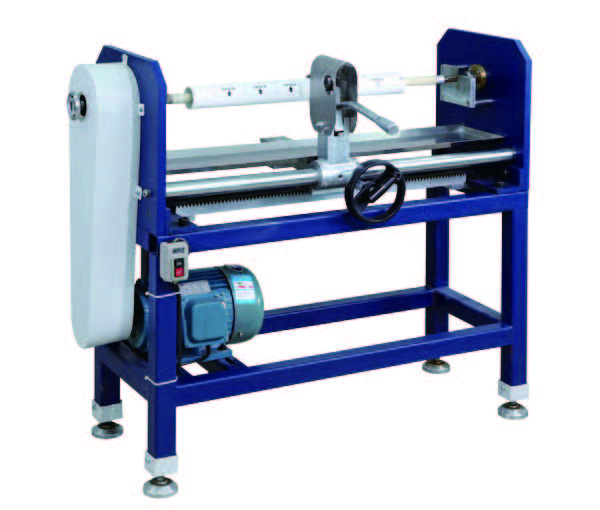 Manual Foil Roll Cutting Machine
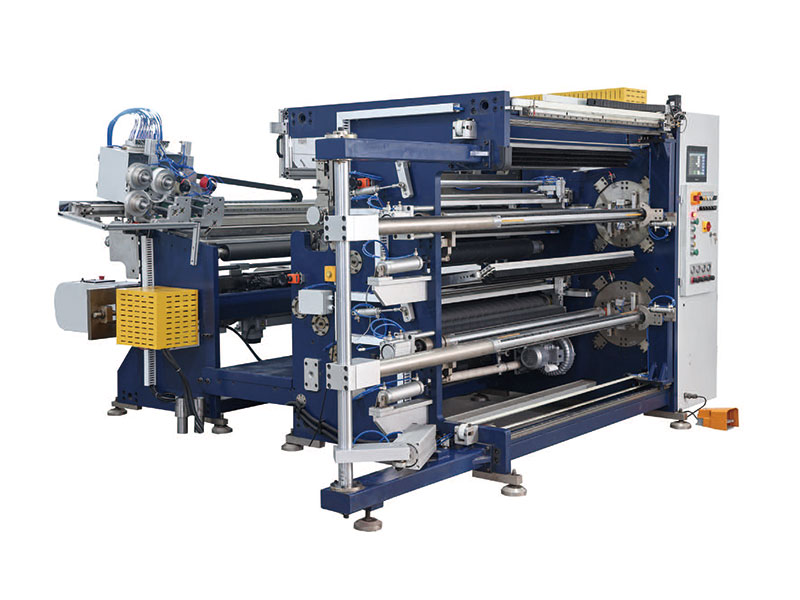 1350mm Hot Stamping Foil Slitting Machine
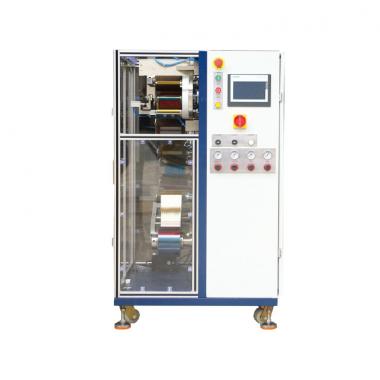 Photo & Card Print Ribbon Rewinding Machine
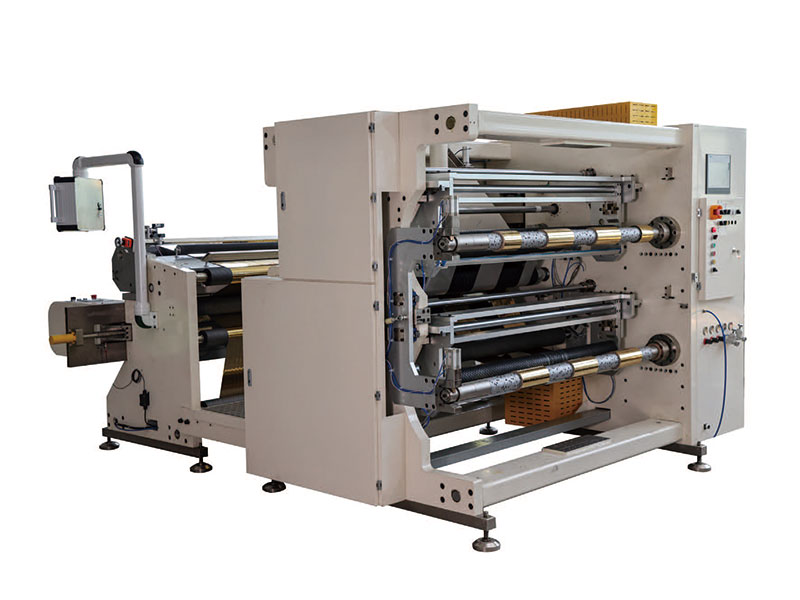 1400mm Copper Foil Slitting Machine
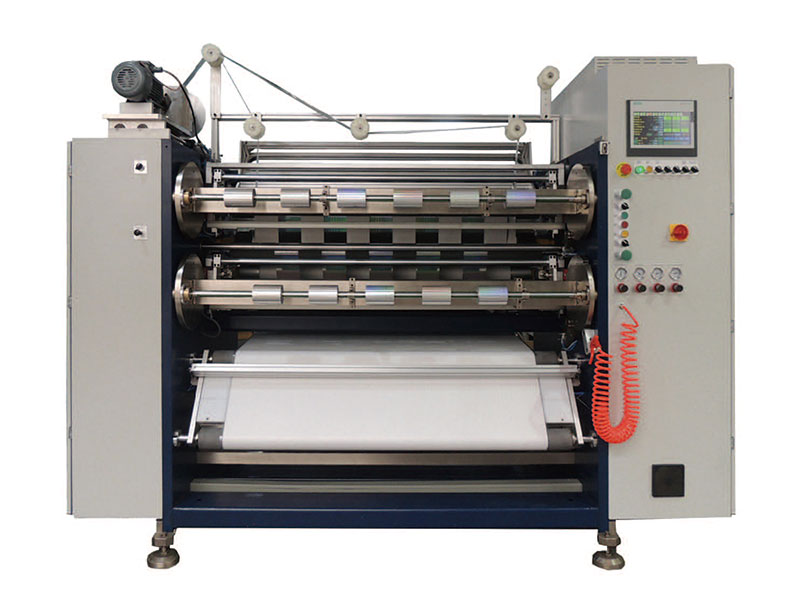 1350mm/1600 Foil Slitting Machine


 +86 135 9951 7291
 support@delishmachine.com