1. Recognize the particularity of the materials
PET/aluminum foil composite foil foil is one of the more "delicate" members of the foil family. It is composed of a PET base layer, aluminum foil layer, release layer, color layer, and adhesive layer. This multilayer structure makes it far more sensitive to slitting processes than ordinary films or paper.
The PET layer provides tensile strength, but the aluminum foil layer is fragile and poorly ductile, and the difference in mechanical properties between the two forms the core contradiction in debugging. Proper adjustment ensures smooth slitting edges and neat winding; Even slight deviations can cause issues such as aluminum layer cracking, edge burrs, and uneven end faces.
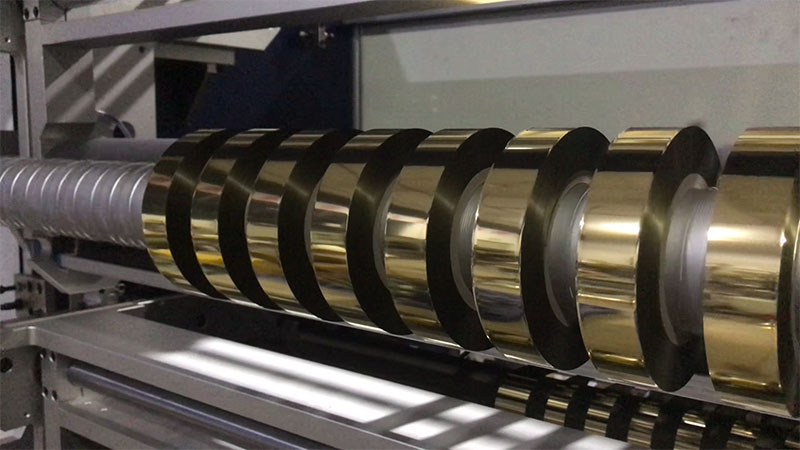
2. Tension control: the most core debugging subject
Tension control is called the "soul" of slitting machines by industry insiders, especially for PET/aluminum foil composites.
Taper tension is a must
During slitting, the diameter of the unwinding coil continuously decreases, while the winding diameter keeps increasing. If a fixed tension value is used, it will inevitably lead to internal tightness and loose external tension, or loose internal tightness but external tightness. During commissioning, taper tension control must be enabled—as the coil diameter changes, the winding tension should gradually decrease to avoid the outer layer being compressed and crushed by the inner layer.
Empirical data: The winding tension is usually set at 80%~90% of the slitting tension, and the initial tension can be 10%~15% lower than the set value to prevent core deformation.
Dynamic compensation for acceleration and deceleration
PET/aluminum foil composites are most vulnerable to inertial shocks caused by sudden velocity changes. At the moment of equipment start, acceleration, or deceleration, if the control system lacks compensation functions, inertial shocks will directly act on the foil, causing microcracks in the aluminum layer or edge stringing. During commissioning, it is necessary to confirm that the equipment has pre-acceleration compensation and inertia compensation functions; the tension regulation response time for high-end equipment should be less than 50ms.
Tension zoning isolation
If the material at the cutting edge shakes with tension, the blade will cut the aluminum layer like a "saw," producing microscopic serrations—this is the root cause of gilded rough edges. During commissioning, ensure that the material at the slitting blade is in a "zero tension fluctuation" state, with real-time feedback via a floating roller or tension sensor to isolate the fluctuations outside the cutting area.
3. Tool selection and clearance adjustment
When selecting slitting tools for PET/aluminum foil composites, the characteristics of both materials must be considered.
Tool type
It is recommended to use a single-edged circular blade with a blade angle of 45~60 degrees to ensure a smooth cut surface. For products requiring high precision, diamond-coated or ceramic-coated tools can be used to reduce scratches on the aluminum foil layer. Ordinary high-speed steel (HSS) blades wear out faster on aluminum foil composites, so it is recommended to use cemented carbide (tungsten steel).
Precise blade clearance settings
Excessive blade gaps cause burrs to continuously form during aluminum lamination; If the gap is too small, it accelerates tool wear and easily produces powder to contaminate the adhesive layer. During commissioning, the gap should be set according to the material thickness:
| Material thickness | Recommended blade spacing |
| 10~12μm | 0.02~0.03mm |
| 12~25μm | 0.03~0.05mm |
| 25μm or higher | 0.05~0.08mm |
Knife-changing system
Blunt knives are the number one accomplice to rough edges. For high-demand products, even if the blade looks fine after slicing a certain meter, it should still be replaced by force. It is recommended to establish a blade replacement ledger and perform laser calibration or tool wear testing every 8 hours.
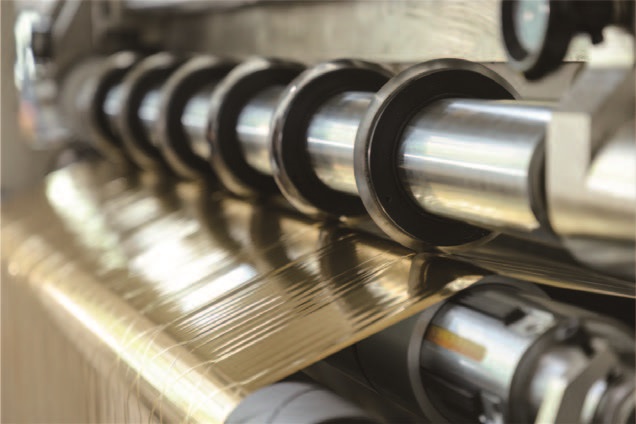
4. Debugging of the deviation correction system
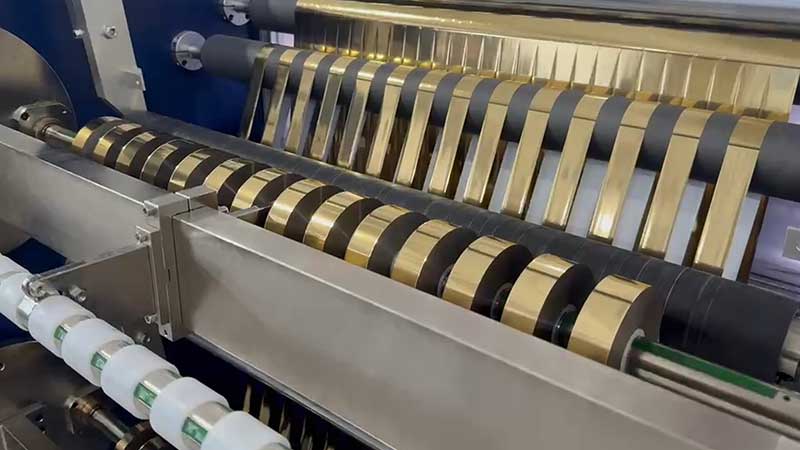
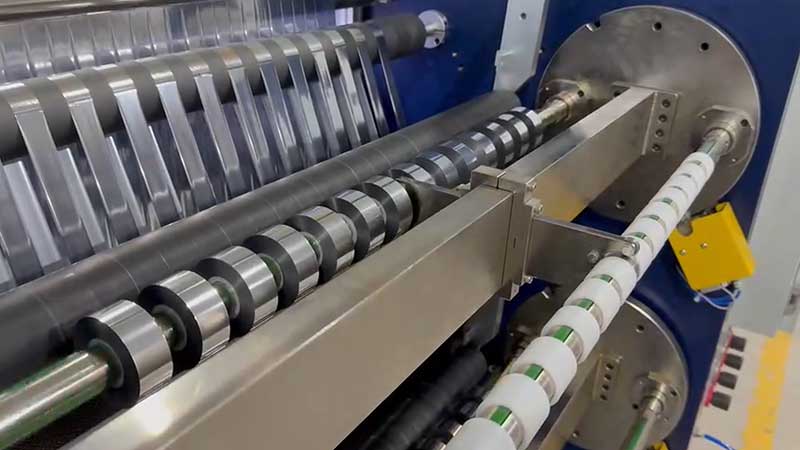
PET/aluminum foil composites require extremely high edge uniformity. The Straightening System (EPC) ensures the foil always runs along the correct path before entering the slitting blade.
Key Points for Debugging:
• Photoelectric correction is suitable for most PET/aluminum foil composites
• The sensor installation position is usually set with double correction after unwinding, before slitting, and before winding
• Correction accuracy should reach ±0.1mm
• If the aluminum foil layer reflects too strongly and interferes with the photoelectric sensor, ultrasonic correction solutions can be considered
5. Speed matching and temperature and humidity control
Slitting speed
The slitting speed of PET/aluminum foil composites should not be too high; it is recommended to start trial cutting at 80~150 meters/minute, gradually adjusting according to slitting quality. When first commissioning new materials, always start at low speed (50~80 meters/min) and gradually increase.
Ambient temperature and humidity
Temperature and humidity directly affect the dimensional stability of PET base films and the oxidation resistance of aluminum foil:
• Temperature: 20~25°C
• Humidity: 40%~60%
Too low humidity can generate static electricity, causing foil powder to fly and adhere to the cut edge; Excessive humidity may affect the performance of the adhesive layer.
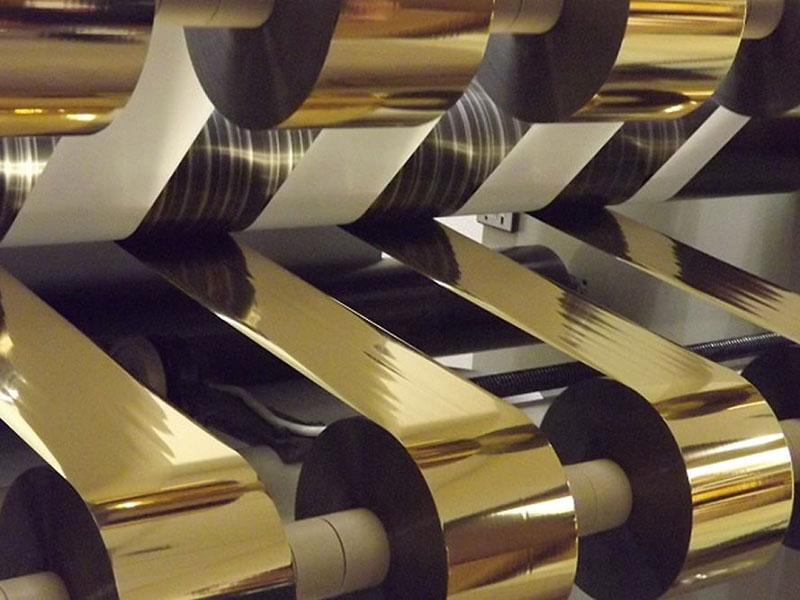
6. Commissioning Process and Acceptance Standards
Systematic debugging steps
1. Cleaning equipment: Ensure all guide rollers are smooth and free of dust, with a concentricity of the air expansion shaft ≤ 0.03mm
2. No-load trial run: jog to test motor rotation, and check for abnormal noises during low-speed operation
3. Trial Cutting Sample: Using actual production materials, low-speed trial cutting 5~10 meters, then stopping for inspection
4. Parameter optimization: Adjust only one parameter at a time, observe the changes, and record the best parameter combination
5. Batch validation: Strengthen quality inspection for the first 3 rolls, with regular spot checks every 5 rolls
Acceptance criteria
• Slitting width error: standard products ± 0.1mm, precision products ± 0.05mm
• Slitting edges: no burrs, no aluminum layer peeling, no delamination
• Rolling end face: smooth as a mirror, without "chrysanthemum patterns" or sunken edges
• Tension fluctuations: controlled within the set value of ±5%.
7. Quick Check for Common Issues
| Problematic phenomena | Possible reasons | Testing and countermeasures |
| Edges burrs/serrations | Blade dullness or improper clearance | Replace blades or adjust the clearance |
| Aluminum layer cracks | Excessive tension or sudden changes in speed | Reduce tension and check dynamic compensation |
| The winding ends are uneven | Correction failure or uneven winding pressure | Check the offset correction system and adjust the pressure of the rollers |
| The roll wrinkles | Uneven tension or unbalanced guide rollers | Check the parallelism of the guide rollers and adjust the tension zones |
| Electrostatic dust adsorption | Humidity in the environment is too low | Install static eliminators, increase humidity to 50%~60% |
In summary:P the core of slitting debugging of ET/aluminum foil composite hot stamping foil lies in understanding the differences in mechanical properties between the two materials, focusing on three key points: taper tension control, fine tool clearance setting, and correction system calibration, and establishing a systematic trial cut-record-optimization process. When the winding end face is as smooth as a mirror and the cut is smooth and flawless, the debugging has reached an ideal state.
 English
 Deutsch
 Français
 Español
 Português
 日本語
日本語 русский
 한국어
한국어 عربي
عربي ภาษาไทย
 Tiếng Việt
 Italiano
 Automatic Foil Roll Cutting Machine
 1400mm Hot Stamping Foil Slitting Machine
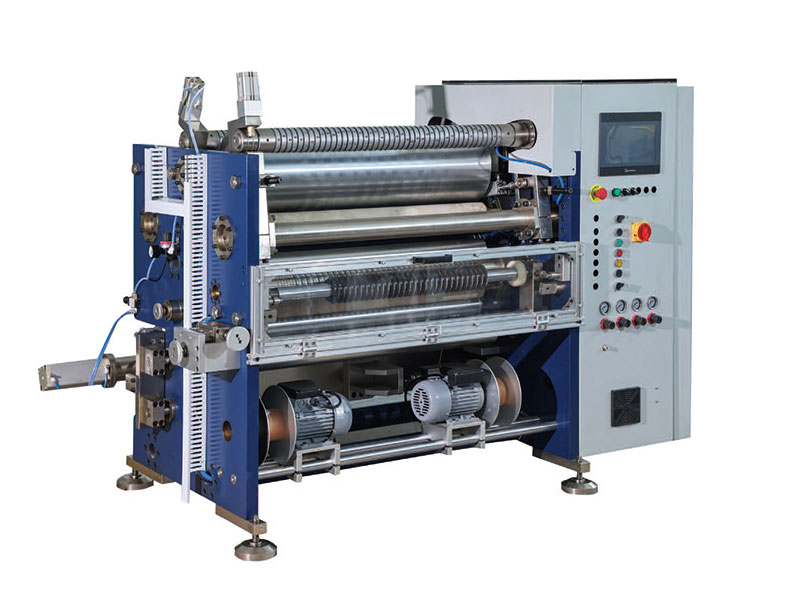 800mm Hot Stamping Foil Slitting Machine
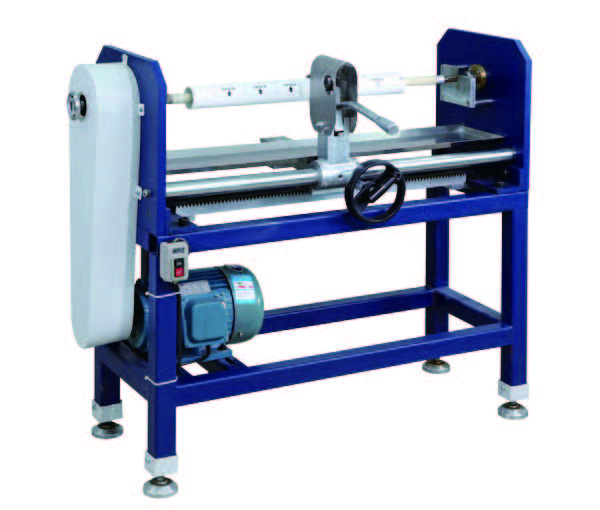 Manual Foil Roll Cutting Machine
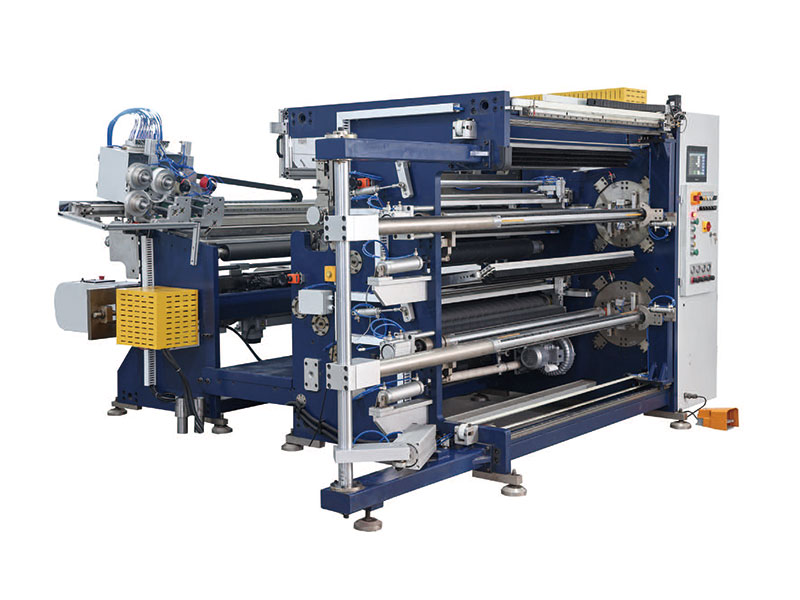 1350mm Hot Stamping Foil Slitting Machine
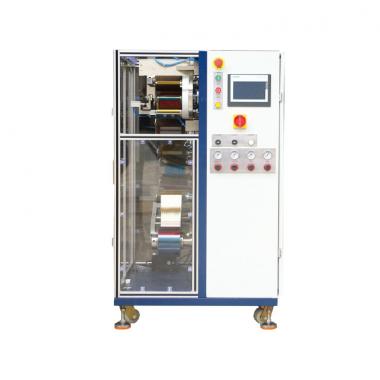 Photo & Card Print Ribbon Rewinding Machine
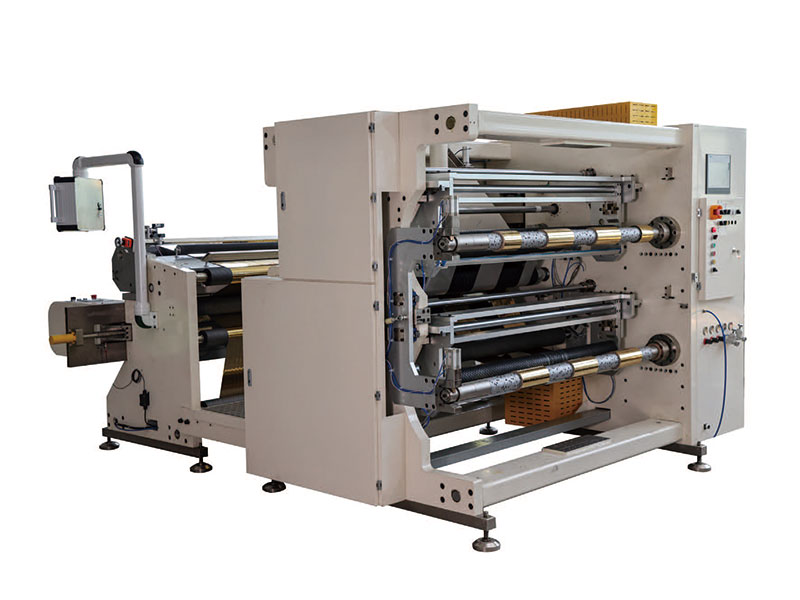 1400mm Copper Foil Slitting Machine
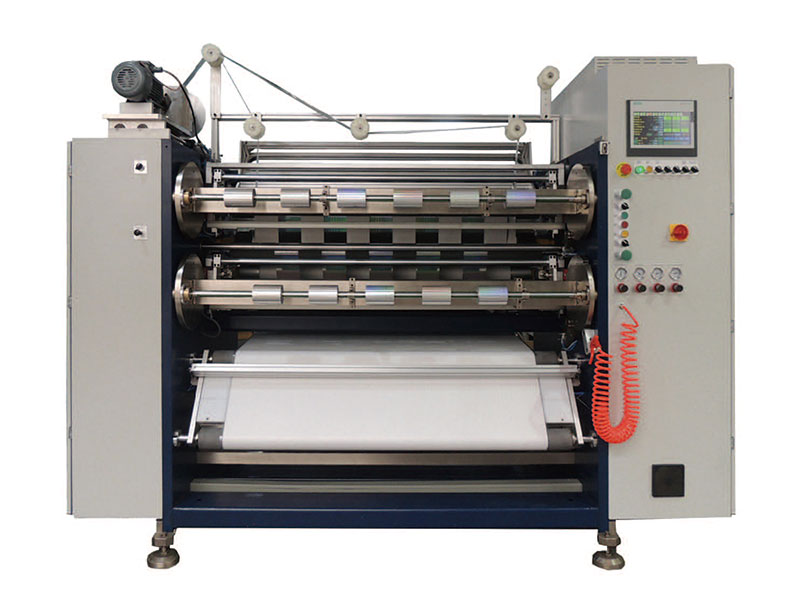 1350mm/1600 Foil Slitting Machine


 +86 135 9951 7291
 support@delishmachine.com