Introduction
With the widespread application of thermal transfer printing technology in logistics, healthcare, retail, and other fields, the market demand for ribbons (thermal transfer ribbons) continues to grow. As the core equipment for post-production processing of ribbons, ribbon slitting machines face two major environmental challenges when slitting wide-width large-roll ribbons into smaller coils of different specifications: high-intensity operating noise and dust pollution. These issues not only affect the physical and mental health of operators but also pose challenges to the production environment and sustainable manufacturing. In recent years, the industry has launched a series of environmentally friendly design innovations centered on "noise reduction and dust suppression," pushing ribbon slitting into a new stage of green intelligent manufacturing.
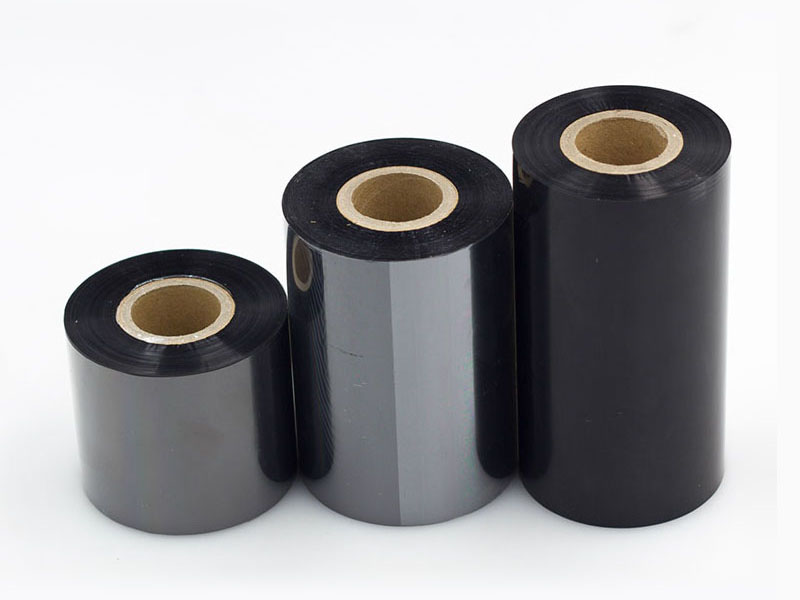
1. Noise sources and innovations in their control
When traditional ribbon slitting machines operate at high speed, noise mainly comes from three sources: high-speed friction between the circular blade and the ribbon substrate, vibrations caused by unbalanced retracting and retracting reels, and high-frequency exhaust sounds during pressure relief from pneumatic components. Actual tests show that when the operating speed of old equipment reaches 300m/min, the operating noise often exceeds 85 decibels, approaching or even exceeding the upper limit of occupational hygiene.
Design Innovation One: Silent Cutter System
The new slitting machine uses a spiral shear circular cutter to replace the traditional straight-edge bi-cutting blade. During rotation, the spiral blade forms a continuous progressive shear, significantly reducing instantaneous impact forces between the blade and the ribbon substrate and ink layer, thereby lowering high-frequency friction noise from the sound source. Some high-end equipment also introduces magnetic coupling drive blade shafts to eliminate periodic impact noise caused by gear transmission clearances. Experimental data show that the application of spiral silent knife sets can reduce noise by 8-12 decibels.
Design Innovation 2: Low-vibration precision spindle and vibration-isolating structure
By achieving a dynamic balance level of G1.0 with ultra-precision retraction reels and direct drive servo motor technology, vibration excitation from belt or gear drives is eliminated. At the same time, the equipment base adopts a double-layer vibration isolation structure—the upper layer is made of high-damping resin composite material, and the lower layer is an air spring vibration-absorbing foot pad, effectively blocking the transmission of high-frequency vibrations to the ground. Structural noise during machine operation is reduced by about 15%.
Design Innovation 3: Intelligent exhaust muffler
To address periodic exhaust noise in pneumatic tension control systems, the new equipment integrates a multi-chamber impedance composite silencer at the exhaust port and uses solenoid valve timing control technology to discharge high-pressure gas in stages, preventing sudden rapid expansion and bursting noises. This design can dramatically reduce exhaust noise from 90 decibels to below 70 decibels.
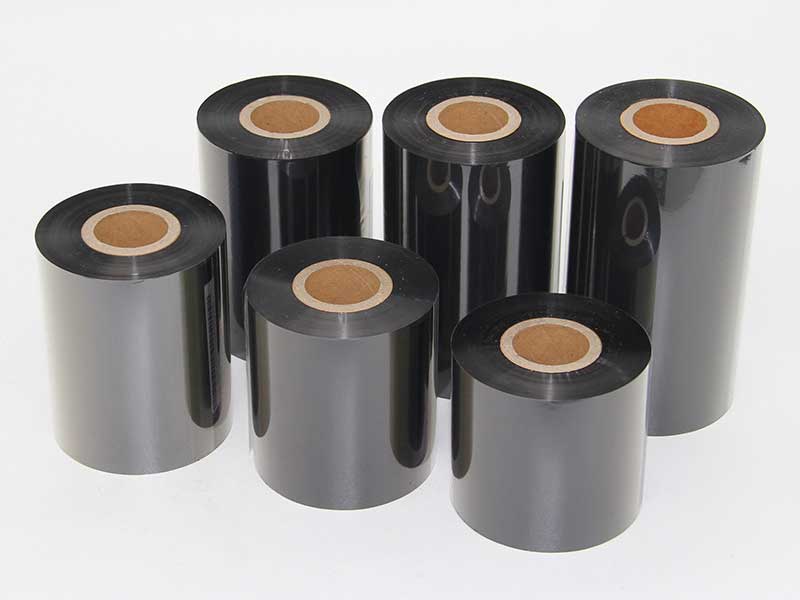
2. Dust sources and innovations in their control
During ribbon slitting, dust is mainly generated at two stages: powder generated by the blade's fine cutting of the ribbon ink layer and substrate during slitting, and debris generated by relative sliding grinding at the chuck fixation point of the paper core or plastic shaft tube. These dust particles are often smaller than 10 microns and can be suspended in the air, which not only affects cleanliness but may also be inhaled by operators, posing occupational health risks with long-term exposure.
Design Innovation 4: Fully enclosed negative pressure cutting chamber
The slitting core area is designed as a transparent acrylic sealed chamber, which only opens during film penetration and tool group replacement. The cabin maintains a slight negative pressure (-50Pa to -80Pa), and dust generated by cutting is immediately drawn into the efficient filtration system through distributed vacuum inlets at the top and bottom. The negative pressure chamber is designed to intercept over 90% of dispersed dust, preventing it from spreading into the workshop environment.
Design Innovation 5: In-situ Vacuum Cleaning and Static Elimination Coordinated
Slit dust hoods are arranged on both sides of the slitting blade group, with the air intake closely aligned with the cutting edge and ribbon separation point. Using computational fluid dynamics optimized flow channel shape, a high-speed sweeping airflow is formed to promptly remove newly generated dust. At the same time, to address the issue of carbon strip substrates (usually PET film) being prone to static electricity and dust adsorption, static elimination rods are installed at the front end of the vacuum system to actively neutralize surface charges, making dust more easily captured by airflow. After static electricity is eliminated, vacuum efficiency increases by about 40%.
Design Innovation 6: Centralized high-efficiency filtration and return air utilization
All dust-containing gases from all suction inlets are channeled into the central filtration unit, featuring a three-stage design of "cyclone pre-separation + cartridge-type precision filtration + HEPA final filtration." For dust particles with a particle size of 0.3 microns, the filtration efficiency exceeds 99.97%, and the clean air can be directly discharged into workshops or reused for equipment cooling systems. The filter cartridge pulse back-blowing cleaning device can clean automatically online, ensuring long-term low-resistance operation of the filtration system.
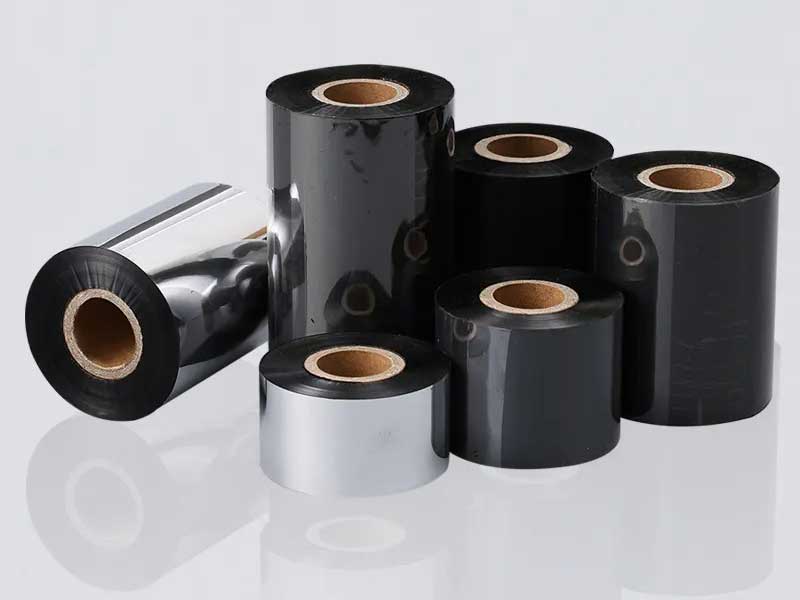
3. Intelligent Collaboration and Comprehensive Benefits
Modern environmentally friendly ribbon slitting machines incorporate noise and dust control into the intelligent management system of the entire machine. By arranging microphone arrays and dust concentration sensors inside the slitting chamber, the system can monitor the noise spectrum and particulate concentration in real time. When abnormal elevation is detected, it automatically determines whether it is due to tool wear, filter blockage, or exhaust valve failure, and prompts maintenance or adaptive adjustment of slitting speed and tension parameters.
From a comprehensive benefit perspective, innovations in environmentally friendly design have brought clear returns:
• Occupational health and compliance: Operating noise is reduced to 72-78 decibels, dust concentration is below 0.2mg/m³, meeting GBZ 2.1 and ISO 45001 requirements.
• Product quality improvement: After dust is reduced, the ribbon surface cleanliness is enhanced, lowering the risk of printhead contamination; Low-vibration operation makes the slitting end face neater, and reduces the misplacement defect rate in winding by about 30%.
• Extended equipment lifespan: The probability of dust entering key bearings and guide rails is reduced, doubling maintenance intervals.
• Energy saving and consumption reduction: The optimized vacuum system uses 25% less total energy than traditional external high-power dust collectors.
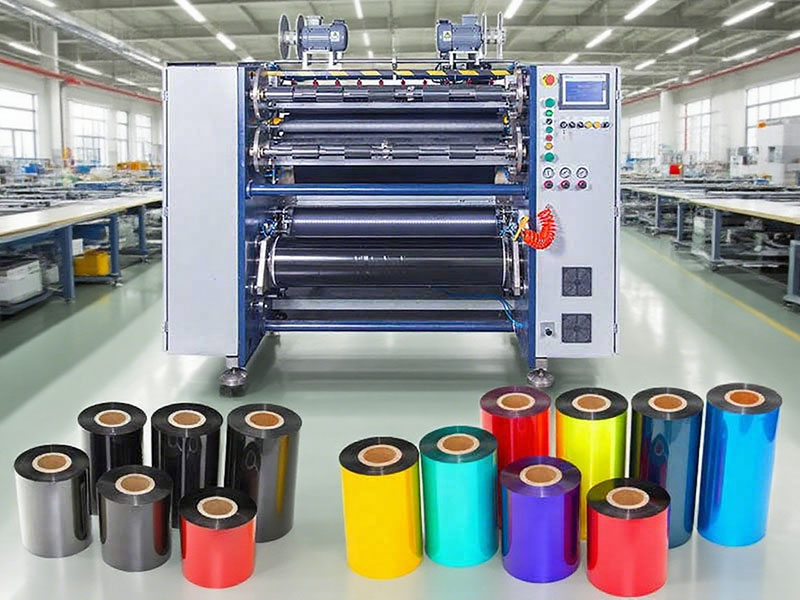
4. Future Outlook
With increasingly stringent environmental regulations and rising user requirements for working environments, the eco-friendly design of ribbon slitting machines will develop at a deeper level. Future trends include:
• Dust-free closed-loop: Integrate the slitting machine into an ISO Level 7 or higher cleanroom to achieve completely dust-free production, meeting the requirements of medical and food-grade carbon ribbons.
• Ultra-quiet drive: Uses a linear motor to directly drive winding and retracting and blade shafts, completely eliminating bearing and gear noise from rotating machinery.
• Digital twin optimization: Pre-optimizing cutting parameters, airflow organization, and sound field distribution through virtual simulation, shortening the physical prototype commissioning cycle.
• In-situ waste reuse: Collected carbon ribbon dust is analyzed for composition, and some can be reused as modified filler materials, achieving a circular economy.
Conclusion
The noise and dust control of ribbon slitting machines is no longer simply "end-of-pipe treatment" by adding protective covers or connecting external vacuum cleaners; it integrates into mechanical structure design, pneumatic control optimization, fluid mechanics applications, and intelligent sensing collaborative environmental system innovations. These designs not only meet the demands of the green manufacturing era but also create a quieter and cleaner working environment for operators, while improving product quality and equipment reliability. It is foreseeable that with continuous advancements in materials, drive, and filtration technologies, ribbon slitting machines will steadily advance toward the ultimate environmental goals of zero noise and zero dust.
 English
 Deutsch
 Français
 Español
 Português
 日本語
日本語 русский
 한국어
한국어 عربي
عربي ภาษาไทย
 Tiếng Việt
 Italiano
 Thermal Transfer Ribbons Packaging Machine
 Automatic Thermal Transfer Ribbon Slitting Machine RSDS8 H PLUS
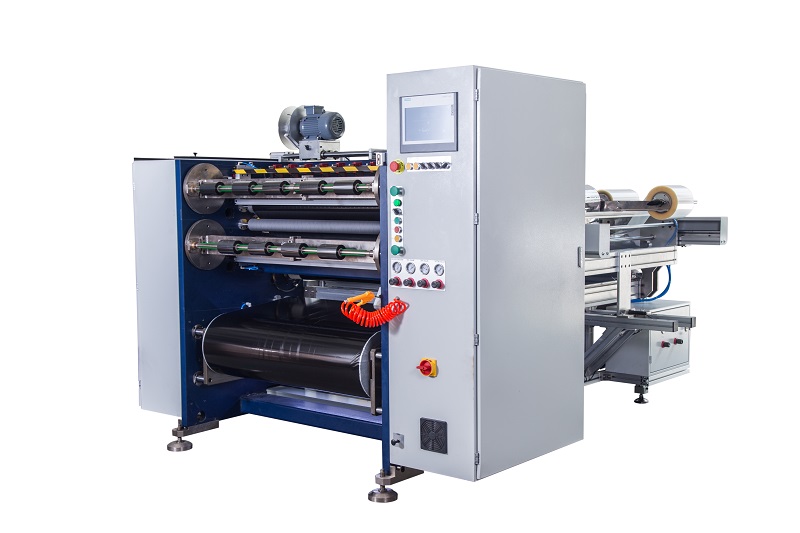 Semi Automatic Thermal Transfer Ribbon Slitting Machine RSDS5 PLUS
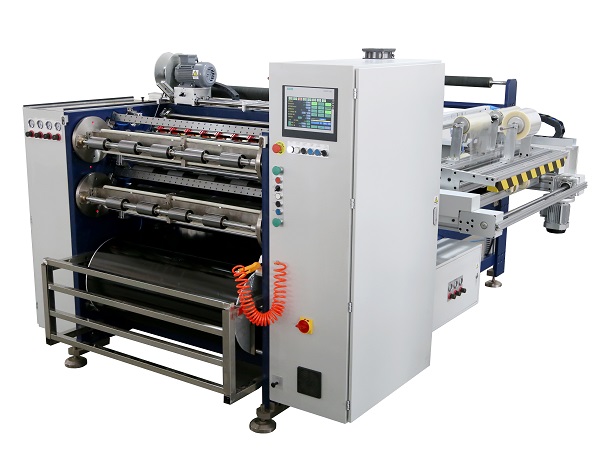 Automatic Thermal Transfer Ribbon Slitting Machine RSDS8 PLUS
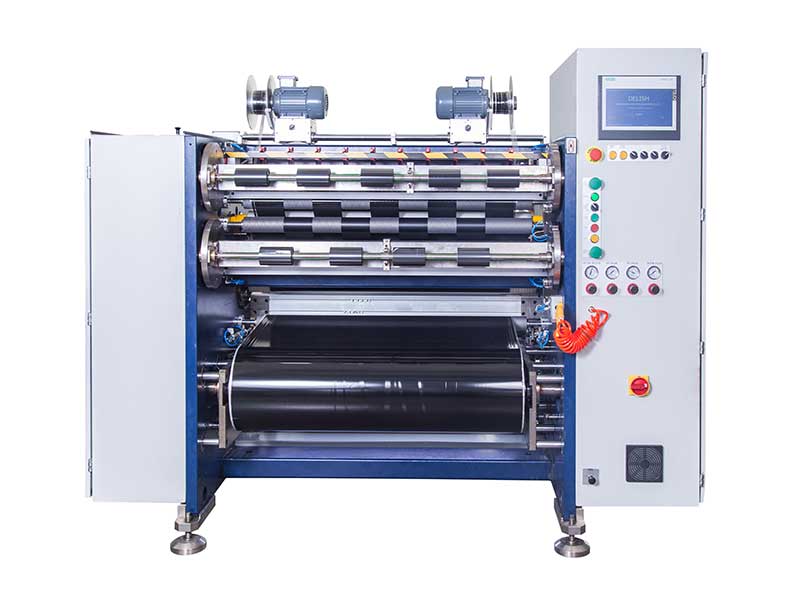 TTR Slitting Machine
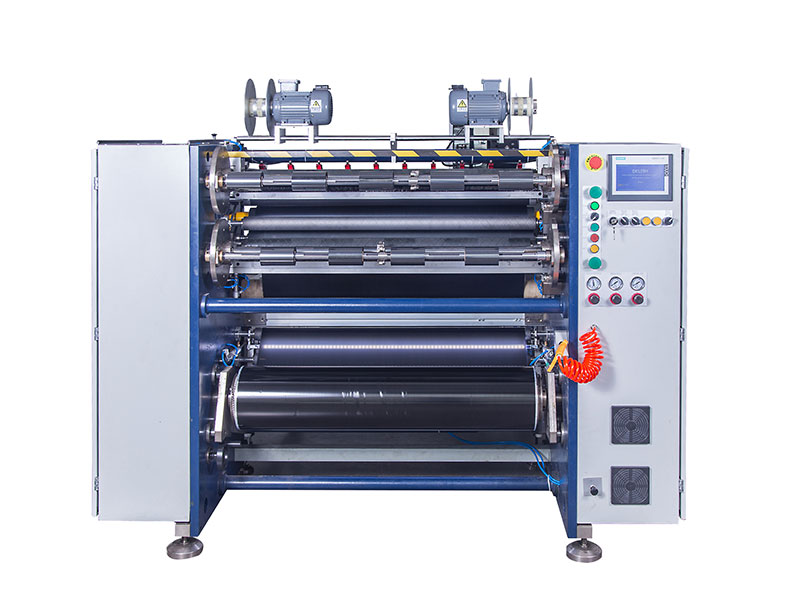 Barcode Ribbon Slitting Machine
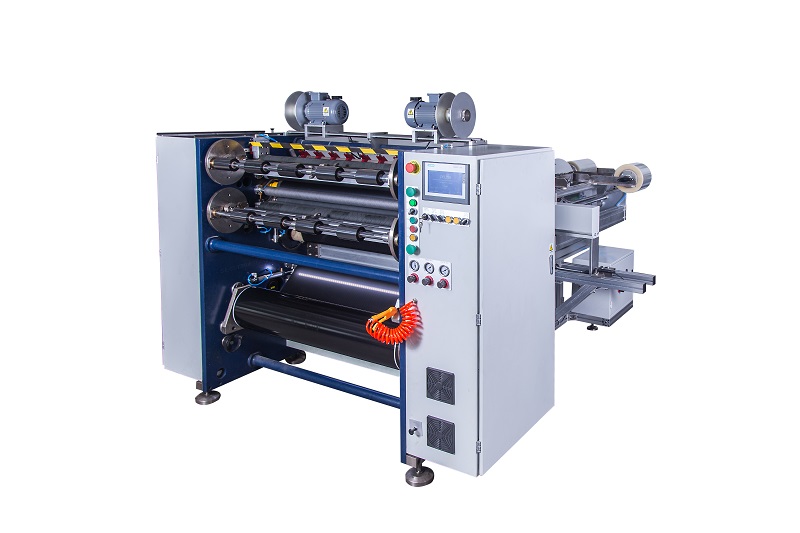 Semi Automatic Thermal Transfer Ribbon Slitting Machine RSDS1 PLUS
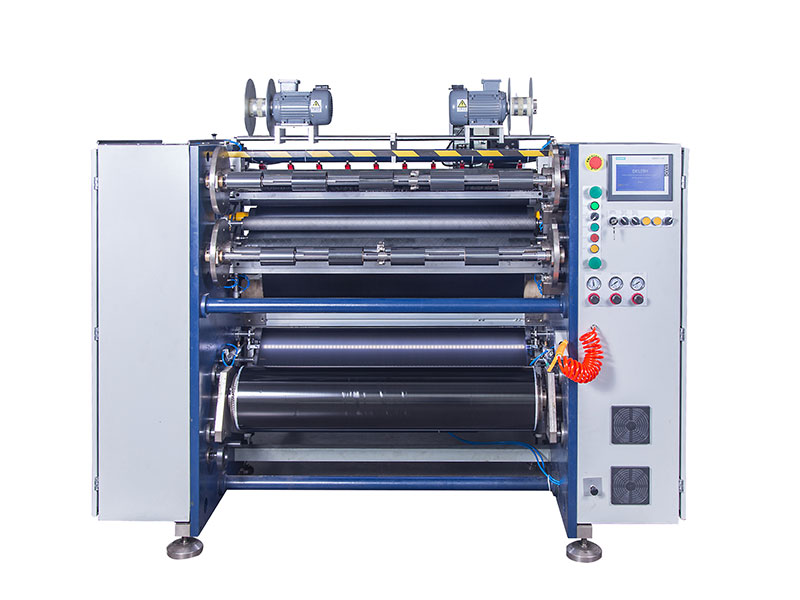 Ribbon Slitting Machine


 +86 135 9951 7291
 support@delishmachine.com