In the production line of film packaging, optical film, lithium battery separator and hot stamping foil, slitting machines are often regarded as the "last gatekeeper". No matter how perfect the film making process of the previous process is, once there is an uneven winding in the slitting process - that is, commonly known as "deviation", "tower wheel" or "end face misalignment" in the industry, the whole roll product can only be reduced from excellent to defective, or even directly scrapped.
For a long time, "uneven winding" has been regarded as the "cancer" of film post-processing, which is not only a matter of appearance, but also the root cause of film warping, burst ribs, and collapse during transportation. With the iteration of intelligent slitting technology from 2025 to 2026, this pain point is being systematically overcome. The latest technical transformation data in the industry shows that through the dual upgrade of tension closed-loop dynamic control and precision knife cutting system, enterprises can not only solve the problem of "uneven winding", but also generally achieve significant benefits such as increasing yield by 20% and production efficiency by more than 25%.
This article will provide an in-depth analysis of the underlying logic and practical path of slitting machines to solve the pain points of winding winding.
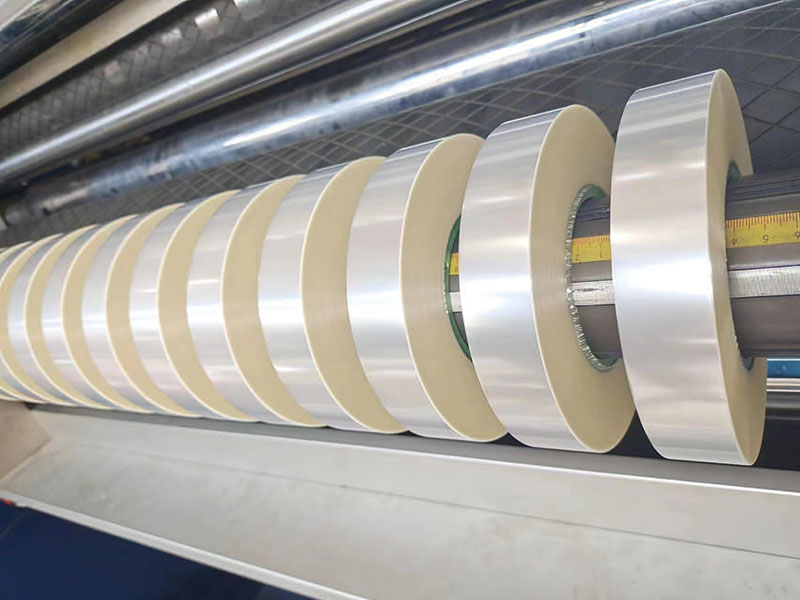
1. Tracing back to the roots: the uneven "invisible killer"
Before discussing solutions, it is important to re-understand the physical causes of "uneven coiling". Many operators mistakenly believe that if they cut straight, the roll will be straight, but this is not the case.
The neatness of the end face in the winding process is essentially the result of the game of tension, path and density, which is mainly reflected in the following three dimensions:
1. The "respiratory effect" of tension: This is the most common cause. During the start-stop or acceleration of the slitting machine, if the tension control system responds lagging in response, the film will periodically loosen or tighten. Due to the extremely thin film thickness (typically 6-20 μm), this fluctuating tension can cause micron-level misalignment of each film on the reel shaft in the slip, accumulating into a "serpentine" or "telescope" phenomenon visible to the naked eye.
2. "Lateral force" of the cutter: When a traditional cutter cuts thick or optical films, the contact between the cutter edge and the film will generate a lateral force perpendicular to the direction of motion. This force changes the original trajectory of the film, causing the position of the film to shift before entering the winding roller.
3. "Cumulative tolerance" of thickness: The film itself cannot achieve absolute uniform thickness (known as "explosive ribs" in the industry). When the thicker part is superimposed during winding, the local diameter becomes larger, and the film will automatically "crawl" to the side with a larger diameter, causing the winding surface to protrude like a small mountain bag, and in severe cases, it cannot be stacked at all.
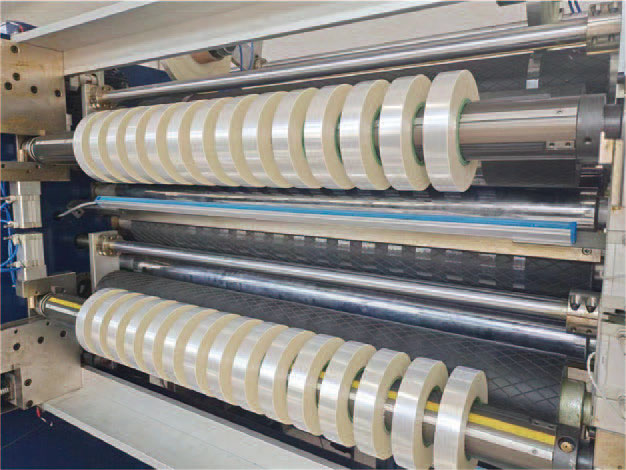
2. Technological breakthrough: how to "tame" the film with closed-loop control
In response to the above pain points, the mainstream technical transformation direction of slitting machines from 2024 to 2025 has shifted from "mechanical correction" to "digital closed-loop control". The key to achieving a 20% yield increase is the collaborative work of the following three systems.
1. Tension closed-loop: from "open-loop guessing" to "millisecond feedback"
Traditional slitting machines mostly use open-loop control, that is, it doesn't matter if you set a constant torque. However, in actual winding, as the wind diameter increases, the moment of inertia increases geometrically, and constant torque inevitably leads to uncontrolled tension.
The new generation of solutions introduces a closed-loop tension control system:
The tightness of the film is monitored in real time by means of a floating roller or tension sensor in front of the rewinding shaft and the data is transmitted back to the servo drive in milliseconds. The algorithm calculates the current winding diameter in real time and dynamically adjusts the torque of the winding motor (T = F × D/2, and the torque T decreases intelligently as the diameter D increases).
Practical effect: In the production and measurement of hot stamping foil and lithium battery separator, after adopting the "speed + current" double closed-loop architecture, even under the extreme working conditions of full speed and rise and fall, the tension fluctuation can be suppressed within ±3%, and the adjustment time is shortened from the traditional 2-3 seconds to less than 0.3 seconds. This directly eliminates the slippage between layers caused by sudden changes in tension, and makes the winding end surface appear "knife-cut" neat.
2. Y-shaped knife and intelligent knife control: cut off the source of "deviation"
If the film has deviated before it enters the winding roller, no matter how hard the rear correction device works, it will not help. Traditional straight-edge cutters are prone to yield phenomenon at high speeds, resulting in non-vertical cutting edges.
The Y-shaped cutter device, which has attracted much attention in the market recently, gives new ideas. This patented tool is structurally optimized to "snap" the film at the moment of cutting by coordinating the ruler with the movable joint, providing stable lateral support and eliminating lateral offset caused by tool vibration.
With high-precision rulers and meter counters, this intelligent knife control system can ensure that the width tolerance of each slitting strip is controlled within a very small range, and provide the winding shaft with absolutely flat edges of the "raw material", which is the basic guarantee for improving the yield.
3. The "golden partner" of automatic correction and contact rollers
Once the tension and cutter issues have been addressed, the final physical alignment is also crucial. The sensor of the ultrasonic or photoelectric correction system configured in the modern slitting machine is no longer a "temporary worker", but filters out the burr interference at the edge of the film through algorithms, realizing real-time dynamic adjustment of the winding shaft.
In addition, the optimization of the contact pressure wheel (contact roller) often leads to unexpected surprises. If the contact wheel is worn or the pressure is not set properly, it will create uneven radial pressure on the winding surface, which will instantly lead to "ribbing" of the film roll. By upgrading the contact pressure wheel to a silicone material with high precision and uniform pressure distribution on the surface, combined with the closed-loop air pressure valve group, it can ensure that the tightness inside and outside the winding is consistent, and completely solve the unevenness between layers caused by "burst ribs".
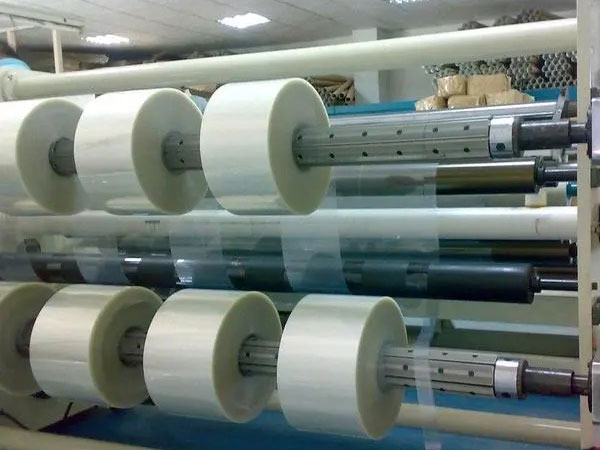
3. Practical benefits: where does the 20% yield come from?
When the above technologies are systematically applied to a production line, the 20% yield increase is not an exaggeration, but is quantified and accumulated by the following links:
• Direct decline in scrap rate: For high-end optical film or composite packaging film, scrap caused by uneven winding (tower wheel, split layer) often accounts for more than 30% of all scrap. Through closed-loop control to eliminate extreme deviations, this part of the waste is almost zero.
• Breakthrough in narrow width technology: In subdivisions such as anti-counterfeiting lines and narrow strip tapes, it is difficult for traditional slitting machines to stably rewind (usually easy to break or have extremely short reeling meters). The narrow slitting machine with winding winding technology, combined with low tension control, can lift the narrow strip that could only be collected a few hundred meters to thousands of meters, and the effective finished product length per unit time is increased by 10 times.
• Reduced joint waste: During the slitting process of old equipment, the broken film due to tension and deviation problems must be stopped and re-threaded, and each joint will cause several meters of material loss. The millisecond response of the new solution ensures continuous acceleration and deceleration, which not only reduces material loss, but also improves time utilization.
4. Conclusion
Film slitting has long bid farewell to the era of "a knife, a core, and all depends on the master's feel". Today, in 2026, the competition between volumes is essentially a competition between data and algorithms.
A slitting system with millisecond-level response tension closed loop and equipped with a high-rigidity precision knife set is not only solving the visual problem of "uneven winding", but also solving the economic problem of "every meter of film can be sold". As shown in the cases of technological transformation in the manufacturing industry in Shandong, Zhejiang and other places, the enterprises that take the lead in embracing the "digital transformation and intelligent transformation" and let the slitting machine change from manufacturing to "intelligent manufacturing", the 20% increase in yield rate is the best return given by the market to technology believers.
 English
 Deutsch
 Français
 Español
 Português
 日本語
日本語 русский
 한국어
한국어 عربي
عربي ภาษาไทย
 Tiếng Việt
 Italiano
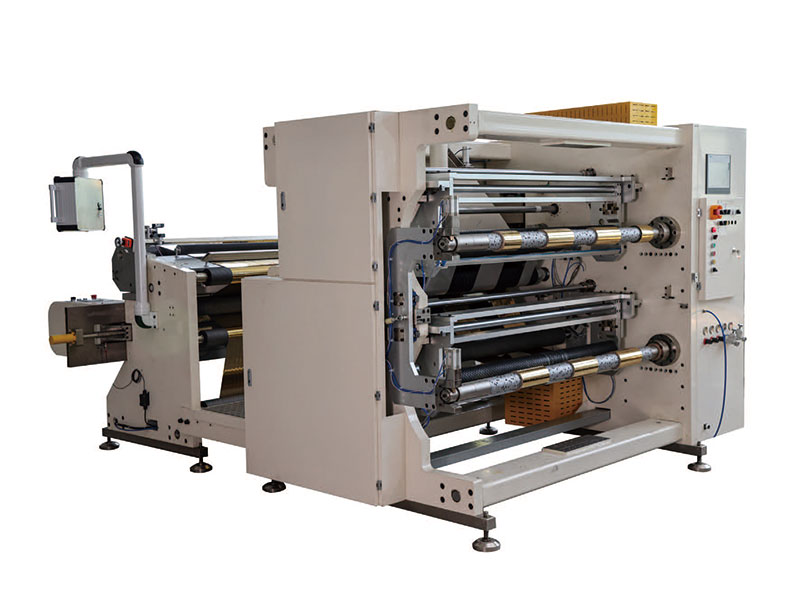 1400mm Hot Stamping Foil Slitting Machine
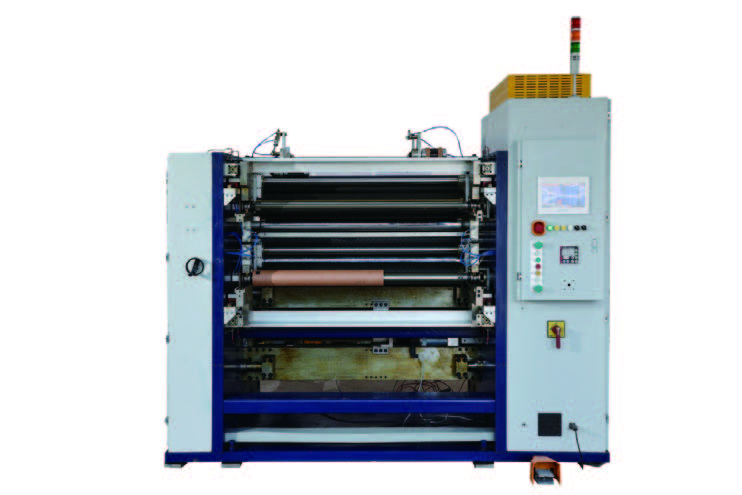 New Energy Ultra-thin Film Slitting Machine For Capacitive Film
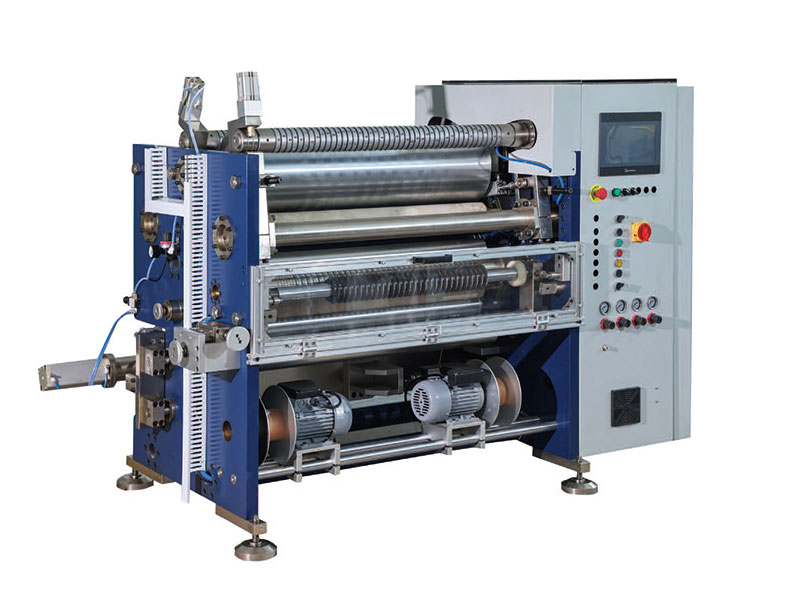 800mm Hot Stamping Foil Slitting Machine
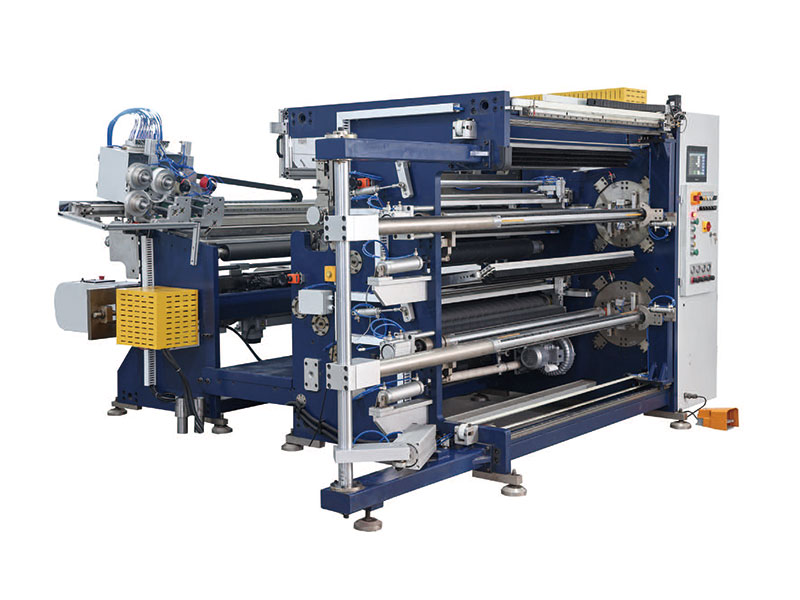 1350mm Hot Stamping Foil Slitting Machine
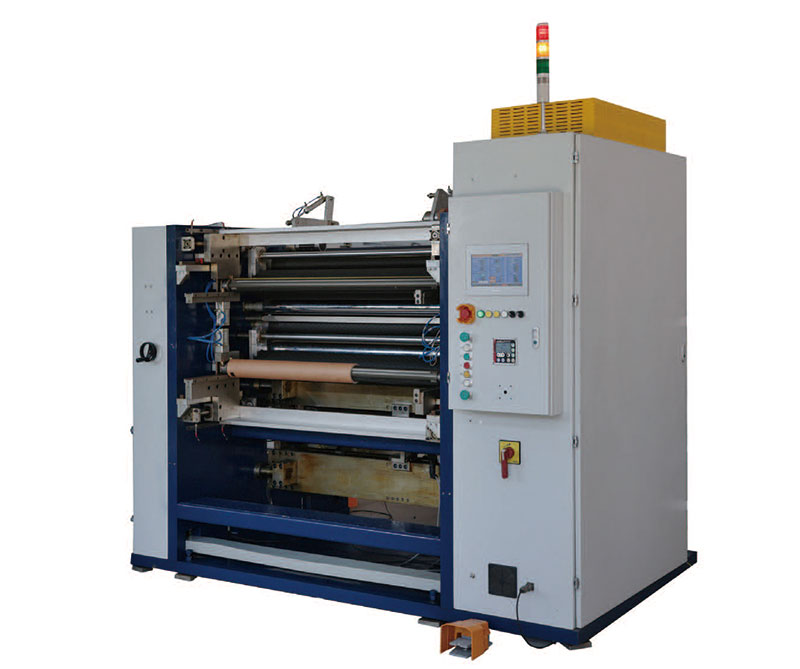 New Energy Ultra-thin Film Slitting Machine For MOPP
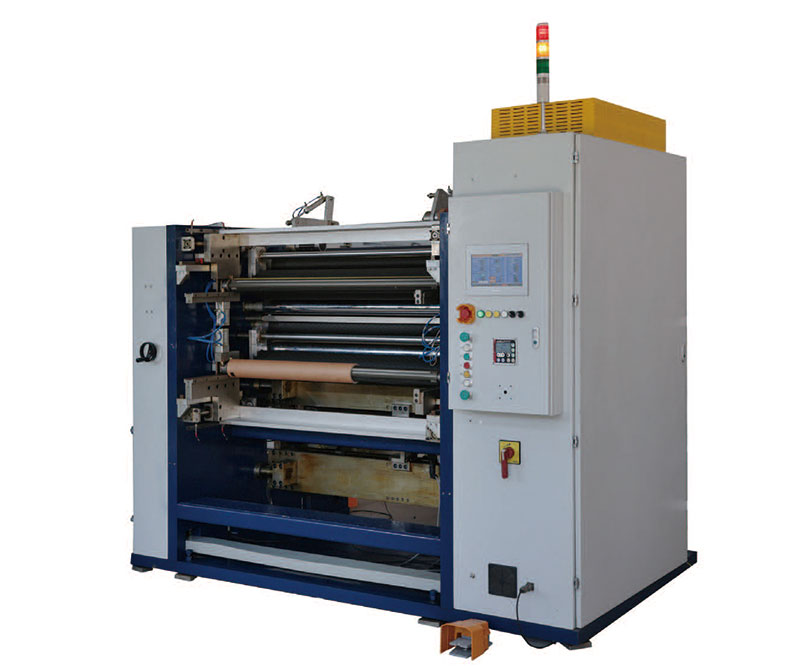 New Energy Ultra-thin Film Slitting Machine For MPET
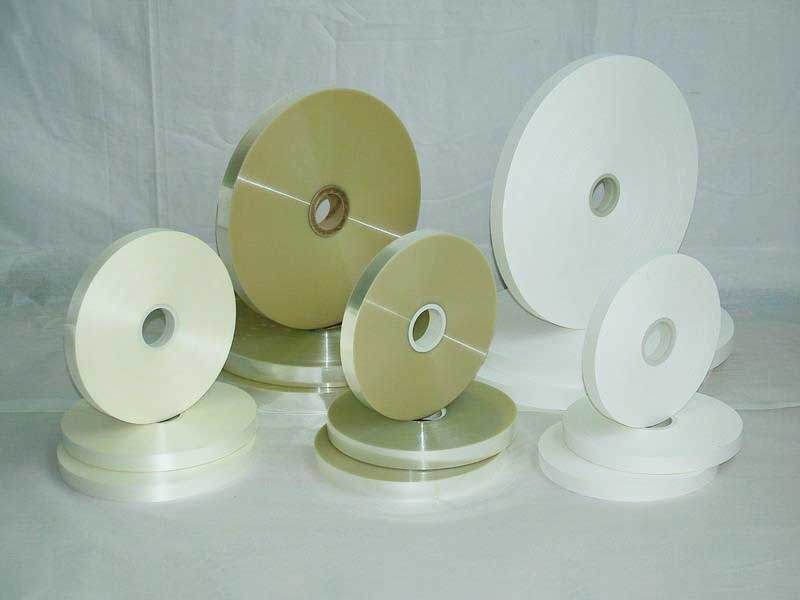 Film Slitting Machine
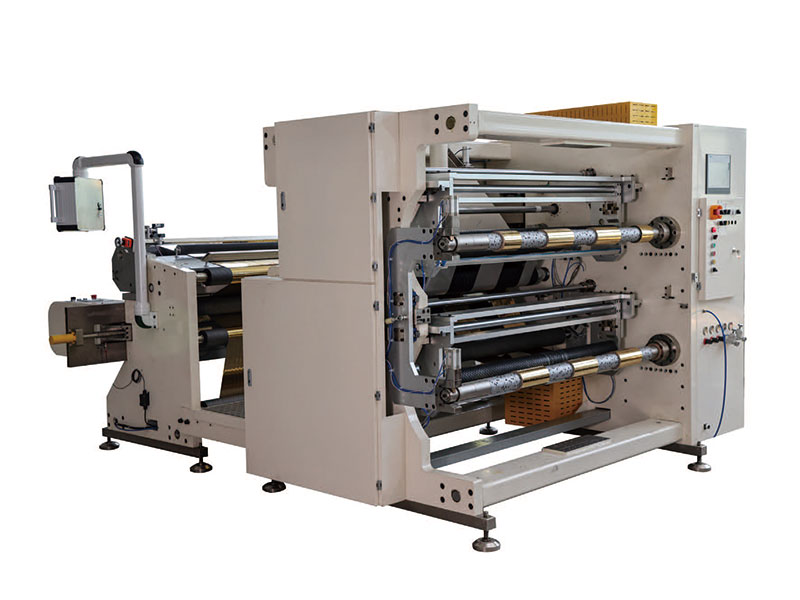 1400mm Copper Foil Slitting Machine


 +86 135 9951 7291
 support@delishmachine.com