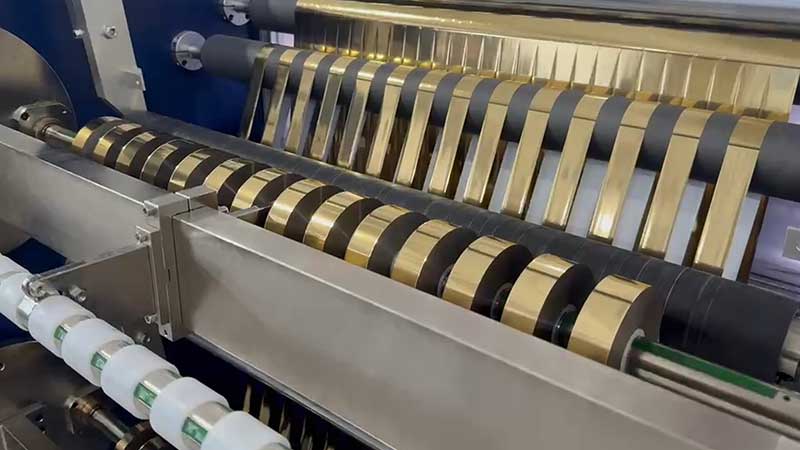
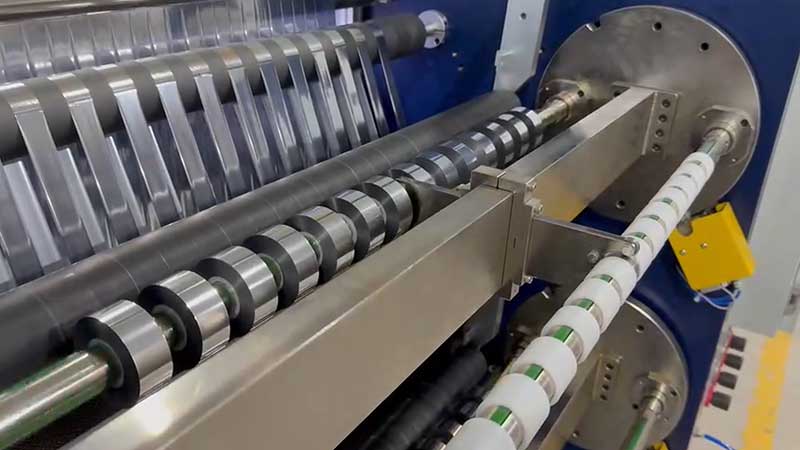
In the post-processing of high value-added film materials such as hot stamping foil, electrochemical aluminum, laser film, etc., the winding quality of the slitting machine directly determines the yield and the efficiency of downstream printing hot stamping. However, winding deviation (commonly known as "uneven winding" and "tower wheel winding") is one of the most common pain points in the industry. Once there is a serpentine swing or uneven end face, it can lead to material scrapping, damage to the slitting blade or even cause paper breakage.
Many people's first reaction is to adjust the parallelism of the correction sensor or guide roller, but often the symptoms are not cured. The core that truly determines the neatness of the winding end face is the dynamic stability of the winding tension - that is, the response speed and control accuracy of the tension closed-loop. Below, we systematically analyze how to eradicate winding deviation through "tension closed-loop rapid stabilization" from physical mechanism to engineering practice.
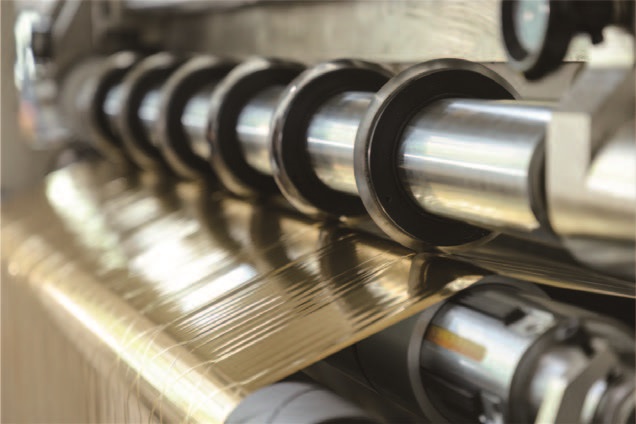
1. Why do tension fluctuations inevitably lead to deviation?
The characteristics of hot stamping foil are: thin thickness (6~20μm), smooth surface, low elongation, and weak rigidity. During the slitting and winding process, the coil is cut into multiple narrow strips from a single large coil, and each narrow strip is wound independently.
If the retraction tension fluctuates periodically (e.g., a runout of 5N every 10 seconds± the following chain reaction occurs:
1. Elastic slippage: The film layer produces a small amount of axial slip on the winding core, and the slip direction of each turn is random, accumulating into end face misalignment.
2. Lateral force imbalance: Tension fluctuations will cause uneven stress distribution at various points in the transverse direction of the membrane, and the membrane will automatically "crawl" towards the side with high tension.
3. Loose core: the inner layer relaxes after the tension is too long, and cannot be repaired by itself after the winding deviates; When the tension is too high, the film is stretched and deformed, which also leads to dislocation between layers.
Therefore, the tension closed loop is not a simple "constant tension control", but a servo system that needs to respond quickly, without overshoot, and resist disturbance.
2. The three dead points of traditional tension control
Many slitting machines use open-loop torque control or PID closed-loop, which is very easy to lose control in the following situations:
• Fast change of roll diameter: from empty to full roll, the roll-to-diameter ratio can reach 5:1, and the rotational moment of inertia changes drastically. If the PID parameter is fixed, the vibration will be shaken during small rolls and the response will be slow during large rolls.
• Acceleration and deceleration process: During start-stop and lifting speed, the inertial force is superimposed on the tension, causing an instantaneous tension spike and resulting in instant "layer jumping" when rewinding.
• Uneven material joints or thicknesses: Hot stamping foil often has fluctuations in the thickness of the paper or coating, which is a step disturbance to the tension closed loop. Ordinary PID takes 2~3 fluctuation cycles to recover, and deviation occurs during these fluctuations.
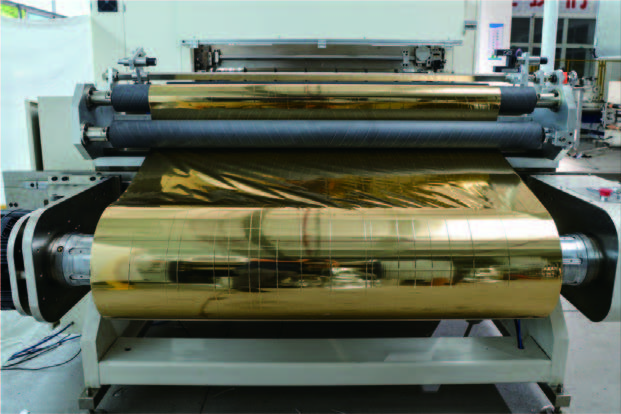
3. The "three-step closed-loop" strategy of rapid stabilization
To eradicate deviation, the adjustment time of the tension closed loop must be reduced to what the material properties allow (typically requiring ≤ 0.5 seconds without overshoot). Here's how:
Step 1: Adopt "speed + current" dual closed-loop architecture
• Outer ring (speed ring): given by the encoder or linear speed sensor to avoid low-speed crawling in pure torque mode.
• Inner ring (current ring/torque ring): The high-speed response (millisecond) of the servo drive directly regulates the motor output.
• Key point: The winding motor must work in torque control mode, but the reference torque is calculated in real time by the tension setpoint, and the speed limit is added as a safety protection.
Step 2: Dynamic feedforward compensates for the coil diameter and inertia
• Calculation of the current reel diameter in real time (by linear velocity to angular velocity ratio or ultrasonic sensor).
• Real-time updates of two parameters based on roll diameter:
◦ Torque compensation coefficient: T = F × (D/2), where F is the set tension and D is the real-time coil diameter.
◦ Inertia feedforward: An additional torque component ΔT = J × α is superimposed when accelerating or decelerating (J is the current coil's moment of inertia, α is the angular acceleration).
• In this way, the actual tension fluctuation can be controlled to within ±3% even at full speed and up and down.
Step 3: Adaptive PID + Low-Frequency Perturbation Suppression
• For the common 0.5~5Hz tension fluctuations of hot stamping foil (such as eccentricity of traction rollers, poor dynamic balance of air expansion axis), a bandpass filter or notch filter is embedded in the PID regulator.
• Fuzzy PID or model reference adaptation: automatically adjusts the scale gain Kp and integration time Ti when the volume diameter change exceeds the threshold. For example, the Kp is lowered to prevent shock when the volume is small, and the Kp is increased to enhance the anti-disturbance ability when the volume is large.
• Measured data shows that the optimized closed-loop adjustment time can be shortened from 2~3 seconds to less than 0.3 seconds of traditional control, and there is no overshoot.
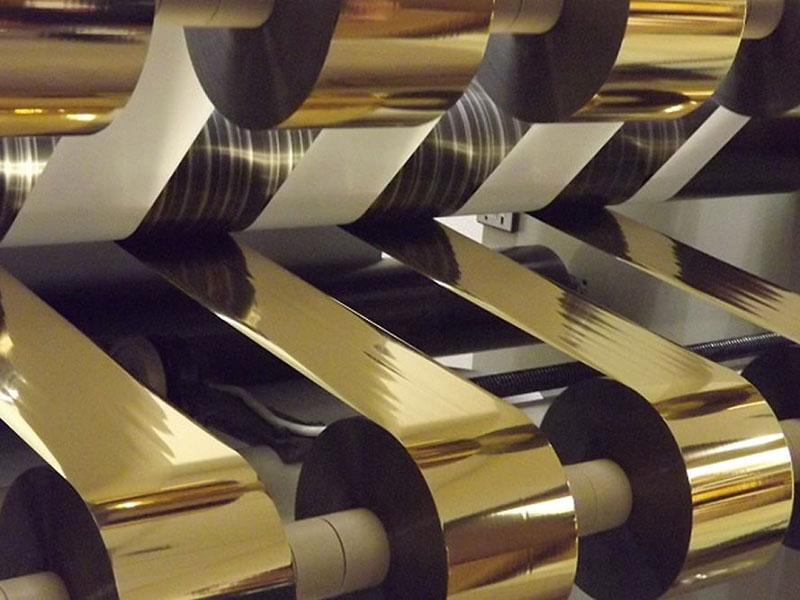
Fourth, the four "invisible killers" in the implementation of the project
Even if the theoretical algorithm is perfect, there may still be deviations on site. The following details cannot be ignored:
1. Tension sensor installation position: It must be close to the last guide roller before winding, and the roller bearing clearance ≤ 0.01mm. The sensor signal line should be far away from the power line of the frequency converter.
2. Inflation pressure of the reel shaft: For 3-inch or 6-inch cores, the air pressure must be uniform and stable (closed-loop regulator is recommended). When the pressure is insufficient, the inner layer will slip, and if the pressure is too high, the paper core will be deformed.
3. Independent floating rollers for each narrow strip after slitting: For extremely narrow strips with a width of less than 20mm, it is recommended to add micro floating rollers to each winding station to provide mechanical damping cushioning using gravity or low-friction cylinders.
4. Timing of edge correction and tension closed-loop: The correction action will temporarily change the length of the membrane path, thereby interfering with the tension. It needs to be set in the PLC: at the moment of the correction action, the tension PID temporarily freezes the integral term, and then resumes after the correction is completed.
5. Effect verification: from "visible to the naked eye" to "measurable data"
The optimized winding deviation can be quantitatively assessed:
• End face misalignment: ≤±0.5mm (normal working condition) / ≤±1.0mm (acceleration and deceleration working condition).
• Tension fluctuation peak: ≤ ±5% of the set value.
• Adjustment time: ≤0.5 seconds (from the time the perturbation occurs to the return to steady-state).
It is recommended that users do a "step test" in actual production: artificially quickly change the rewinding speed set value by ±10%, record the tension sensor curve with a high-speed data collector, and observe the overshoot and the number of oscillations. If the waveform can converge within one cycle, it means that the closed-loop stabilization is qualified.
Epilogue
The winding deviation of the hot stamping foil slitting machine is not essentially a problem of "correction", but a problem of "tension". Only by making the tension closed loop have three major capabilities: rapid response, adaptive reel diameter change, and suppression of mechanical disturbances, can the serpentine winding be fundamentally eliminated. For equipment manufacturers, this is not only a matter of replacing a PID controller, but also a systematic project of servo drive, mechanical stiffness, and sensor accuracy. When your winding end face is as neat as a knife, it means you've mastered the essence of tension control.
 English
 Deutsch
 Français
 Español
 Português
 日本語
日本語 русский
 한국어
한국어 عربي
عربي ภาษาไทย
 Tiếng Việt
 Italiano
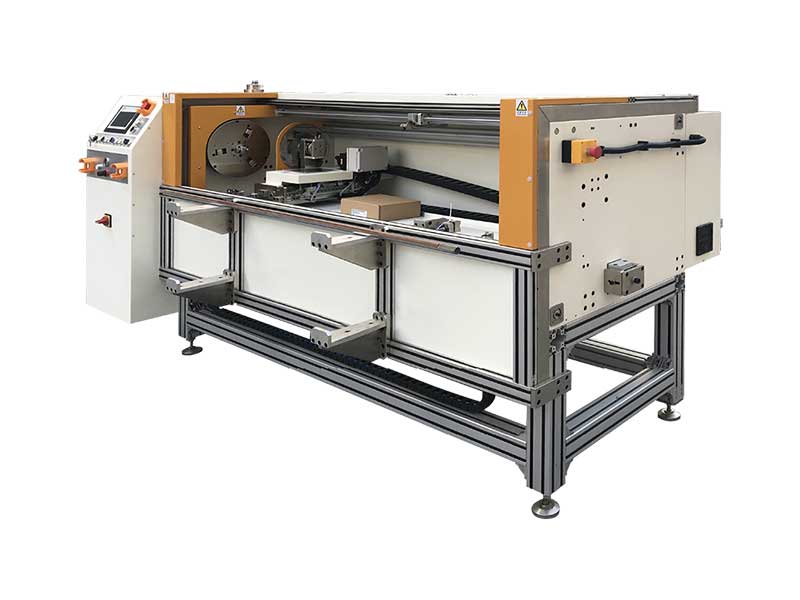 Automatic Foil Roll Cutting Machine
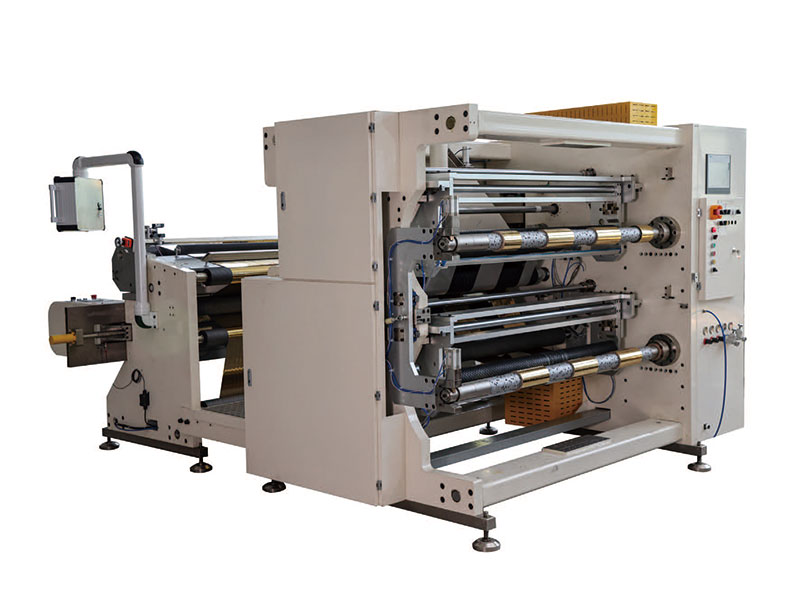 1400mm Hot Stamping Foil Slitting Machine
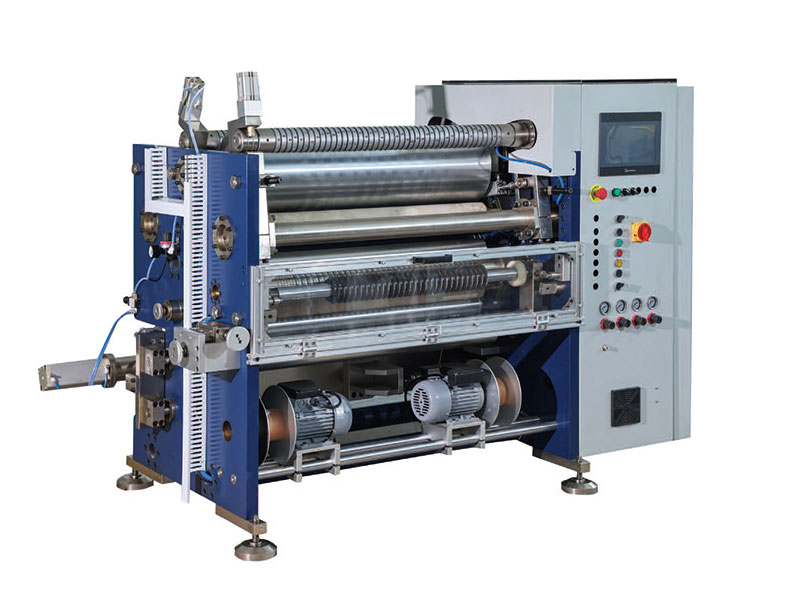 800mm Hot Stamping Foil Slitting Machine
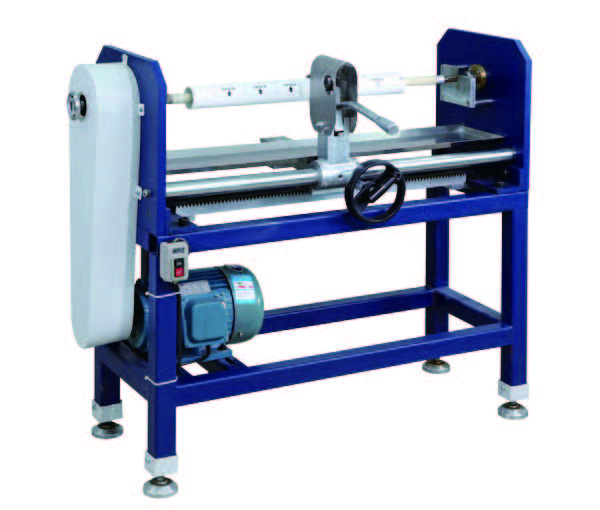 Manual Foil Roll Cutting Machine
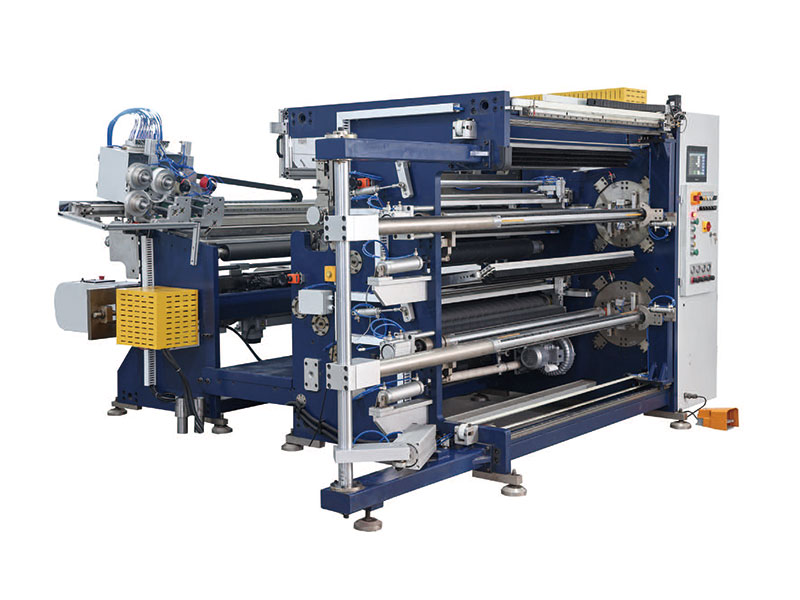 1350mm Hot Stamping Foil Slitting Machine
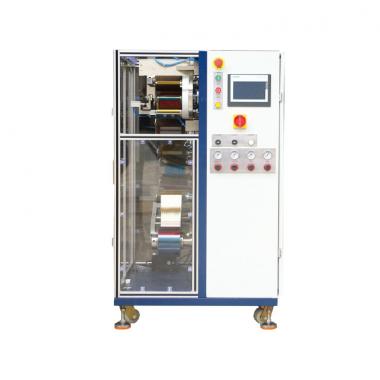 Photo & Card Print Ribbon Rewinding Machine
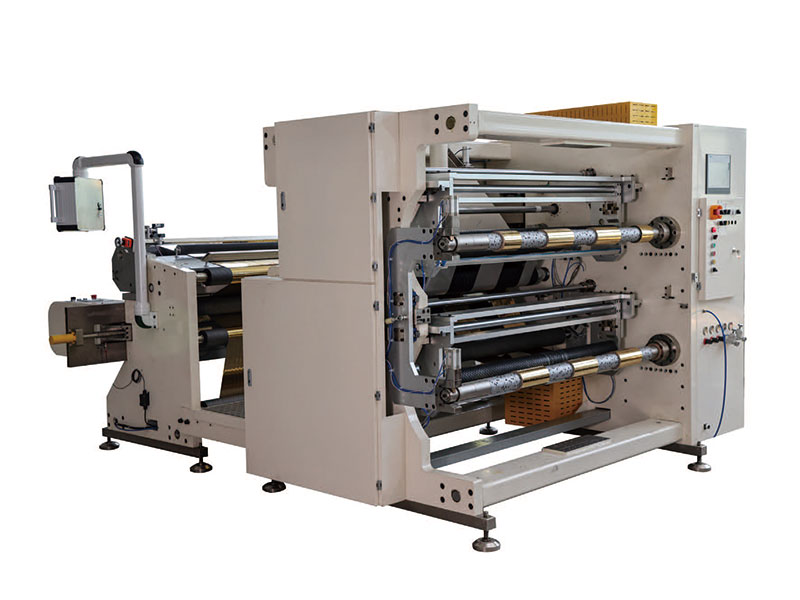 1400mm Copper Foil Slitting Machine
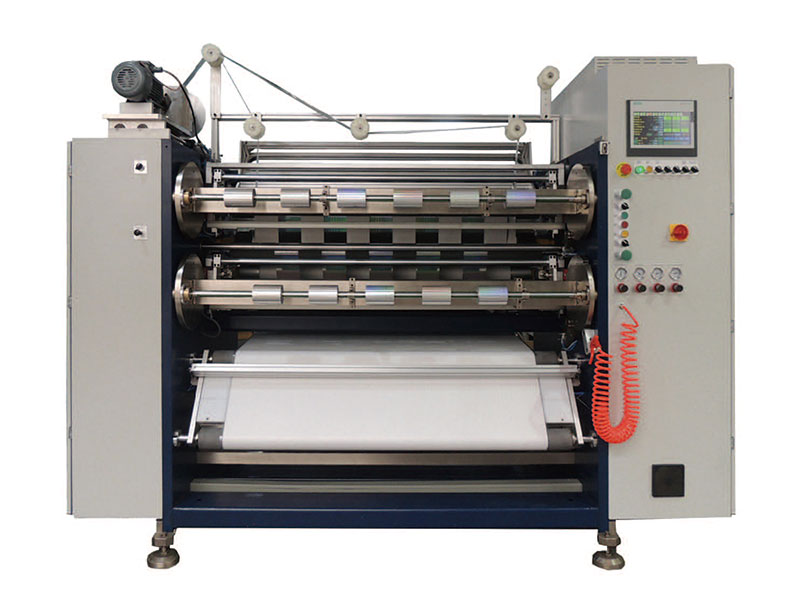 1350mm/1600 Foil Slitting Machine


 +86 135 9951 7291
 support@delishmachine.com