In industries such as packaging and printing, textile decoration, and stationery manufacturing, hot stamping foil (commonly known as electrochemical aluminum) is a common surface decoration material. It attaches the metallic luster or colored luster to the surface of the substrate through hot press transfer, enhancing the grade and visual appeal of the product. The process of hot stamping foil from large coil master roll to finished small roll is inseparable from a key equipment - hot stamping foil slitting machine.
This article will focus on the main line of "from rewinding to slitting", and disassemble the standard process of hot stamping foil slitting machine in detail.
1. Feeding and film threading: the starting point of the process
The first step in hot stamping foil slitting is to install the large coil master coil on the unwinding reel of the slitting machine. The master roll usually ranges from 500mm-1300mm in width and can reach thousands of meters in length. Operators need to:
• Use an inflatable or mechanical shaft to fix the female coil core
• Adjust the unwinding tension control
• The starting end of the hot stamping foil is pulled along the guide roller path to the rewinding shaft
The key to this stage is to have the correct penetrating path and reasonable initial tension value to avoid wrinkles or deviations at the start.
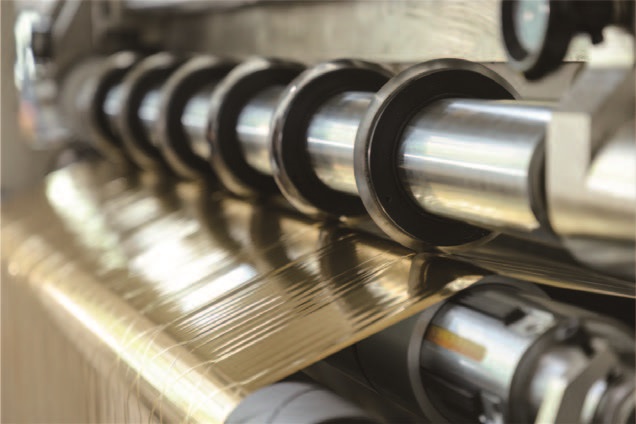
2. Tension setting before rerolling
Foil stamping is extremely sensitive to tension. Excessive tension will lead to tensile deformation of the foil surface and cracking of the coating. If the tension is too small, it will cause loose winding and uneven end faces. Slitting machines are usually equipped with closed-loop tension control systems, including:
• Unwinding tension is controlled by magnetic particle brakes or servo motors
• The winding tension adopts the taper decreasing algorithm, and the tension is automatically reduced with the increase of the wind diameter
• Real-time feedback of the middle floating roller to dynamically compensate for tension fluctuations
A reasonable tension curve is the basis for ensuring that the hot foil is "no wrinkle, no edges, and no sticking" after slitting.
3. Correction system: ensure that the material is straight
Hot stamping foil is prone to lateral deviation due to uneven end faces of the master coil and roller parallelism errors in high-speed operation. The slitting machine is equipped with EPC (Edge Position Control) or LPC (Line Position Control) correction system:
• Photoelectric or ultrasonic sensors detect foil edges or pre-printed marking lines in real time
• The controller drives the guiding frame to move laterally to keep the material in the set path at all times
• The correction accuracy can usually reach within ±0.5mm
Without stable correction, the end face of the finished small roll will be uneven and cannot meet the customer's packaging requirements.
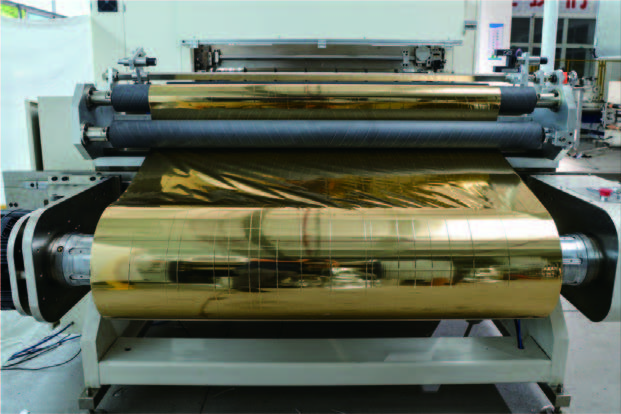
4. Slitting process: core link
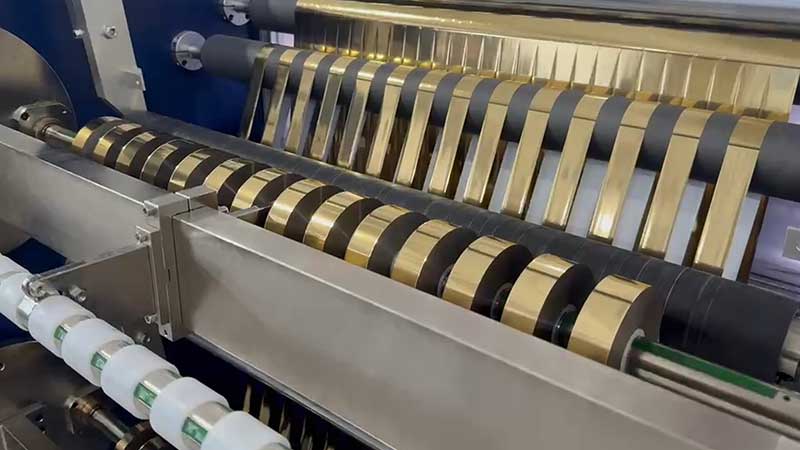
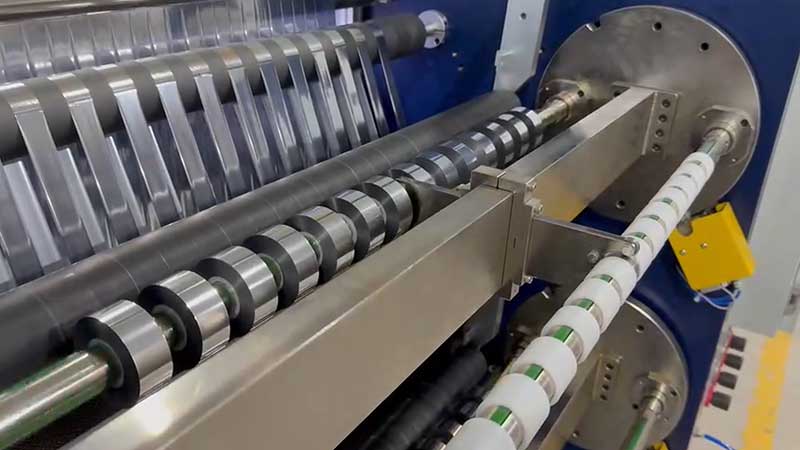
Slitting is the core action of the whole equipment, cutting the wide master coil into several narrow finished products along the longitudinal direction. The hot stamping foil slitting machine is divided into two mainstream methods according to the different blade forms:
1. Circular knife slitting
• The upper and lower disc knives are rolled and sheared, similar to the principle of scissors
• Suitable for thin (12μm-30μm) hot stamping foils
• Fast speed, long blade life, and smooth cuts
2. Flat knife slitting
• Upper and lower anvil or razor pressing
• Suitable for thicker or special foil stamping with adhesive backing
• More flexibility in changing specifications
The tool spacing is adjusted by the position of the tool holder, which determines the width of the finished product. According to the order requirements, the operator inputs the slitting specification on the touch screen, and the servo motor drives the tool group to automatically arrange the tools.
5. Winding: forming a small roll of finished products
The slitted strips of foil are wound onto their respective small cores. The winding process directly affects the appearance quality of the final product:
• Winding method: surface winding (contact winding) or center winding (shaft winding). The hot stamping foil is mostly center-wound, and the tension of each belt can be adjusted independently by controlling the torque of the winding shaft.
• Roller Assist: At the beginning of winding, the roller gently presses the roll surface to expel air to prevent slippage between layers.
• End face control: High-precision winding can ensure that the two end faces of small coils are neat like "knife cutting", without tower layers, internal loosening and external tightness.
The diameter, length and end face flatness of the finished coil are the core indicators to check the quality of winding.
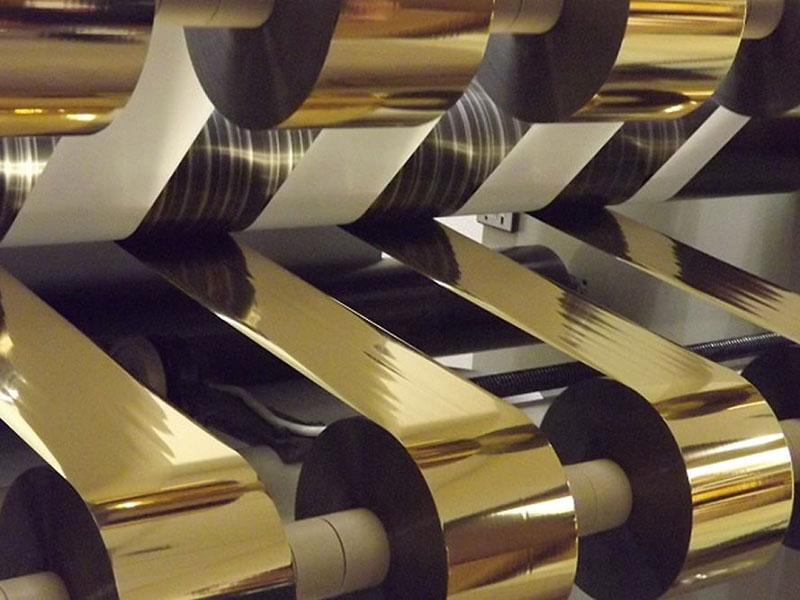
6. Unwinding and packaging: the end of the process
When the slitting is completed, the rewinding shaft automatically stops and relieves the pressure. Operator:
• Remove the finished roll together with the inflatable shaft
• Push small rolls off the shaft on the unwinding rack
• Inspect each small roll for width, face, cosmetic defects (scratches, white spots, wrinkles)
• Put on protective film or heat shrink bag and pack into the box
Some high-end slitting machines are also equipped with automatic unwinding and labeling systems, which can greatly reduce manual intervention.
7. Common problems and process optimization
In actual production, even with advanced equipment, the following problems may be encountered, requiring operators to fine-tune parameters based on experience:
| Problem phenomenon | Possible causes | Process countermeasures |
| Slitting post-edge burrs | Round knives are worn or improperly cleared | Replace the blade or adjust the backlash |
| The end of the winding is uneven | Correction response lag or tension fluctuation | Reduce the speed or adjust the PID parameters |
| Longitudinal stripes on the foil surface | The guide rollers are dirty or scratched | Clean the guide rollers or replace scratched parts |
| The inner layer of the small roll is loose | The initial tension of winding is insufficient | Increase the starting tension or extend the contact time of the rollers |
8. Intelligent trend
At present, hot stamping foil slitting machines are developing from semi-automatic to fully automatic and digital. The new models generally have:
• MES system docking: automatically read work orders and download slitting recipes
• Online defect detection: Identify defects such as pinholes, uneven coatings, and foreign objects through CCD cameras and automatically mark them
• Self-learning of process parameters: Recommend optimal tension curves and slitting speeds based on historical production data
Epilogue
The hot stamping foil slitting machine seems to be just a cutting equipment, but in fact it integrates multidisciplinary technologies such as tension control, correction tracking, precision slitting, and roll diameter calculation. From the feeding of the master coil to the unloading of the finished small coil, the choice of process parameters at each step directly affects the final bronzing effect and customer experience. Understanding and mastering this complete process from rewinding to slitting is the key to ensuring the quality of hot stamping foil processing.
 English
 Deutsch
 Français
 Español
 Português
 日本語
日本語 русский
 한국어
한국어 عربي
عربي ภาษาไทย
 Tiếng Việt
 Italiano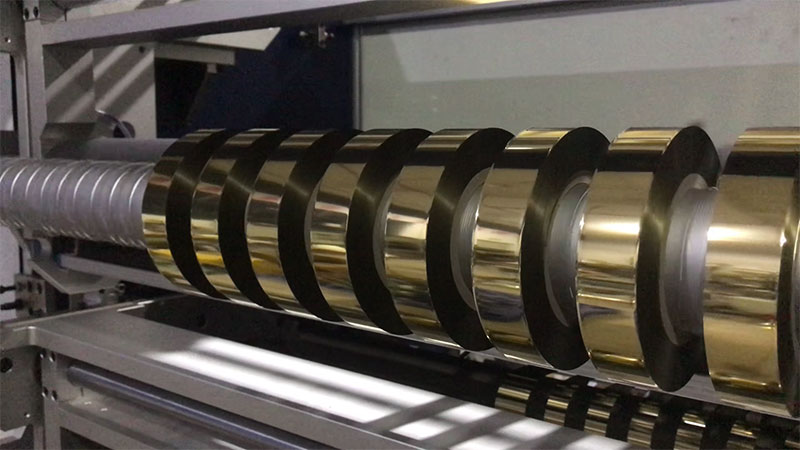
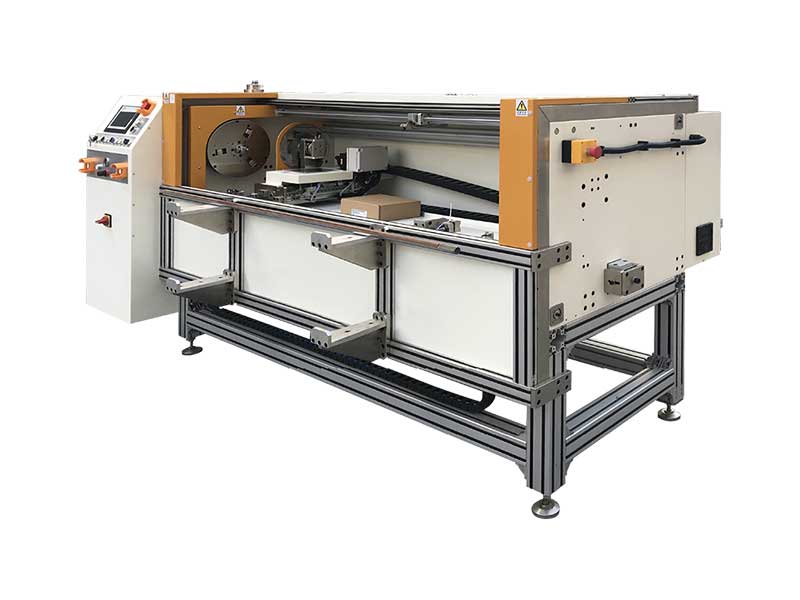 Automatic Foil Roll Cutting Machine
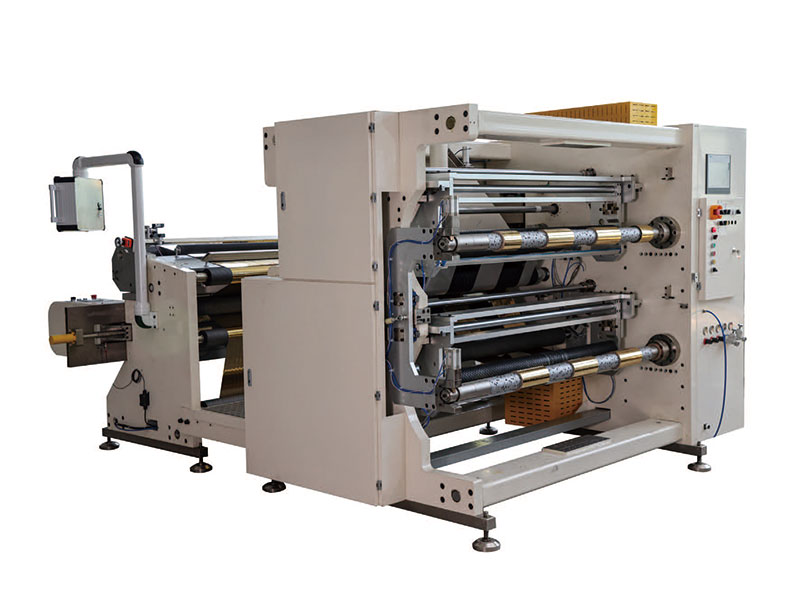 1400mm Hot Stamping Foil Slitting Machine
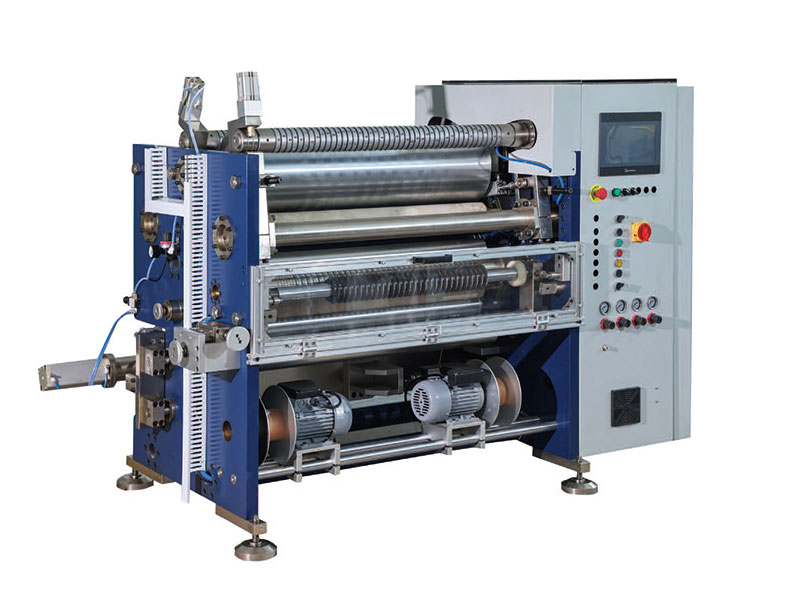 800mm Hot Stamping Foil Slitting Machine
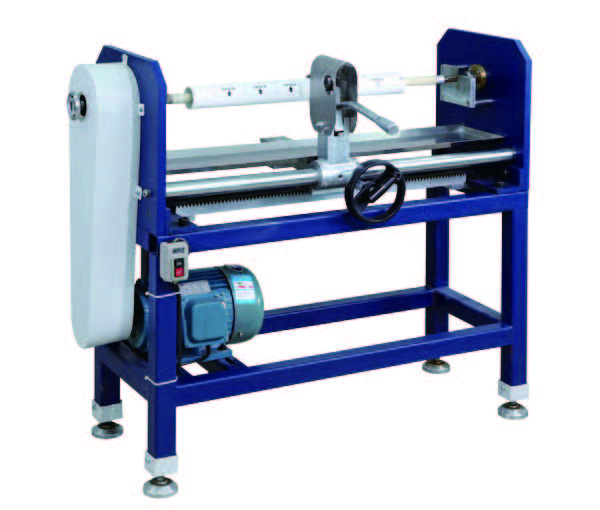 Manual Foil Roll Cutting Machine
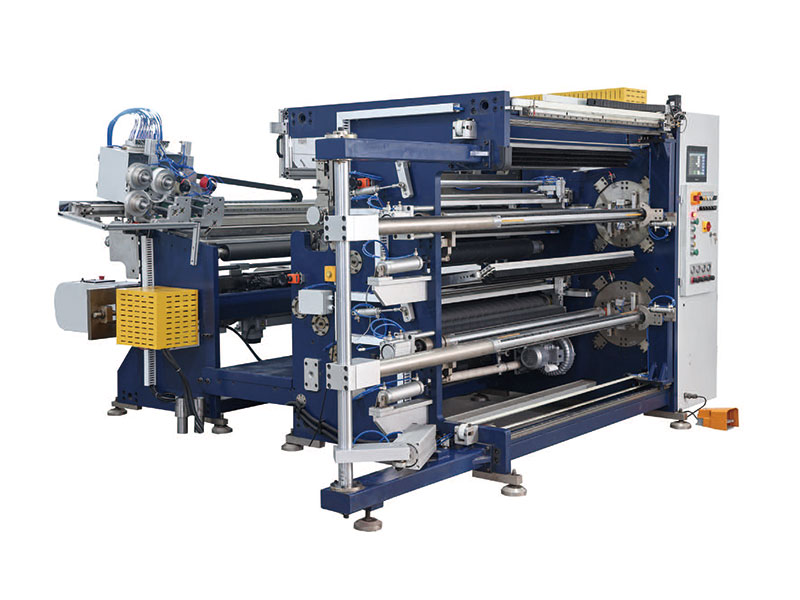 1350mm Hot Stamping Foil Slitting Machine
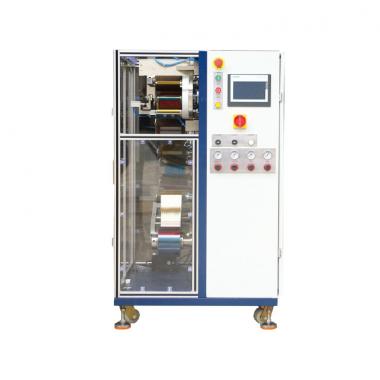 Photo & Card Print Ribbon Rewinding Machine
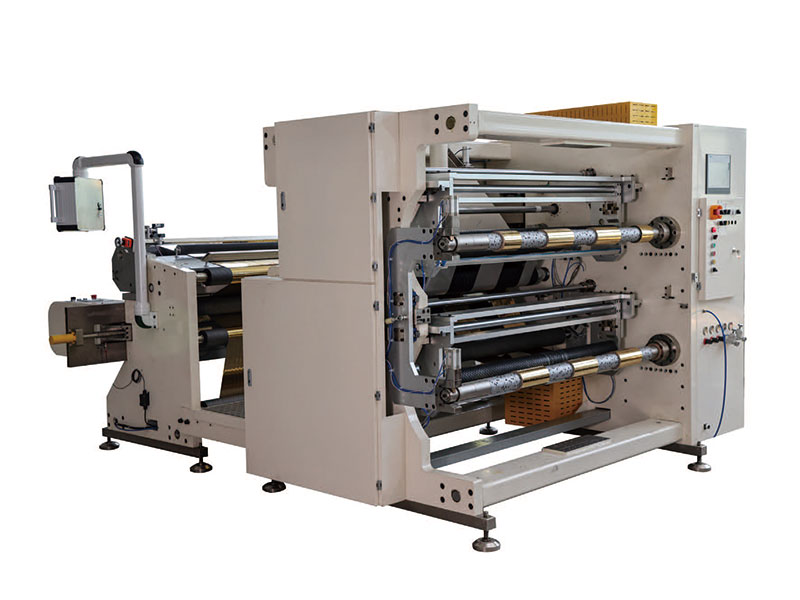 1400mm Copper Foil Slitting Machine
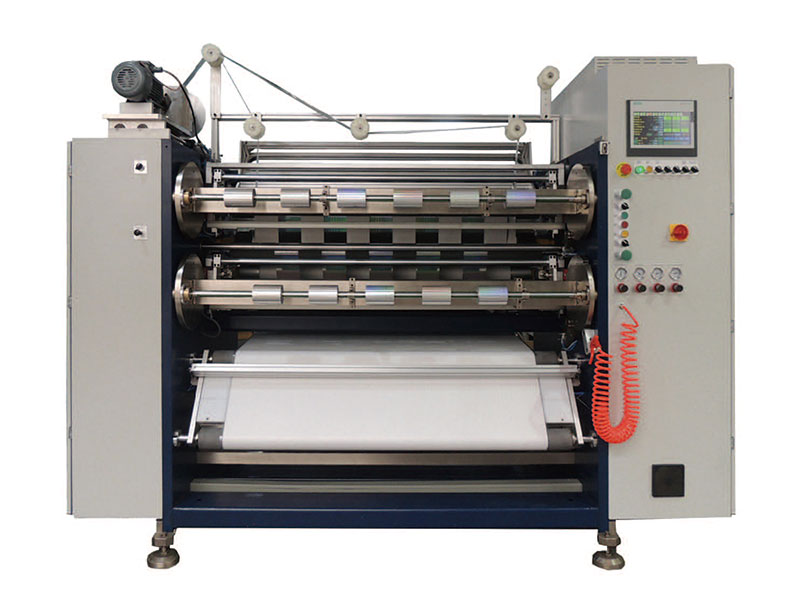 1350mm/1600 Foil Slitting Machine


 +86 135 9951 7291
 support@delishmachine.com