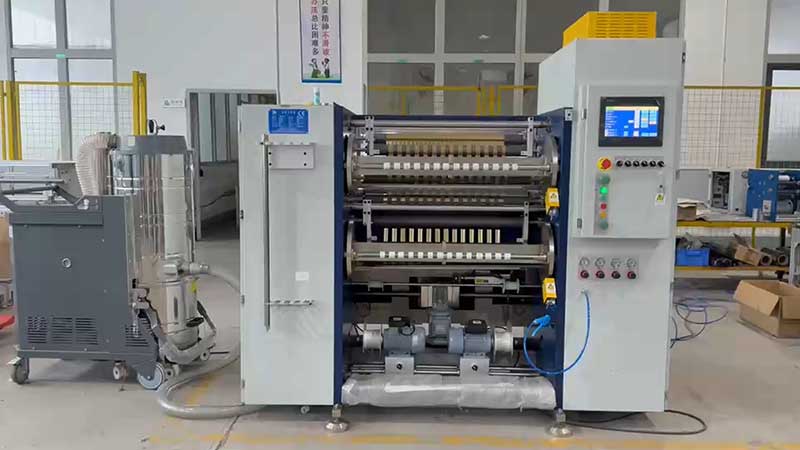
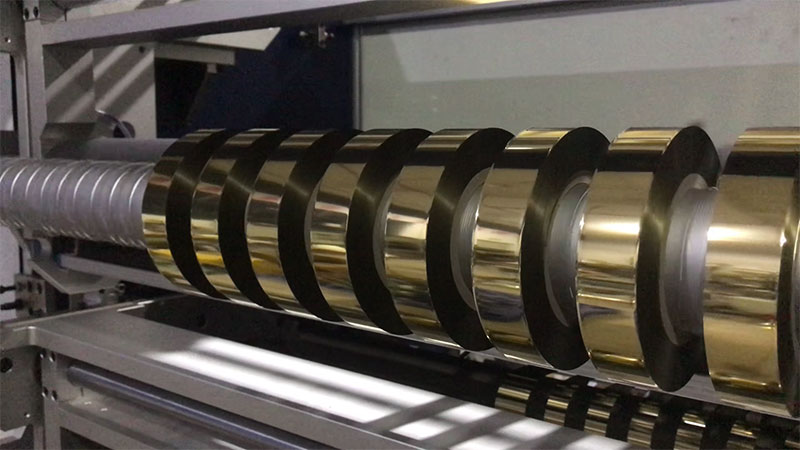
Walking into a modern printing workshop, rolls of colorful and shiny hot stamping paper are slowly being produced from the production line amidst the roar of the machine. They will be shipped to cigarette packaging factories, wine box factories, gift wrapping companies, and finally become those memorable and beautiful packaging in our hands. However, few people know that behind these dazzling hot stamping papers, there is a crucial process - slitting, and it is the protagonist we are going to discuss today: the hot stamping paper slitting machine.
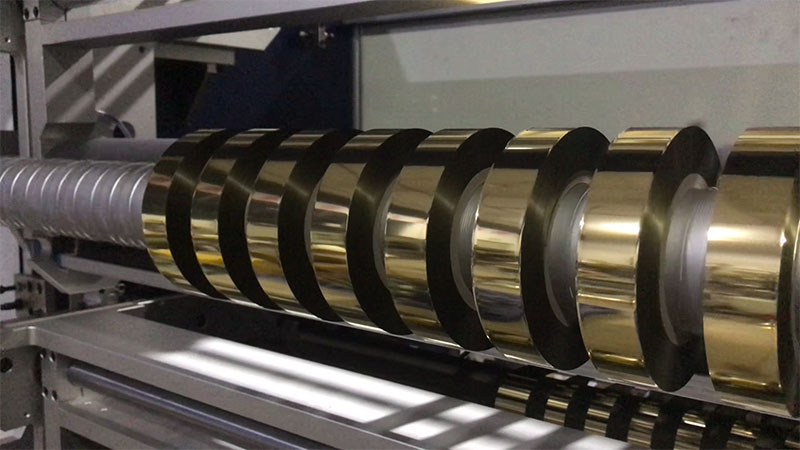
Hot stamping paper: the "fragility" behind beauty
Hot stamping paper, scientifically known as electrochemical aluminum, is an extremely precise thin film composite material. It is usually composed of multi-layer structures such as PET mylar base layer, release layer, coloring layer, aluminum plating layer and adhesive layer. Its total thickness is often only a few microns to more than ten microns, much thinner than a hair.
It is this "ultra-thin" characteristic that gives the hot stamping paper a gorgeous visual effect, but also brings great challenges to subsequent processing:
1. Extremely easy to stretch: Ultra-thin materials are easily deformed when subjected to tension, and once stretched, they will lead to pattern deformation and inaccurate overprinting.
2. Sensitive edges: The edges after cutting must be neat and smooth, and any tiny burrs or jagged teeth will appear as clear blemishes during hot stamping - "gold edges" are uneven, and the product is scrapped.
3. Static electricity trouble: Film materials are very prone to static electricity in high-speed movement, leading to material sticking, uneven winding, and even safety accidents.
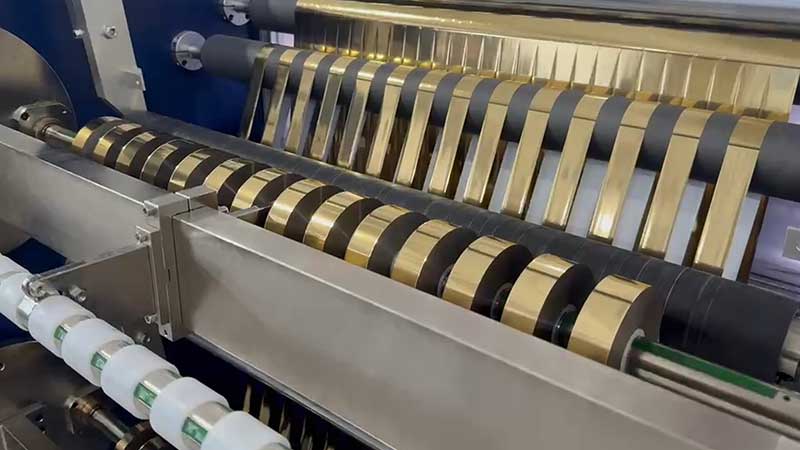
Therefore, how to accurately cut these master rolls with a width of more than one meter into narrow bands ranging from a few millimeters to tens of millimeters, and ensure that every inch is flawless, has become the core problem in the production of hot stamping paper. The hot stamping paper slitting machine was born to solve this problem.
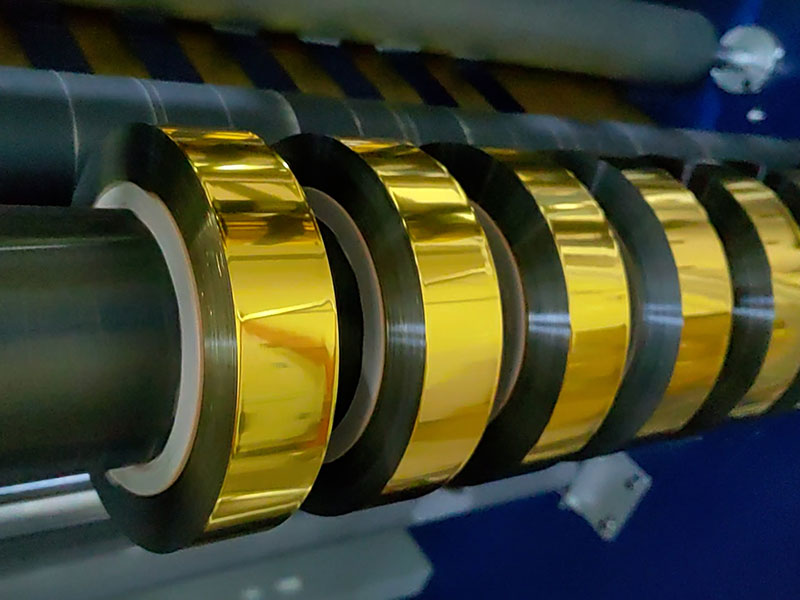
The heart of the slitting machine: a contest of "precision"
An excellent hot stamping paper slitting machine is by no means a simple combination of "cutter + coiling", it is a precision system integrating mechanics, electronics, optics and materials.
1. Unmatched tension control system
This is the soul of the slitting machine. In view of the ultra-thin and easily stretchable characteristics of hot stamping paper, modern slitting machines generally adopt a closed-loop tension control system. From unwinding to winding, each transmission point is equipped with a high-precision tension sensor. The system can monitor the tension of the material in real time and automatically adjust at millisecond speed. Whether it is accelerating, decelerating, or running at a constant speed, it ensures that the material is always in an ideal state of "both straight and not stretched", treating every inch of hot stamping paper gently like a baby.
2. Sharp and durable "iron like mud" blade
The blade is the key to the quality of slitting. For composite materials such as hot stamping paper, the blade must not only be extremely sharp to ensure a neat and burr-free cut, but also have excellent wear resistance to cope with long periods of continuous production. At present, high-end equipment mostly uses disc cutters made of high-quality tungsten steel or cemented carbide, and with precise tool slots, the shear gap is controlled at the micron level, so as to achieve smooth slitting like "cutting iron like mud".
3. Intelligent electrostatic and dust removal management
To address the annoying static electricity problem, the slitting machine integrates a high-efficiency static elimination rod to neutralize the charge on the material at critical locations, ensuring neat winding and safe operation. At the same time, many equipment is also equipped with vacuum adsorption or ion air dust removal device, which synchronously removes the tiny dust generated by the cutting edge during the slitting process to ensure the ultimate cleanliness of the hot stamping paper surface.
4. Precise winding and arrangement
The finished product after slitting requires the winding end face to be as flat as a mirror and the tightness is consistent. This is made possible by a sophisticated winding mechanism and a "wire rowing" system. They are controlled by algorithms to allow the material to be evenly wound on the winding shaft at the most perfect pressure, and even the narrowest 10mm bandwidth can achieve hundreds of meters of neat rewinding, providing the most reliable guarantee for the subsequent high-speed hot stamping process.
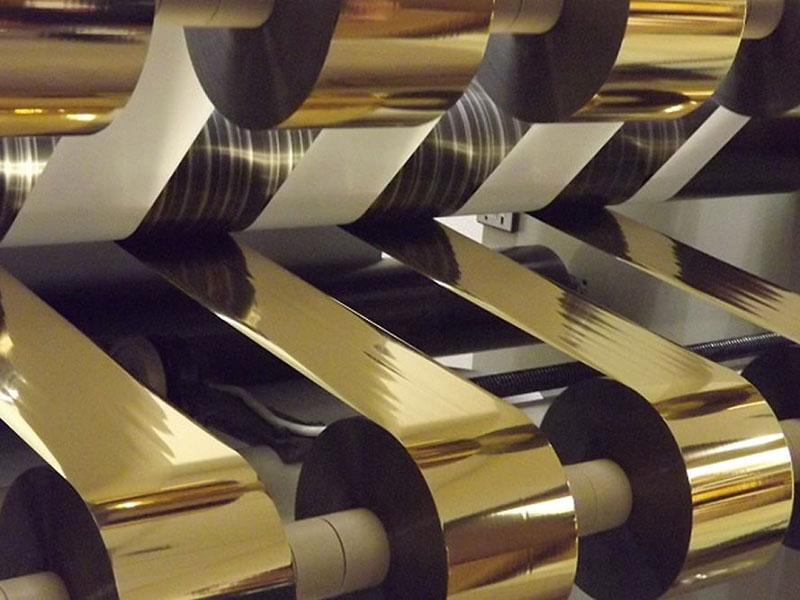
From "slitting" to "intelligent manufacturing" in the future
With the upgrading of consumption, the packaging is becoming more and more exquisite, and the application of hot stamping technology is becoming more and more extensive. This not only requires more diverse colors and textures of hot stamping paper, but also puts forward higher requirements for slitting equipment:
• More intelligent: Through the AI visual recognition system, it automatically detects defects in the slitting process and marks or alarms to achieve quality traceability throughout the process.
• More automated: Automatic film bonding, automatic roll change, and automatic adjustment of specifications greatly reduce manual intervention and improve production efficiency and stability.
• More energy-saving and efficient: optimize the mechanical structure and drive system to reduce energy consumption and achieve green production.
The hot stamping paper slitting machine is the bridge between mass production and individual applications. It stands silently behind the scenes, using the ultimate precision and stability to carve rolls of ordinary films into "gorgeous coats" that convey beauty and light up the brand. It is a vivid embodiment of "seeing the truth in the subtleties" in the modern industrial system - true perfection is often born from the unremitting pursuit of millimeters.
 English
 Deutsch
 Français
 Español
 Português
 日本語
日本語 русский
 한국어
한국어 عربي
عربي ภาษาไทย
 Tiếng Việt
 Italiano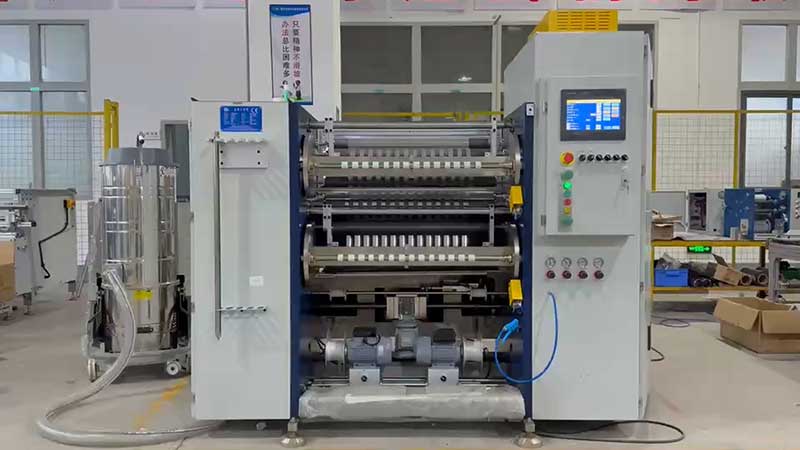
 Automatic Foil Roll Cutting Machine
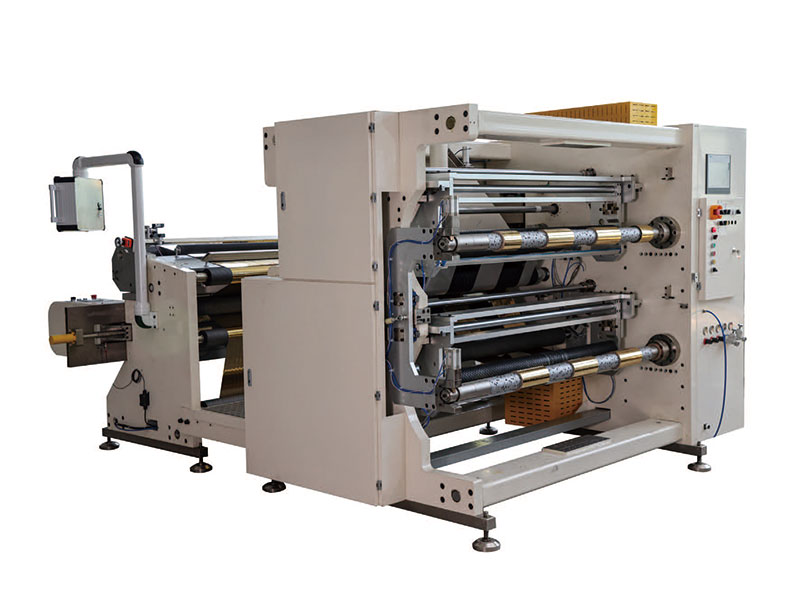 1400mm Hot Stamping Foil Slitting Machine
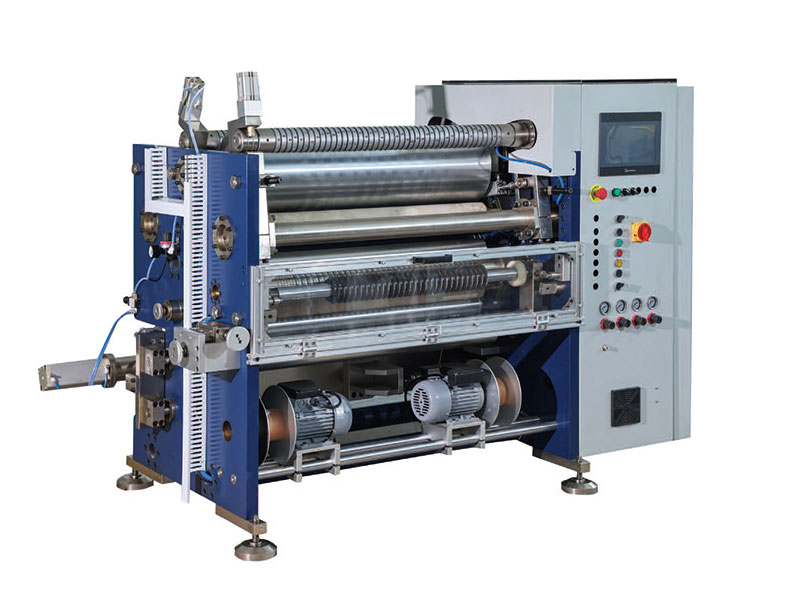 800mm Hot Stamping Foil Slitting Machine
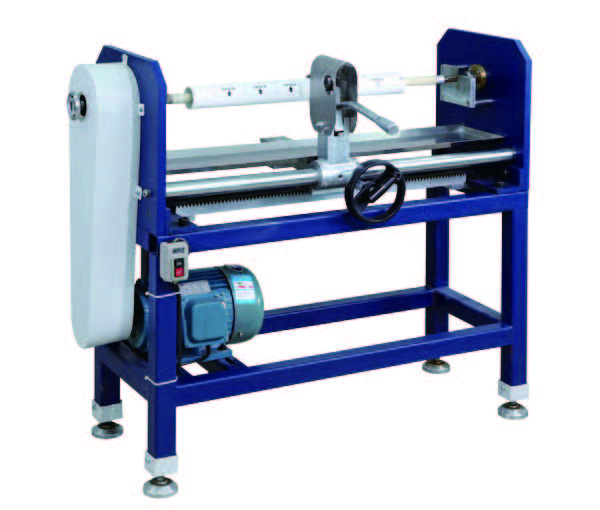 Manual Foil Roll Cutting Machine
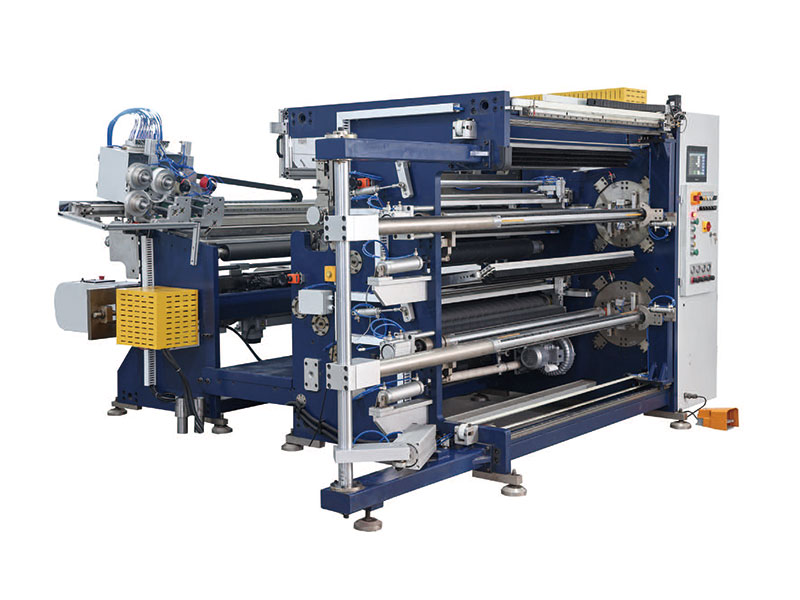 1350mm Hot Stamping Foil Slitting Machine
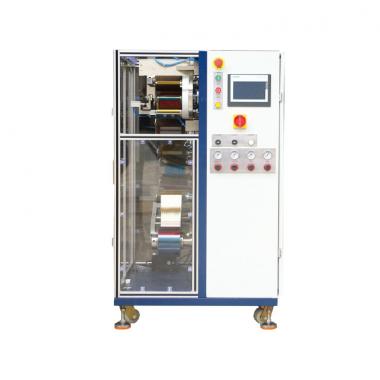 Photo & Card Print Ribbon Rewinding Machine
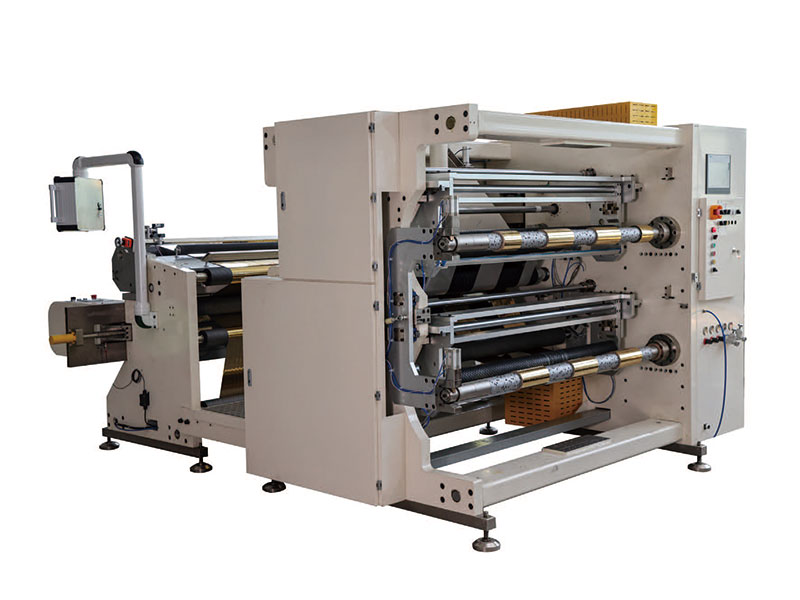 1400mm Copper Foil Slitting Machine
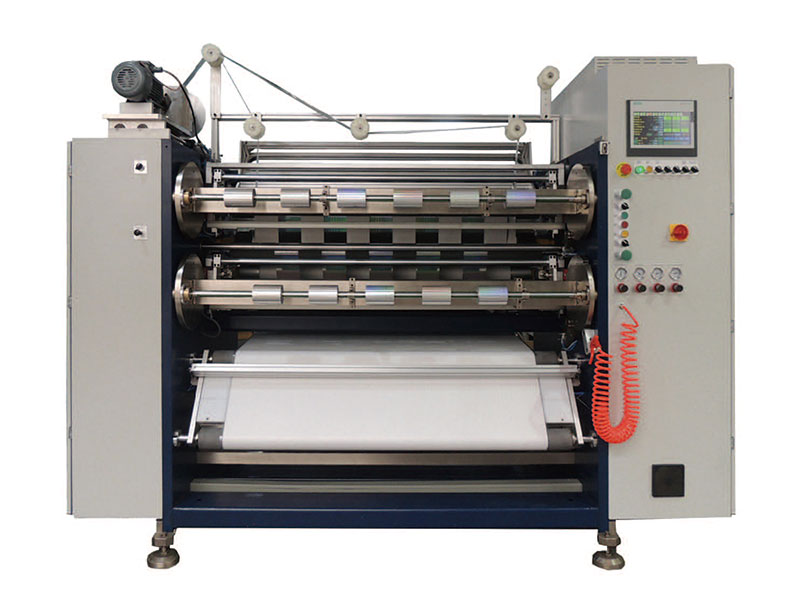 1350mm/1600 Foil Slitting Machine


 +86 135 9951 7291
 support@delishmachine.com