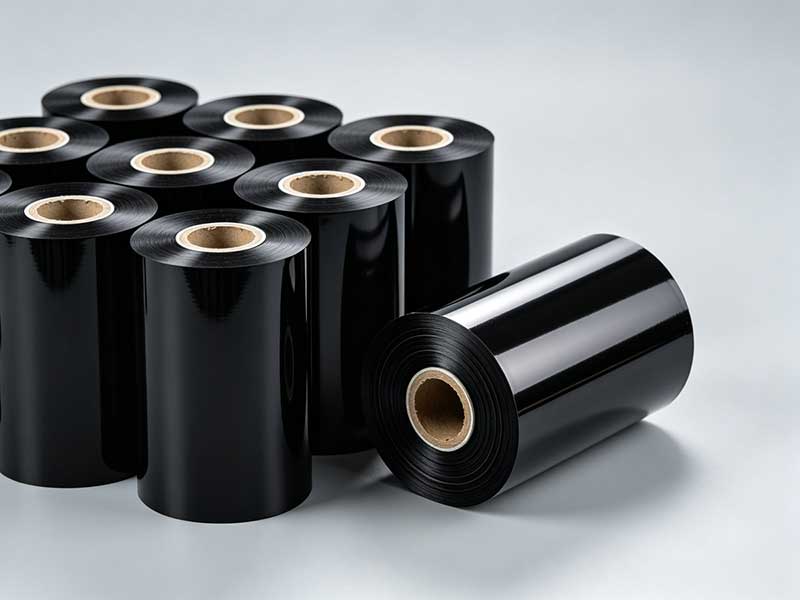
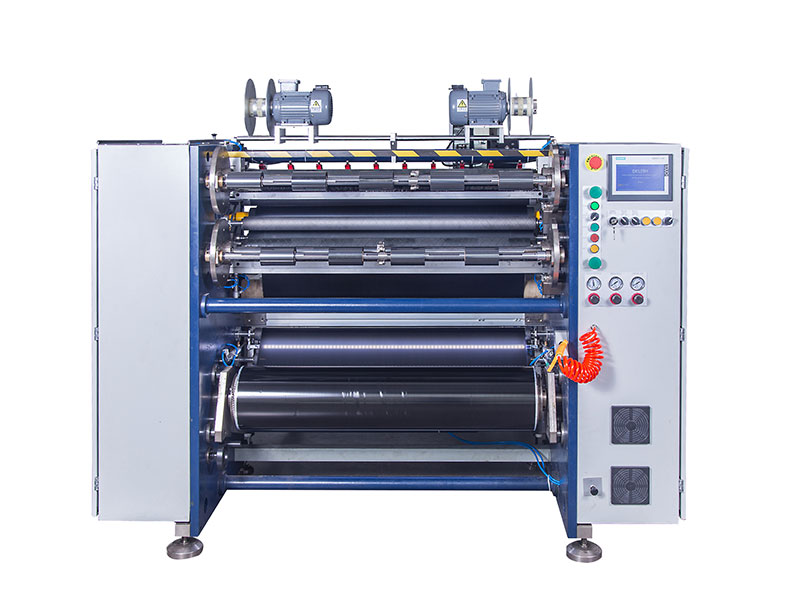
In the precision arena of industrial automation, ribbon slitting machines act as skilled tailors, accurately cutting wide ribbons into narrow ribbons of specified widths. This process may seem simple and straightforward, but in fact, there is an undercurrent surging – the delicate balance of tension control systems directly determines the quality lifeblood of the final product. From printer ribbons to electronic labels, from barcodes to medical devices, ribbons serve as information carriers and protective coatings, and their slitting quality directly affects the performance and reliability of downstream products.
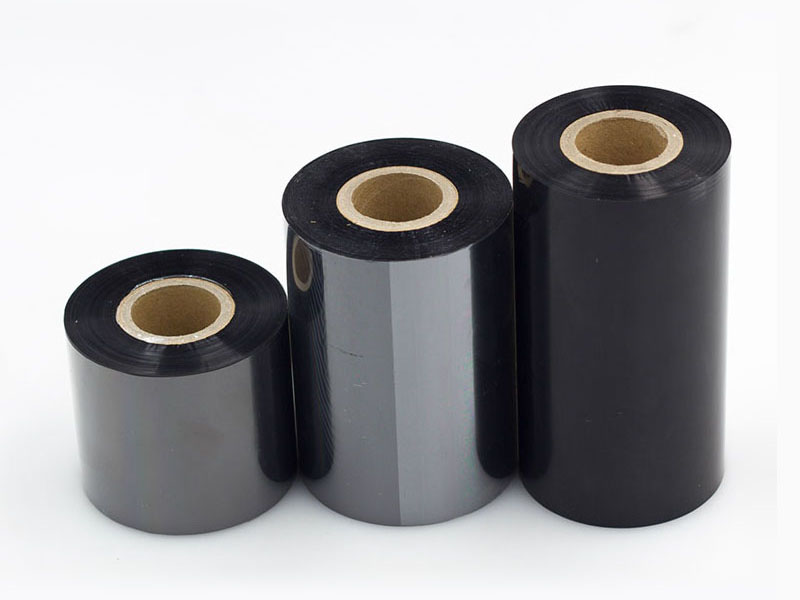
1. Tension runaway: mass tsunami caused by microscopic disturbances
When the ribbon passes through the slitting machine at a speed of hundreds of meters per minute, any small tension fluctuations will be infinitely amplified. When the tension is insufficient, the ribbon relaxation leads to cutting drift, edge fuzzing, and "bird's nest" disorders during rewinding; when the tension is too high, the ribbon is overstretched or even broken, the coating microstructure is damaged, and the conductivity or thermal transfer performance is reduced. Even more hidden are periodic tension fluctuations, which can form "star" or "bamboo" defects during winding, which can evolve into catastrophic problems such as adhesion and deformation in subsequent transportation and storage.
The challenges of modern high-speed slitting machines are particularly challenging: the diversity of material properties (from fragile films to composite coatings), increasing process speeds, increasingly narrow widths (down to 1 mm), and the near-stringent requirements for quality consistency from customers. Traditional mechanical tensioning devices such as counterweight rollers and friction clutches are no longer suitable for modern production due to their slow response and extensive adjustment.
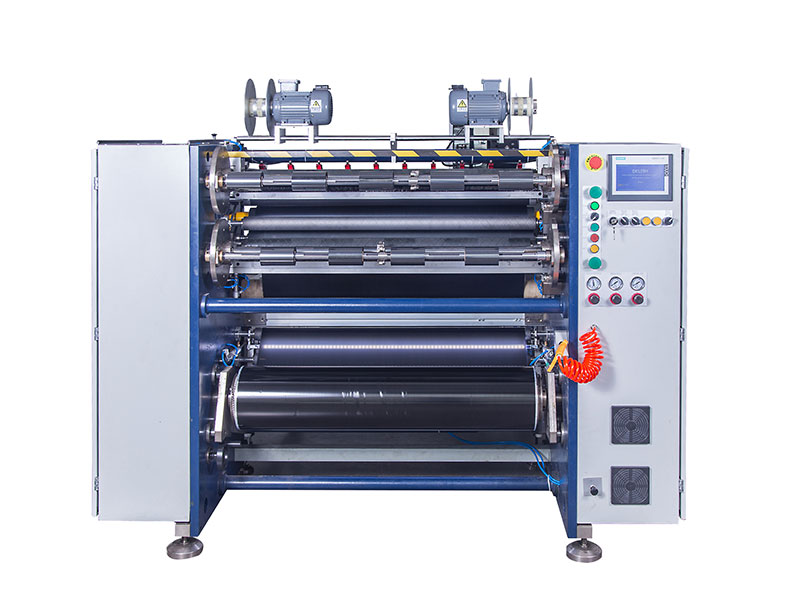
2. System deconstruction: multi-layer collaborative intelligent control network
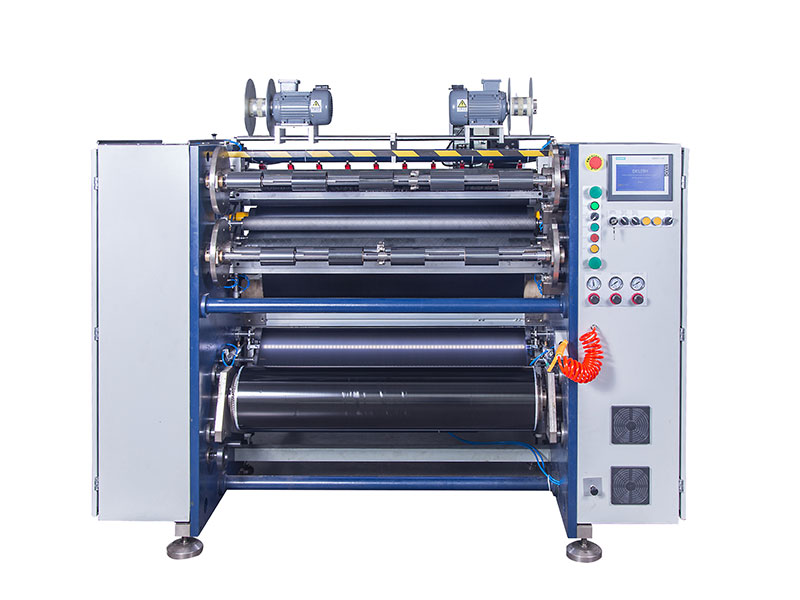
The modern carbon ribbon slitting machine tension control system is a multi-level intelligent network, and its core architecture can be divided into three levels of organic linkage:
Sensing layer: the "nerve endings" of the system
High-precision tension sensors are the starting point for controlling the closed loop. Roller sensors based on the strain gauge principle directly measure the actual tension of the material, non-contact ultrasonic or laser distance sensors monitor material sag, and encoders track the rotation speed of each roller in real time. These sensors collect data at millisecond frequencies and form a digital mirror of the control system's perception of reality.
Control layer: the "intelligent hub" of the system
PLCs or dedicated motion controllers are at the heart of algorithm execution. PID control is still fundamental, but adaptive PID, fuzzy logic, and feedforward control have been commonly introduced in modern systems. When the inertia change caused by the decrease in the unwinding diameter is detected, the controller can automatically adjust the gain parameters. By predicting the linear speed change caused by the increase in the winding diameter, the torque output is adjusted in advance, eliminating disturbances before they occur. More advanced systems introduce machine learning algorithms to optimize the combination of control parameters under specific materials and processes through learning from historical data.
Executive layer: the "muscles and ligaments" of the system
• Unwinding end: magnetic powder clutch, servo motor with planetary reducer to achieve precise braking of unwinding tension. The active unwinding system is directly driven by a servo motor to achieve double closed-loop control of tension and speed.
• Traction end: multi-drive servo synchronization technology is the key, the main drive roller sets the reference line speed, and the driven roller is strictly synchronized through the electronic cam virtual spindle technology to avoid sudden changes in tension caused by speed difference.
• Rewinding end: This is the most technically complex part. The rewinding shaft driven by servo motor is adopted, and the surface tension is gradually reduced with the increase of the coil diameter through the taper tension control algorithm to prevent the inner layer from being deformed under pressure. The tension handover control during automatic roll change ensures a smooth transition of the tension curve at the moment of switching between the old and new rolls, and realizes the "flying connection" without disturbance.
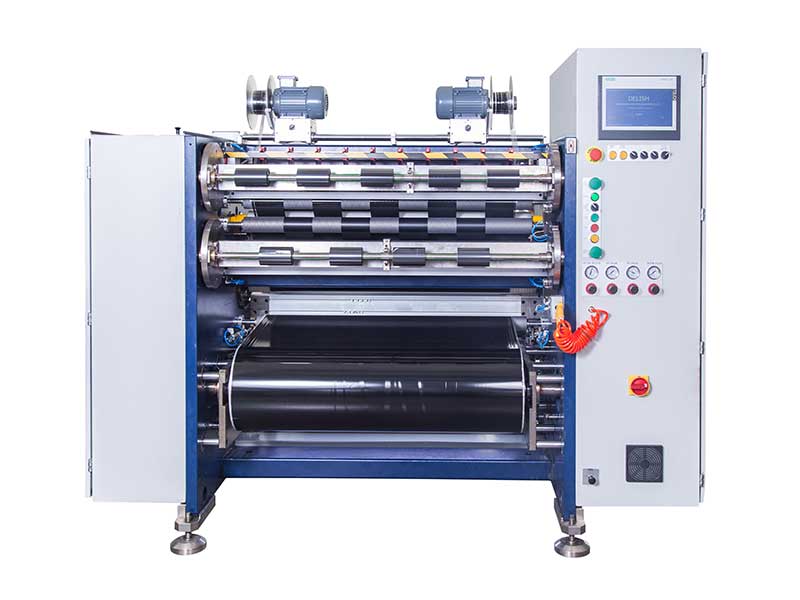
3. Technology frontiers: breakthroughs in adaptive and predictive control
The current state-of-the-art tension control systems are showing three major trends:
Material adaptive technology: The system has a built-in material database, the operator only needs to select the material type, and the system automatically calls the optimal control parameters. By monitoring the small changes of the stress-strain curve of the material online, the control strategy is fine-tuned in real time to compensate for the difference in material batches.
Digital twin and predictive control: Construct a complete digital twin model of the slitting machine in virtual space, and simulate the whole process before actual production to predict possible tension anomalies. During the production process, the digital twin runs in parallel with the physical machine, and potential faults are detected in advance by comparing predictive data with actual data.
Edge computing and cloud platform integration: Edge computing nodes that perform real-time data processing on the device side to ensure the immediacy of control. At the same time, the process data is uploaded to the cloud platform for long-term trend analysis, optimization of algorithm models, and the improved control parameters are distributed to all networked devices through the cloud to achieve continuous evolution of control capabilities.
4. Philosophy of precision: from controlling tension to navigating uncertainty
Superior tension control systems not only pursue technical indicators that limit fluctuations to ±1% or even ±0.5%, but also an industrial philosophy to navigate uncertainty. It requires engineers not only to understand control theory, but also to understand materials science - the viscoelasticity of different polymer substrates, the adhesion properties of coatings, and the influence mechanism of ambient temperature and humidity.
In the future, tension control systems will face greater challenges as ribbons develop in the direction of thinner (less than 3 microns) and more complex functions (multi-layer composite structures). Possible breakthrough directions include: distributed tension measurement based on fiber grating, which realizes accurate monitoring of tension profile along the width direction; Using artificial intelligence to achieve true autonomous optimization, the system can independently discover parameter correlations that human engineers have not detected. The application of quantum sensors in microscopic tension fluctuation monitoring pushes control accuracy to a new level.
From unwinding to winding, the strings of tension run throughout. This invisible line of force connects the precision of machinery with the flexibility of materials, balancing the opposition and unity of speed and quality. In the precision process of ribbon slitting, tension control systems have evolved from auxiliary functions to core value creators. Every perfect smoothing of the tension curve is a victory of modern industrial control philosophy at the microscopic scale - not against the rhythm of nature, but to understand and conform to the nature of materials, and find dynamic balance in high-speed flow, which is the deepest embodiment of industrial intelligence.
 English
 Deutsch
 Français
 Español
 Português
 日本語
日本語 русский
 한국어
한국어 عربي
عربي ภาษาไทย
 Tiếng Việt
 Italiano
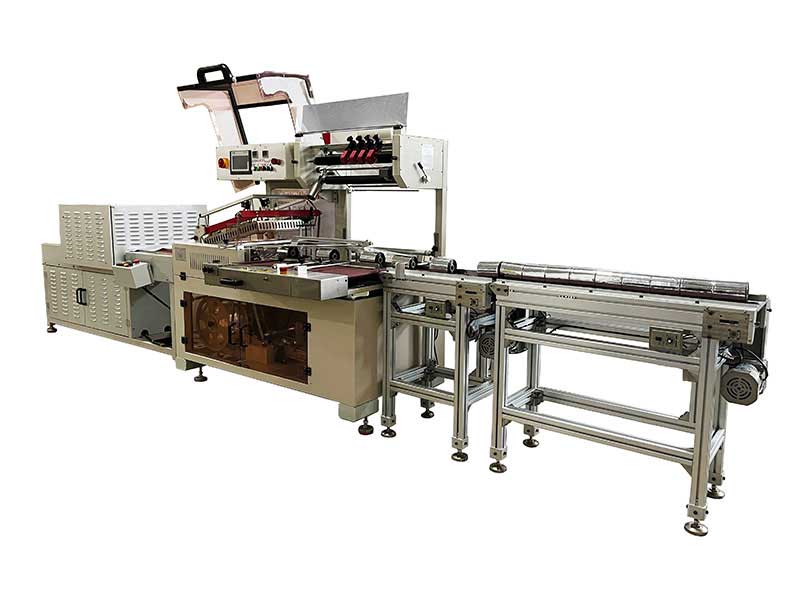 Thermal Transfer Ribbons Packaging Machine
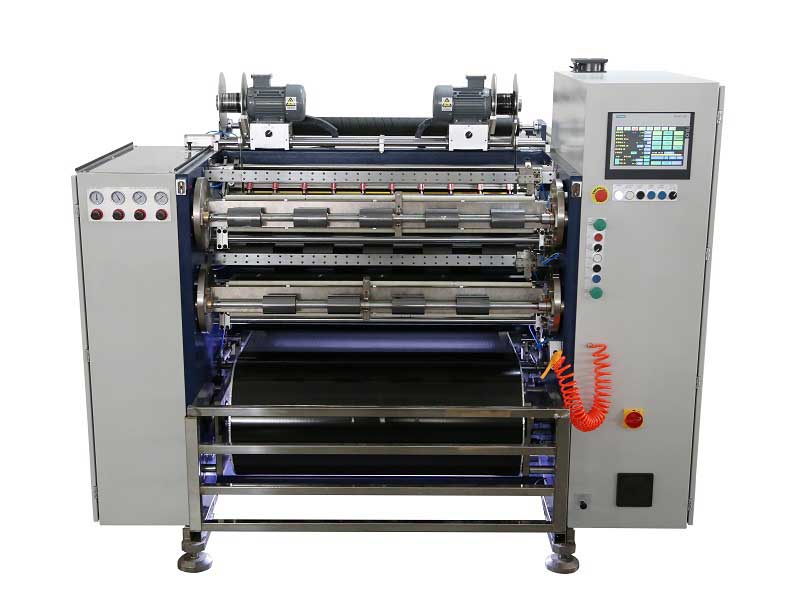 Automatic Thermal Transfer Ribbon Slitting Machine RSDS8 H PLUS
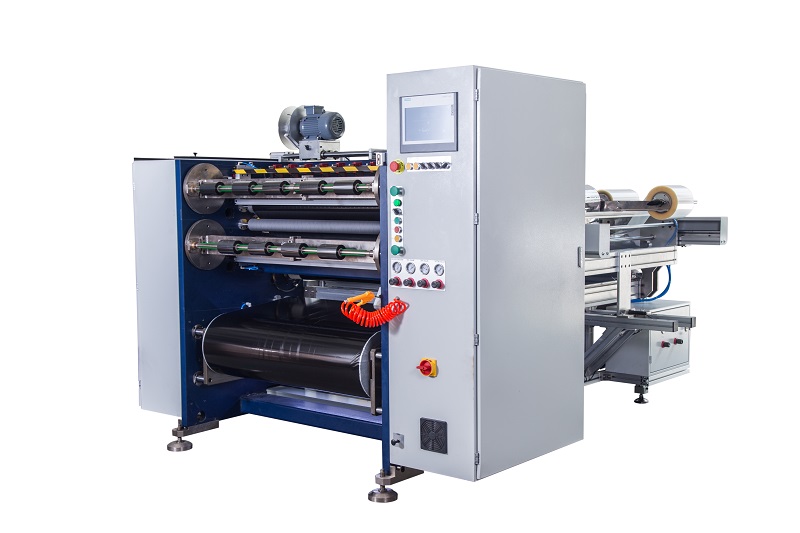 Semi Automatic Thermal Transfer Ribbon Slitting Machine RSDS5 PLUS
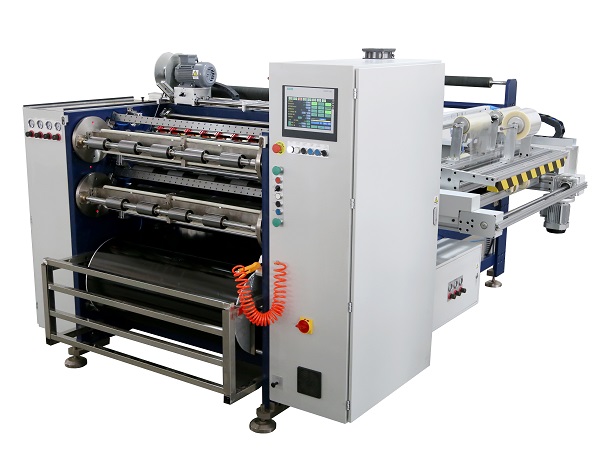 Automatic Thermal Transfer Ribbon Slitting Machine RSDS8 PLUS
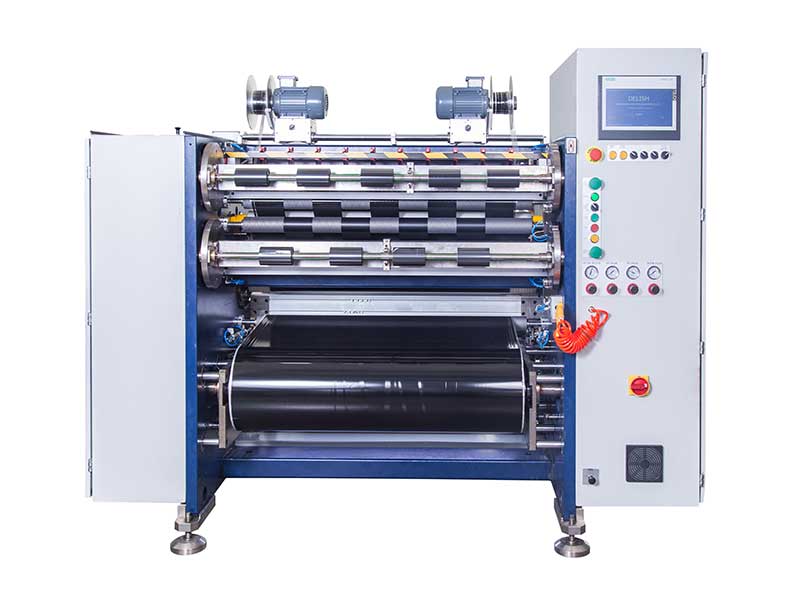 TTR Slitting Machine
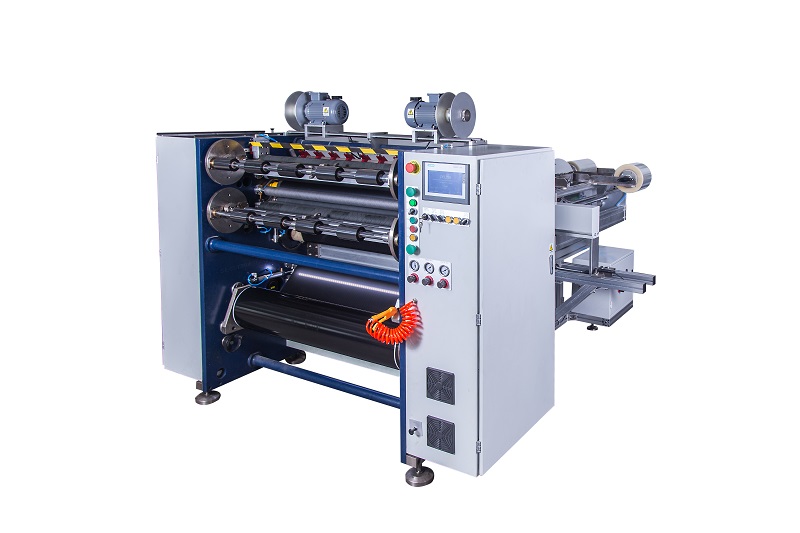 Semi Automatic Thermal Transfer Ribbon Slitting Machine RSDS1 PLUS
 Ribbon Slitting Machine


 +86 135 9951 7291
 support@delishmachine.com