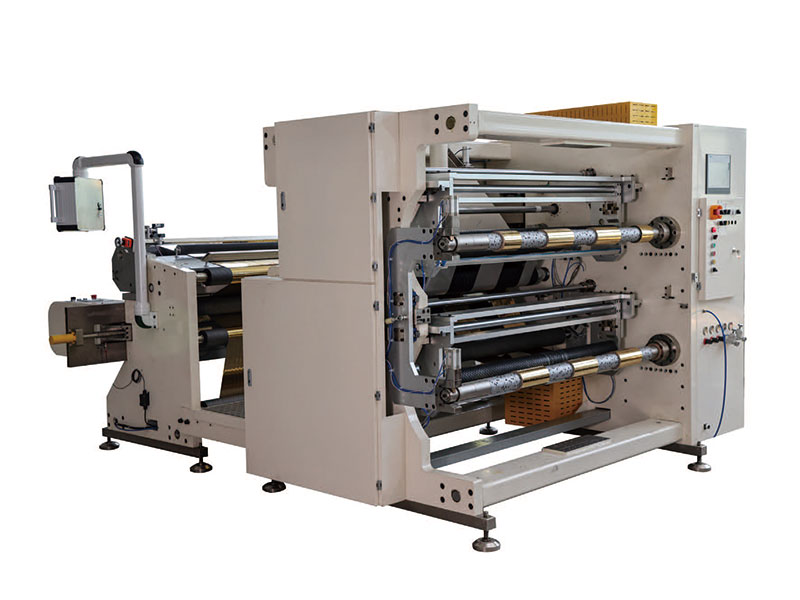
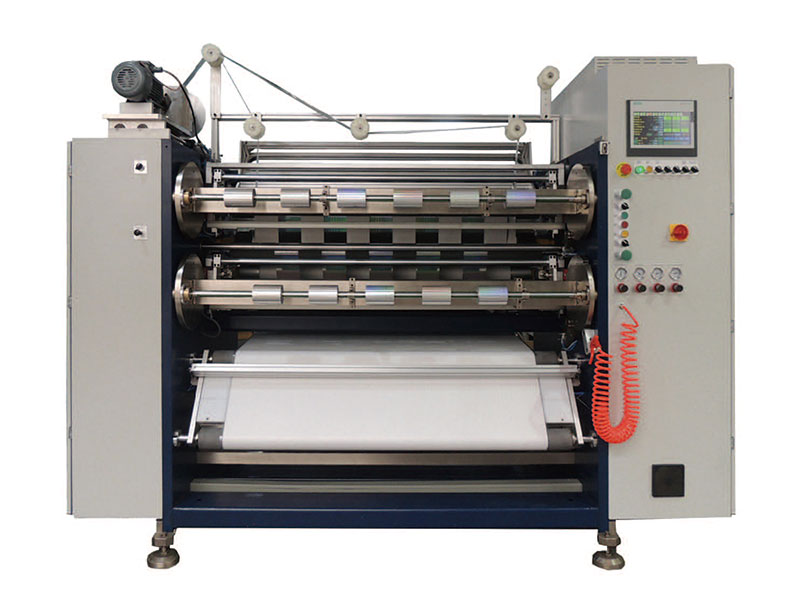
Behind the exquisite packaging, high-end printing, and luxury logos, there is often a material that is silently embellished with a gorgeous gesture - foil stamping. Its brilliant gold, silver or other metallic luster gives the product a luxurious texture and visual impact. However, from the original coil more than one meter wide to the neat and narrow finished product finally applied to hot stamping, there has been a "transformation" led by precision equipment. At the heart of this transformation is the hot foil slitting machine – a sophisticated system that combines mechanical engineering, materials science, and intelligent control.
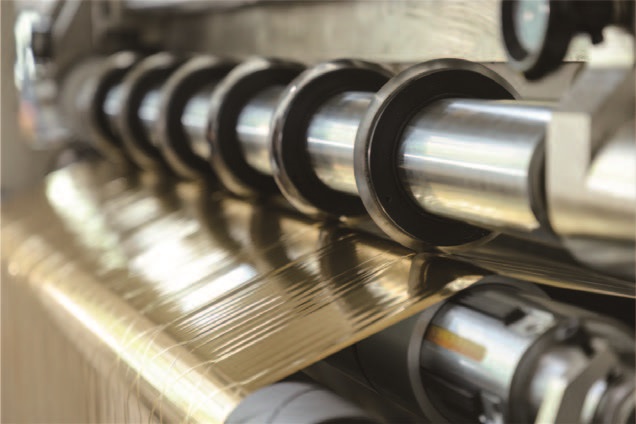
Starting point: precision feeding of the original coil
The precise control of the whole process begins with the coil feeding. The foil foil substrate is typically a polyester film (PET) coated with multiple layers of chemical coatings (including release layers, color layers, and adhesive layers) that are only micron-thick and extremely sensitive to tension.
Modern slitting machines feature automatic feeding systems, equipped with high-precision photoelectric sensors and air pressure adjustments, ensuring that the coils remain centered and free from lateral drift during unfolding. The initial tension is precisely set by means of a magnetic powder clutch or servo drive system to avoid stretching or wrinkling of the film due to uneven tensile forces. At this stage, the core task of the control system is to establish a stable and gentle starting tension curve to lay the foundation for subsequent processes.
Core: Micro control in high-speed slitting
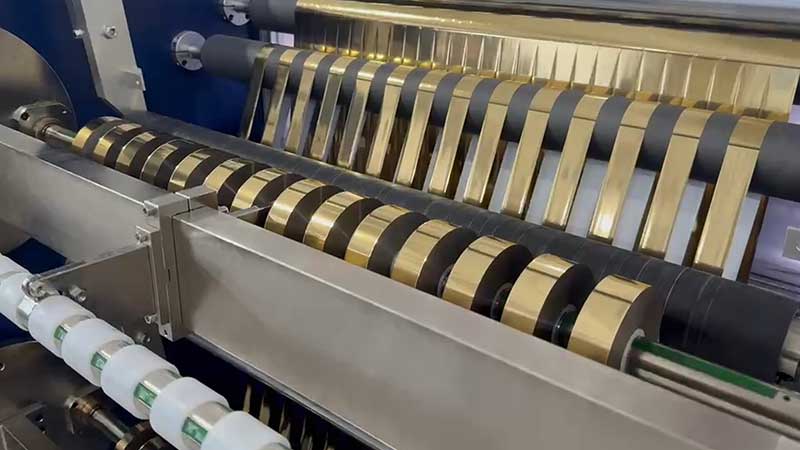
The slitting process is at the heart of the technology. The choice and setup of the blade is art: the round blade must have the highest hardness and finish (often made of tungsten steel or ceramic) to reduce cutting heat and burrs. The clearance between the upper and lower knives needs to be precise to the micron level to accommodate different thicknesses and materials of foils.
The most subtle control is reflected in the tension partition management. From unwinding to winding, the entire path is divided into independent tension zones. Each zone is fed back in real time by a tension sensor, and the speed or torque of the corresponding drive roller is dynamically adjusted by a PLC (Programmable Logic Controller). This "segmented tension control" ensures that the foil remains absolutely flat at the moment of cutting, avoiding uneven trimming edges or micro-cracks in the coating due to vibration.
In addition, the visual inspection system continuously scans the slitting area, using a high-resolution CCD camera to capture defects such as pinholes, uneven coatings, or impurities, and marks and locates them in real time to ensure traceability of quality issues.
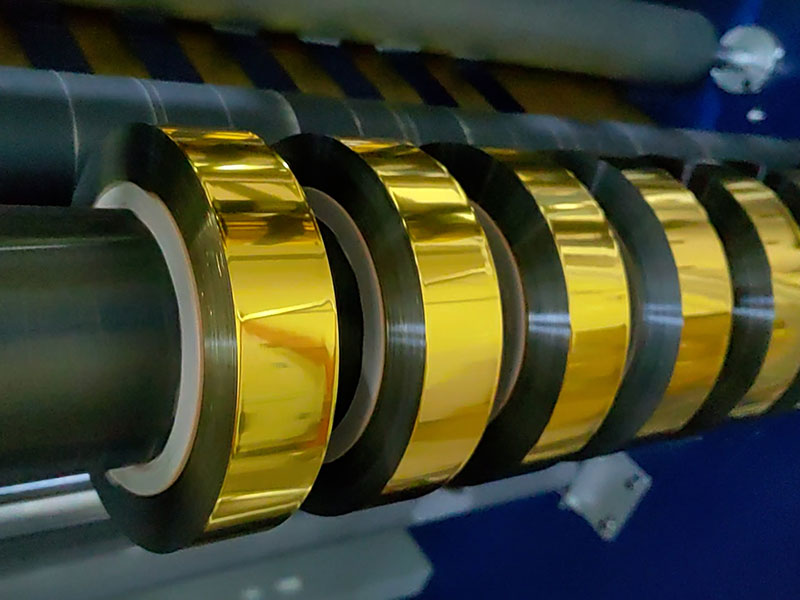
Winding: A crucial step in achieving a perfect finished product
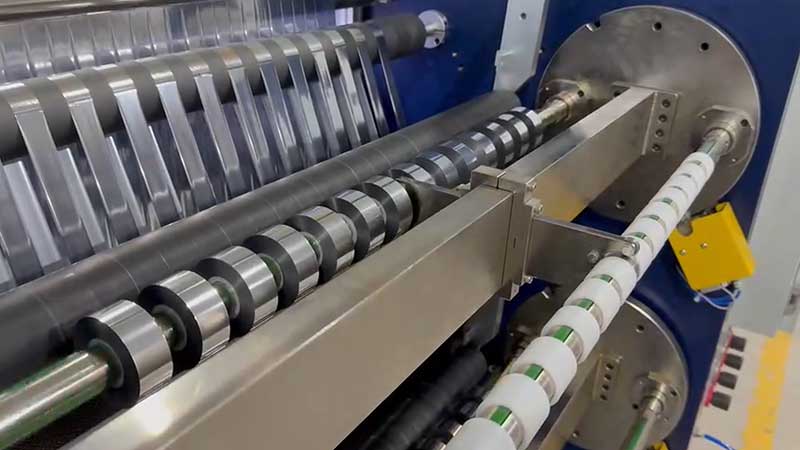
After slitting, multiple narrow foil strips need to be wound synchronously and smoothly into independent finished products. The winding quality directly determines the hot stamping effect of the end user.
Modern slitting machines use center or surface winding and are equipped with constant tension or taper tension control algorithms. As the coil diameter increases, the control system automatically reduces the tension according to the preset curve to prevent the inner layer from deforming under pressure. More advanced equipment with automatic rewinding and taping functions for uninterrupted production.
The neatness of the winding is ensured by the EPC (Edge Position Control) system, which fine-tunes the lateral position of the winding shaft by means of pneumatic or electric actuators, so that the edge alignment accuracy of the foil belt is controlled within ±0.1 mm. This edge consistency is crucial for the smooth operation of subsequent automated hot stamping equipment.
Intelligent hub: data-driven full-process collaboration
Behind the precise control of the whole process is a centralized intelligent control system. The Industrial Internet of Things (IIoT)-based platform integrates data streams from hundreds of sensors – tension, temperature, speed, vibration, energy consumption and other parameters are monitored and analyzed in real time.
Machine learning algorithms are starting to play an important role: trained on historical data, the system can predict the optimal slitting parameters for a specific material, automatically adjusting the blade clearance, tension curve, and winding hardness. When abnormal vibrations or tension fluctuations are detected, the system can warn in advance and even adjust the process parameters autonomously to compensate for deviations.
Digital twin technology provides a virtual sand table for process optimization: simulate different slitting schemes in a virtual model and evaluate their impact on the quality of the finished product, so as to find the optimal solution before actual production.
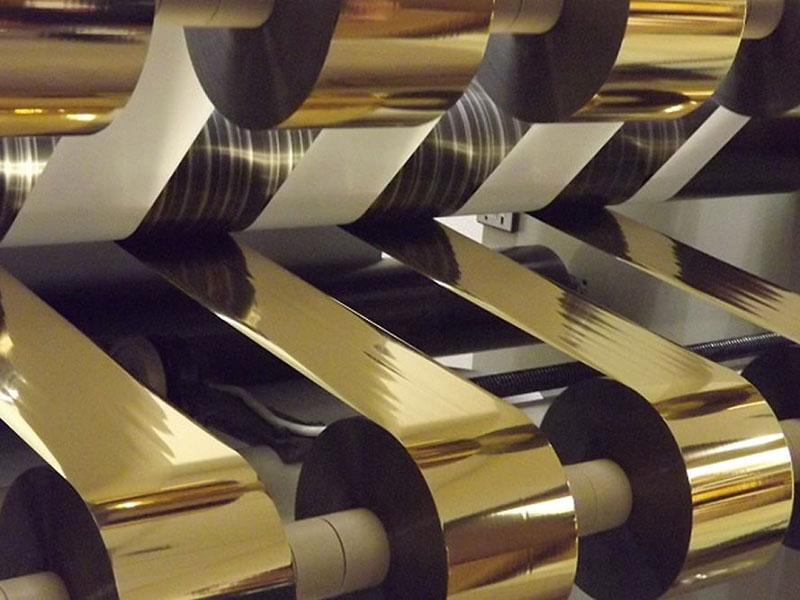
The value of fine control: beyond the slitting itself
The precise control of the whole process of hot stamping foil slitting brings not only dimensionally accurate finished products. It directly enhances the added value and market competitiveness of hot stamping foil products by minimizing material waste (controlling waste edges below 0.5%), improving production efficiency (speeds up to 600 m/min) and ensuring batch consistency.
On a deeper level, this precise control capability allows the hot stamping process to expand into a wider range of fields—from paper to plastic, from fabric to wood, and even curved and microstructured hot stamping. It gives designers more freedom to use metallic luster and inject soul light into their products.
Epilogue
From sprawling coils to exquisite finished products, the journey of hot stamping foil is a symphony of precision mechanics, intelligent sensing, and advanced algorithms. Slitting machines are no longer just cutting tools, but sophisticated systems that realize the potential of materials. In today's manufacturing industry towards intelligence and customization, this kind of whole-process precision control represents the unremitting pursuit of "excellence in millimeters", so that the luster of metal can bloom accurately between square inches.
 English
 Deutsch
 Français
 Español
 Português
 日本語
日本語 русский
 한국어
한국어 عربي
عربي ภาษาไทย
 Tiếng Việt
 Italiano
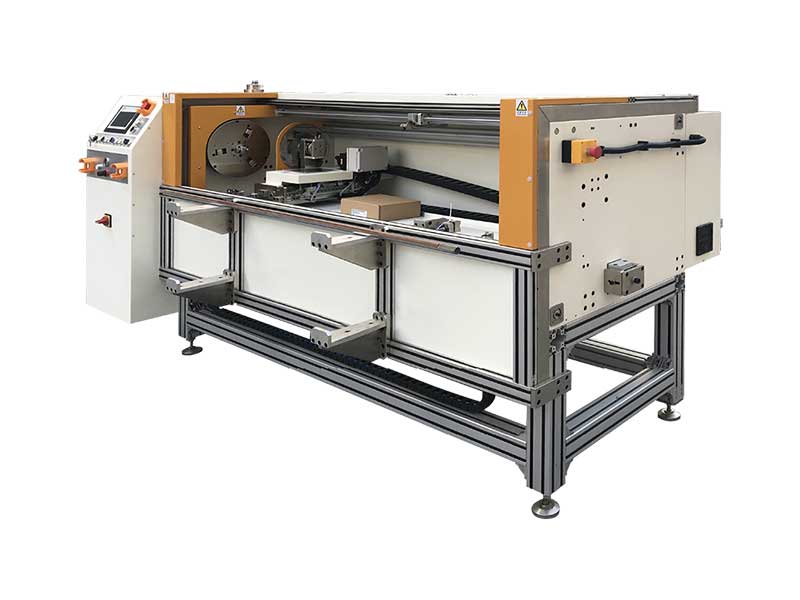 Automatic Foil Roll Cutting Machine
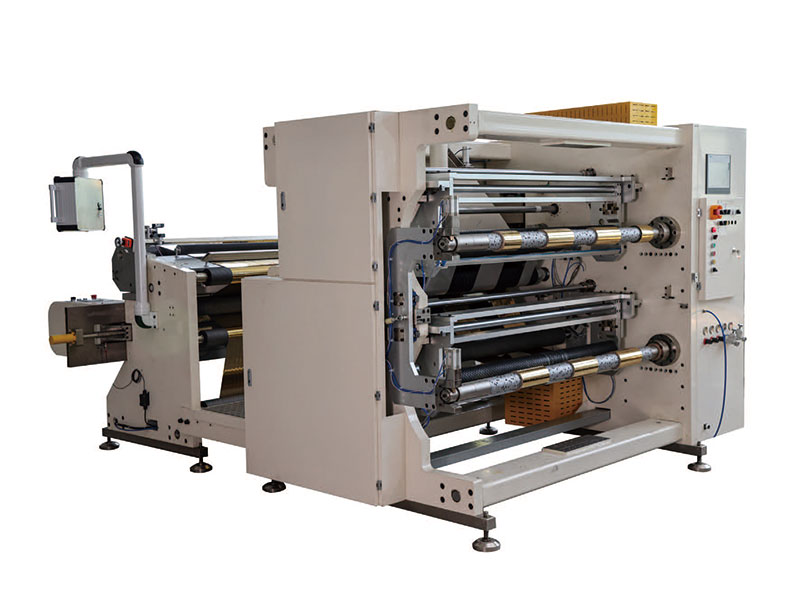 1400mm Hot Stamping Foil Slitting Machine
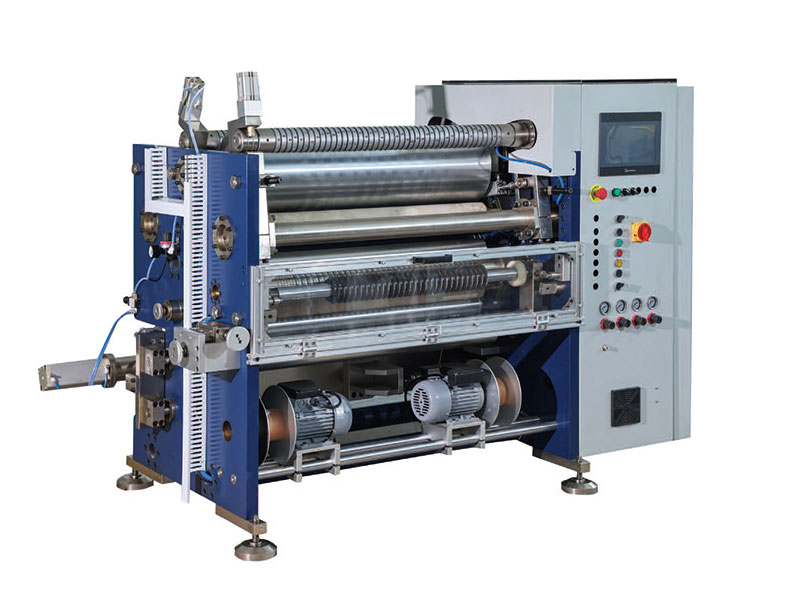 800mm Hot Stamping Foil Slitting Machine
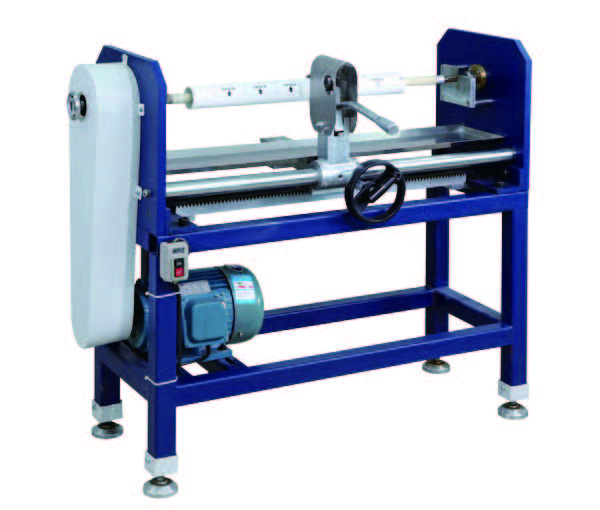 Manual Foil Roll Cutting Machine
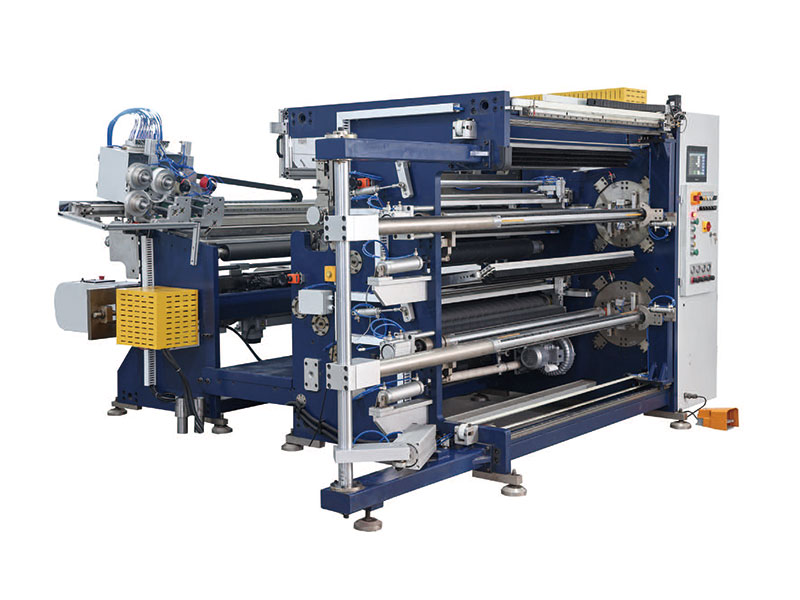 1350mm Hot Stamping Foil Slitting Machine
 Photo & Card Print Ribbon Rewinding Machine
 1400mm Copper Foil Slitting Machine
 1350mm/1600 Foil Slitting Machine


 +86 135 9951 7291
 support@delishmachine.com