In the plastic film processing industry, polyethylene terephthalate (PET) film has become a core material in many fields such as packaging, electronics, and solar energy due to its excellent mechanical strength, thermal stability, and transparency. In the production process of PET film, the slitting process is a key link connecting production and application - it determines the final quality and availability of film coils. How to ensure the quality of slitting while slitting at high speed has become an urgent problem for the industry, and it is also the core criterion for measuring the technical level of a slitting machine.
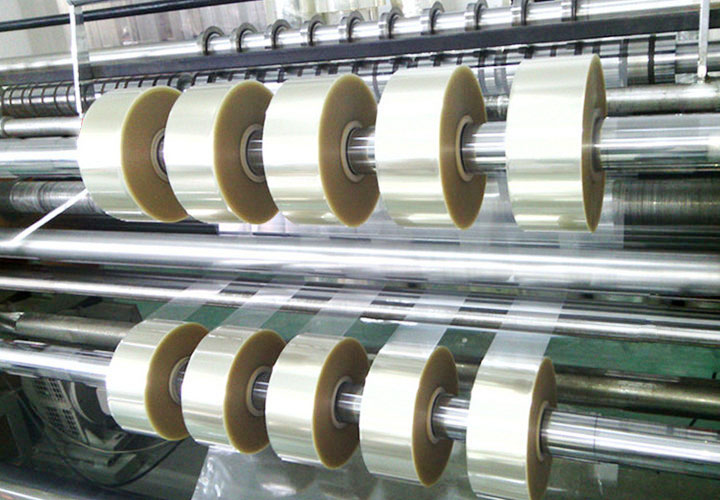
The natural contradiction between speed and quality
On the surface, slitting speed and quality may seem like an irreconcilable pair of contradictions. Increasing slitting speed often means:
• Increased difficulty in slitting tension control
• Defects such as burrs and wavy lines on the edge of the film are more likely to occur
• Rewinding neatness and tightness are difficult to guarantee
• Increased tool wear and reduced life
The pursuit of ultimate quality usually requires:
• Reduce operating speed and increase production cycles
• More frequent tool changes and maintenance
• Higher equipment cost investment
• Reduced throughput per hour
However, the modern PET film application market is increasingly demanding on both: downstream customers demand both efficient and low-cost slitting services, as well as near-demanding requirements for film winding quality, edge flatness, and length accuracy. This market pressure forces slitting machine manufacturers and users to find a balance between speed and quality.
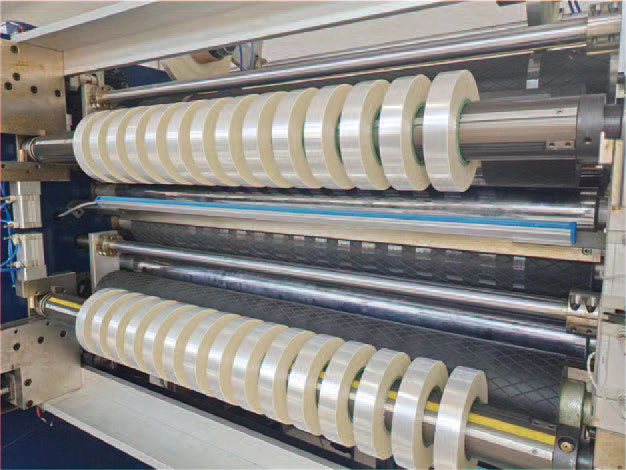
Technological innovation: a breakthrough to break contradictions
Modern PET film slitting machines are gradually solving this industry problem through a number of technological innovations:
1. Intelligent tension control system
The tension control system based on multi-sensor fusion and adaptive algorithm can monitor and adjust the film tension at each stage of unwinding, slitting and winding in real time. Even at high speeds, the system can keep the tension stable within the range of ±0.5%, which fundamentally reduces the problems of slack winding and uneven edges caused by tension fluctuations.
2. High-precision slitting tool technology
The combination of carbide-coated inserts and air-suspended tool holders keeps the slitting process sharp while reducing frictional heat. Some advanced models use laser online monitoring of tool wear to achieve predictive maintenance and avoid slitting quality problems caused by tool passivation.
3. Dynamic deviation correction and vibration suppression
Machine vision-based edge detection systems with pneumatic or electric guidance correction devices can correct film deviations in real time. At the same time, the application of active vibration damping system greatly reduces mechanical vibration during high-speed operation and reduces the resulting wrinkles on the membrane surface.
4. Integrated quality monitoring system
The online inspection system can monitor the thickness uniformity, surface defects and slitting edge quality of the film in real time during the slitting process, and the data is immediately fed back to the control system to realize the dynamic optimization of slitting parameters.
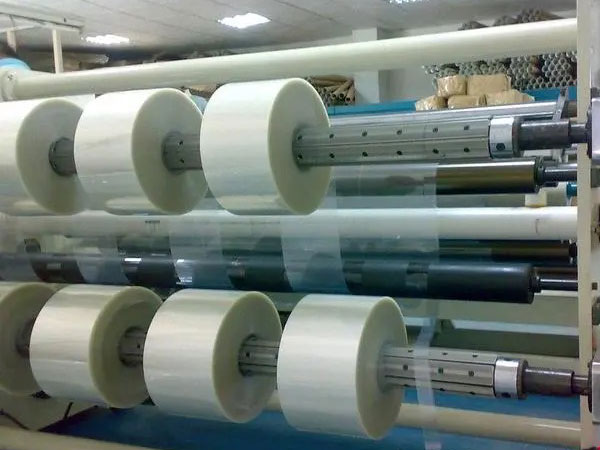
Process Optimization: The Art of Balance
In addition to upgrading the equipment itself, scientific process management is also the key to achieving speed and mass balance:
1. Parameter matching
For PET films of different thicknesses and different uses, a database of slitting parameters is established. Operators can quickly adjust the optimal tension setting, tool angle, and slitting speed based on the characteristics of the film, avoiding quality fluctuations caused by empirical debugging.
2. Scientific tool management
Implement a graded tool use system, new tools are used for high-demand products, and after a certain period of use, they are downgraded to general products. At the same time, a tool life cycle file is established to ensure that each tool is used in optimal condition.
3. Refinement of environmental control
The slitting quality of PET film is extremely sensitive to temperature and humidity. Modern slitting workshops generally adopt constant temperature and humidity environment control, controlling temperature fluctuations within ±2°C and humidity fluctuations within ±5%RH, creating a stable environment for high-quality slitting.
4. Specialization of personnel skills
Operators are regularly trained to master new equipment and processes, and develop their ability to fine-tune parameters according to film performance. Experienced operators are able to prevent potential quality issues with minor adjustments while maintaining high production speeds.
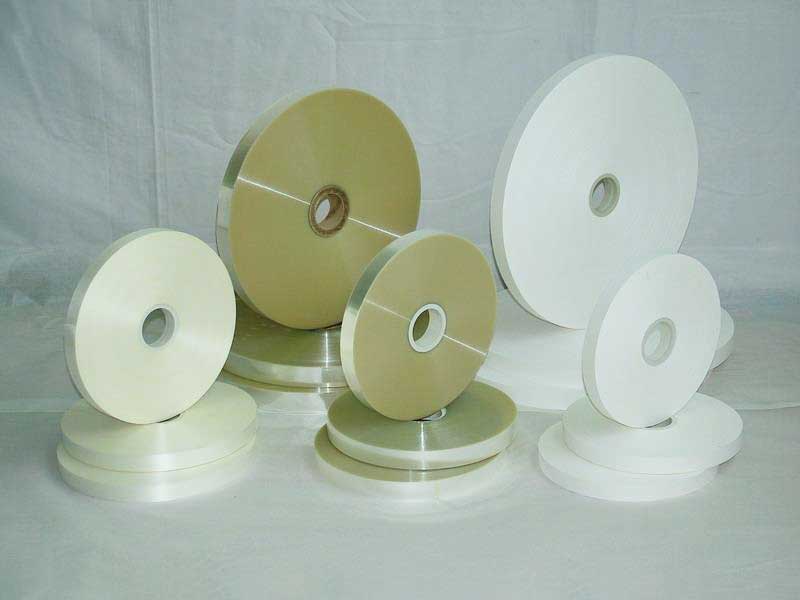
Future Prospects: The Convergence of Intelligence and Sustainability
With the in-depth application of Industry 4.0 technology, the balance of PET film slitting machine is developing to a higher level:
By analyzing equipment operating data, predictive maintenance systems can warn of quality issues before they occur and automatically adjust parameters or shutdown maintenance.
Digital twin technology allows simulating slitting effects under different parameters in a virtual environment to find the optimal slitting scheme for a specific film, greatly reducing commissioning losses in actual production.
The energy efficiency optimization algorithm intelligently adjusts the power consumption of the equipment under the premise of ensuring quality, so that high-speed slitting no longer comes at the cost of high energy consumption and achieves true sustainable development.
Epilogue
The speed and mass balance of PET film slitting machines has evolved from a simple technical trade-off to a systematic solution. It is not only an advancement in mechanical precision and control algorithms, but also a deep integration of materials science, process management, and intelligent technology. For film processing companies, investing in advanced slitting technology and process optimization is not only to solve the current production contradictions, but also to establish core advantages in the increasingly fierce market competition.
When a slitting machine can still ensure that the slitting edges are as smooth as a mirror and the winding is as neat as a work of art at a speed of 600 meters per minute, it reflects not only the ingenuity of the manufacturer, but also the unremitting pursuit of "the ultimate" of the entire industrial system. On this balancing path, each technological breakthrough redefines the boundaries of "possible" and promotes the extension of PET film applications into a broader future.
 English
 Deutsch
 Français
 Español
 Português
 日本語
日本語 русский
 한국어
한국어 عربي
عربي ภาษาไทย
 Tiếng Việt
 Italiano
 1400mm Hot Stamping Foil Slitting Machine
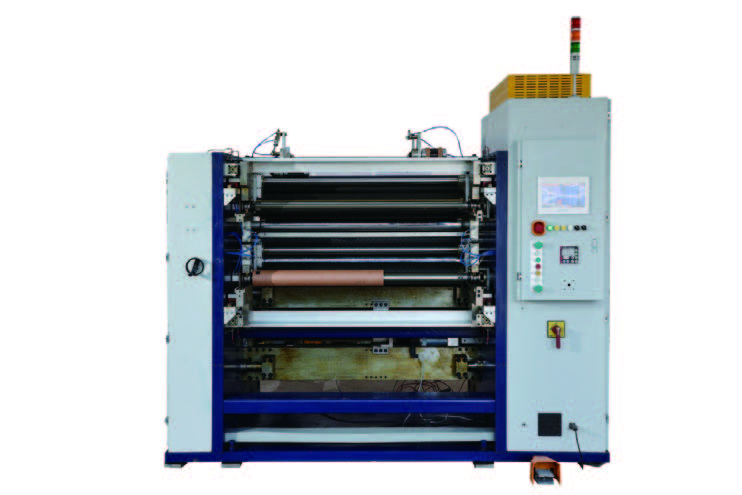 New Energy Ultra-thin Film Slitting Machine For Capacitive Film
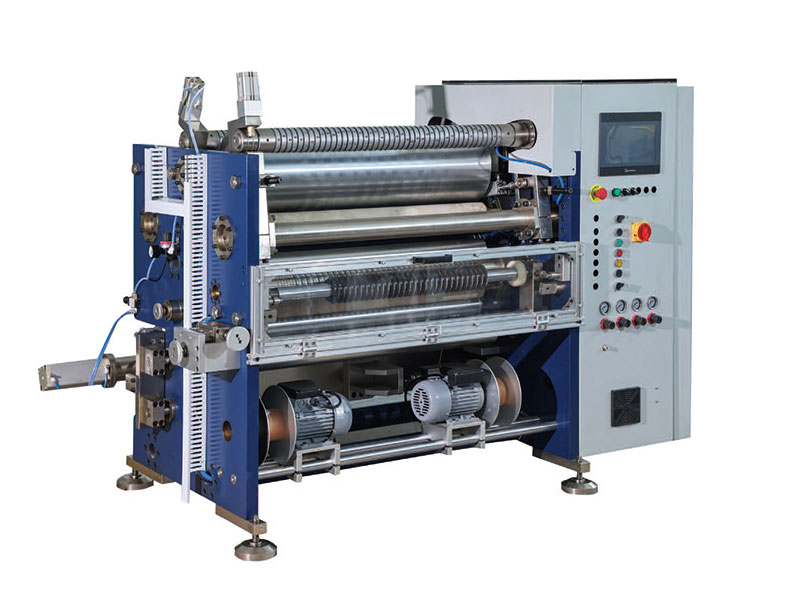 800mm Hot Stamping Foil Slitting Machine
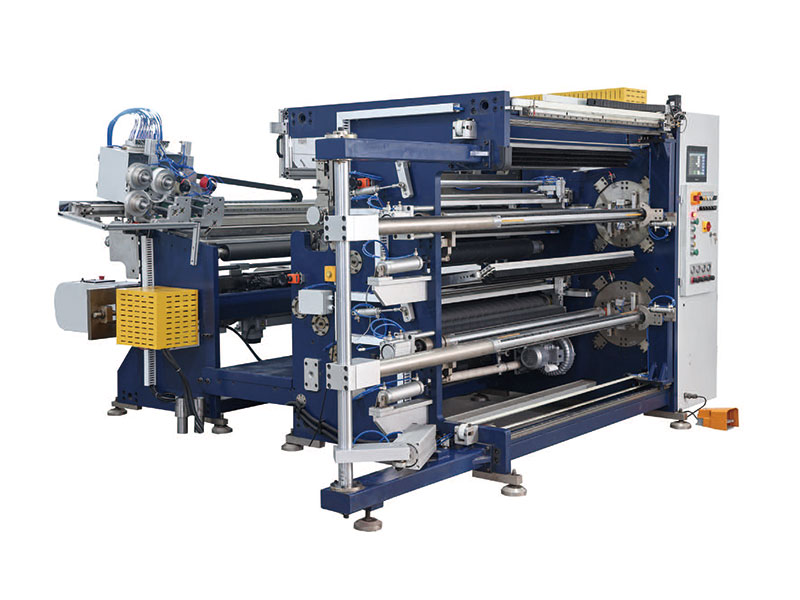 1350mm Hot Stamping Foil Slitting Machine
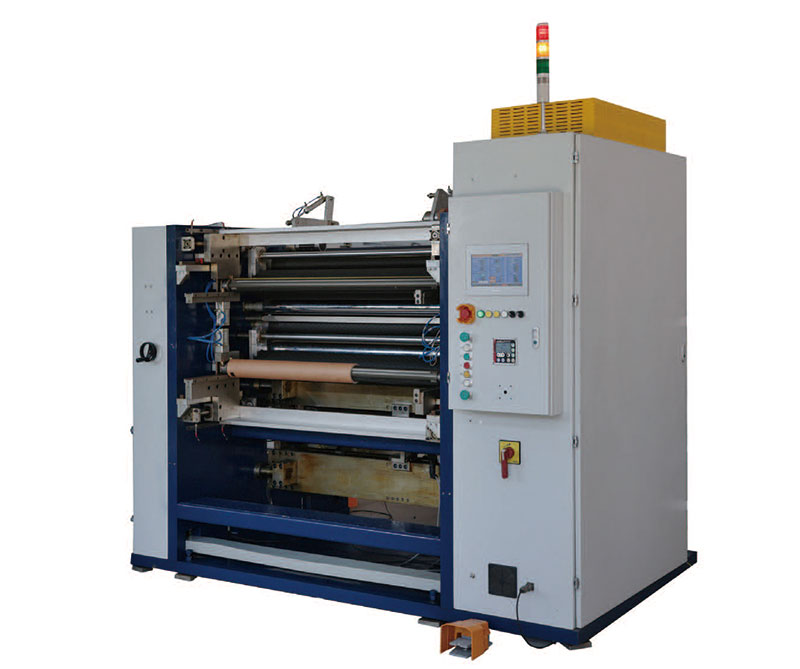 New Energy Ultra-thin Film Slitting Machine For MOPP
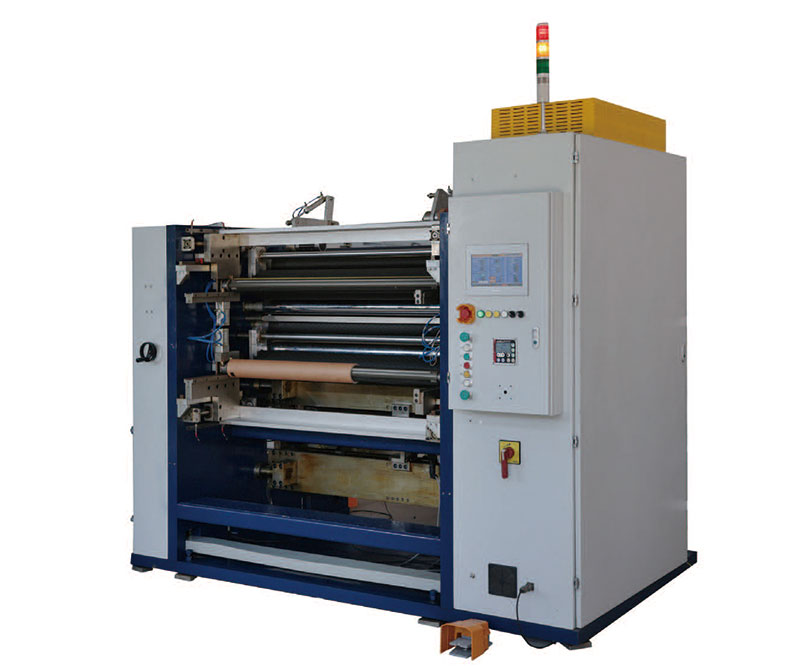 New Energy Ultra-thin Film Slitting Machine For MPET
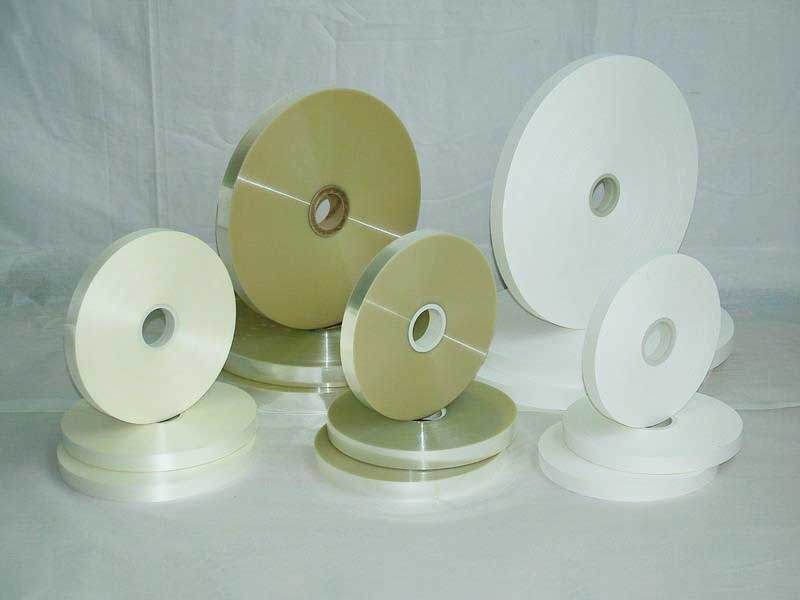 Film Slitting Machine
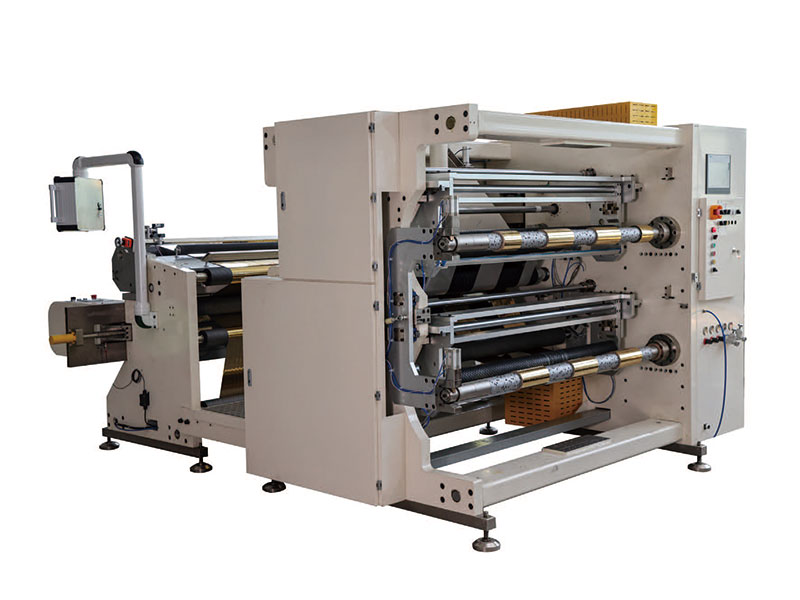 1400mm Copper Foil Slitting Machine


 +86 135 9951 7291
 support@delishmachine.com