In the grand movement of modern industrial production, there is a device that is like a silent and precise conductor, cutting wide films, paper, non-woven fabrics, metal foils and other coils according to precise sizes, and then rewinding them into finished rolls that meet downstream needs. It is a fully automatic slitting and rewinding machine. This machine is not only a physical converter, but also a concentrated embodiment of efficiency, precision and intelligence, deeply integrated into all contexts from everyday consumer goods to high-tech industries.
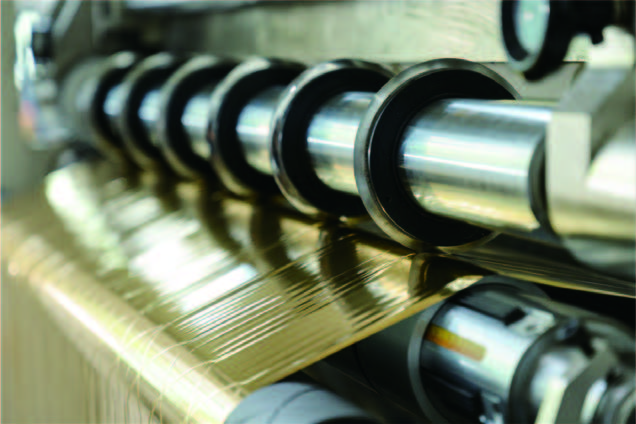
Technical Highlights: A precision core that penetrates appearances
An advanced automatic slitting and rewinding machine with outstanding performance built on the integration of several core technologies:
1. High-precision tension control system: the "soul" of production
Tension control is the core technical difficulty and soul of automatic slitting and rewinding machine. It runs through the whole process of unwinding, slitting, traction to winding. Modern models feature multi-stage closed-loop tension control and integrate high-sensitivity sensors and servo drive systems to monitor and fine-tune tension in real-time to ensure that materials maintain a constant and appropriate stretching state during high-speed operation. This avoids tension fluctuations caused by traditional mechanical friction braking, and fundamentally eliminates defects such as uneven winding, uneven tightness, surface wrinkles, and even material tearing or deformation, especially for ultra-thin, easily stretchable or high-value materials (such as lithium battery separators, high-end capacitive films), which is the lifeline to ensure product quality.
2. Intelligent Cutting & Correction System: Millimeter-level art
• Cutting technology: From traditional scraper slitting and flat knife slitting to more precise circular knife shearing and ultrasonic slitting, the technology is constantly evolving. The high-end model is equipped with a servo-driven independent tool holder, which can be fully automatic tool adjustment and positioning according to the preset order size, with an accuracy of up to ±0.1mm. Non-contact technologies such as laser slitting have also begun to be applied to special materials to achieve dust-free and stress-free cutting.
• Automatic Correction (EPC): Continuously monitor the edge position of the material through the edge or line array CCD sensor, and once a deviation occurs, the system immediately drives the correction roller for millisecond response and correction, ensuring that the slitting line is absolutely straight and the winding end face is uniform, which is the prerequisite for achieving high-speed, high-quality production.
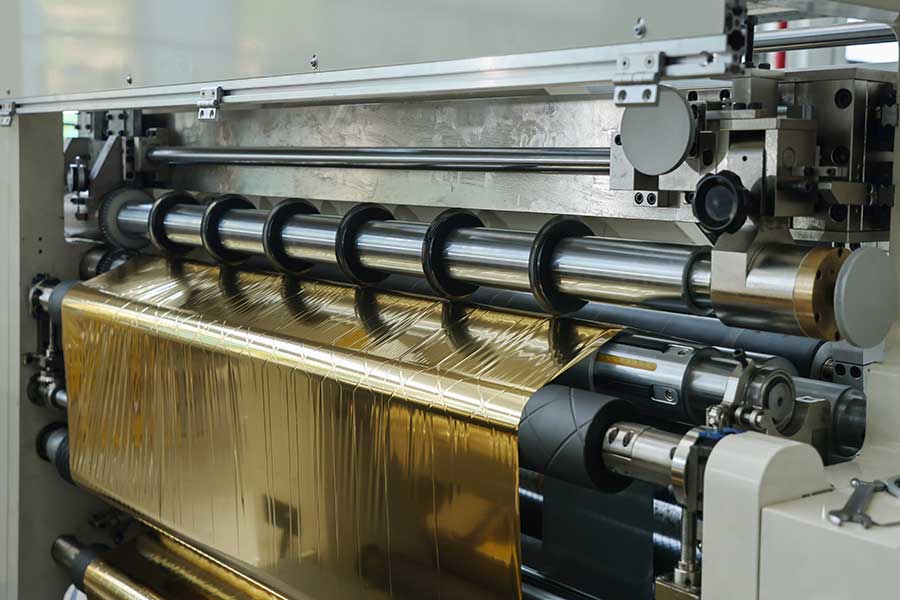
3. Whole process automation and intelligence
Modern automatic slitting and rewinding machines have gone beyond the stand-alone concept and are integrated into intelligent production units. Its automation is reflected in:
• Automatic coil picking and coiling: equipped with a double-station rotary frame or shuttle cart to realize automatic splicing and switching of new and old coils, uninterrupted production, and greatly improve the overall efficiency of equipment (OEE).
• Intelligent winding and unwinding: Multi-station winding shaft driven by AC vector or servo motor, with air expansion shaft and hydraulic clamping, to achieve smooth start-stop and precision winding. After the end of production, the automatic unwinding vehicle smoothly moves the finished roll out and can be connected to the warehouse through AGV docking.
• Central control system: An integrated human-machine interface (HMI) based on industrial PC or PLC, which can not only store a large number of process recipes and call them with one click, but also connect to the factory MES/ERP system through the Internet of Things (IoT) module to realize order data downlink, production status monitoring, quality data upload, preventive maintenance reminders, etc., which is the key node of the digital factory.
4. Humanized design and sustainability
• Modular design: Flexible configuration according to different materials (from extremely thin 3μm film to heavy canvas) and process requirements (e.g. grooving, stripping, overwinding).
• Energy-saving design: The main drive adopts a high-efficiency servo motor, and the energy feedback system can recover braking energy and reduce energy consumption.
• Safety and environmental protection: fully enclosed or semi-enclosed protection, equipped with safety light curtain and emergency stop device; Integrated dust collection system to deal with fine dust generated by slitting and improve the working environment.
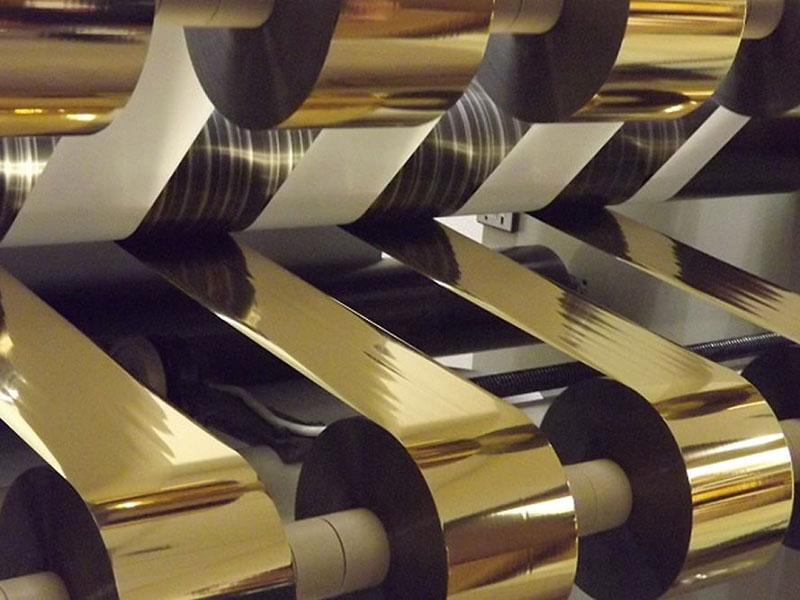
Scenario adaptation: an invisible engine that empowers thousands of industries
The value of automatic slitting and rewinding machines is maximally released in the deep integration with specific industry scenarios:
1. New energy and high-end electronics
This is one of the most demanding areas for equipment. In lithium-ion battery manufacturing, it is used to slit positive and negative electrode substrates (copper foil, aluminum foil) and separators, which require no burrs, no dust, no internal stress damage, and extremely precise tension control to prevent affecting battery safety and consistency. In fields such as film capacitors and flexible circuit board (FPC) substrates, slitting quality with near-zero defects is also required. Equipment often needs to be operated in a clean or dry environment.
2. Packaging and printing industry
This is the most widely used field. Handle various plastic films such as BOPP, CPP, PET, PVC, as well as paper, aluminum-plastic composite film, etc., and provide standard slitting coils for subsequent processes such as bag making, printing, and labeling. High speed, high efficiency, and high yield are key, and equipment needs to quickly adapt to frequent switching between different materials, thicknesses, and order specifications.
3. Sanitary materials and medical devices
Handle non-woven fabrics, perforated films, release liners, medical tapes, etc. The material is usually soft, fluffy or sticky, sensitive to tension, and requires smooth slitting, no fiber shedding, and moderate tightness for winding to avoid indentation. The equipment has high hygiene standards, and sometimes anti-static design is required.
4. Textiles and composites
Slitting textile rolls, leather, carbon fiber prepreg, fiberglass cloth, etc. The material may be heavy or specially structured, requiring a strong drive system and a sturdy blade while keeping the edges neat and preventing warp and weft threads from twisting or fibers from spreading.
5. Home and decoration materials
It is used for slitting wallpaper, floor leather, decorative film, window film, optical film, etc. In addition to dimensional accuracy, the appearance protection requirements are extremely high, and the surface must not be scratched, wrinkled, or contaminated.
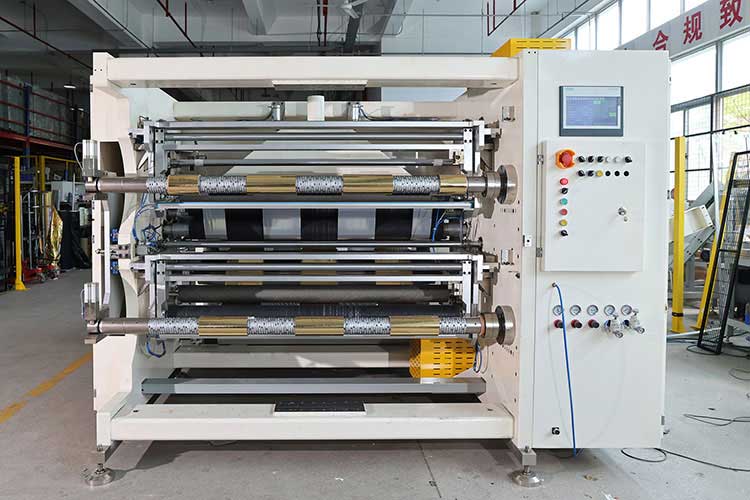
Key considerations for adaptation selection:
When selecting, enterprises need to comprehensively evaluate:
• Material properties: thickness, width, stretchability, surface properties, viscosity, etc.
• Process requirements: slitting width, tolerance, winding method, maximum coil diameter, running speed.
• Capacity and automation level: continuous production time, rewinding frequency, and connection with front and rear equipment.
• Environment and standards: cleanliness, explosion-proof, noise level, etc.
epilogue
The automatic slitting and rewinding machine, a precision equipment hidden behind countless end products, is no longer a simple "shearing" tool. It is the crystallization of the intersection of material science and mechanical precision manufacturing, automatic control and information technology. Its technological highlights are evolving in the direction of higher speed, smarter (AI process optimization), more flexible (rapid changeover), and more interconnected. Its extensive and in-depth application scenario adaptation capabilities make it an indispensable "enabler" in industrial upgrading, quietly improving the manufacturing level and competitiveness of the industrial chain from daily consumer goods to national heavy equipment. In the wave of industrial intelligence, this "invisible hand" will weave a more precise and efficient future picture of modern manufacturing with a sharper and more powerful attitude.
 English
 Deutsch
 Français
 Español
 Português
 日本語
日本語 русский
 한국어
한국어 عربي
عربي ภาษาไทย
 Tiếng Việt
 Italiano
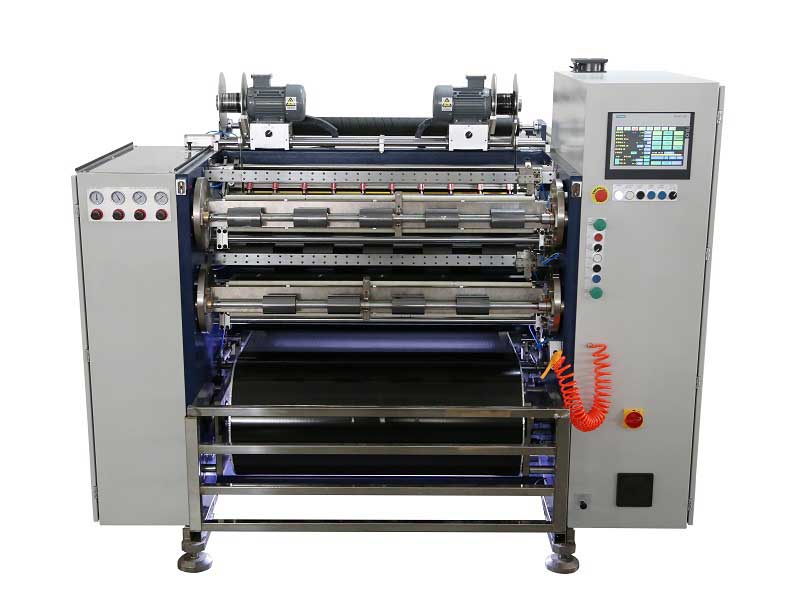 Automatic Thermal Transfer Ribbon Slitting Machine RSDS8 H PLUS
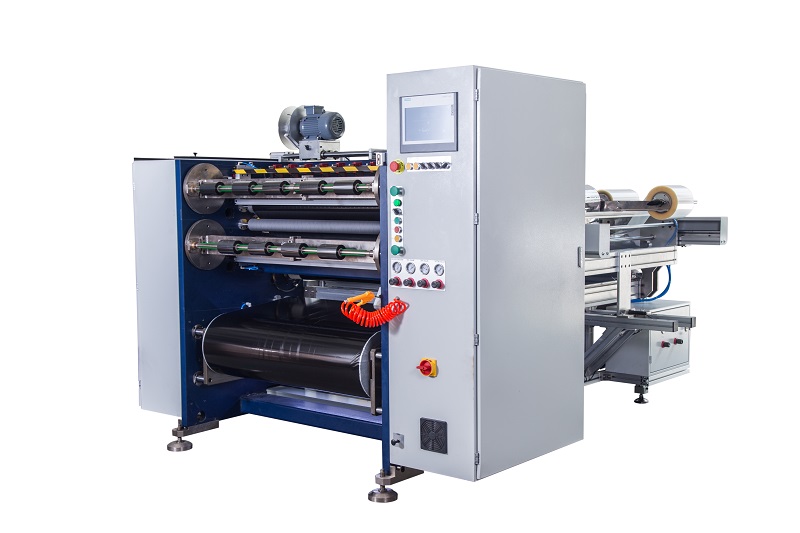 Semi Automatic Thermal Transfer Ribbon Slitting Machine RSDS5 PLUS
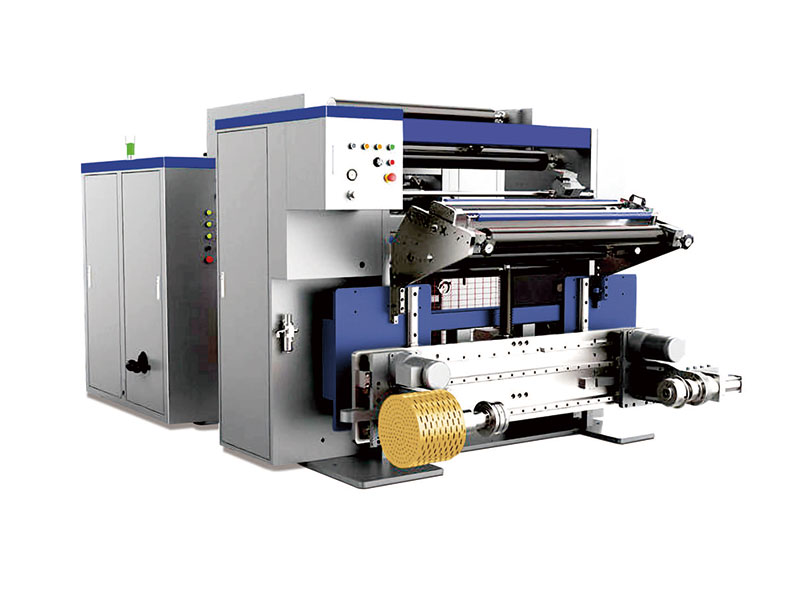 High Speed Slitting Machine
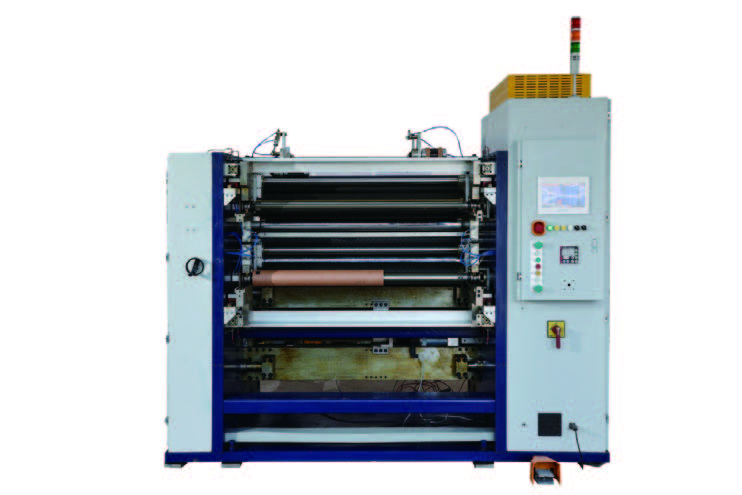 New Energy Ultra-thin Film Slitting Machine For Capacitive Film
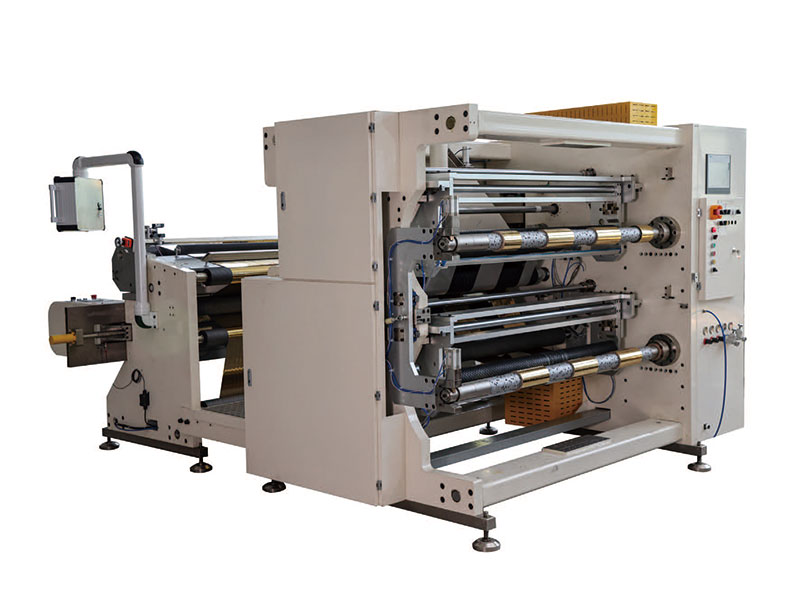 1400mm Hot Stamping Foil Slitting Machine
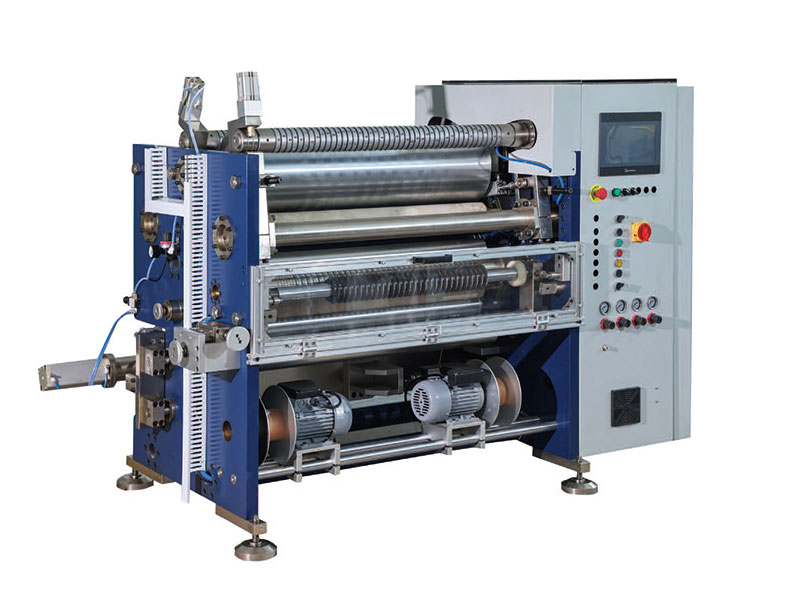 800mm Hot Stamping Foil Slitting Machine
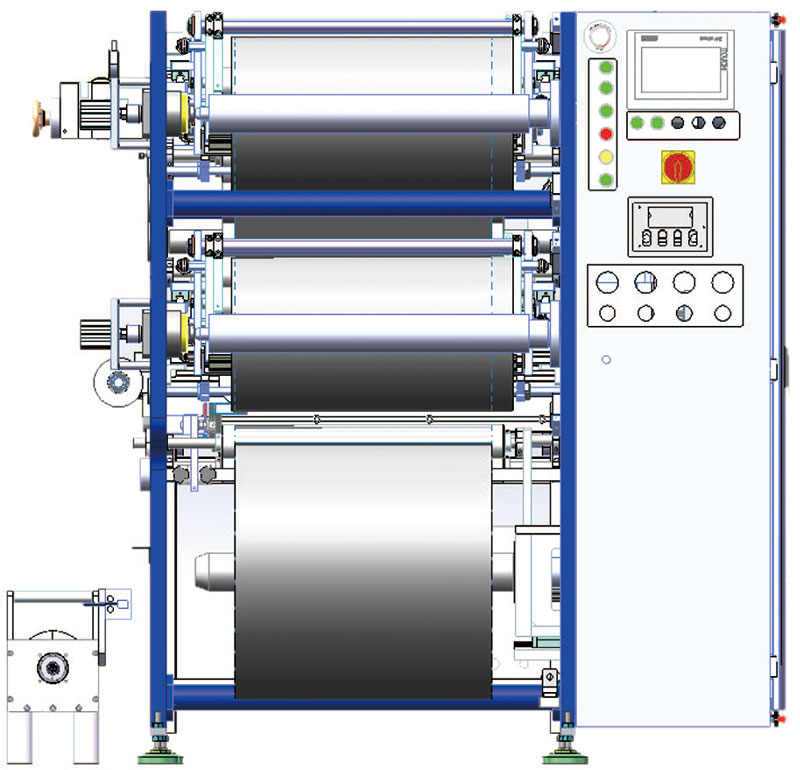 Customerized Slitter
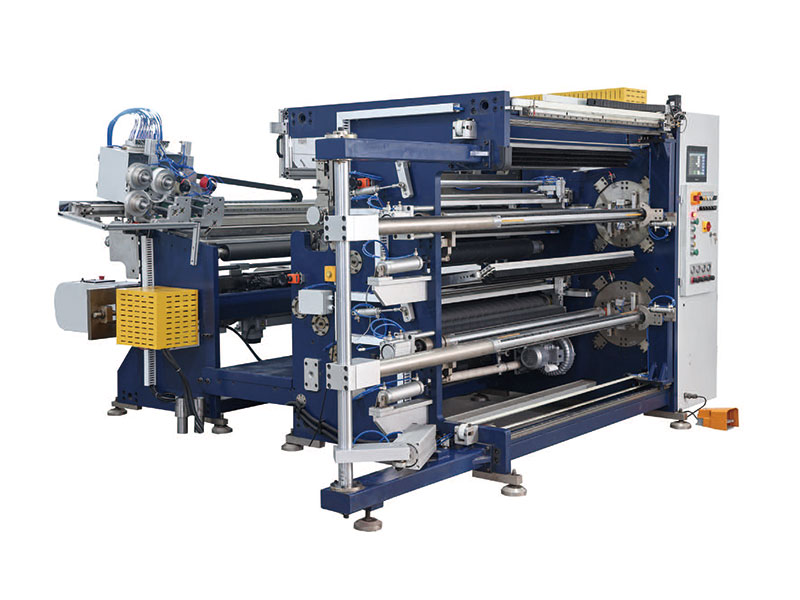 1350mm Hot Stamping Foil Slitting Machine


 +86 135 9951 7291
 support@delishmachine.com